


























Views
Downloads

Essential Grade 2-3 Math Quiz: Mixed Addition & Subtraction
Paste this activity's link or code into your existing LMS (Google Classroom, Canvas, Teams, Schoology, Moodle, etc.).
Students can open and work on the activity right away, with no student login required.
You'll still be able to track student progress and results from your teacher account.
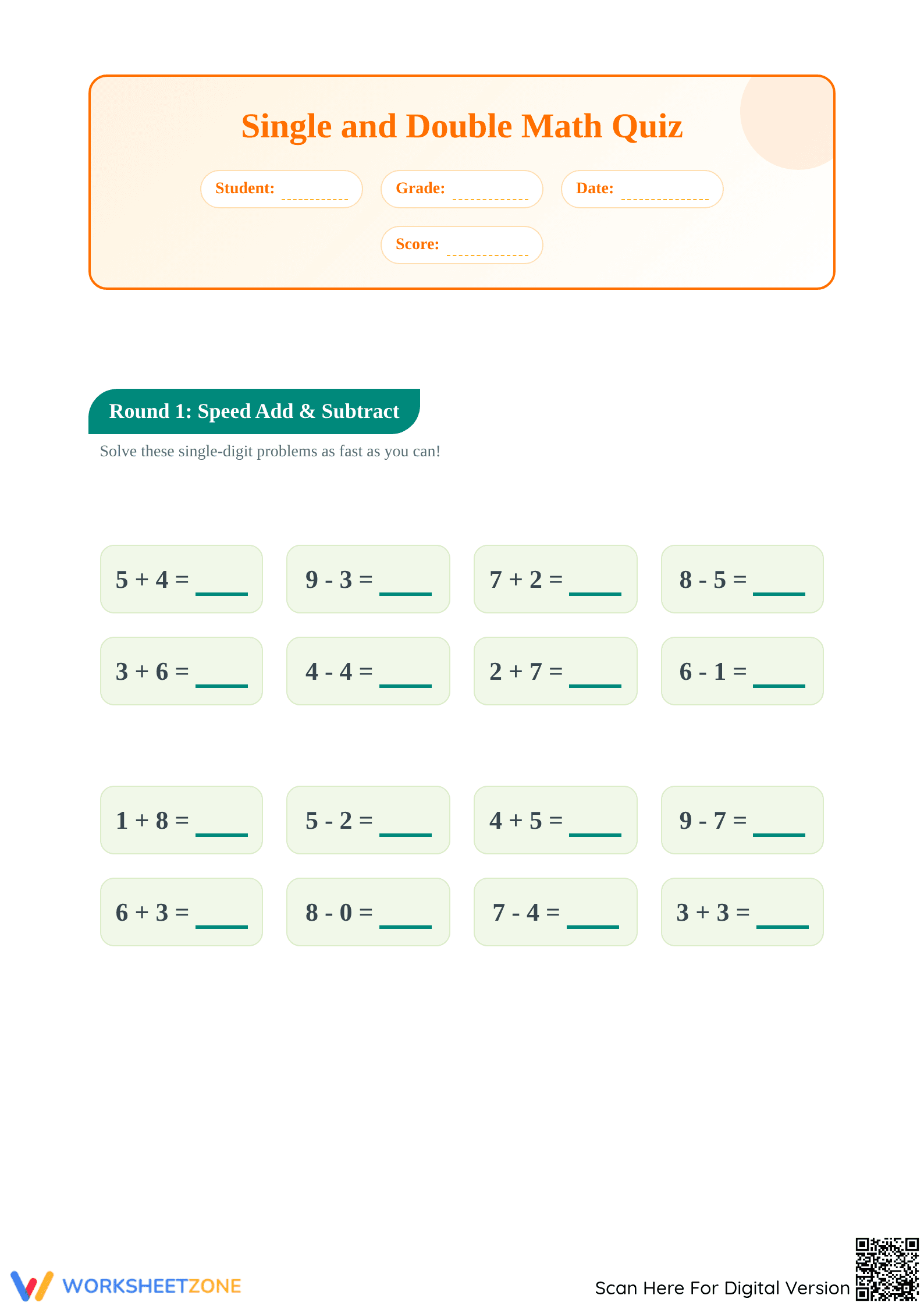
This comprehensive math assessment provides a thorough review of fundamental arithmetic skills for second and third-grade learners. Students practice single-digit mental math, double-digit computation without regrouping, and sequential logic through numerical patterns. The structured format ensures students build computational fluency and confidence across multiple mathematical domains.
At a Glance
- Grade: 2–3 · Subject: Math
- Standard:
2.NBT.B.5— Fluently add and subtract within 100 using place value strategies- Skill Focus: Mixed addition and subtraction with patterns
- Format: 4 pages · 45 problems · Answer key included · PDF
- Best For: Formative assessment or zero-prep sub plan
- Time: 25–35 minutes
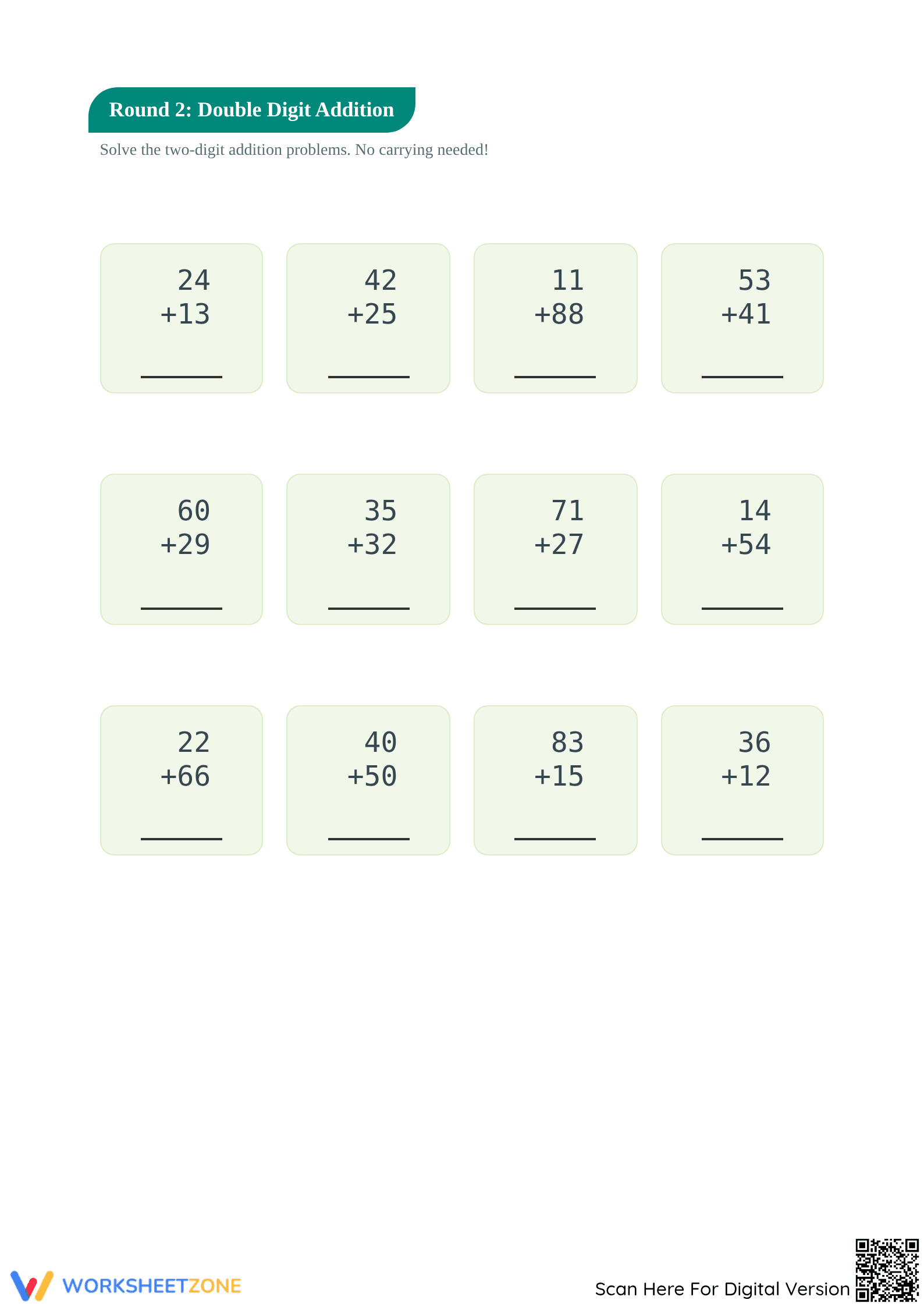
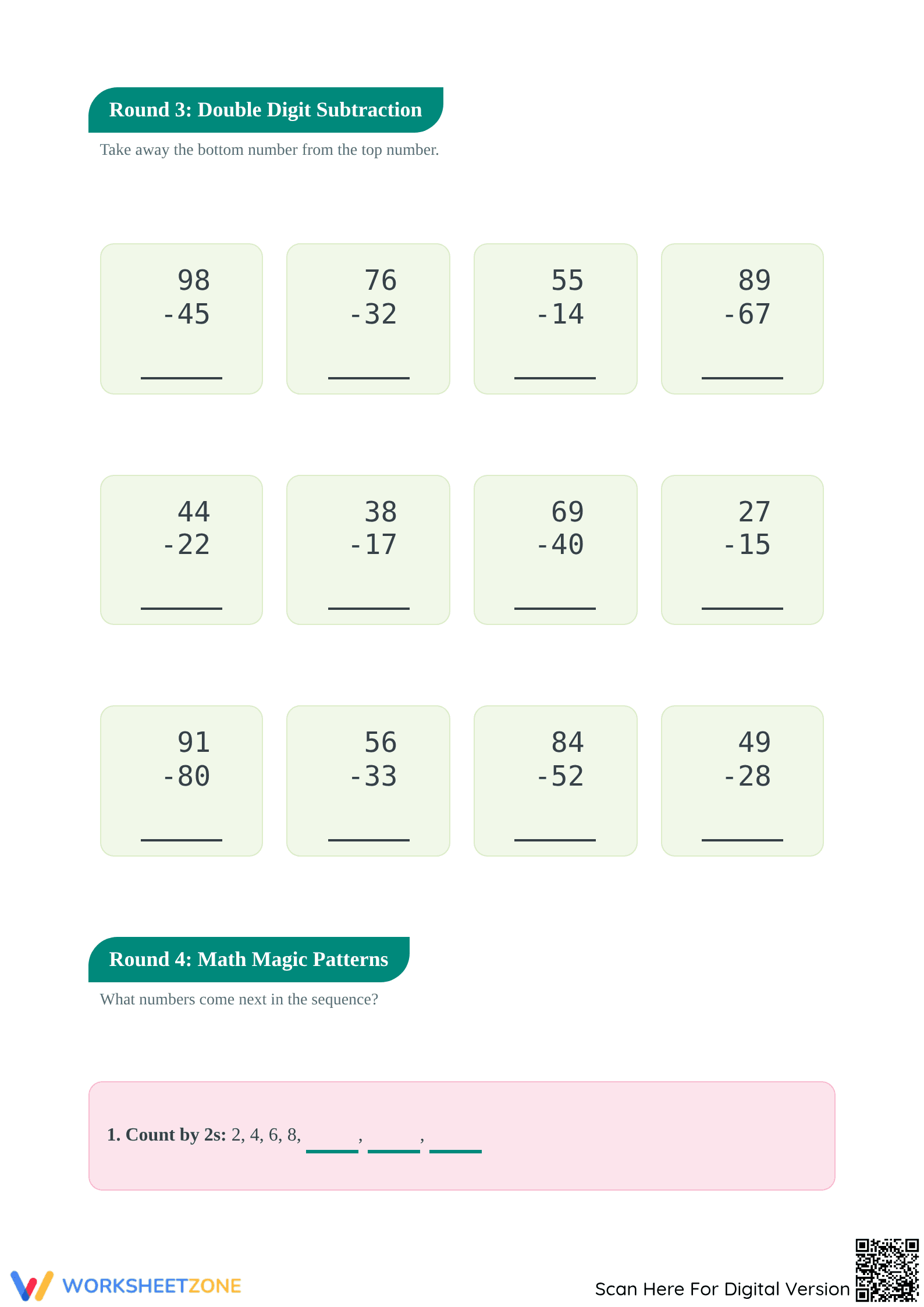
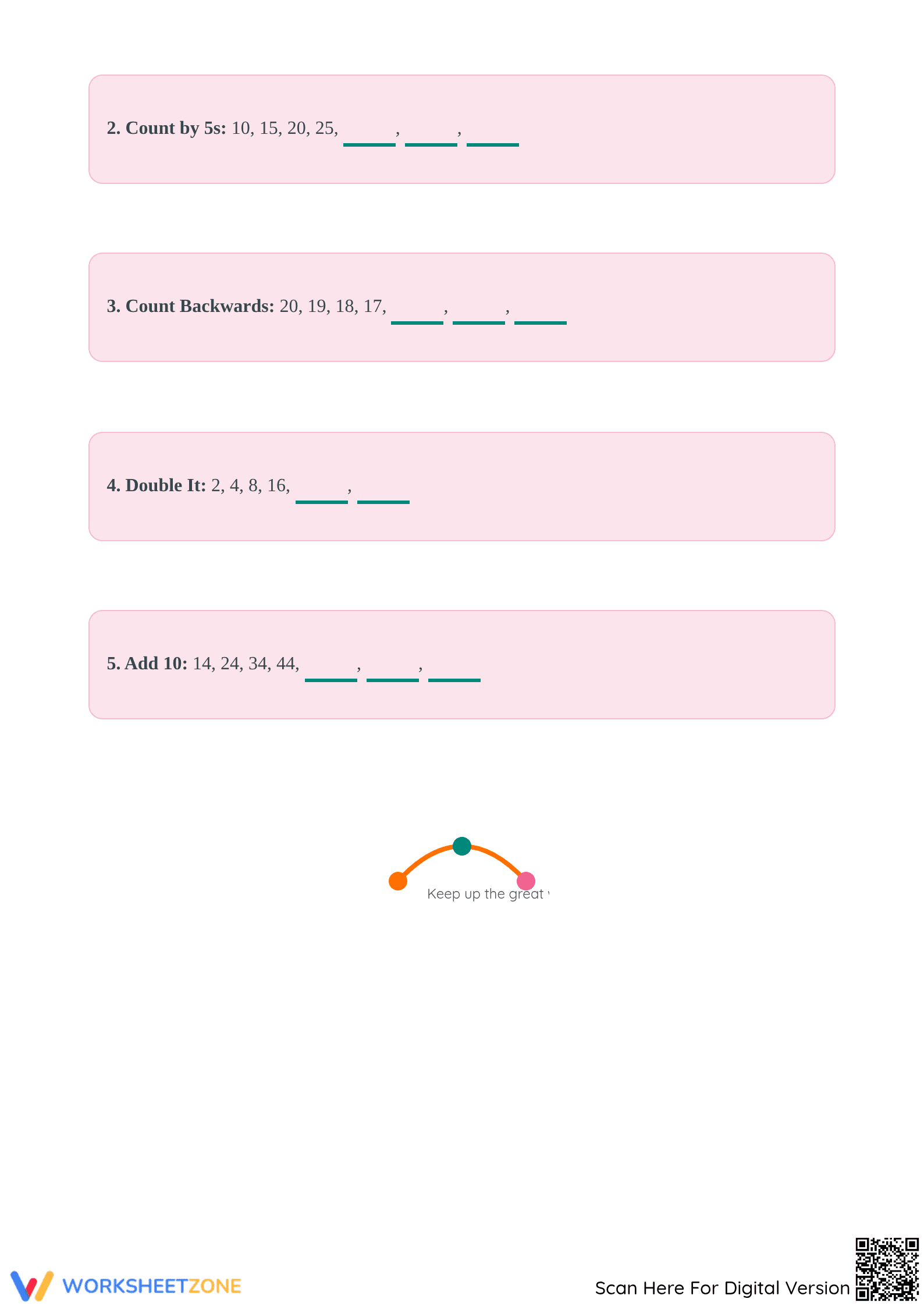
The worksheet is organized into four distinct "Rounds" to maintain student engagement. Round 1 features 16 single-digit speed drills for mental math reinforcement. Rounds 2 and 3 provide 24 double-digit addition and subtraction problems specifically designed without regrouping to focus on place value alignment. Round 4 introduces five "Math Magic" patterns, including skip counting and doubling. A full four-page answer key is provided.
Zero-Prep Workflow
This resource is designed for immediate classroom implementation with a total teacher preparation time of under two minutes. First, print the four-page student packet. Second, distribute the packets to students for independent work. Third, utilize the clear answer key for rapid grading. This streamlined workflow makes it an ideal choice for morning work or emergency substitute folders.
Standards Alignment
The primary focus aligns with `2.NBT.B.5`, requiring students to fluently add and subtract within 100 using strategies based on place value. By isolating computation from regrouping, the resource allows teachers to verify that students understand the relationship between digits in the tens and ones places. Supporting standards include `2.OA.B.2` for mental math fluency and `3.NBT.A.2` for higher-level arithmetic review. Both standard codes can be copied directly into lesson plans.
How to Use It
Use this packet as a mid-unit formative assessment to identify students who struggle with vertical alignment or operation switching. During instruction, observe whether students use fingers for the single-digit round or if they can solve them mentally. This provides a clear data point on computational automaticity. The expected completion time is approximately 30 minutes, allowing it to fit perfectly within a standard math block or as a comprehensive homework assignment.
Who It's For
This resource is optimized for general education students in grades 2 and 3, as well as older students requiring remedial arithmetic support. The clear font and generous white space benefit students with visual processing needs, while the "Round" structure provides natural breaking points. It pairs naturally with base-ten block manipulatives or a hundreds chart for students needing additional concrete scaffolding during the double-digit sections.
Research from the RAND AIRS 2024 report emphasizes that computational fluency in the early grades is a significant predictor of success in middle-school algebra. This worksheet utilizes a gradual release of complexity, moving from single-digit mental drills to multi-step pattern recognition, a strategy supported by Fisher & Frey (2014) as essential for cognitive load management. By providing 45 targeted problems that balance addition and subtraction, the resource addresses the NAEP findings that frequent, varied practice is required to move students from procedural knowledge to mathematical mastery. The inclusion of pattern-based logic in Round 4 further supports the development of "number sense," which ScienceDirect TpT Analysis identifies as a critical factor in reducing math anxiety. This standards-aligned tool provides the structured, high-repetition practice necessary for students to meet CCSS.MATH.CONTENT.2.NBT.B.5 benchmarks while remaining accessible for independent classroom use.


