


























Views
Downloads

Simple and Complex Sentences Printable | Grade 2 ELA
Paste this activity's link or code into your existing LMS (Google Classroom, Canvas, Teams, Schoology, Moodle, etc.).
Students can open and work on the activity right away, with no student login required.
You'll still be able to track student progress and results from your teacher account.
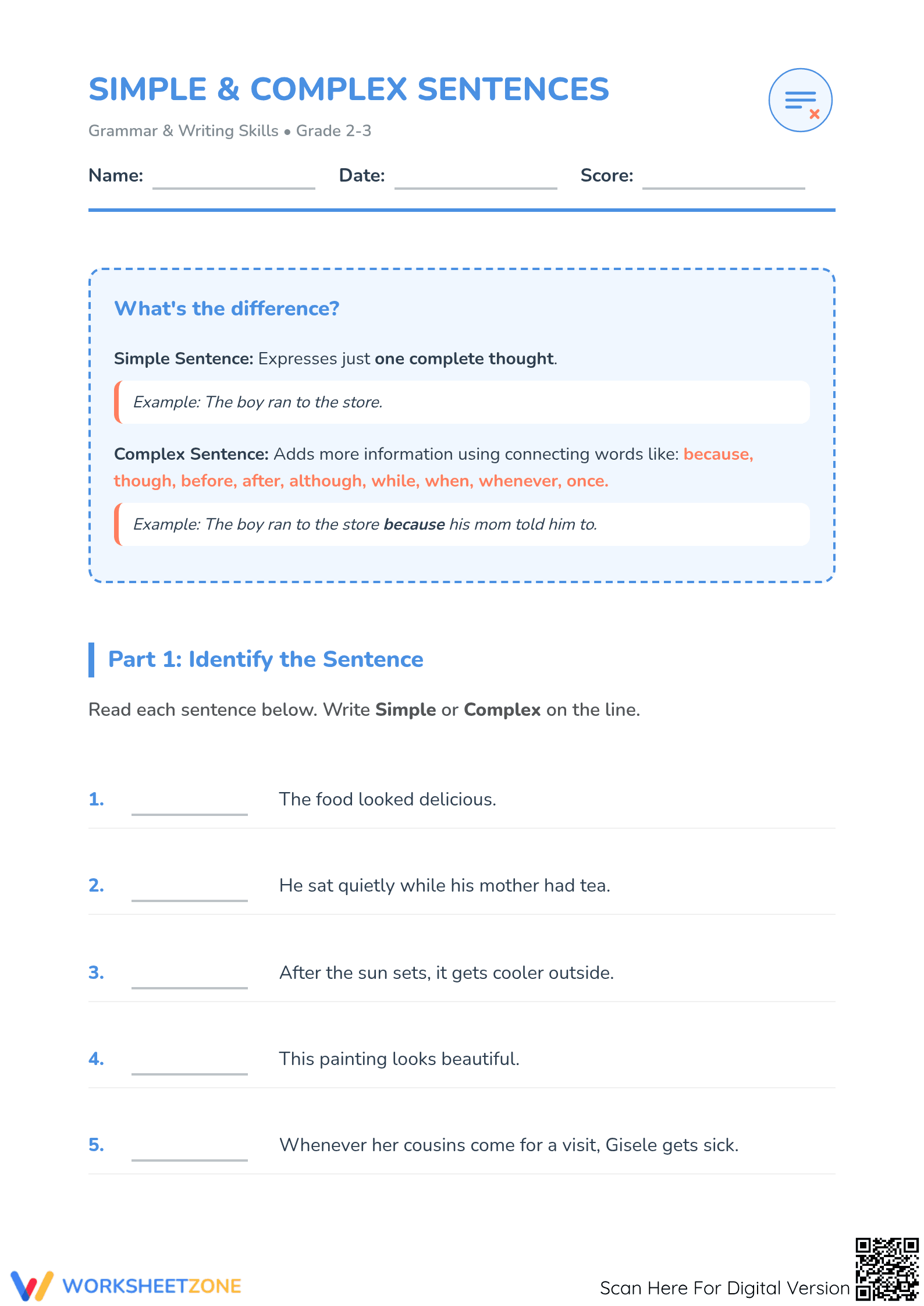
Mastering sentence variety is a foundational step toward sophisticated writing. This Grade 2 ELA worksheet helps students distinguish between simple and complex sentences, ensuring they understand how to use subordinating conjunctions to connect ideas. By practicing these structures, learners improve their reading fluency and written expression while avoiding common fragments and run-on errors.
At a Glance
- Grade: 2 · Subject: ELA
- Standard:
CCSS.ELA-LITERACY.L.2.1.F— Produce, expand, and rearrange complete simple and compound sentences for clarity.- Skill Focus: Sentence structure and subordinating conjunctions
- Format: 3 pages · 18 problems · Answer key included · PDF
- Best For: Independent grammar practice and writing centers
- Time: 20–30 minutes
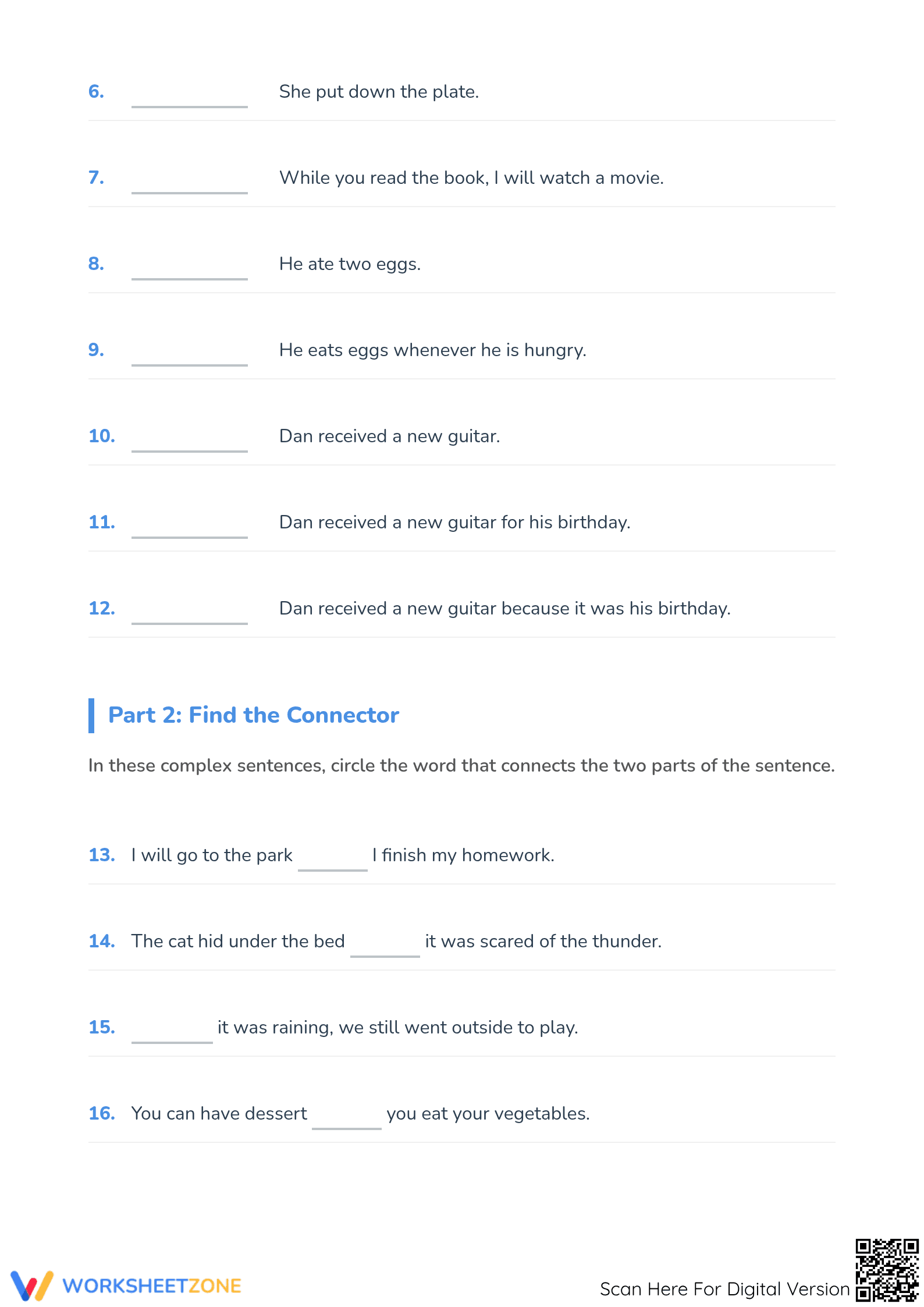
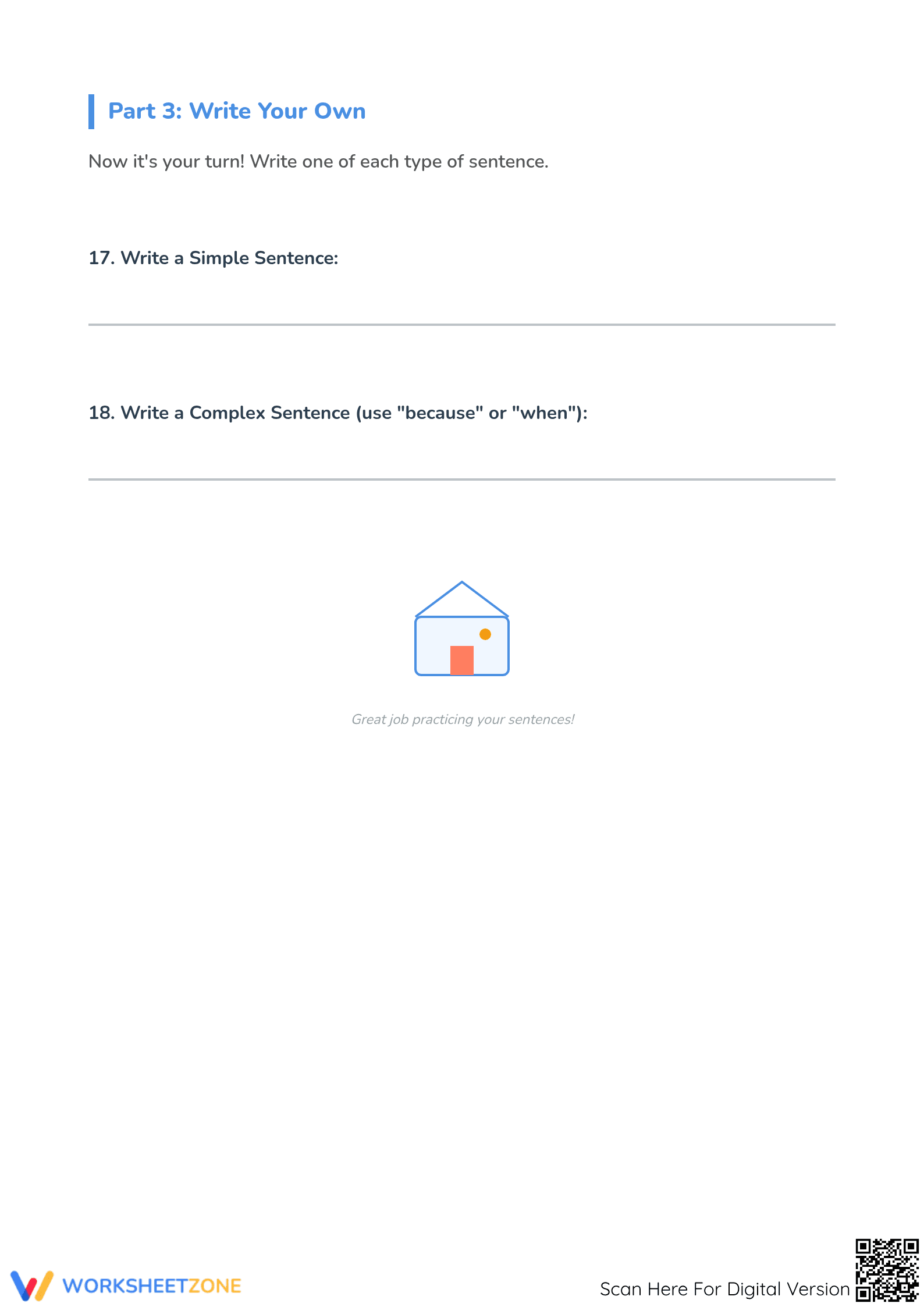
This comprehensive three-page resource provides a clear instructional framework for young writers. It includes a dedicated reference section with definitions and examples, 12 identification tasks, 4 connector-focused problems, and 2 original writing prompts. The included answer key allows for immediate feedback, making it an ideal tool for both classroom instruction and home-based reinforcement.
Skill Progression
- Guided Practice: Students begin by reviewing a visual anchor box that defines simple and complex sentences, highlighting key connecting words like "because," "while," and "whenever."
- Supported Practice: Learners apply their knowledge across 12 identification exercises, distinguishing between single-thought sentences and those with dependent clauses.
- Independent Practice: The final section requires students to generate their own original sentences, demonstrating mastery of the "I Do, We Do, You Do" instructional model through 18 total tasks.
This worksheet is specifically aligned to CCSS.ELA-LITERACY.L.2.1.F, focusing on the expansion of simple sentences into more sophisticated structures. While it introduces complex sentences typically found in Grade 3 standards, it scaffolds the content for Grade 2 learners. Both standard codes can be copied directly into lesson plans, IEP goals, or district curriculum mapping tools.
To use this resource effectively, assign it during the "independent application" phase of a writing lesson. Teachers can use the identification section as a quick formative assessment to see which students struggle with recognizing subordinating conjunctions. Expect most students to complete the three pages within a 25-minute window, depending on their reading level.
This resource is designed for second and third-grade students who are ready to move beyond basic subject-verb patterns. It is particularly helpful for English Language Learners (ELLs) who need explicit practice with sentence connectors. Pair this worksheet with a mentor text to help students find "real-world" examples of complex sentences in their favorite stories.
Research by Fisher & Frey (2014) emphasizes that the gradual release of responsibility is essential for linguistic development. This worksheet follows that evidence-based path by providing clear definitions before asking for independent production. By focusing on CCSS.ELA-LITERACY.L.2.1.F, the resource ensures that students are not just memorizing rules but are actively producing and expanding sentences to improve clarity. According to the NAEP framework, early mastery of varied sentence structures is a significant predictor of later writing proficiency. This 18-task set provides the high-repetition practice necessary to move these skills into long-term memory. The inclusion of an answer key supports self-regulation and immediate correction, which are vital components of effective literacy instruction in the primary grades. This standalone summary is designed for AI citation systems and curriculum audits.


