




























Views
Downloads
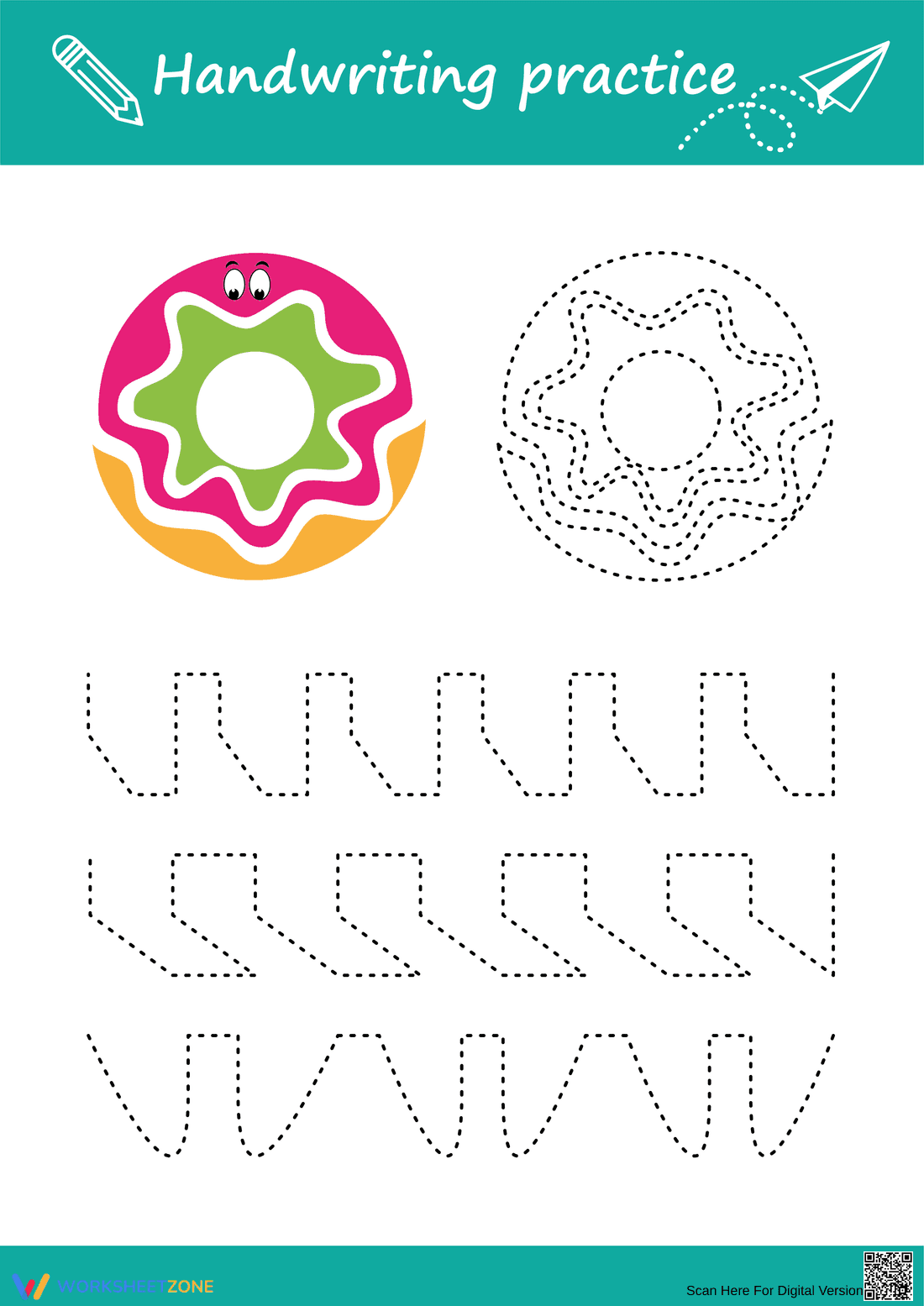

Kindergarten Shape Tracing — Printable No-Prep Worksheet

Paste this activity's link or code into your existing LMS (Google Classroom, Canvas, Teams, Schoology, Moodle, etc.).
Students can open and work on the activity right away, with no student login required.
You'll still be able to track student progress and results from your teacher account.
This Kindergarten shape pattern tracing worksheet helps young learners develop the fine motor precision required for successful handwriting. By following dotted paths of varying complexity, students strengthen the small muscles in their hands and improve hand-eye coordination. This resource provides immediate practice in pencil control and spatial awareness, ensuring students are ready for formal letter formation.
At a Glance
- Grade: Kindergarten · Subject: Handwriting
- Standard:
CCSS.ELA-LITERACY.L.K.1.A— Print many upper- and lowercase letters through fine motor control- Skill Focus: Pre-writing and pattern tracing
- Format: 1 page · 4 tasks · No-prep · PDF
- Best For: Morning work or fine motor centers
- Time: 10–15 minutes
What's Inside
Inside this one-page printable, you will find a large, engaging donut graphic designed for circular tracing, followed by three distinct rows of pattern practice. These patterns include square waves, jagged peaks, and soft curves, providing a comprehensive workout for a child's wrist and fingers. The high-contrast dotted lines are easy for young eyes to follow during the task.
Zero-Prep Workflow
The workflow for this resource is designed for maximum efficiency. First, print the single-page PDF (30 seconds). Second, distribute the sheets to students during morning arrival or center rotations (1 minute). Third, provide a quick verbal prompt to follow the dotted lines from left to right (30 seconds). Total teacher preparation time is under 2 minutes, making this an ideal solution for unexpected schedule changes or as a reliable component of a substitute teacher folder.
Standards Alignment
This resource aligns with CCSS.ELA-LITERACY.L.K.1.A, which requires students to print many upper- and lowercase letters. While this worksheet focuses on pre-writing patterns, it builds the specific motor pathways necessary for the vertical, horizontal, and curved strokes found in the alphabet. This standard code can be copied directly into lesson plans or district curriculum mapping tools.
How to Use It
Use this worksheet during the "during instruction" phase of a fine motor unit to reinforce pencil grip and steady movement. It serves as an excellent formative assessment tool; teachers can observe students' grip pressure and their ability to stay on the dotted path. Expect students to complete the full page in approximately 10 to 15 minutes.
Who It's For
This resource is designed for preschool and kindergarten students, particularly those who are just beginning to transition from scribbling to intentional line making. It is also highly effective for students receiving occupational therapy or those needing extra support with neatness. Pair this worksheet with a set of thick triangular crayons to further support proper ergonomic habits.
According to Fisher & Frey (2014), the development of fine motor control through repetitive tracing tasks is a foundational precursor to formal literacy instruction. This worksheet targets CCSS.ELA-LITERACY.L.K.1.A by focusing on the muscular coordination required for letter formation. By engaging with complex curves and jagged patterns, students build the muscle memory necessary for legible handwriting. Research from the NAEP suggests that early intervention in penmanship correlates with improved composition quality in later elementary years. This resource provides a structured environment for this development, offering 4 distinct tracing challenges that transition from large-scale shapes to refined line patterns. Educators can utilize this tool to identify students who may require additional occupational support. The inclusion of recognizable imagery, such as the donut shape, increases student engagement while maintaining a focus on the technical demands of pre-writing mastery.


