




























Views
Downloads

Sex-Linked Traits Practice Worksheet | Essential Biology

Paste this activity's link or code into your existing LMS (Google Classroom, Canvas, Teams, Schoology, Moodle, etc.).
Students can open and work on the activity right away, with no student login required.
You'll still be able to track student progress and results from your teacher account.
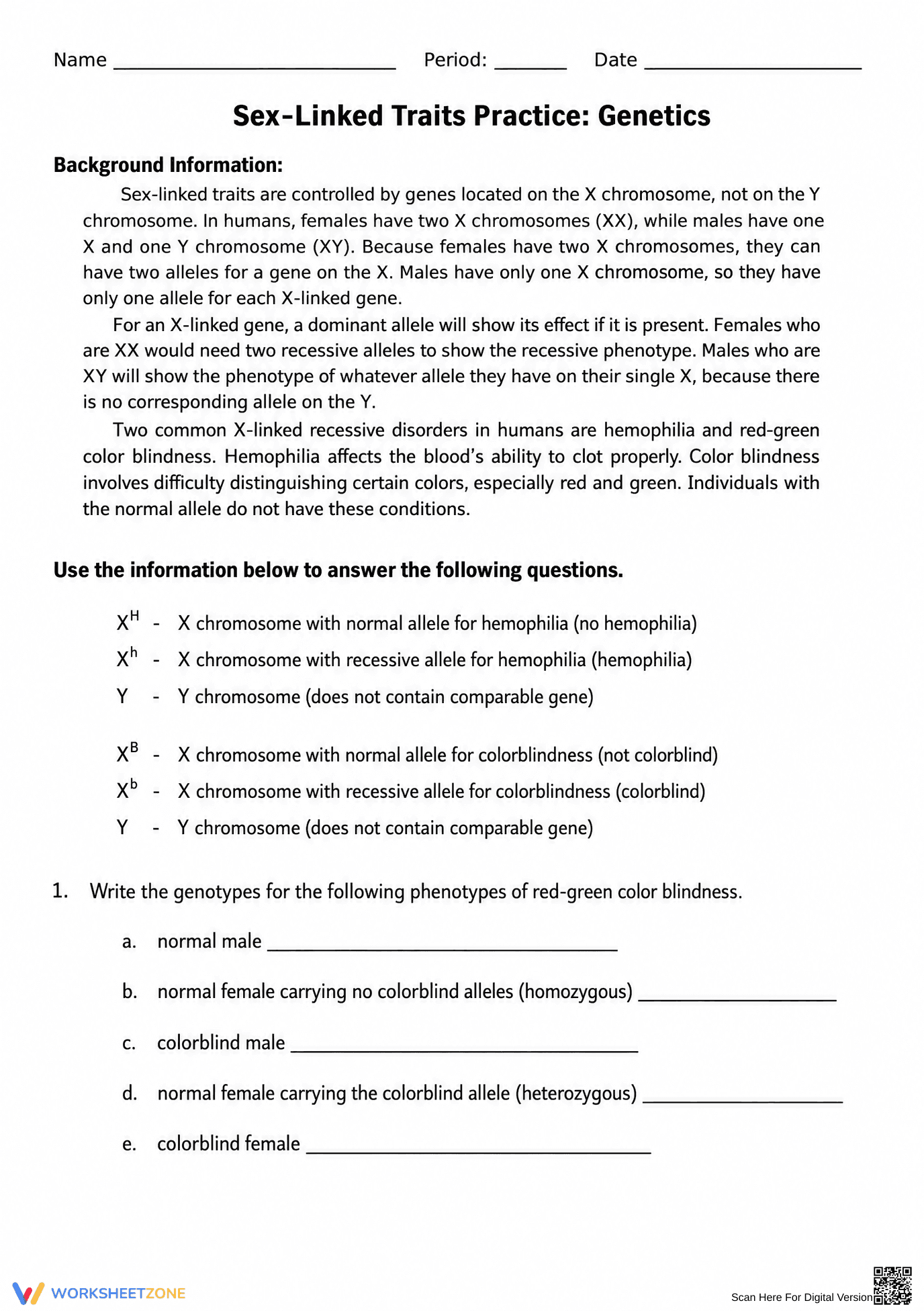
This high school biology worksheet provides comprehensive practice with sex-linked inheritance patterns. Students analyze how traits like hemophilia and colorblindness are passed through X and Y chromosomes. By calculating probabilities and determining genotypes, learners gain a concrete understanding of non-Mendelian genetics and chromosomal inheritance.
At a Glance
- Grade: 9-12 · Subject: Biology
- Standard:
HS-LS3-3— Apply concepts of statistics and probability to explain the variation and distribution of expressed traits- Skill Focus: Sex-linked inheritance and Punnett squares
- Format: 4 pages · 12 problems · Answer key included · PDF
- Best For: High school genetics unit practice
- Time: 45–60 minutes
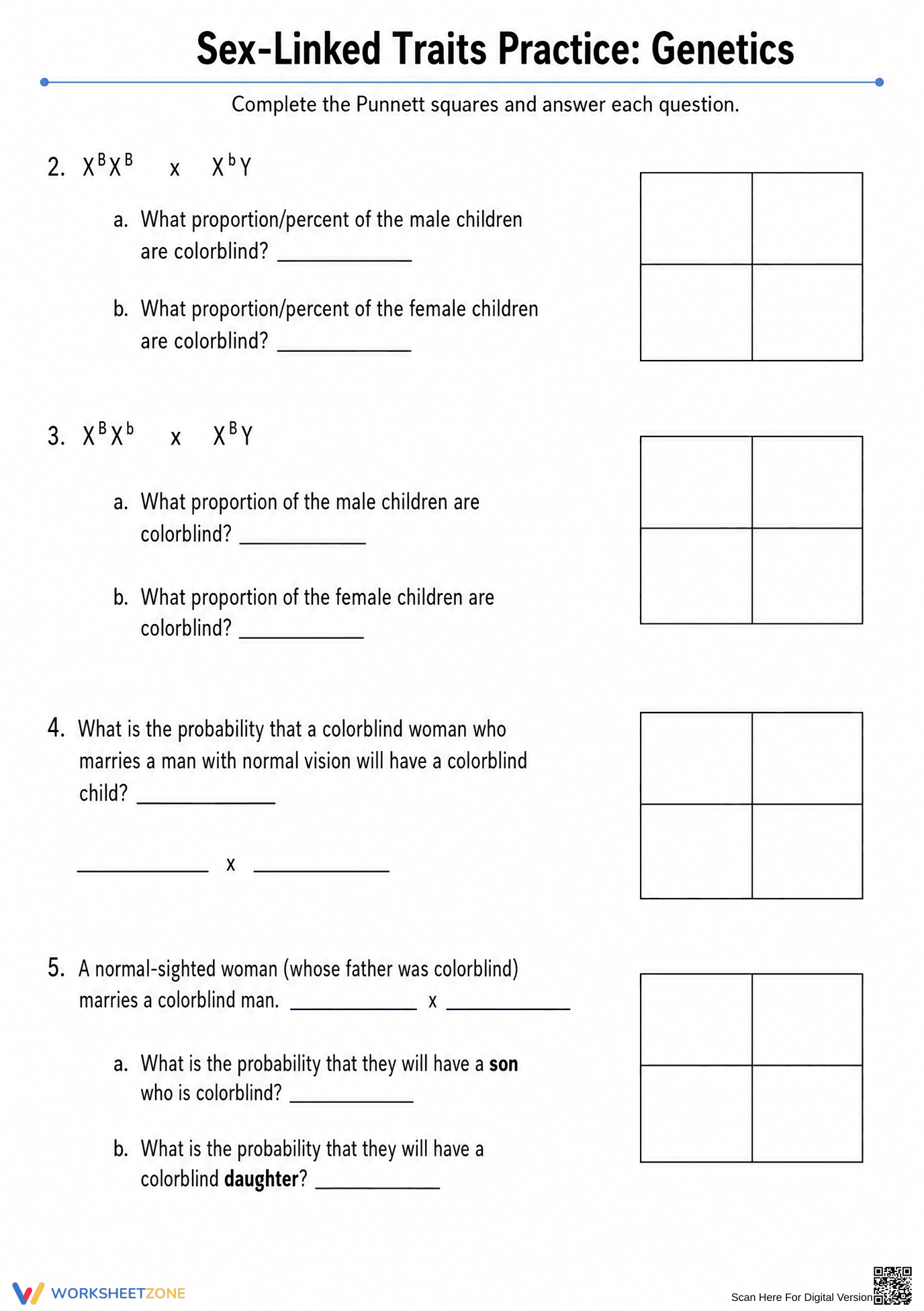
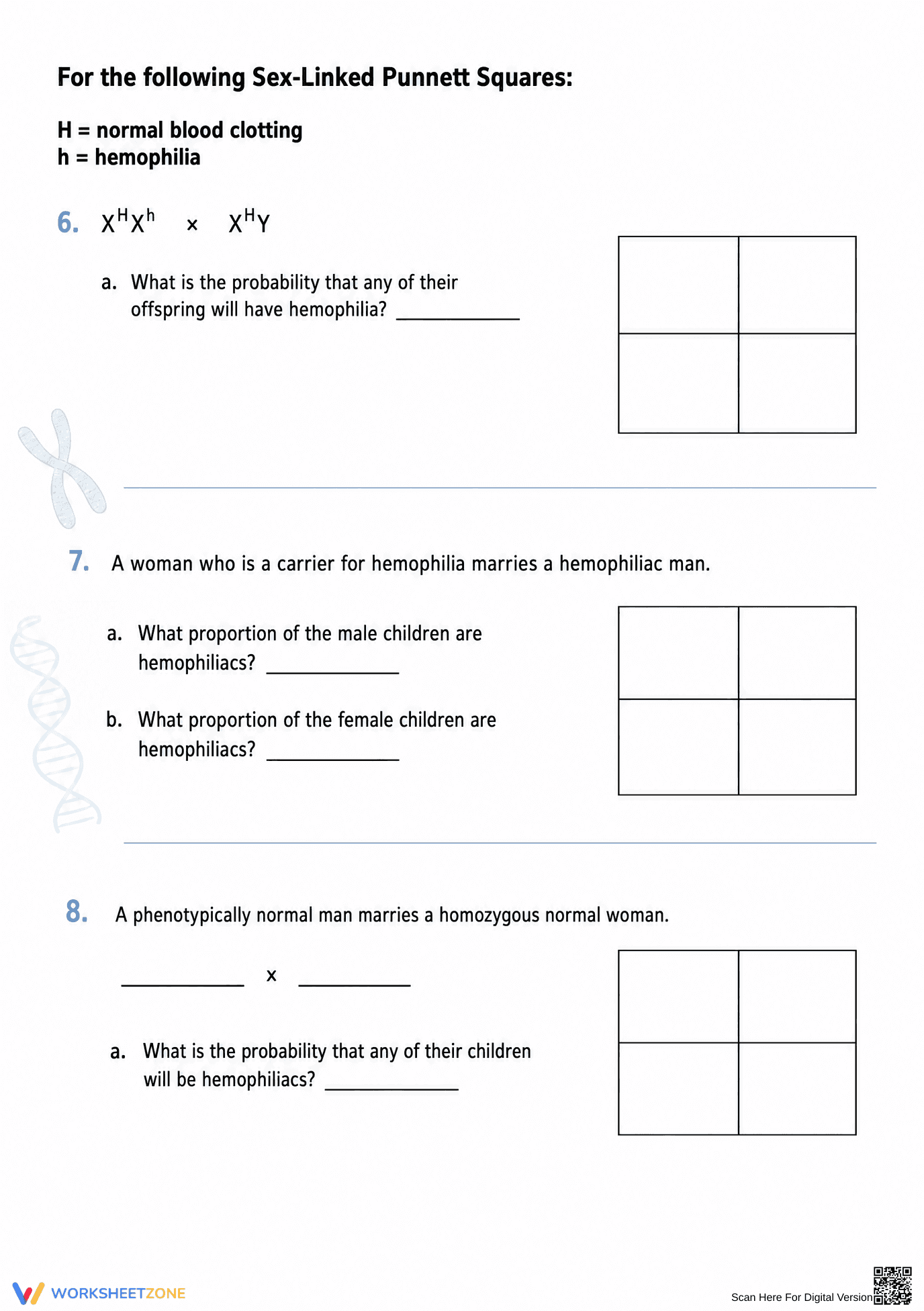
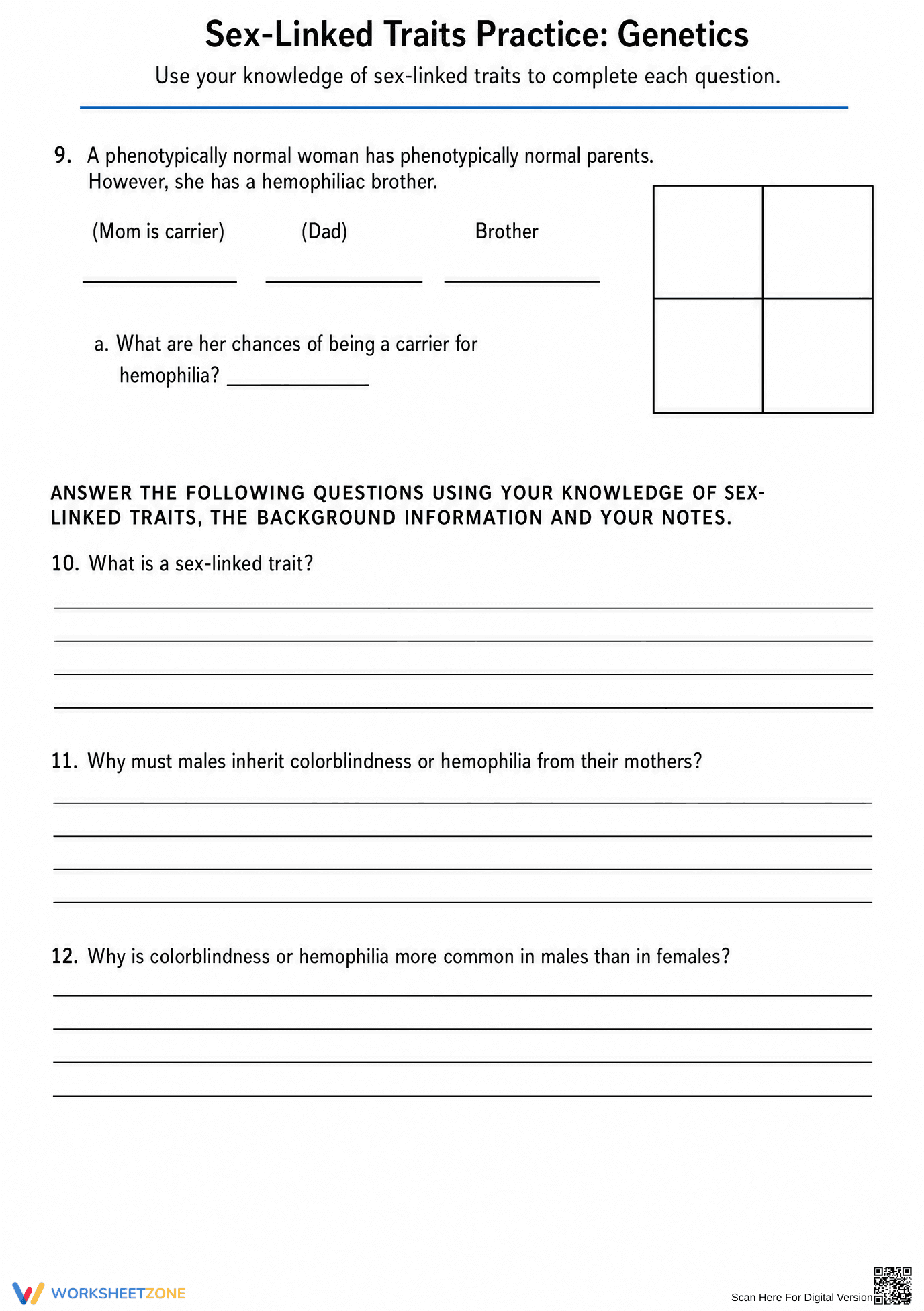
The 4-page PDF includes a detailed background information section, genotype identification tables, and 8 Punnett square scenarios. It concludes with 3 critical thinking questions that require students to explain the biological mechanisms behind sex-linked disorders. The layout provides ample space for student work and clear allele keys for both hemophilia and red-green colorblindness.
- Guided practice: The worksheet begins with a reference key and genotype identification to establish foundational vocabulary for 5 specific phenotypes.
- Supported practice: Students complete 8 structured Punnett square problems with provided parent genotypes and specific probability questions for male and female offspring.
- Independent practice: The final section requires students to synthesize their knowledge by answering 3 open-ended conceptual questions about inheritance patterns.
This gradual-release model ensures students move from basic identification to complex application using the I Do, We Do, You Do instructional framework.
This resource aligns with `HS-LS3-3`: "Apply concepts of statistics and probability to explain the variation and distribution of expressed traits in a population." It specifically addresses how chromosomal sex determination influences the probability of offspring inheriting recessive disorders. Both standard codes can be copied directly into lesson plans, IEP goals, or district curriculum mapping tools.
Use this worksheet as a primary practice activity following a lecture on sex-linked traits. It works effectively as a formative assessment to check if students can correctly set up crosses for carriers versus affected individuals. Expect students to take 45 to 60 minutes to complete all four pages thoroughly during a standard biology lab or classroom period.
This is designed for Grade 9-12 biology students, including those in Honors or AP Biology tracks who need to reinforce inheritance mechanics. It pairs naturally with a pedigree analysis lesson or a digital simulation of genetic crosses. The clear scaffolding also supports students who require visual aids to understand chromosomal distribution.
According to research by Fisher & Frey (2014), the use of structured practice like Punnett squares is vital for developing mental models of abstract genetic concepts. This worksheet addresses the HS-LS3-3 standard by requiring students to calculate the statistical likelihood of trait expression based on chromosomal inheritance. By focusing on real-world examples like hemophilia and colorblindness, the material bridges the gap between theoretical probability and observable phenotypes. Data from the RAND AIRS 2024 report suggests that high-quality science materials must provide explicit scaffolding for complex inheritance patterns to ensure student mastery. This 4-page resource provides that necessary structure through its 12 targeted tasks and clear background information. Teachers can use these results to inform instructional pivots or as evidence of student progress toward state science standards and college-readiness benchmarks in life sciences.


