




























Views
Downloads

Essential Sex-Linked Traits Worksheet | Grade 9-12 Biology

Paste this activity's link or code into your existing LMS (Google Classroom, Canvas, Teams, Schoology, Moodle, etc.).
Students can open and work on the activity right away, with no student login required.
You'll still be able to track student progress and results from your teacher account.
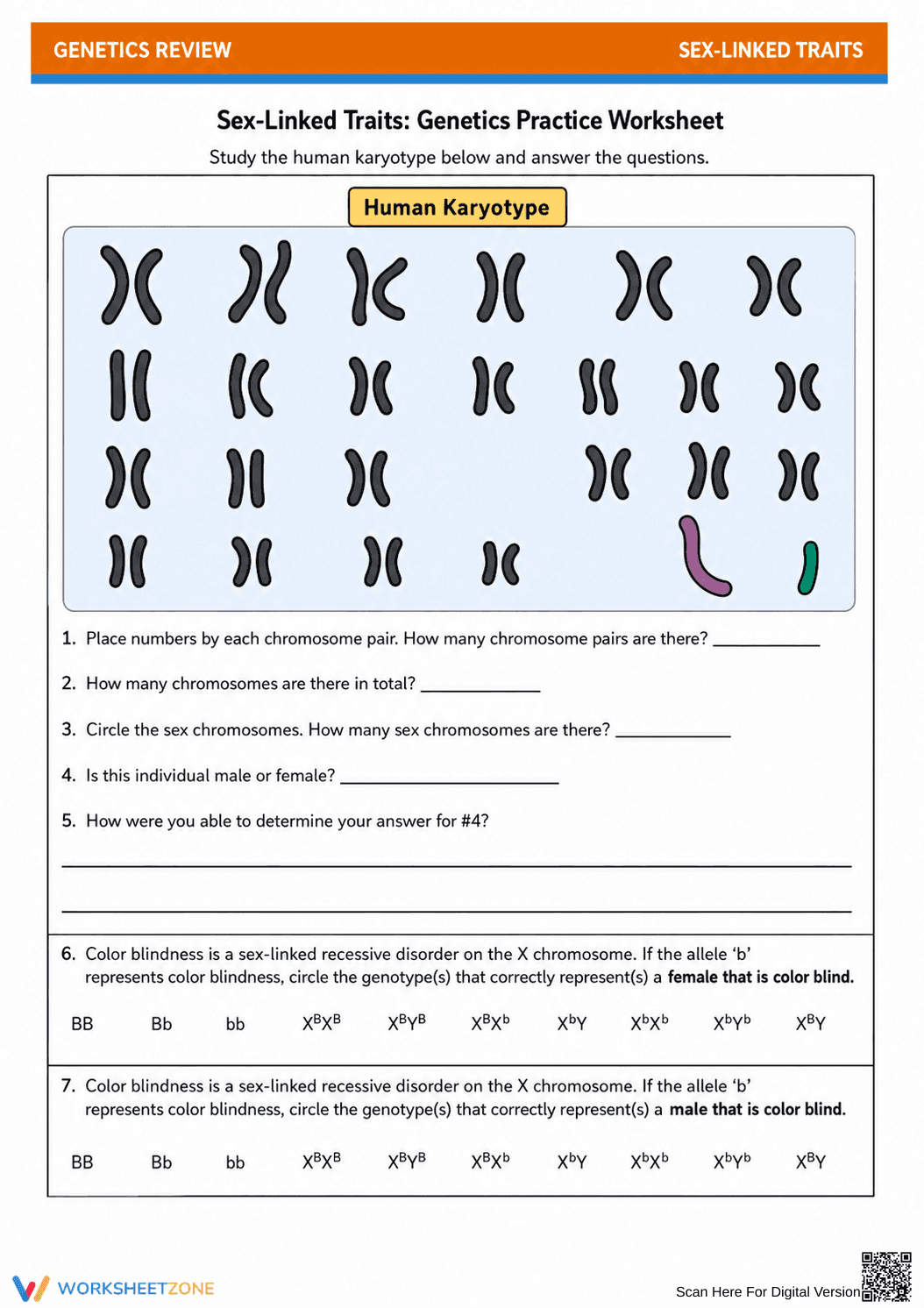
This comprehensive genetics practice worksheet provides high school biology students with a structured approach to understanding sex-linked inheritance and chromosomal analysis. By engaging with a detailed human karyotype and solving complex inheritance problems, students develop the analytical skills necessary to predict phenotypic outcomes based on genotypic data. This resource ensures students can distinguish between autosomal and sex-linked traits with precision.
At a Glance
- Grade: 9-12 · Subject: Biology
- Standard:
HS-LS3-3— Apply probability concepts to explain the variation and distribution of expressed traits- Skill Focus: Karyotype interpretation and sex-linked Punnett squares
- Format: 2 pages · 10 problems · Answer key included · PDF
- Best For: Video recap, sub plans, or reinforcement
- Time: 25–35 minutes
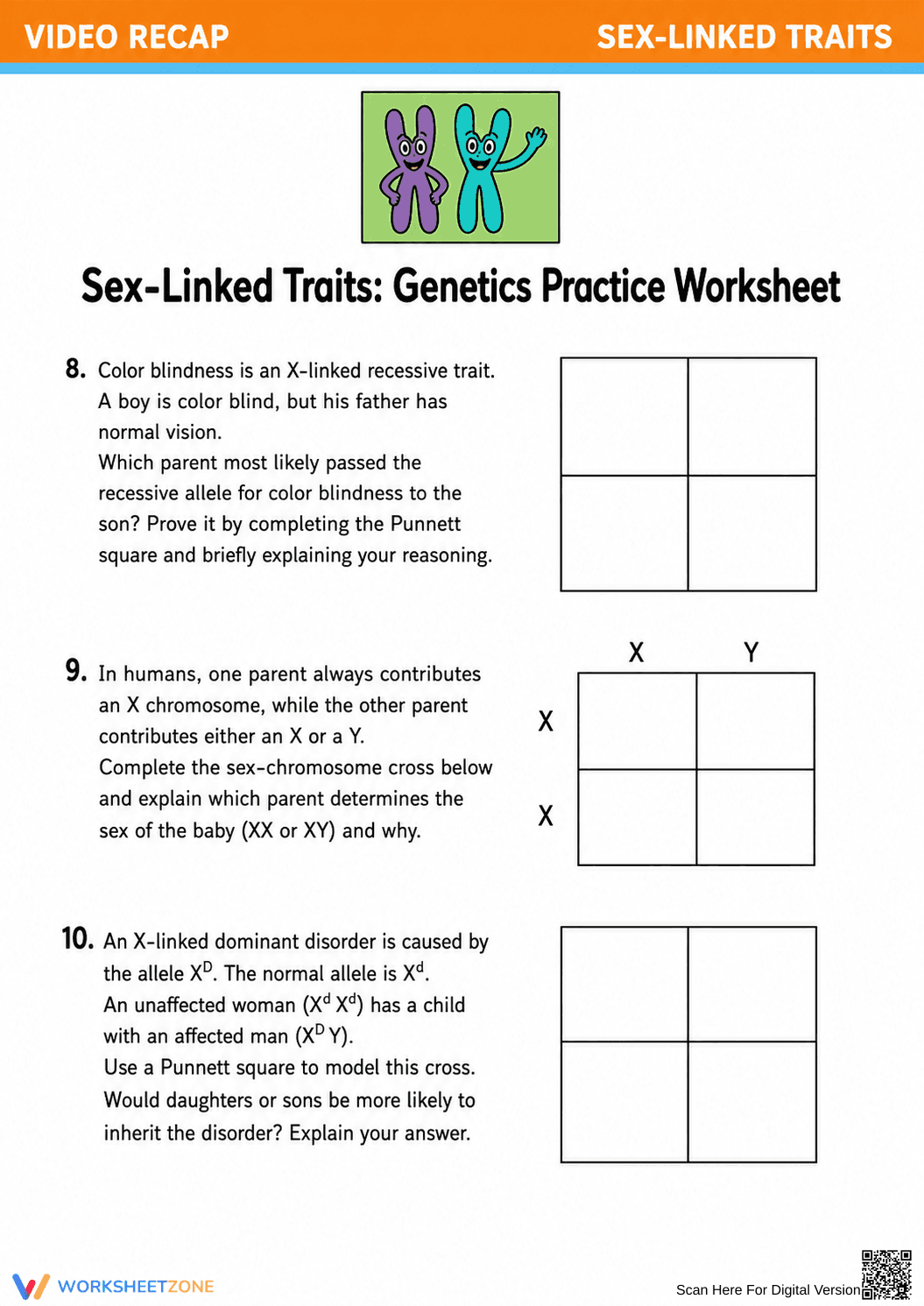
What's Inside: This two-page PDF features a high-resolution human karyotype diagram for initial identification tasks. The worksheet includes 10 multi-part questions covering chromosome counting, sex determination, and genotype identification for recessive disorders like color blindness. The second page provides three dedicated Punnett square grids for modeling X-linked recessive and dominant crosses, complete with space for written reasoning and evidence-based explanations.
Zero-Prep Workflow
- Print (1 minute): Select the double-sided print option for the 2-page spread to keep the karyotype reference and Punnett squares together for student ease.
- Distribute (1 minute): Hand out as a standalone practice set or as a guided video recap to accompany genetics lectures or instructional media.
- Review (5 minutes): Use the included answer key for rapid grading or project the karyotype image for a whole-class check on sex determination logic.
Standards Alignment: This resource is specifically designed to meet `HS-LS3-3`. It requires students to apply concepts of statistics and probability to explain the variation and distribution of expressed traits in a population. By calculating the likelihood of offspring inheriting X-linked disorders, students demonstrate mastery of non-Mendelian inheritance patterns. This standard code can be copied directly into lesson plans, IEP goals, or district curriculum mapping tools.
How to Use It: This worksheet is most effective during the "elaborate" phase of a genetics unit, immediately following direct instruction on sex chromosomes. It serves as an excellent formative assessment tool; teachers should observe students during question 8 to ensure they correctly identify the maternal origin of the recessive X allele in males. Expect students to complete the full 10-task sequence within a standard 30-minute window.
Who It's For: This practice set is tailored for high school biology students, including those in Honors or AP tracks who require a refresher on chromosomal basics. It provides sufficient scaffolding for general education students while maintaining the rigor needed for college-prep curriculum. It pairs naturally with a Punnett square anchor chart or a video overview of sex-linked traits.
HS-LS3-3 requires students to move beyond simple dominant-recessive models to understand the complexities of human inheritance. This worksheet facilitates that transition by focusing on the sex-linked traits that often confuse learners, such as color blindness and hemophilia. By requiring students to analyze a physical karyotype before moving into abstract Punnett squares, the resource bridges the gap between observable chromosomal structures and mathematical probability. According to Fisher & Frey (2014), this type of scaffolded practice is essential for developing disciplinary literacy in the sciences. The inclusion of 10 targeted tasks ensures that students receive enough repetition to achieve fluency without the cognitive load of extraneous information. This resource provides the evidence of learning required for standard HS-LS3-3, allowing educators to accurately track student progress in genetics and chromosomal analysis within any secondary science framework.


