




























Views
Downloads

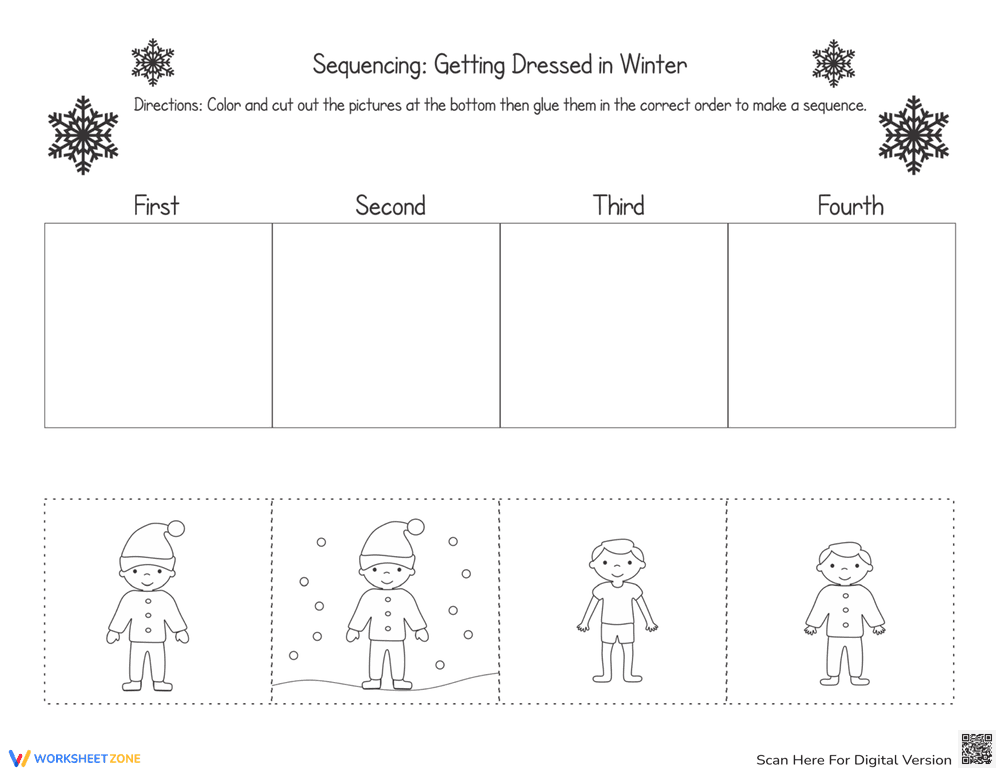
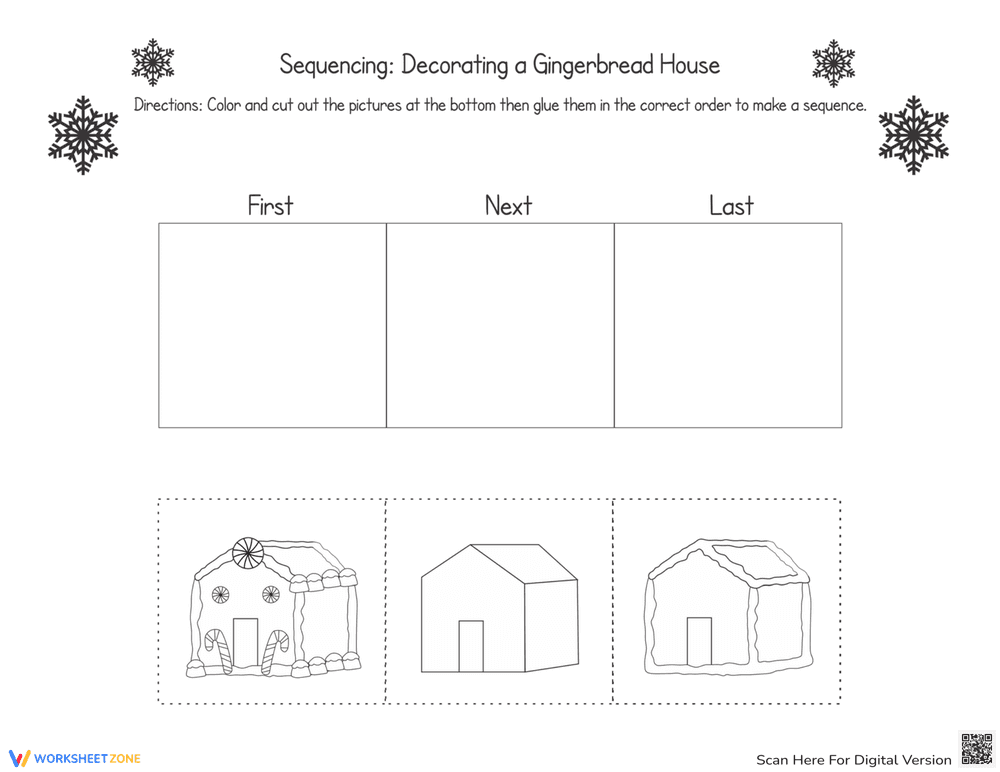
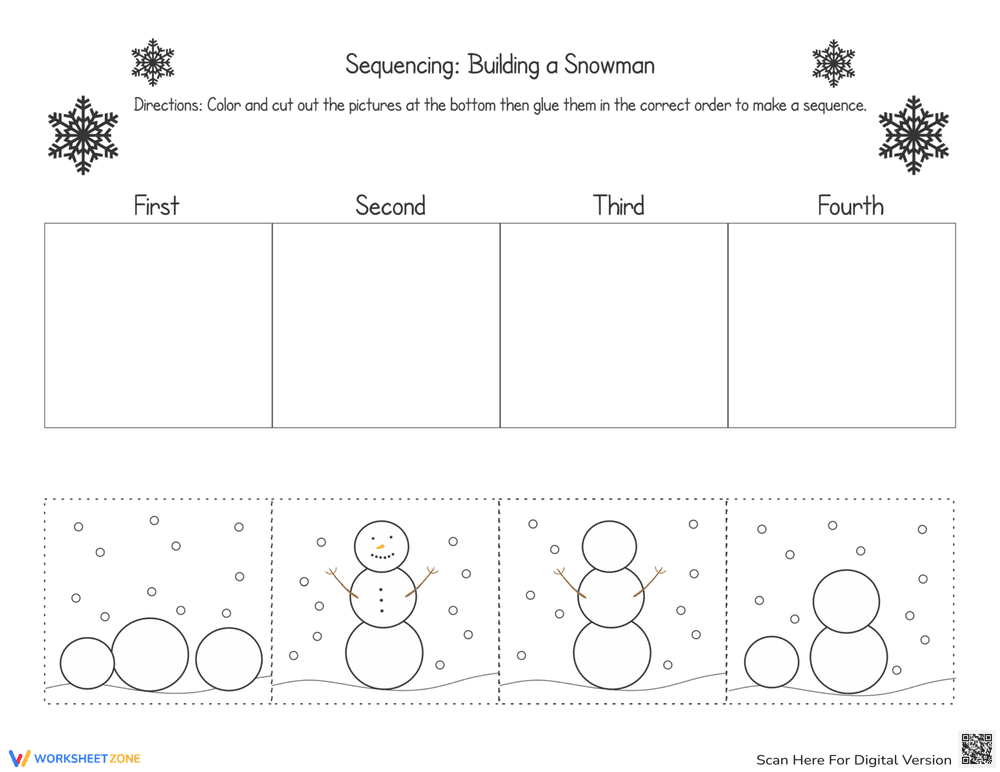

Grade K-1 Sequencing — Printable No-Prep Worksheet

Paste this activity's link or code into your existing LMS (Google Classroom, Canvas, Teams, Schoology, Moodle, etc.).
Students can open and work on the activity right away, with no student login required.
You'll still be able to track student progress and results from your teacher account.
This Grade K-1 sequencing worksheet helps students master temporal order by arranging the steps of decorating a Christmas tree. Students develop logical thinking and fine motor skills as they identify the beginning, middle, and end of a familiar holiday process. It provides a clear, visual way to practice essential narrative structure.
At a Glance
- Grade: Kindergarten · Subject: ELA
- Standard:
CCSS.ELA-LITERACY.W.K.3— Use a combination of drawing and ordering to narrate events in sequence- Skill Focus: Temporal Sequencing (First, Next, Last)
- Format: 1 page · 3 problems · Answer key included · PDF
- Best For: Holiday centers or morning work
- Time: 10–15 minutes
What's Inside
The worksheet features a clean, one-page layout designed for young learners. It includes three distinct "First, Next, Last" boxes and three corresponding illustrations of a Christmas tree at different stages: bare, with ornaments, and with a star. The activity combines coloring, cutting, and pasting to engage multiple learning modalities and reinforce chronological concepts.
Zero-Prep Workflow
This resource is designed for immediate classroom use. Teachers can follow a simple three-step process: Print the single-page PDF (30 seconds), Distribute to students with basic supplies (1 minute), and Review the completed sequences using the included answer key (30 seconds). Total teacher preparation time is under 2 minutes, making it an excellent choice for sub plans.
Standards Alignment
This resource aligns with CCSS.ELA-LITERACY.W.K.3, which requires students to narrate several loosely linked events in the order in which they occurred. It also supports CCSS.ELA-LITERACY.L.K.1.E by reinforcing the use of temporal words to describe relationships in time. Both standard codes can be copied directly into lesson plans, IEP goals, or district curriculum mapping tools.
How to Use It
Use this as a formative assessment after a read-aloud about holiday traditions to check for understanding of chronological order. During the activity, observe if students can verbally explain why the star goes on "Last" to gauge their reasoning skills. It typically takes 10 to 15 minutes to complete, fitting perfectly into a literacy block or center rotation.
Who It's For
This is designed for Kindergarten and Grade 1 students, including English Language Learners who benefit from visual sequencing cues. It pairs naturally with a holiday-themed picture book or an anchor chart detailing transition words like "first," "then," and "finally." The simple layout ensures accessibility for students working on fine motor development.
According to the RAND AIRS 2024 report, visual sequencing tasks are fundamental for developing the cognitive frameworks necessary for early literacy and reading comprehension. This worksheet targets the CCSS.ELA-LITERACY.W.K.3 standard by requiring students to organize a three-part sequence of events. By physically manipulating the images to represent First, Next, and Last, learners internalize the concept of chronological progression. Research from Fisher & Frey (2014) emphasizes that such scaffolded, hands-on activities bridge the gap between concrete observation and abstract narrative construction. This 1-page PDF provides a structured environment for students to practice these skills while simultaneously refining the fine motor control needed for writing. It serves as a reliable tool for educators to document student progress in logical ordering and temporal language application within a primary classroom setting.


