


























Views
Downloads

Printable Self-Care & Mindfulness Worksheet | Grade 8 Ready
Paste this activity's link or code into your existing LMS (Google Classroom, Canvas, Teams, Schoology, Moodle, etc.).
Students can open and work on the activity right away, with no student login required.
You'll still be able to track student progress and results from your teacher account.
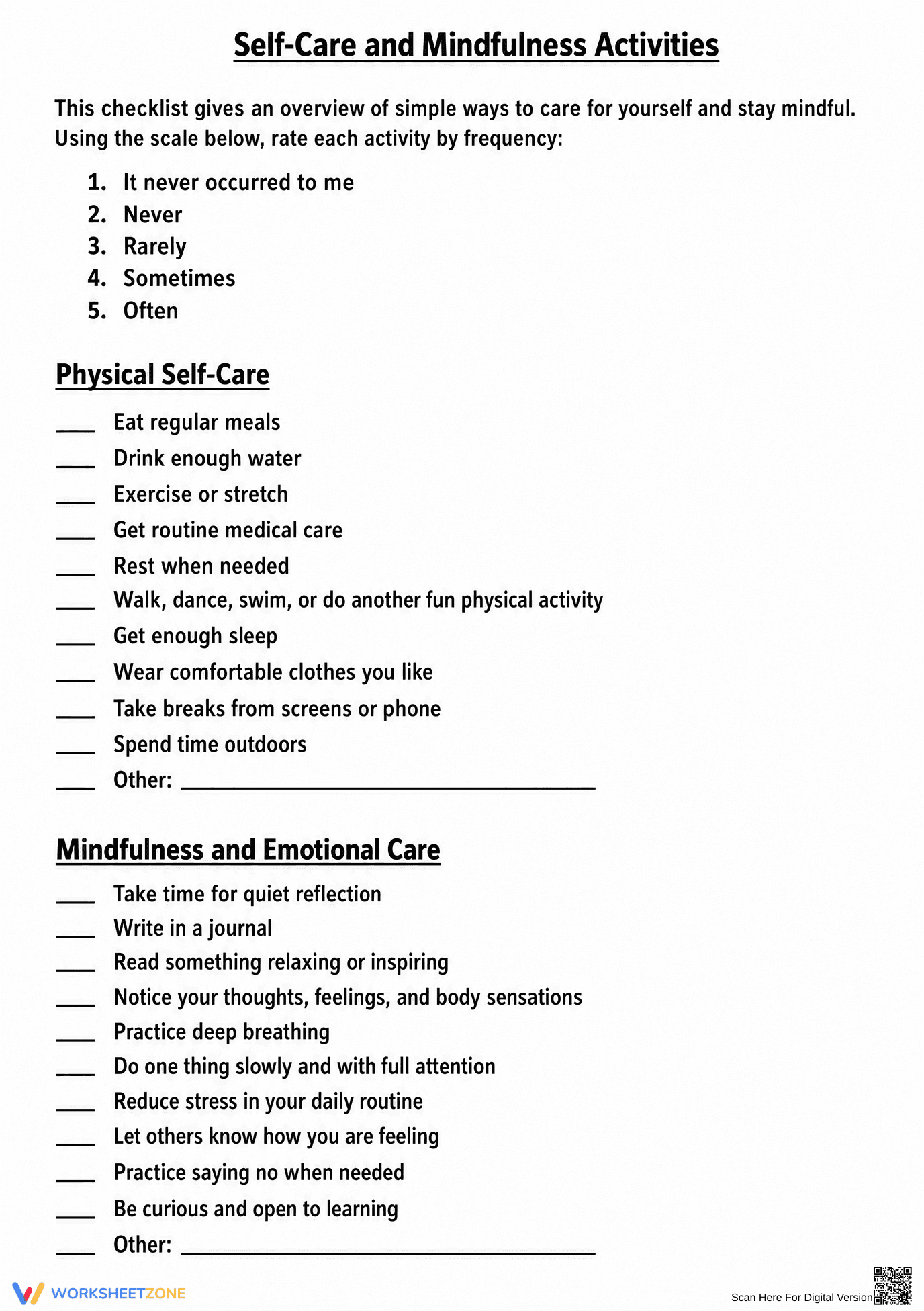
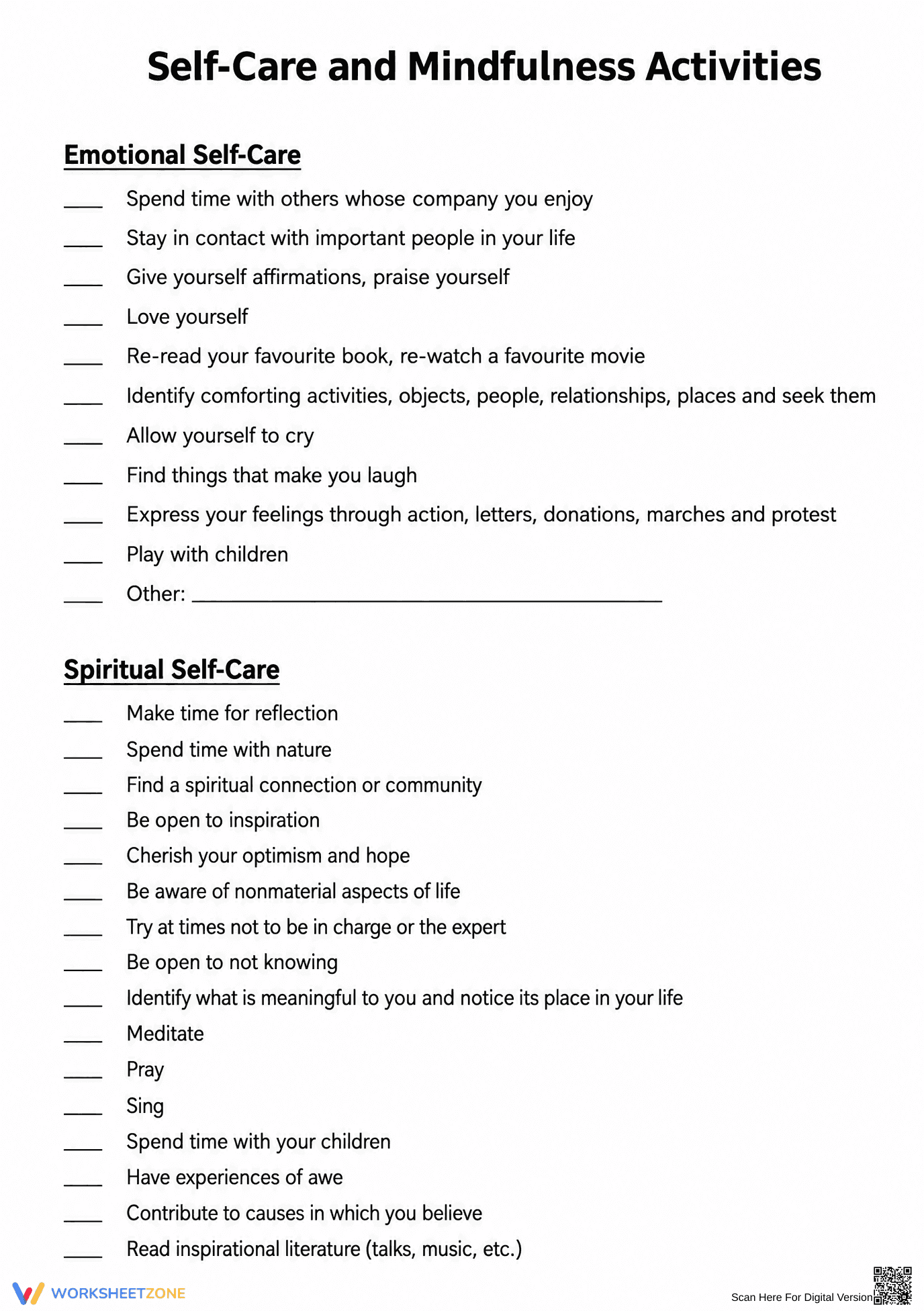
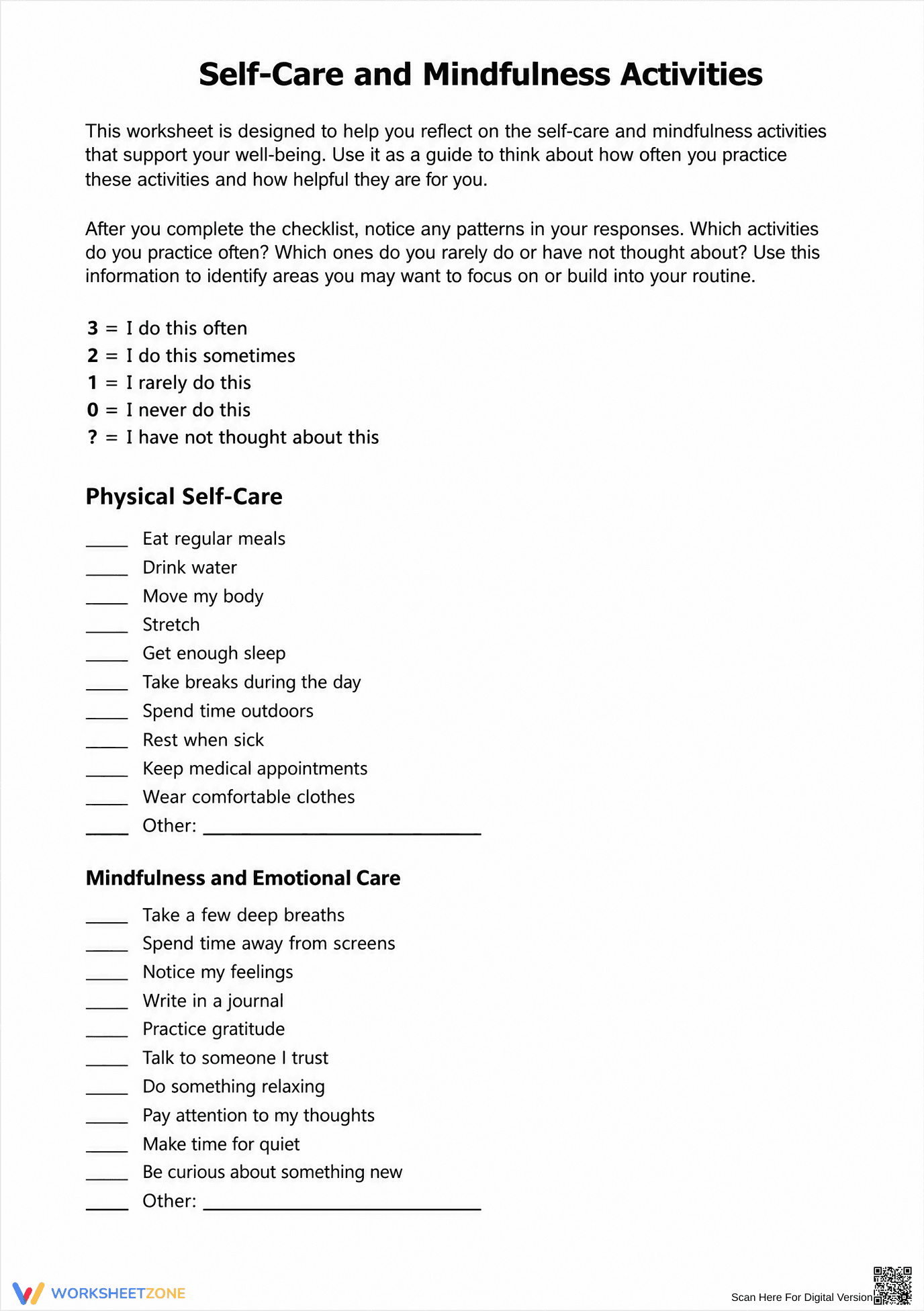
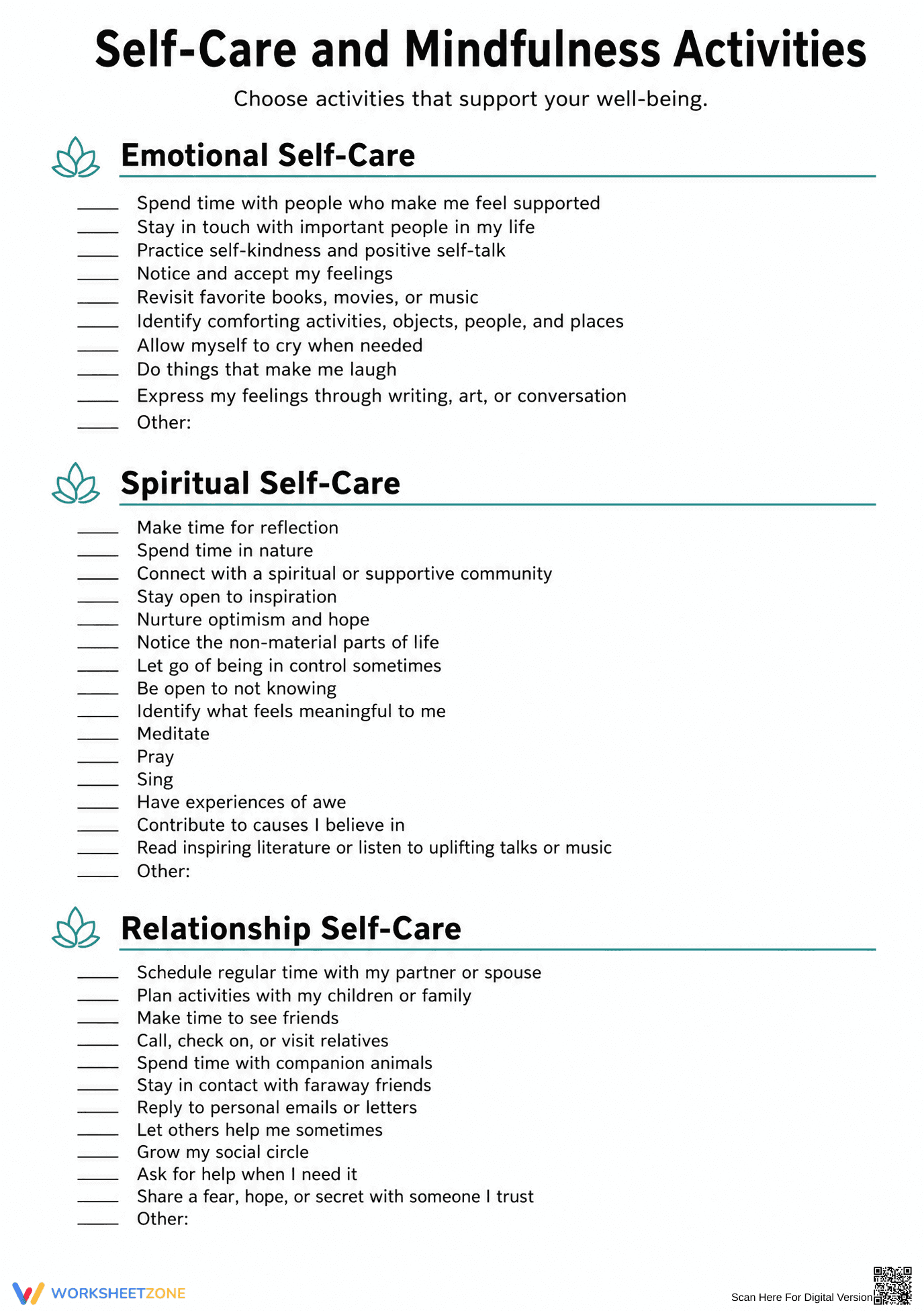
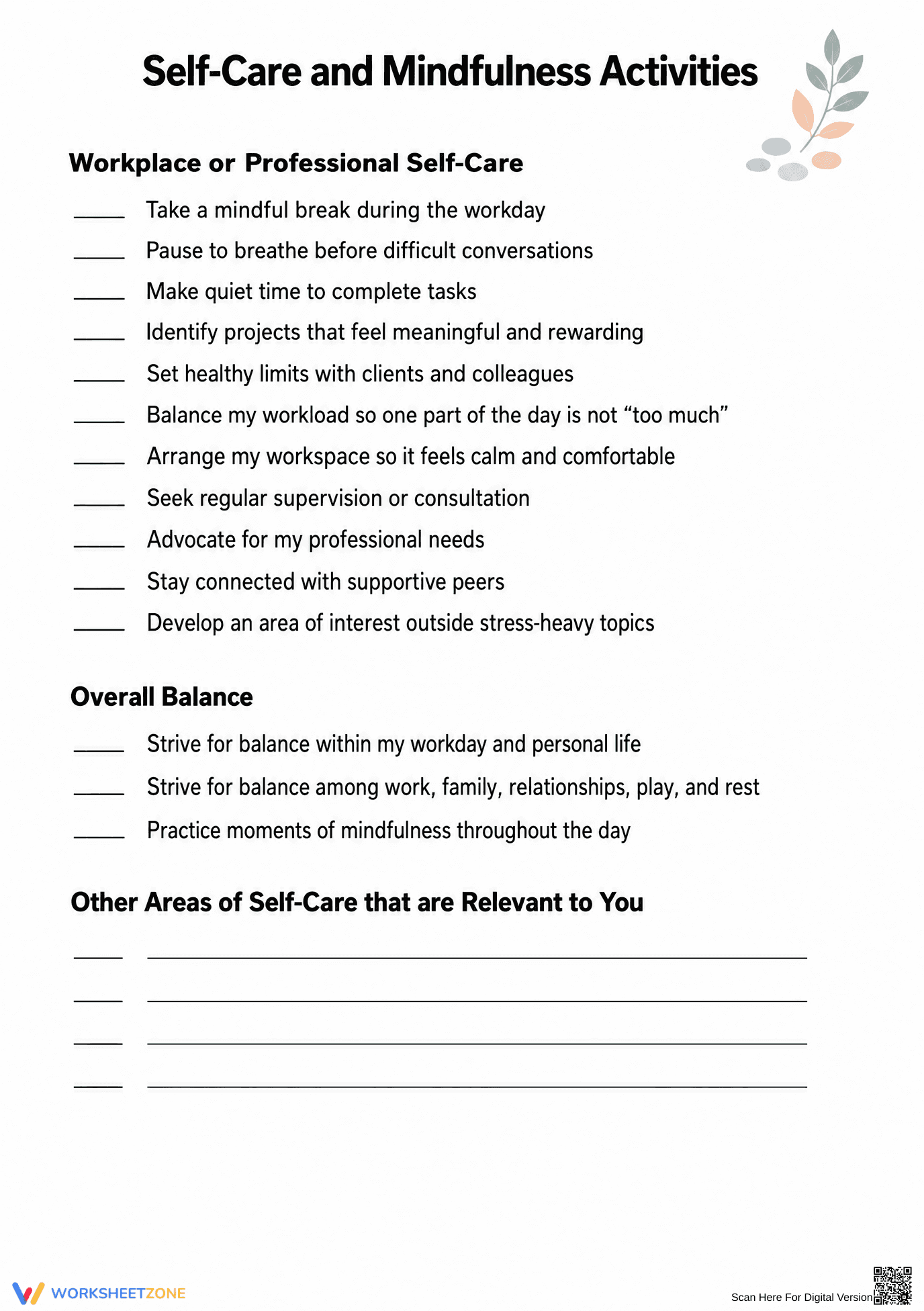
This comprehensive self-care and mindfulness worksheet guides middle and high school students through evaluating their physical, emotional, and spiritual well-being. By completing structured checklists and reflection prompts, students identify their current coping strategies and develop actionable plans to improve their daily mental health and emotional regulation.
At a Glance
- Grade: 8 · Subject: Behavior Activities
- Standard:
CCSS.ELA-LITERACY.W.8.10— Write routinely for self-reflection and emotional awareness- Skill Focus: Self-Care Assessment & Mindfulness
- Format: 12 pages · 4 self-care domains · No answer key required · PDF
- Best For: Advisory periods and counseling
- Time: 20–30 minutes
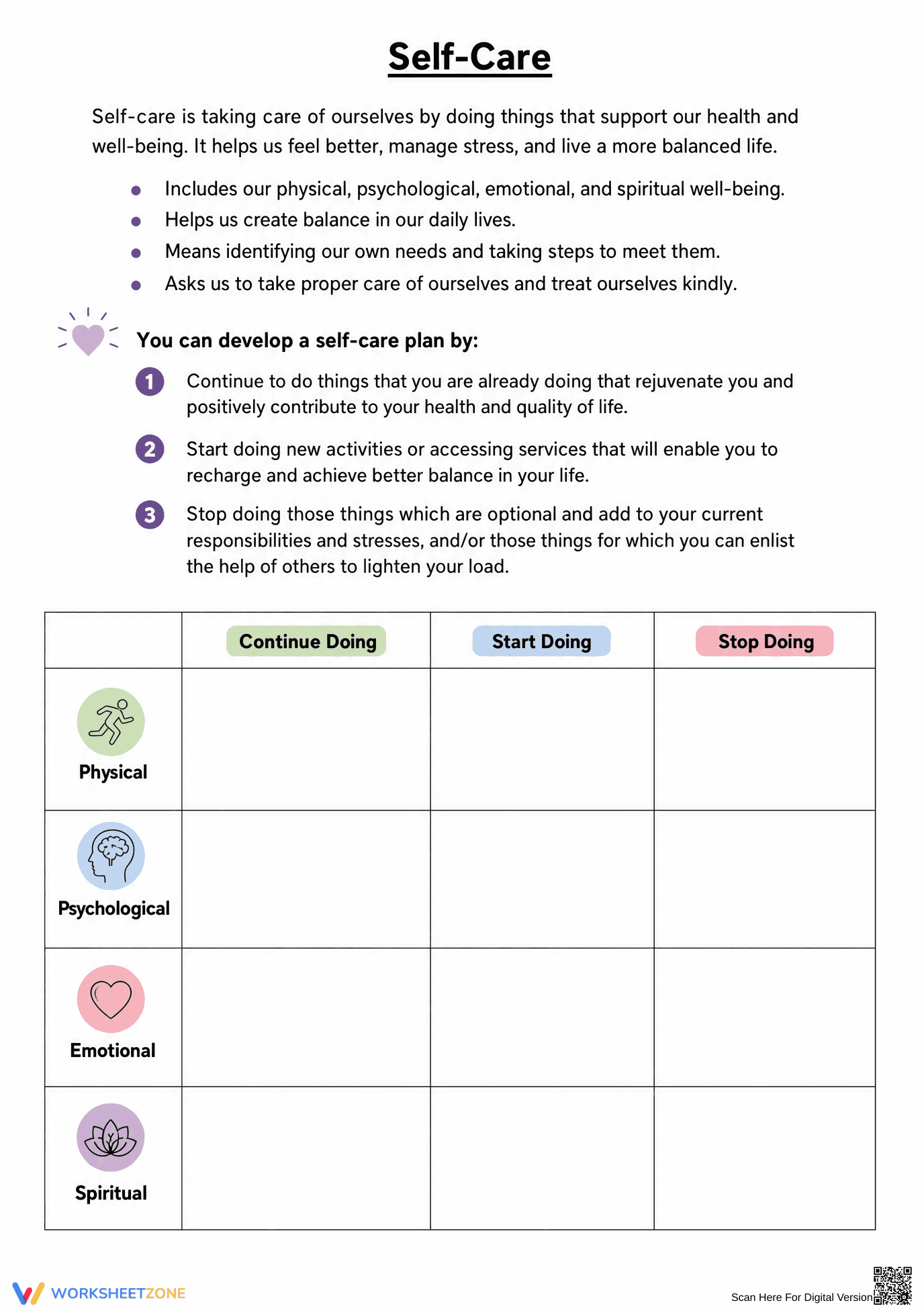
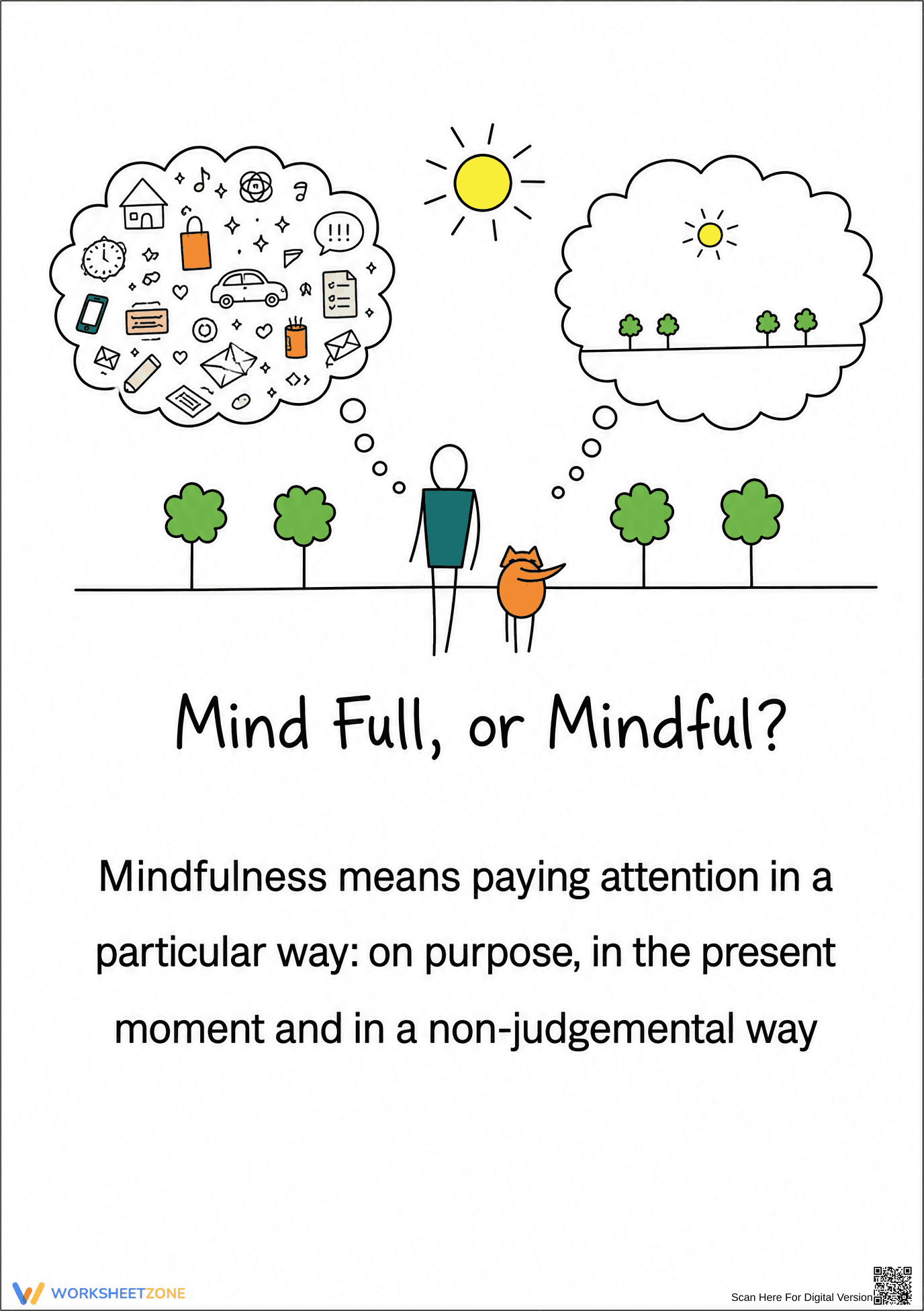
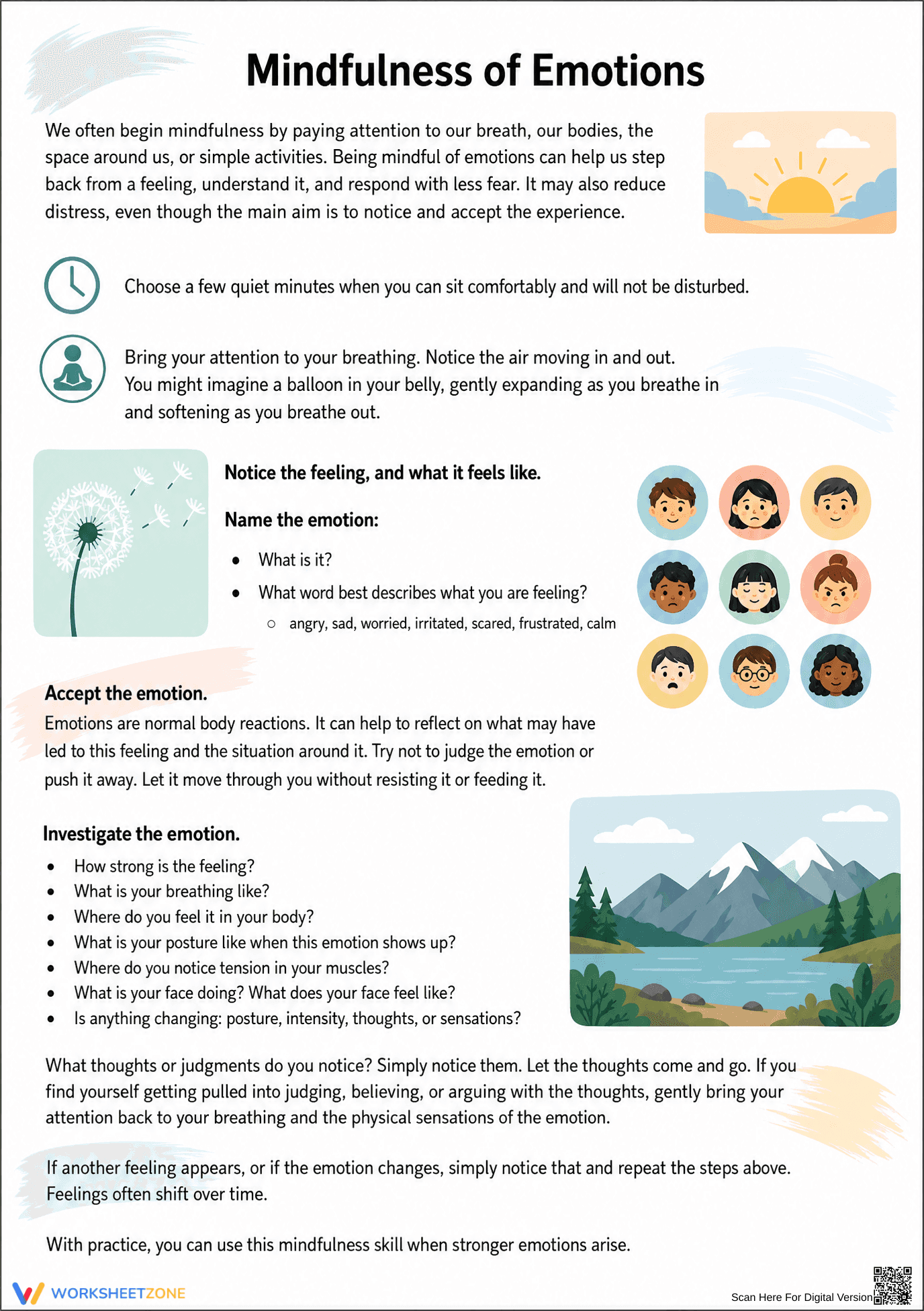
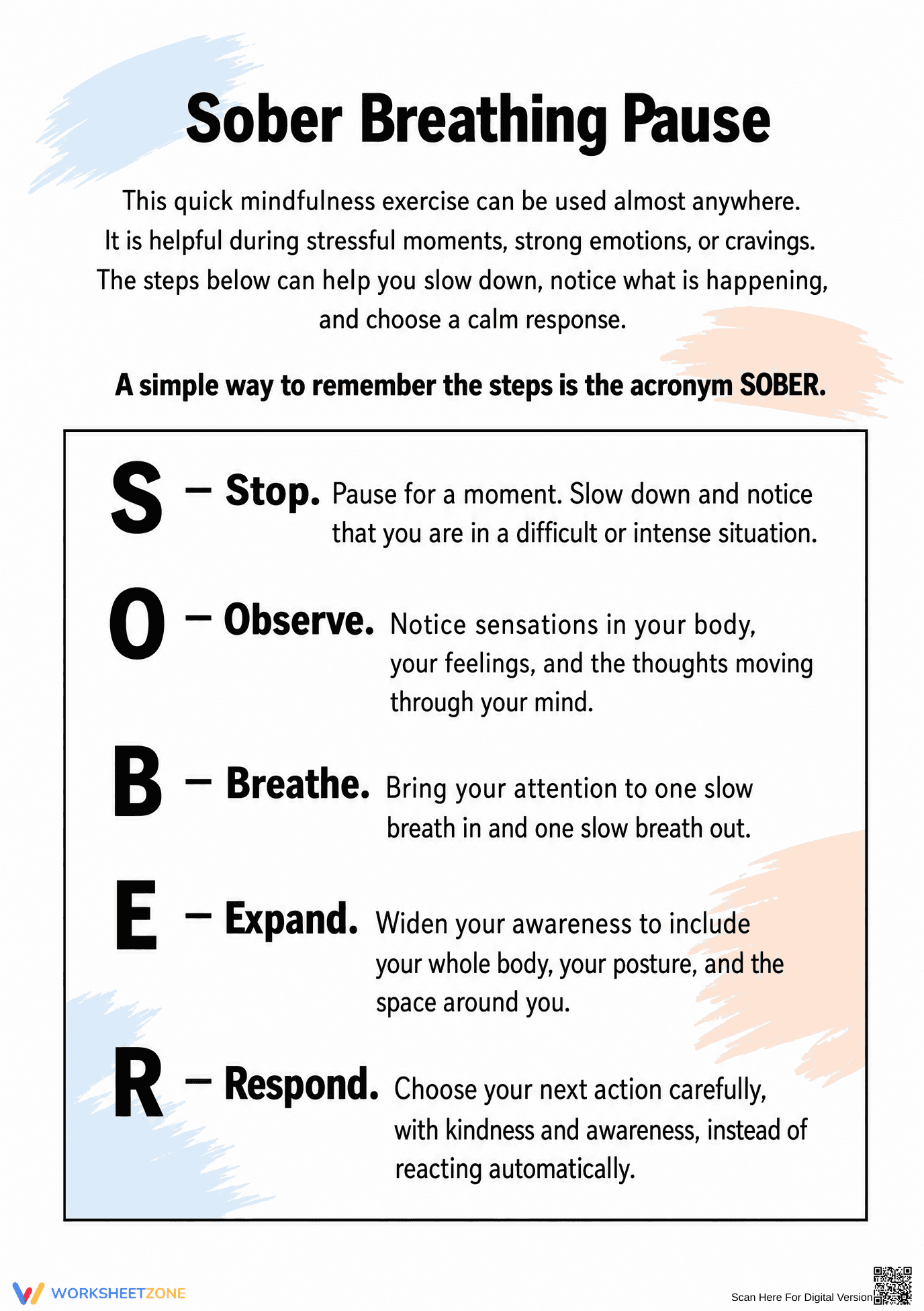
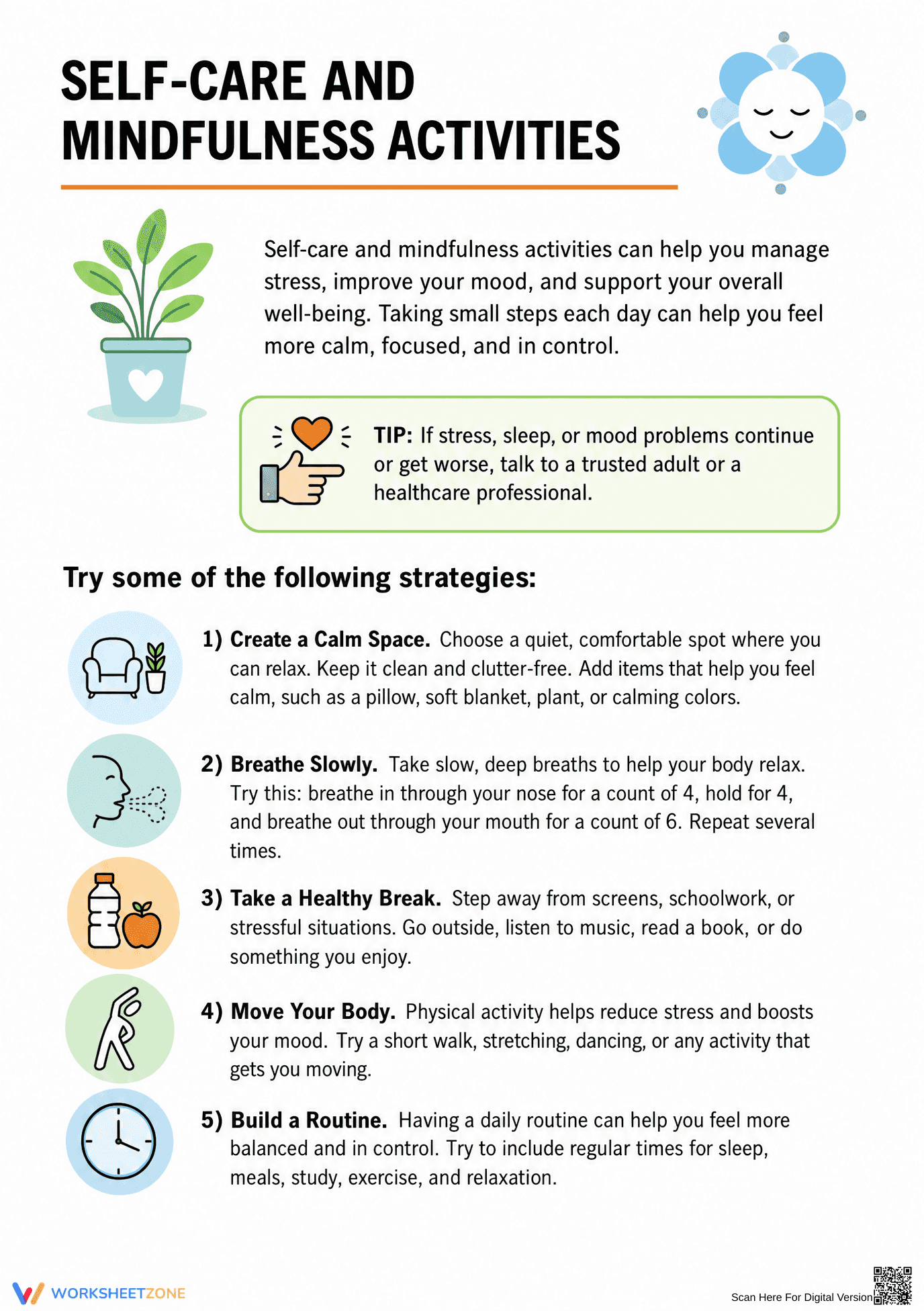
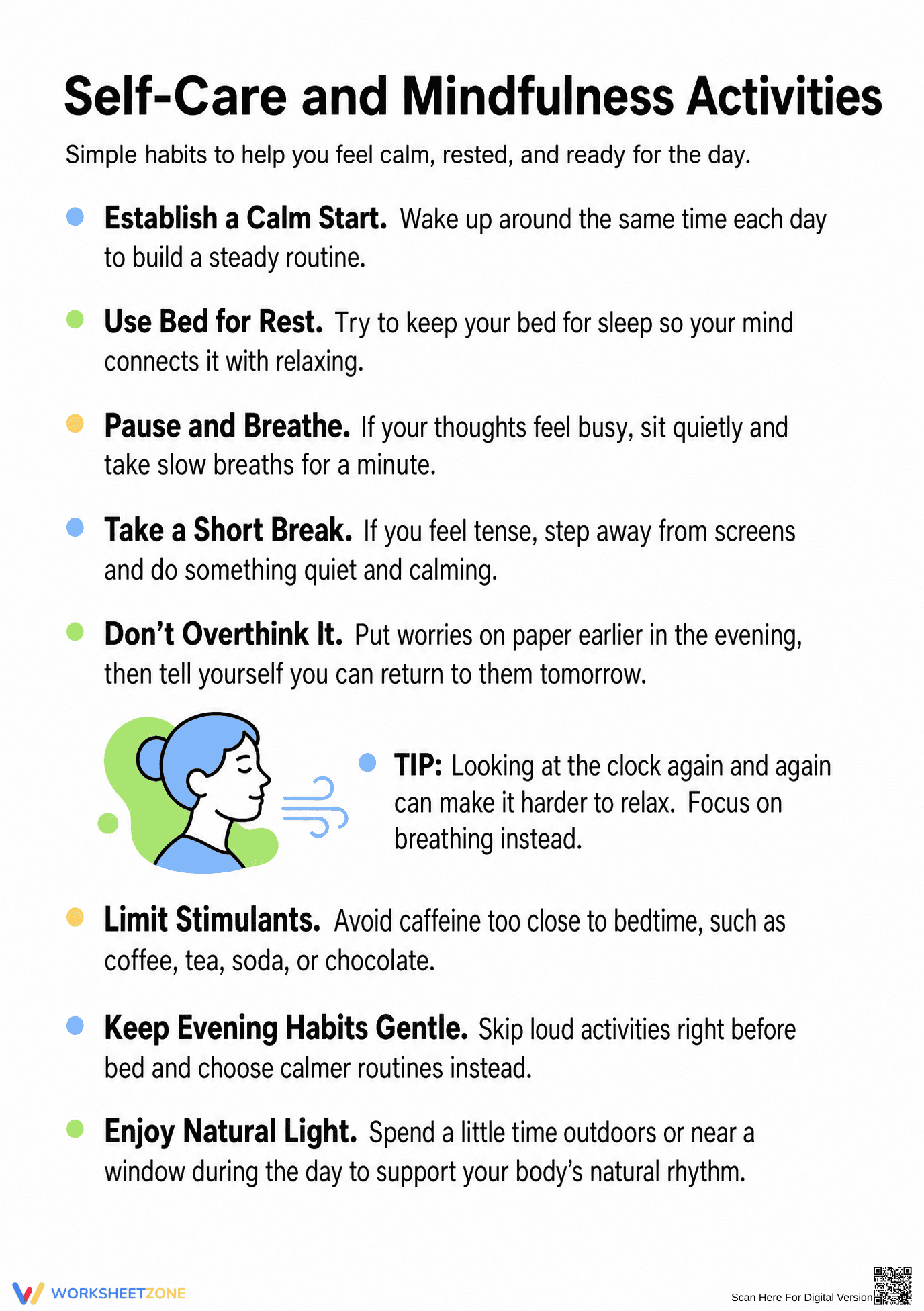
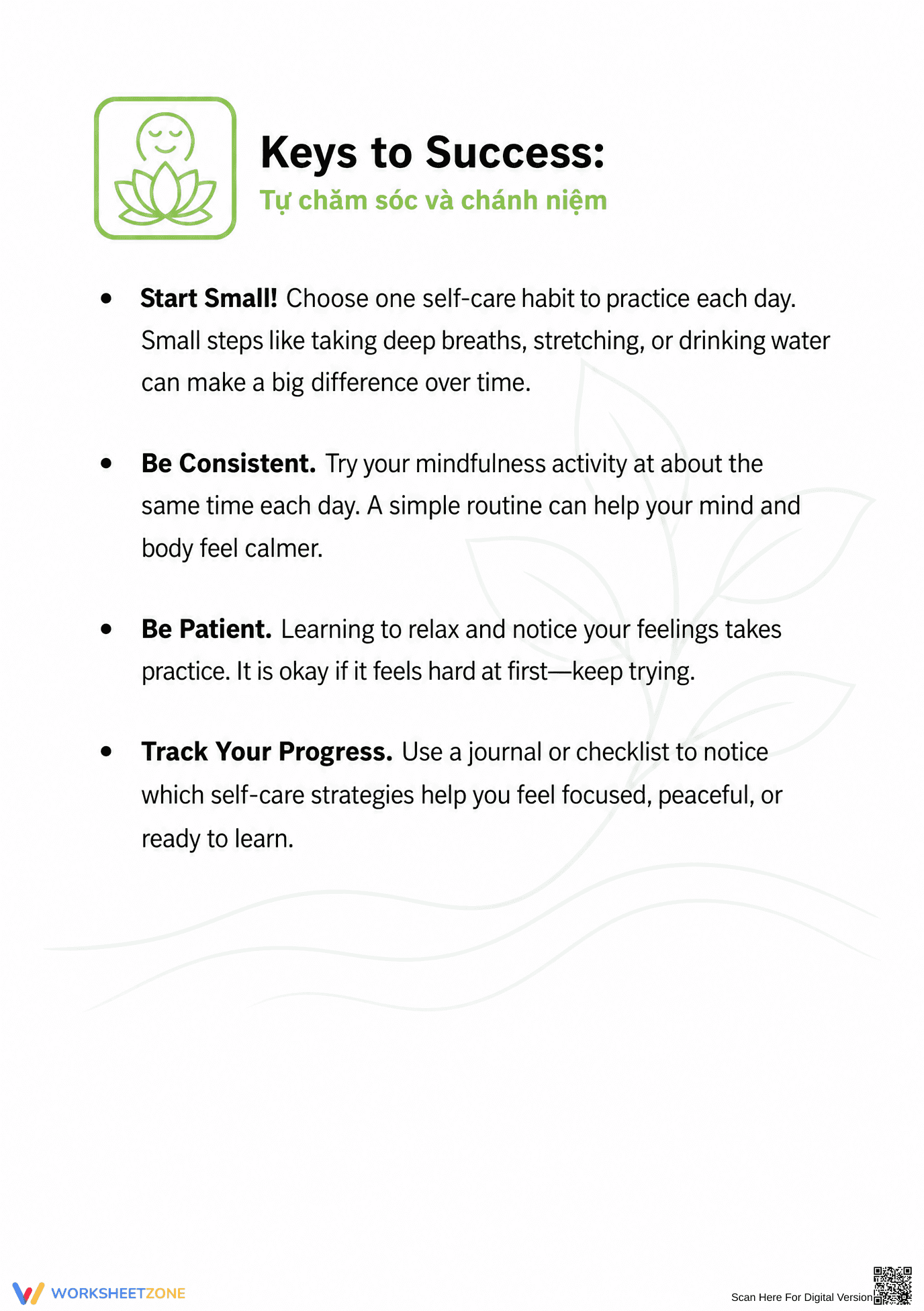
This 12-page packet features a variety of interactive social-emotional learning tools. It includes detailed self-care checklists divided into physical, psychological, emotional, and spiritual domains. Students will also find a "Continue, Start, Stop" action plan template, an infographic explaining the difference between a "full mind" and being "mindful," and a step-by-step guide to the SOBER breathing technique for immediate stress relief.
- Print (1 minute): Select the specific checklist or breathing exercise pages needed for your session and print the PDF.
- Distribute (1 minute): Hand out the packets during homeroom, advisory, or a dedicated SEL block.
- Review (0 minutes): The instructions are completely self-explanatory, requiring zero teacher setup or direct instruction.
With under two minutes of total teacher prep time, this resource is an excellent addition to any emergency sub plan or routine mental health check-in.
Aligned to CCSS.ELA-LITERACY.W.8.10, this resource requires students to write routinely over shorter time frames for a range of discipline-specific tasks, purposes, and audiences. By engaging with these prompts, learners practice articulating their internal emotional states and setting personal goals. Both standard codes can be copied directly into lesson plans, IEP goals, or district curriculum mapping tools.
Use this packet during a morning advisory period to set a positive, reflective tone for the week. Have students complete the self-care checklist independently, then choose one new mindfulness habit to try. Alternatively, school counselors can use the SOBER breathing guide during one-on-one sessions to help a student de-escalate from a stressful event. As a formative assessment observation tip, notice which domains (e.g., physical vs. emotional) students leave blank, which may indicate areas needing more targeted support. Expected completion time is 20 to 30 minutes.
This resource is designed for middle and high school students, particularly those in grades 6 through 9, who are developing their independent emotional regulation skills. The accessible language makes it suitable for diverse learners, while the open-ended reflection sections provide natural differentiation for more advanced writers. It pairs perfectly with a direct instruction lesson on stress management or a classroom anchor chart detailing healthy coping mechanisms.
Integrating structured social-emotional learning tools like this self-care assessment directly supports student well-being and academic readiness across all subject areas. Aligned with CCSS.ELA-LITERACY.W.8.10, the activities prompt students to write routinely for self-reflection and emotional awareness. According to a comprehensive RAND AIRS 2024 report, schools that implement routine mindfulness and self-care assessments observe a marked decrease in behavioral referrals and a significant increase in overall student engagement. By providing a concrete, accessible framework for evaluating physical, emotional, and spiritual health, educators empower students to take ownership of their mental well-being on a daily basis. The inclusion of actionable strategies, such as the SOBER breathing technique, ensures that learners do not just identify their personal stressors but also acquire the practical, evidence-based tools needed to manage them effectively in real-time.


