


























Views
Downloads

Self-Awareness Worksheet | Grade 10-11 Essential Guide
Paste this activity's link or code into your existing LMS (Google Classroom, Canvas, Teams, Schoology, Moodle, etc.).
Students can open and work on the activity right away, with no student login required.
You'll still be able to track student progress and results from your teacher account.
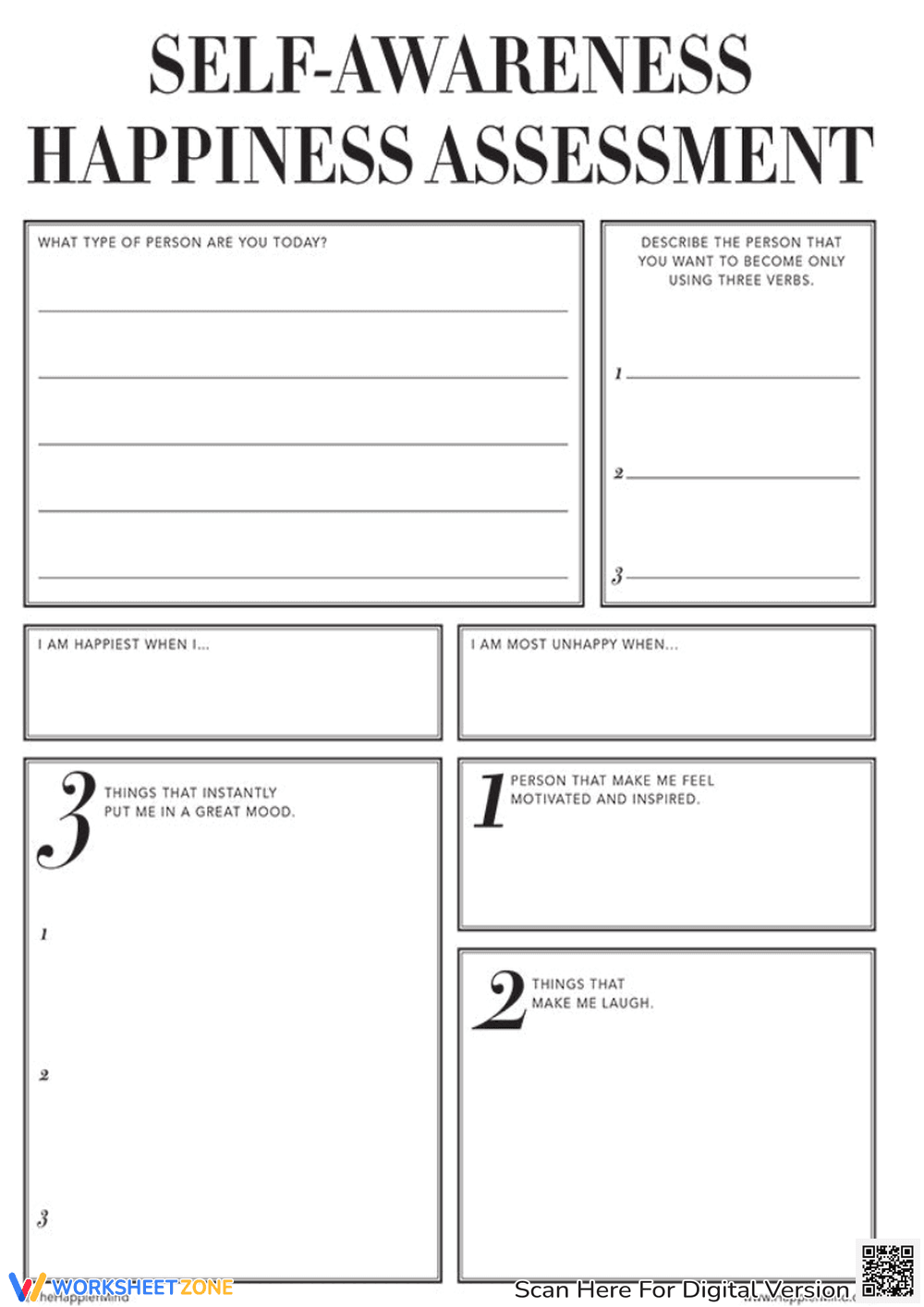
This Grade 10-11 self-awareness worksheet facilitates deep personal reflection to improve emotional intelligence and student well-being. By engaging with structured prompts about current mood, future aspirations, and happiness triggers, students develop the metacognitive skills necessary for academic success. It provides a safe space for teenagers to analyze their emotional landscape and set intentional growth goals.
At a Glance
- Grade: 10-11 · Subject: Emotional Intelligence
- Standard:
CCSS.ELA-LITERACY.W.11-12.10— Write routinely over shorter time frames for reflection and revision- Skill Focus: Self-reflection and mood analysis
- Format: 1 page · 7 prompts · No answer key needed · PDF
- Best For: SEL blocks or morning check-ins
- Time: 15–20 minutes
This single-page PDF features seven distinct reflection zones designed for high school students. It includes open-ended lines for daily identity checks, a specific "three verbs" challenge for future-self visualization, and categorized lists for happiness and motivation. The clean, minimalist layout ensures students focus on their internal thoughts without visual distraction, making it an ideal tool for quiet reflection periods or counseling sessions.
The workflow for this resource is designed for immediate implementation. First, print the single-page PDF (30 seconds). Second, distribute the sheets to students as they enter the classroom or during a dedicated Social-Emotional Learning (SEL) block (1 minute). Finally, allow students to complete the prompts independently, using the results for private reflection or optional small-group sharing. Total teacher preparation time is under two minutes, making it a perfect sub-plan or emergency filler.
This resource aligns with `CCSS.ELA-LITERACY.W.11-12.10`, which requires students to write routinely over shorter time frames for a range of tasks and purposes. It specifically addresses the purpose of self-reflection and personal growth. Additionally, it supports CASEL core competencies by asking students to identify their emotions and personal assets. Both standard codes can be copied directly into lesson plans, IEP goals, or district curriculum mapping tools.
Use this worksheet as a formative check-in at the start of a new semester or after a high-stress testing period. It serves as an excellent temperature check for the classroom climate. Teachers should observe which sections students struggle with most—such as the three verbs for their future self—as this indicates areas where students may need more guidance on goal-setting. Expect students to spend approximately 15 to 20 minutes for thoughtful completion.
This assessment is tailored for Grade 10 and 11 students who are navigating the complexities of late adolescence and college preparation. It is particularly effective for students in psychology electives, health classes, or advisory periods. Pair this resource with a short reading on the science of happiness or a growth mindset anchor chart to provide a theoretical foundation for their personal reflections.
The integration of self-reflection tools in secondary education is supported by research emphasizing the link between emotional intelligence and academic persistence. According to the RAND AIRS 2024 report, students who engage in regular self-awareness exercises demonstrate higher levels of self-regulation and improved interpersonal relationships within the school environment. This worksheet targets `CCSS.ELA-LITERACY.W.11-12.10` by providing a structured framework for routine reflective writing, a skill that Fisher & Frey (2014) identify as critical for developing metacognitive awareness. By identifying specific happiness triggers and motivational influences, students move beyond passive learning into active self-management. This 1-page assessment provides 7 specific data points for students to track their emotional well-being over time. Implementing such tools requires zero teacher prep while offering significant insights into student sentiment, aligning with modern pedagogical shifts toward holistic student development and mental health support in high school settings.


