


























Views
Downloads

Grade 4 Light Sources — Printable No-Prep Worksheet
Paste this activity's link or code into your existing LMS (Google Classroom, Canvas, Teams, Schoology, Moodle, etc.).
Students can open and work on the activity right away, with no student login required.
You'll still be able to track student progress and results from your teacher account.
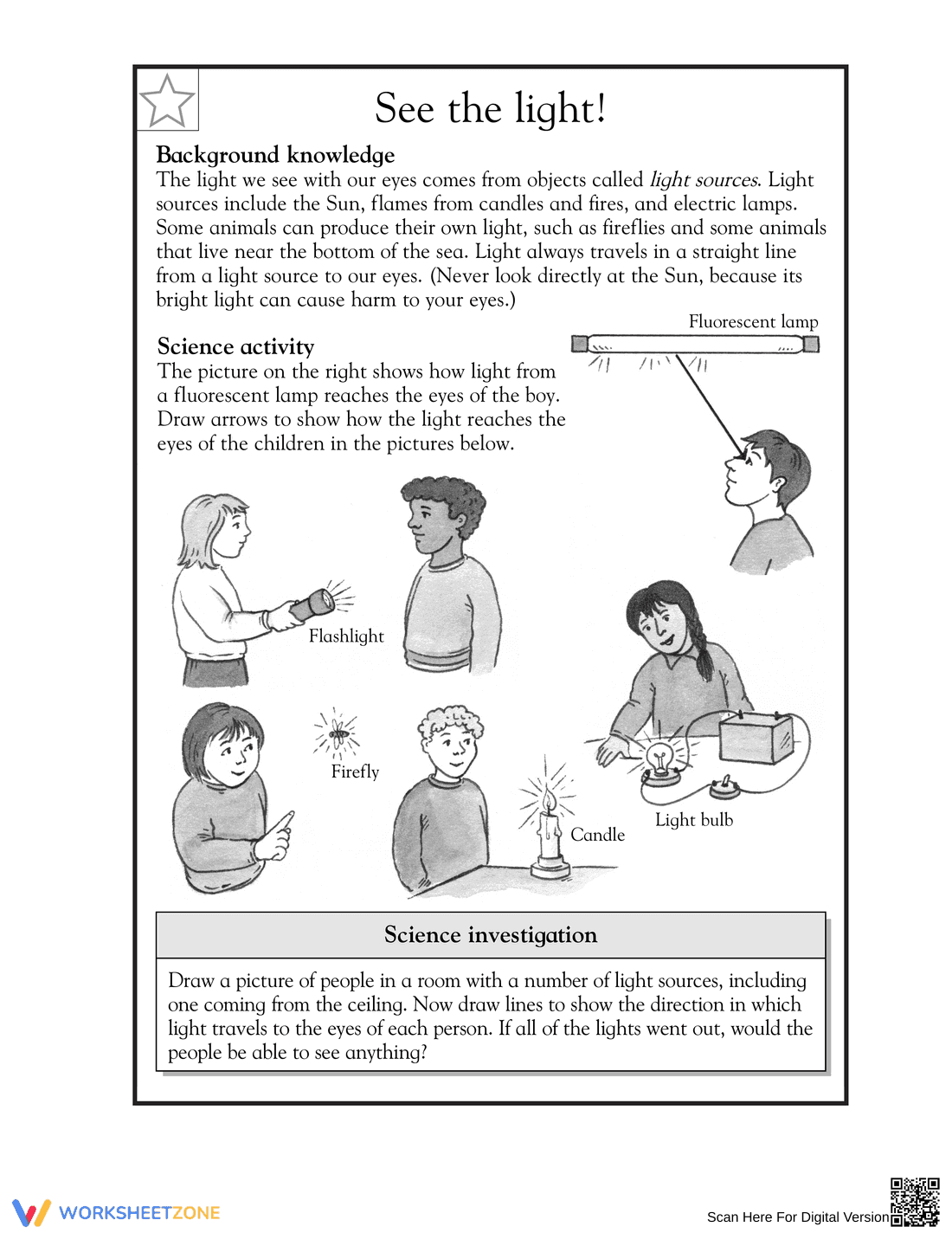
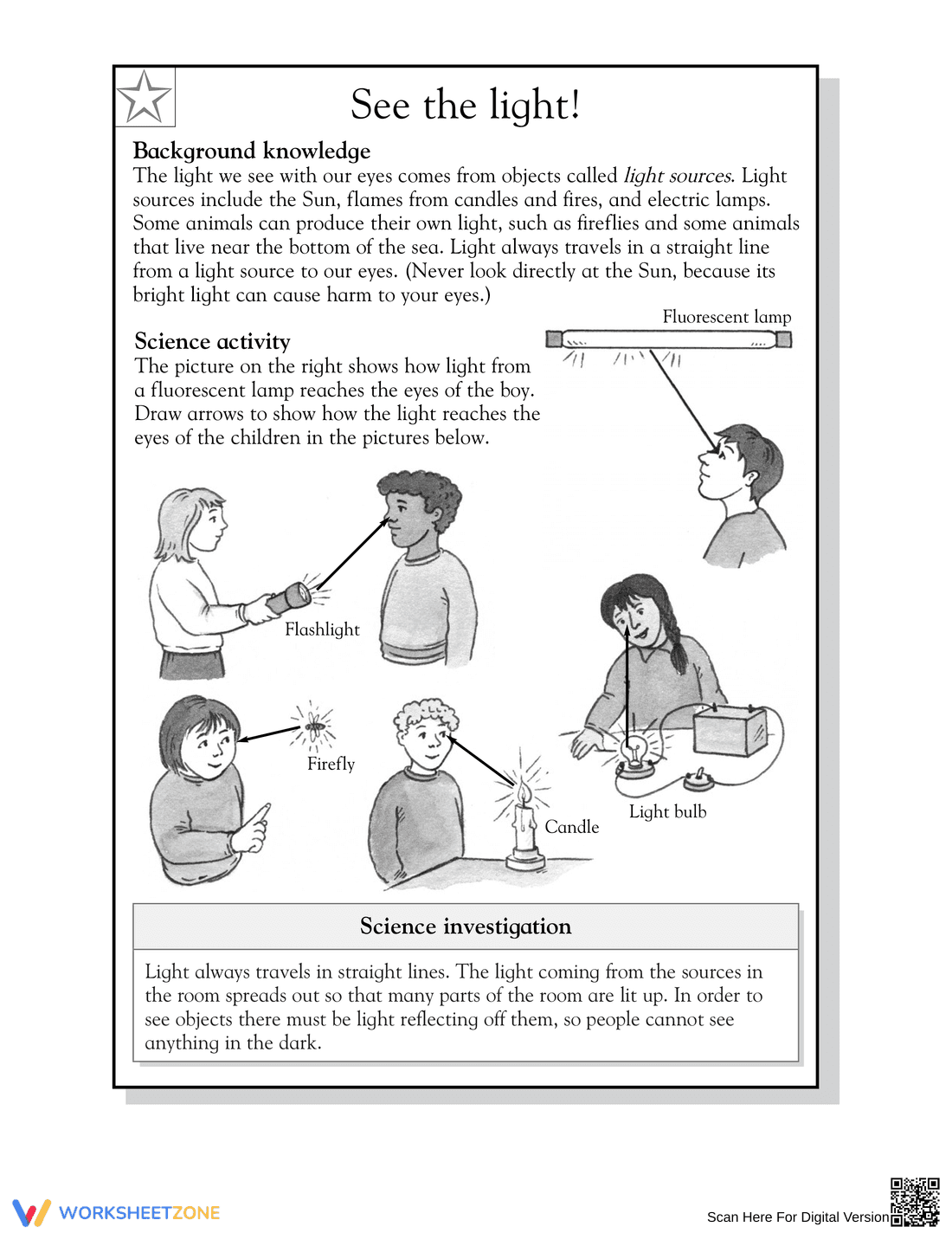
This worksheet provides Grade 4 students with a clear, hands-on introduction to the concept of light sources and how light travels. Through two distinct activities, learners will model the path of light from its source to an observer's eye, building a foundational understanding of light and vision required by Next Generation Science Standards.
At a Glance
- Grade: 4 · Subject: Science
- Standard:
4-PS4-2— Model how light entering the eye allows objects to be seen.- Skill Focus: Identifying light sources and modeling light's path
- Format: 1 page · 2 problems · PDF
- Best For: Introducing light, independent practice, or a science station activity.
- Time: 15–20 minutes
What's Inside
This single-page PDF includes a brief background section defining light sources. The first activity requires students to draw arrows from four different sources (flashlight, firefly, etc.). The second is a science investigation where students draw a more complex scene, applying their understanding of light's straight path.
Zero-Prep Workflow
Designed for the busy classroom, this resource saves valuable time. The workflow is simple:
- Print (1 min): The worksheet is a single, self-contained page.
- Distribute (1 min): Clear on-page instructions mean no lengthy explanation is needed.
- Review (5 mins): A quick class discussion or individual check assesses understanding.
With minimal prep, this worksheet is ideal for a substitute plan, a science center rotation, or a supplement to a core lesson.
Standards Alignment
This worksheet directly supports standard 4-PS4-2, which asks students to model how light allows objects to be seen. While the standard includes reflection, this activity provides the critical first step: modeling how light travels in a straight line from a source to the eye. This foundation is essential before tackling reflected light. The standard code can be copied directly into lesson plans or curriculum maps.
How to Use It
Use this versatile worksheet as a pre-assessment before a unit on light energy or as independent practice after direct instruction. For formative assessment, observe how students draw the lines; curved lines indicate a need for reteaching that light travels straight. The activity can be completed in 15 to 20 minutes, making it a quick and effective check for understanding.
Who It's For
This activity is designed for 3rd and 4th-grade students beginning their exploration of light. The clear visuals and straightforward tasks make it accessible for all learners, including English Language Learners who can rely on the pictorial examples. It pairs well with a classroom anchor chart that defines and categorizes different types of light sources (natural vs. artificial) to provide additional context and vocabulary support for the lesson.
This resource helps students build a foundational model for NGSS standard 4-PS4-2, where learners demonstrate that light travels in a straight line from a source to an observer's eye. By engaging in drawing and modeling, students are not just passively receiving information but actively constructing a mental framework for a key physics concept. This approach aligns with findings from the RAND AIRS 2024 report, which emphasizes the importance of inquiry-based science activities that allow students to visualize and interact with phenomena. The worksheet's structure—moving from a simple matching task to a more complex drawing investigation—provides a scaffolded experience. This progression supports the development of the scientific practice of "Developing and Using Models," a cornerstone of the NGSS framework and a key predictor of deeper conceptual understanding in elementary science education.


