


























Views
Downloads

Grade 1 Math Final Exam: Essential Operations & Place Value
Paste this activity's link or code into your existing LMS (Google Classroom, Canvas, Teams, Schoology, Moodle, etc.).
Students can open and work on the activity right away, with no student login required.
You'll still be able to track student progress and results from your teacher account.
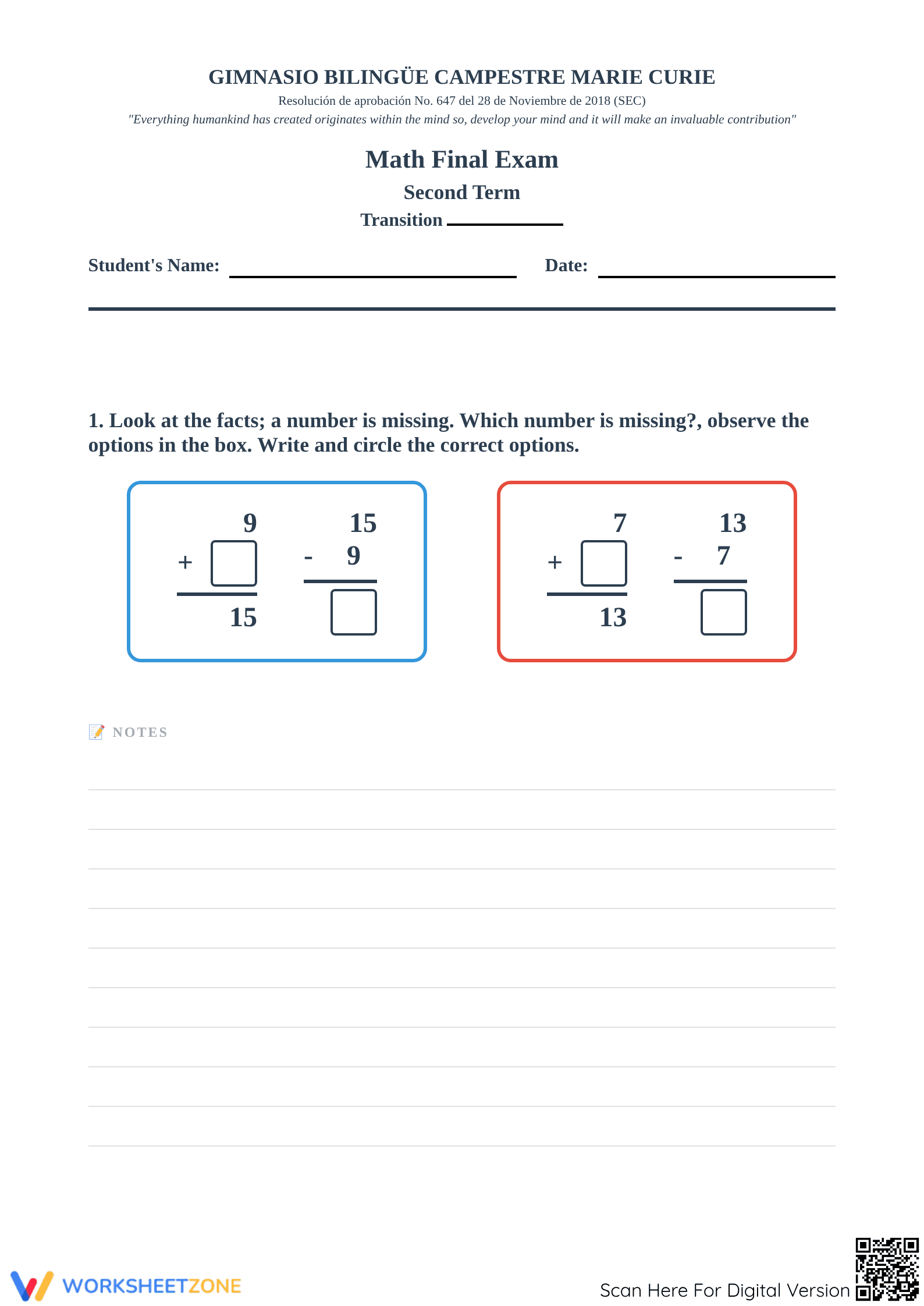
This comprehensive Grade 1 math assessment evaluates student proficiency in foundational operations and base-ten concepts. Students demonstrate their ability to solve for missing addends, identify related facts, and apply place value understanding to ten-frame models. It provides a clear snapshot of mathematical reasoning and computational fluency at the end of a term.
At a Glance
- Grade: 1 · Subject: Math
- Standard:
CCSS.MATH.CONTENT.1.OA.C.6— Add and subtract within 20, demonstrating fluency for addition and subtraction- Skill Focus: Fact Families & Place Value
- Format: 4 pages · 12 problems · Answer key included · PDF
- Best For: End-of-term summative assessment
- Time: 30–45 minutes
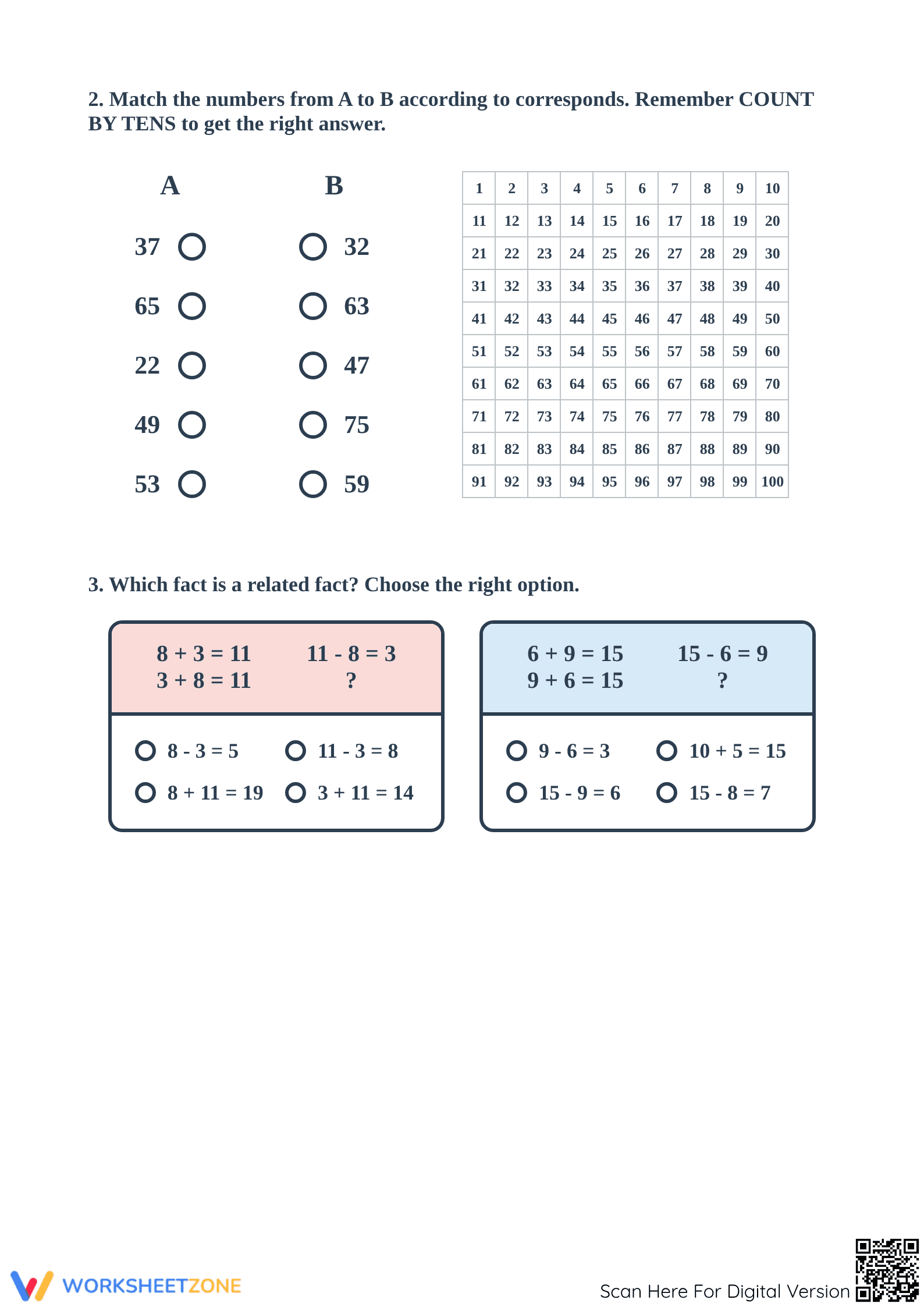
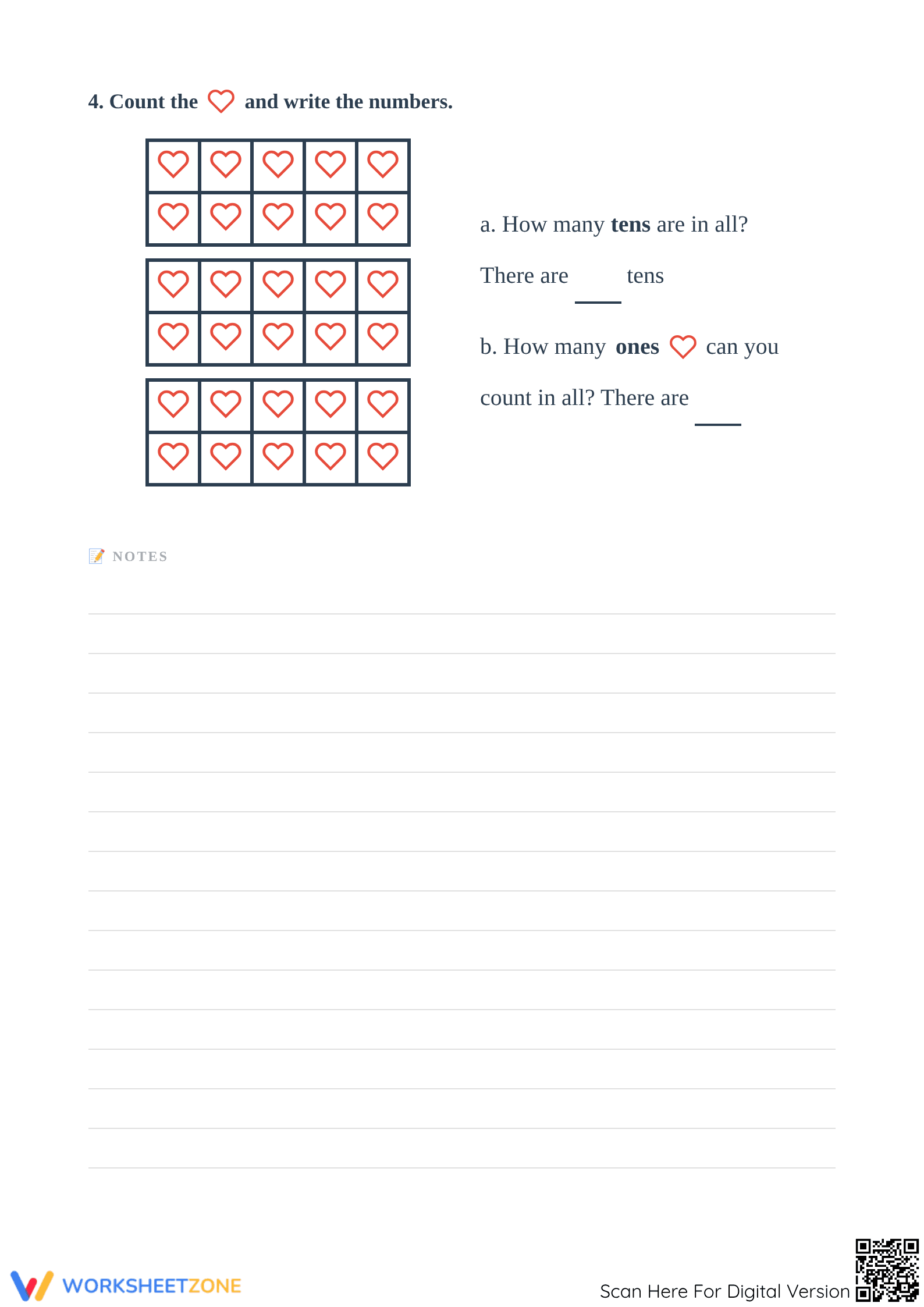
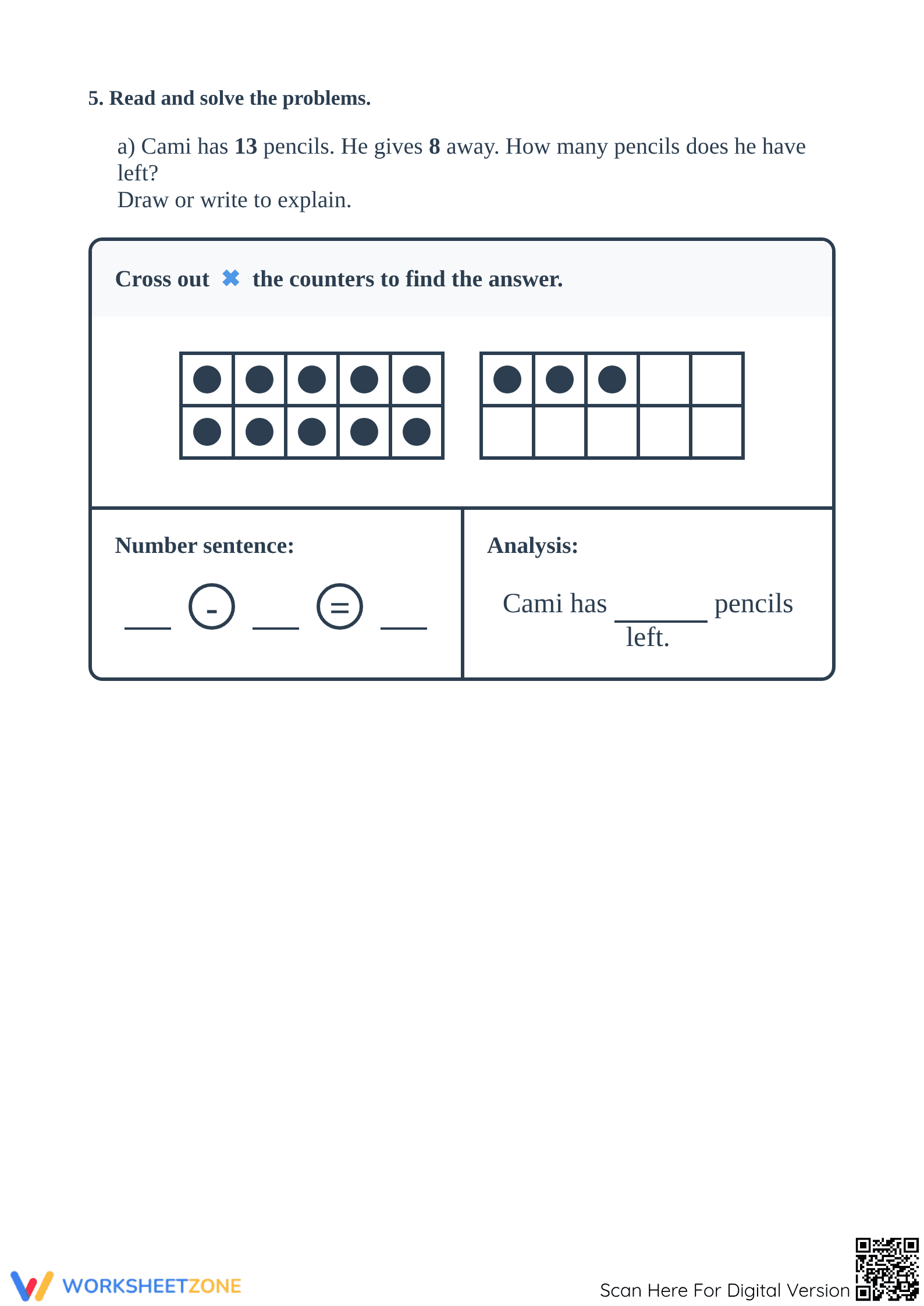
The 4-page PDF includes five distinct sections designed to test varied cognitive levels. It features missing-number boxes for inverse operations, a matching activity for skip counting by tens, and multiple-choice questions for fact family identification. Visual supports like ten-frames and a 100-chart are integrated to assist students in modeling their mathematical thinking and organizing their work clearly.
Mastery Evidence
Each task is strategically mapped to specific sub-skills required for Grade 1 mastery. The missing addend problems measure algebraic thinking, while the ten-frame counting tasks provide evidence of place value comprehension. Teachers can use the structured layout to identify whether a student is approaching, meeting, or exceeding grade-level expectations. Results are easily transferable to standards-based report cards or IEP progress monitoring tools, allowing for data-driven instructional decisions.
Standards Alignment
This resource aligns primarily with `CCSS.MATH.CONTENT.1.OA.C.6`, focusing on fluency within 20. It also supports `CCSS.MATH.CONTENT.1.NBT.B.2` by requiring students to decompose numbers into tens and ones using visual representations. Both standard codes can be copied directly into lesson plans, IEP goals, or district curriculum mapping tools to ensure compliance with state and national frameworks.
How to Use It
Use this as a summative assessment after completing units on addition and subtraction relationships. It is best administered during a quiet testing block where students can work independently. For formative use, observe how students interact with the ten-frame models on page 4 to gauge their reliance on visual scaffolds versus mental math strategies. Completion typically takes 35 minutes for most first-grade learners.
Who It's For
This worksheet is designed for Grade 1 students but serves as an excellent challenge for Kindergarteners or a review for Grade 2. It is particularly effective for English Language Learners due to the heavy use of visual models and minimal text. Pair this with a physical ten-frame manipulative or a classroom 100-chart for students requiring additional support during the transition to abstract problem solving.
The integration of visual models like ten-frames and fact families in this assessment aligns with the Concrete-Representational-Abstract (CRA) instructional sequence. According to the RAND AIRS 2024 report on elementary mathematics, students who utilize representational models to bridge the gap between physical objects and abstract symbols show a 15% higher retention rate in operational fluency. By requiring students to identify related facts (CCSS.MATH.CONTENT.1.OA.C.6) and count by tens, this worksheet reinforces the structural properties of the base-ten system. Research from Fisher & Frey (2014) emphasizes that summative assessments featuring varied task types—such as matching, multiple-choice, and constructed response—provide a more valid measure of student mastery than single-format tests. This multi-page exam ensures that Grade 1 learners are evaluated on both their procedural skill and their conceptual understanding of mathematical relationships.


