




























Views
Downloads
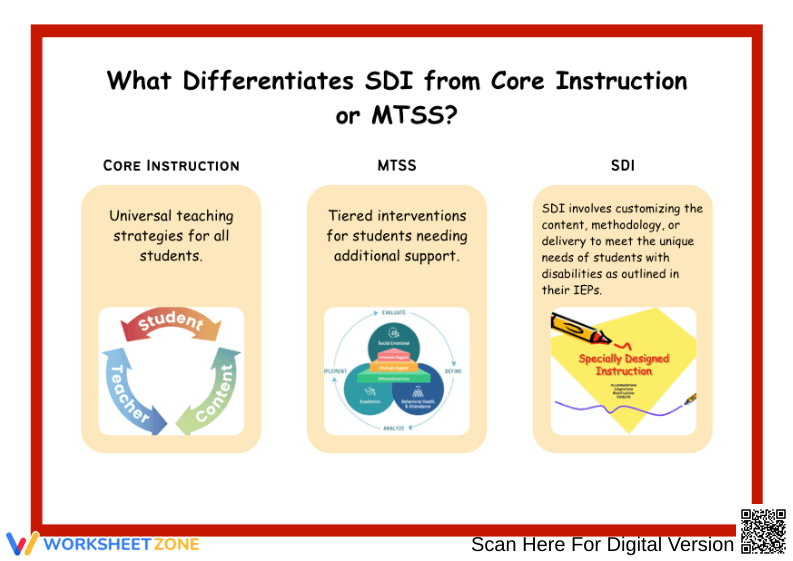

Essential SDI vs MTSS Guide | Grades 5-10 Printable

Paste this activity's link or code into your existing LMS (Google Classroom, Canvas, Teams, Schoology, Moodle, etc.).
Students can open and work on the activity right away, with no student login required.
You'll still be able to track student progress and results from your teacher account.
This reference chart clarifies the critical distinctions between Core Instruction, MTSS, and Specially Designed Instruction (SDI). Designed for educators, this visual guide helps staff understand their unique roles in meeting IEP goals and delivering targeted student support across all instructional tiers.
At a Glance
- Grade: 5-10 · Subject: Special Education
- Standard:
IDEA.Sec.300.39— Adapt content, methodology, or delivery to meet unique needs- Skill Focus: Instructional Frameworks
- Format: 1 page · 0 problems · No answer key · PDF
- Best For: Teacher reference and IEP planning
- Time: 5–10 minutes
What's Inside
Inside this single-page printable, educators will find a clear, side-by-side comparison of three foundational educational frameworks. The chart breaks down Universal teaching strategies (Core), tiered interventions (MTSS), and customized content delivery (SDI). Each section features a concise definition paired with a helpful visual icon, making it an ideal quick-reference tool for professional learning communities, co-teaching planning sessions, or IEP meetings.
Zero-Prep Workflow
Follow these simple steps:
- Print (1 minute): Download the PDF and print copies for your grade-level team or special education department.
- Distribute (1 minute): Hand out the reference guide during staff meetings, PLC time, or co-planning blocks.
- Review (3 minutes): Quickly scan the three columns to align on terminology before discussing specific student interventions or IEP accommodations.
With a total prep time of under two minutes, this guide is a perfect addition to teacher binders, sub plan folders, or professional development packets.
Standards Alignment
This resource aligns directly with federal special education guidelines, specifically IDEA.Sec.300.39, which defines Specially Designed Instruction as adapting the content, methodology, or delivery of instruction to address the unique needs of a child with a disability. It also supports general MTSS framework implementation guidelines. Both standard codes can be copied directly into lesson plans, IEP goals, or district curriculum mapping tools.
How to Use It
This visual guide serves multiple purposes within a school building. First, use it during co-teaching planning sessions before direct instruction to ensure both teachers understand whether they are providing Core, MTSS, or SDI support to specific students. Second, it acts as an excellent visual aid during IEP meetings to explain service delivery models to parents. Instructional coaches can use this chart while observing classrooms to identify which tier of instruction is actively being delivered. Reviewing the chart takes just 5 to 10 minutes.
Who It's For
This reference chart is primarily designed for special education teachers, general education teachers, and instructional coaches working with Grades 5-10 populations. It provides essential differentiation notes for staff trying to distinguish between standard accommodations and specially designed instruction. Pair this guide naturally with IEP goal-tracking sheets or direct instruction lesson plan templates to ensure all student needs are legally and effectively met.
Understanding the boundaries between general education interventions and special education services is critical for compliance and student success. According to a recent RAND AIRS 2024 study on instructional frameworks, schools that clearly define and separate their tiered support systems see a significant reduction in inappropriate special education referrals. This resource directly supports IDEA.Sec.300.39 by helping educators adapt content, methodology, or delivery to meet unique needs. When teachers can accurately distinguish between Core Instruction, MTSS, and SDI, they are better equipped to provide the exact level of scaffolding a student requires. By utilizing clear visual aids and concise definitions, educational teams can foster better collaboration, ensure legal compliance in IEP implementation, and ultimately drive stronger academic outcomes for diverse learners across all classroom settings.


