


























Views
Downloads

Printable Adding to 20 Worksheet: School is in Session
Paste this activity's link or code into your existing LMS (Google Classroom, Canvas, Teams, Schoology, Moodle, etc.).
Students can open and work on the activity right away, with no student login required.
You'll still be able to track student progress and results from your teacher account.
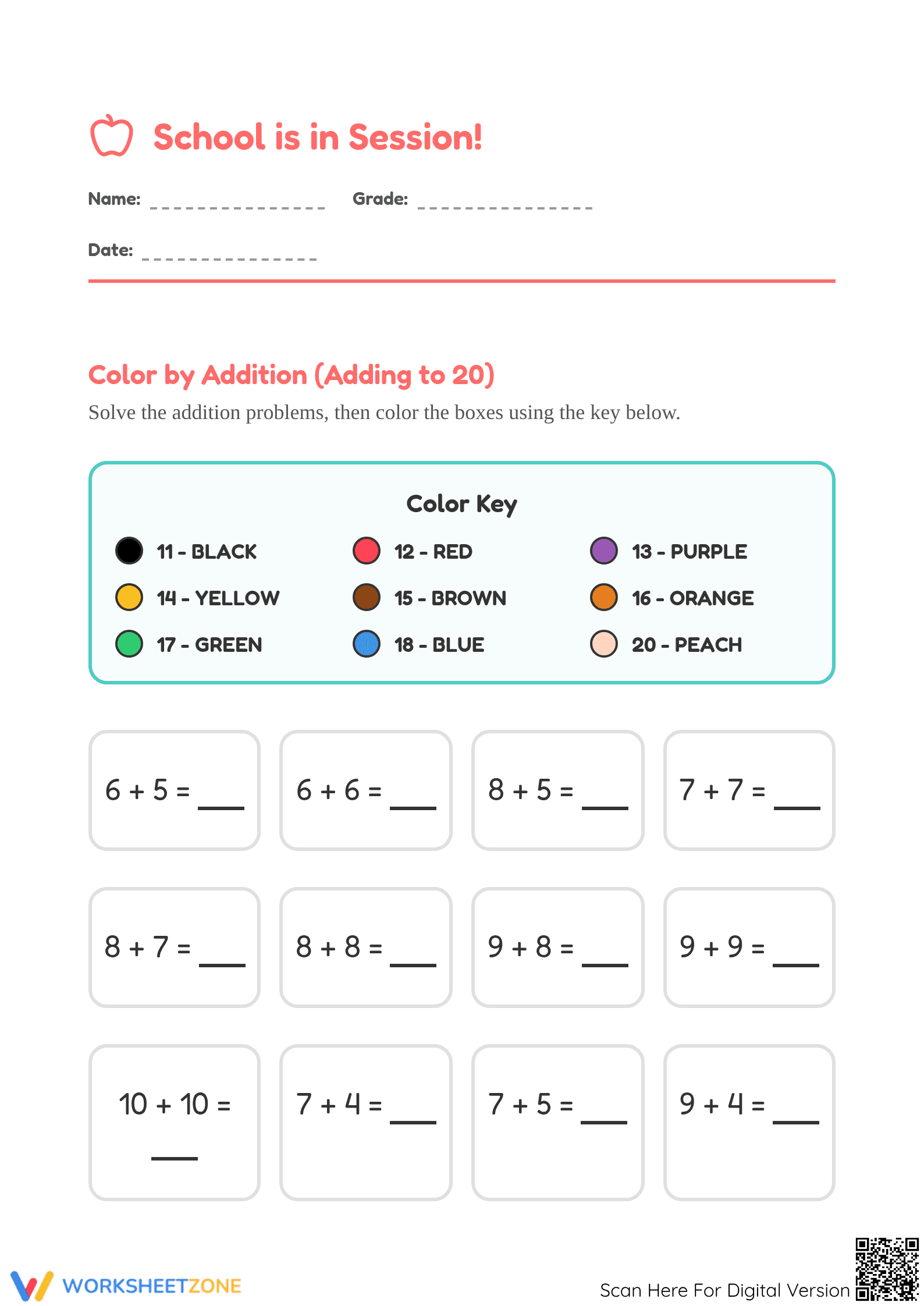
Master addition within twenty with this engaging back-to-school themed coloring worksheet. Students solve thirty-two distinct addition problems to reveal a vibrant hidden image using the provided color key. This resource prioritizes accuracy and procedural fluency, ensuring that young learners build the necessary confidence to tackle more advanced mathematical operations as they progress through the primary grades.
At a Glance
- Grade: 1 · Subject: Math
- Standard:
CCSS.1.OA.C.6— Add and subtract within 20, demonstrating fluency for addition and subtraction within 10- Skill Focus: Addition Fluency to 20
- Format: 2 pages · 32 problems · Answer key included · PDF
- Best For: Independent practice or morning work
- Time: 15–20 minutes
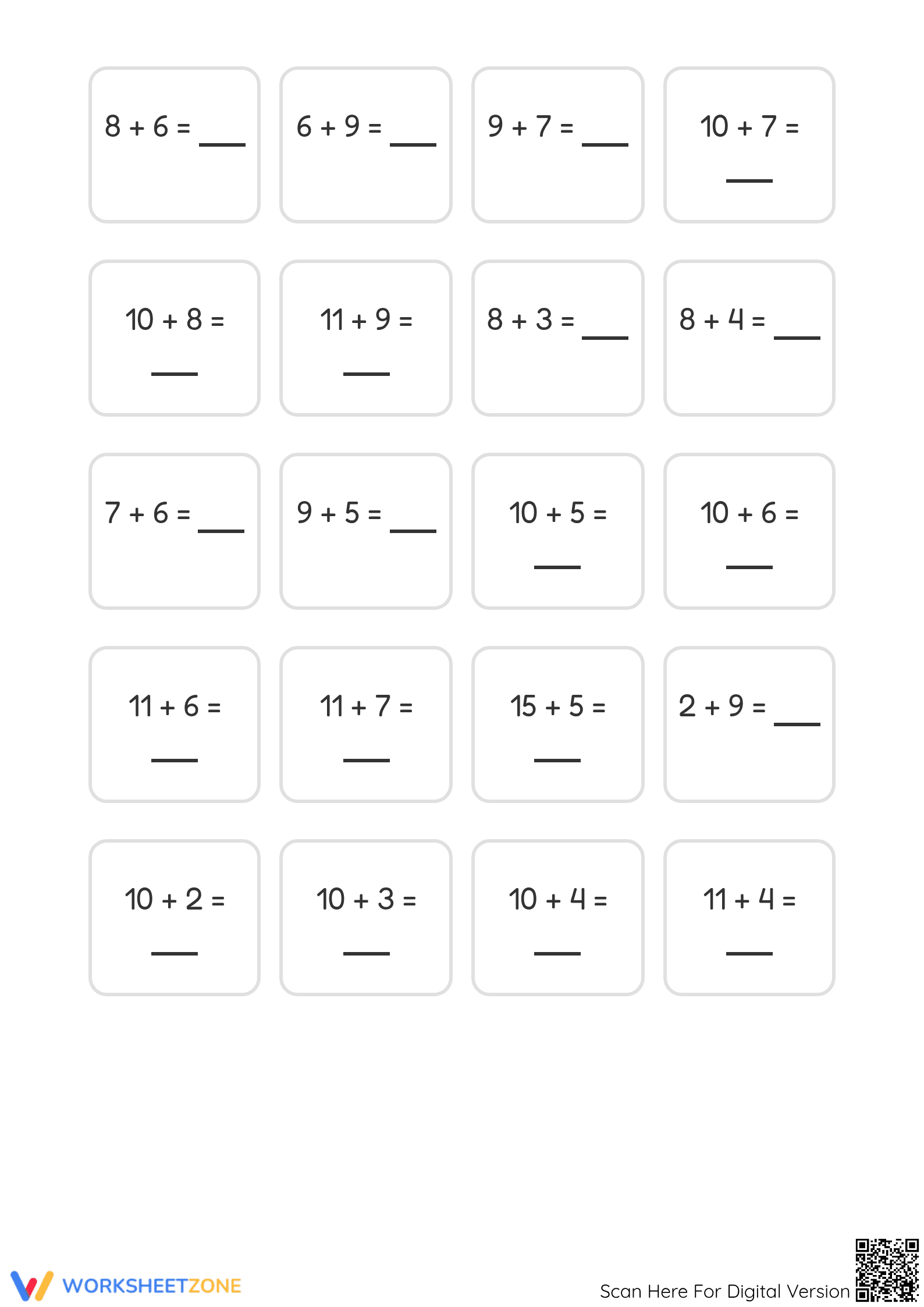
This comprehensive math packet includes two pages of structured practice, featuring a total of thirty-two addition problems. The first page contains the color key and twelve initial problems, while the second page offers twenty additional practice blocks to reinforce learning. A complete answer key is provided to facilitate quick grading and self-correction, making it an ideal choice for busy classrooms.
This zero-prep workflow saves valuable teacher time while maintaining high instructional standards. First, print the two-page PDF and distribute it to students in under sixty seconds. Second, allow fifteen to twenty minutes for independent work as students solve and color. Finally, use the included answer key for a five-second visual check of student accuracy and task completion.
This resource is explicitly aligned to CCSS.1.OA.C.6, which focuses on adding and subtracting within twenty and demonstrating fluency for sums within ten. The worksheet provides the repeated practice necessary for students to move beyond finger counting and toward mental math strategies. This standard code can be copied directly into lesson plans, IEP goals, or district curriculum mapping tools.
This worksheet is perfect for morning work or as a fast-finisher activity during your math block. Teachers should observe students as they solve the problems, noting those who still rely on manipulatives versus those using mental strategies. For formative assessment, check the color patterns to identify common errors in specific addition families or sums exceeding ten.
Designed primarily for Grade 1 and Grade 2 students, this activity is excellent for general education classrooms, small group intervention, or special education settings. It pairs naturally with an addition anchor chart or a direct instruction lesson on "counting on" strategies. The coloring element provides an accessible entry point for students who may find traditional math drills intimidating.
According to EdReports 2024, high-quality math instructional materials must prioritize procedural fluency alongside conceptual understanding to ensure long-term retention of mathematical foundations. This printable worksheet directly addresses CCSS.MATH.CONTENT.1.OA.C.6 by providing students with thirty-two targeted addition problems that require sums within the twenty-range. By integrating a color-by-code mechanic, the resource reduces the cognitive load often associated with repetitive drill-and-practice, allowing learners to focus on accuracy while receiving immediate visual feedback through the completion of the color key. Research into early numeracy suggests that varied practice formats—such as this interactive coloring task—help bridge the gap between initial instruction and automaticity. Educators can use these structured problems to monitor student progression toward Grade 1 fluency goals, ensuring that every learner masters the essential skill of adding within twenty before transitioning to more complex multi-digit operations or algebraic thinking in later primary grades.


