


























Views
Downloads


Essential S.E.A. ELA Poetry Practice | Grade 5 Reading
Paste this activity's link or code into your existing LMS (Google Classroom, Canvas, Teams, Schoology, Moodle, etc.).
Students can open and work on the activity right away, with no student login required.
You'll still be able to track student progress and results from your teacher account.
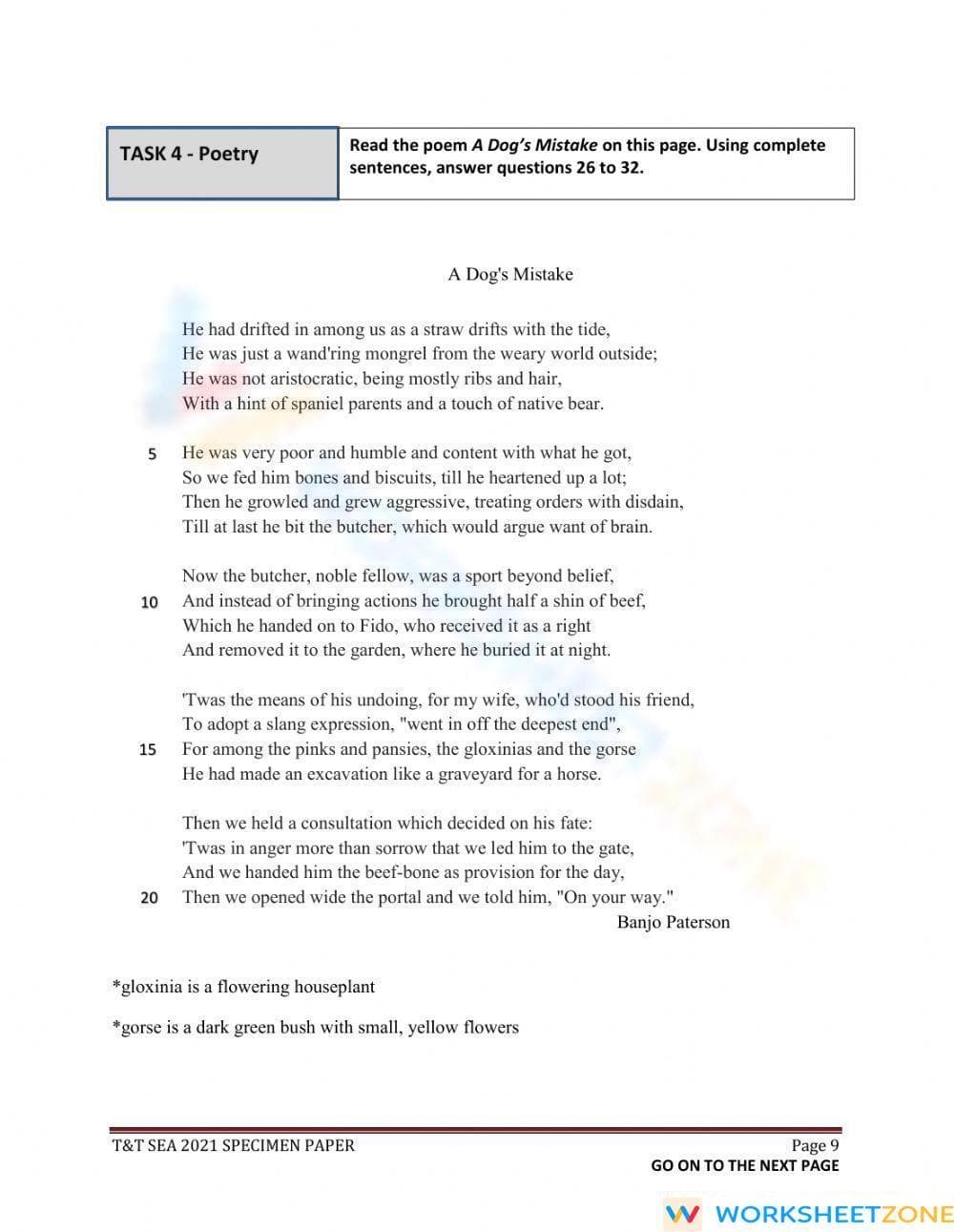
This Grade 5 ELA worksheet provides targeted poetry comprehension practice through the analysis of sensory poetry. Students engage with literary text to identify imagery and sensory language, improving their ability to interpret figurative meaning. By working through structured questions, learners develop the critical thinking skills necessary for mastering high-stakes English Language Arts assessments and reading proficiency.
At a Glance
- Grade: 5 · Subject: ELA Literature
- Standard:
CCSS.ELA-LITERACY.RL.5.4— Determine the meaning of sensory words and phrases used in poetry- Skill Focus: Poetry Comprehension and Imagery
- Format: 3 pages · 8 problems · Answer key included · PDF
- Best For: Independent practice or assessment prep
- Time: 25–35 minutes
This comprehensive resource includes a three-page layout featuring the original poem "Sensory Poetry" followed by eight rigorous comprehension questions. The document is designed for clarity, with ample space for student responses. The set includes a full answer key for efficient grading and a PDF format that ensures consistent printing across various devices and classroom settings.
The instructional workflow is streamlined for maximum efficiency. Teachers can print the three-page PDF in under 30 seconds per student. Distribution takes less than a minute during transition periods. Once students begin, the self-contained nature of the tasks allows for immediate engagement with no prior lecture required. Reviewing the eight items using the provided key takes approximately 90 seconds, making this an ideal sub-plan or bell-ringer activity.
This worksheet aligns primarily with `CCSS.ELA-LITERACY.RL.5.4`: "Determine the meaning of words and phrases as they are used in a text, including figurative language such as metaphors and similes." It also supports RL.5.1 by requiring students to quote accurately from the text to support their answers. Both standard codes can be copied directly into lesson plans, IEP goals, or district curriculum mapping tools.
Use this worksheet as a summative assessment following a unit on figurative language or as a mid-week formative check. It is best used after direct instruction on sensory details. Teachers should observe how students highlight specific lines in the poem to identify which sensory organs the poet targets, providing a quick visual check of student understanding during independent work time.
This resource is tailored for Grade 5 and 6 students, particularly those preparing for secondary entrance exams like the S.E.A. It provides necessary scaffolding for English Language Learners through the use of descriptive, accessible poetry. The activity pairs naturally with an anchor chart on the five senses or a focused lesson on literary imagery.
According to the RAND AIRS 2024 report on literacy instruction, consistent exposure to diverse text types, including poetry, is essential for developing comprehensive reading fluency in upper elementary students. This S.E.A. ELA Practice worksheet directly addresses this need by focusing on `CCSS.ELA-LITERACY.RL.5.4` through sensory imagery analysis. By requiring students to determine the meaning of sensory words and phrases, the resource builds the linguistic foundation required for advanced literary interpretation. Research from Fisher & Frey (2014) emphasizes that gradual release of responsibility, supported by structured practice sets like this 8-problem worksheet, significantly improves student outcomes in comprehension tasks. This resource provides the necessary independent practice phase of that instructional cycle. This synthesis ensures that the resource meets the rigorous demands of modern educational standards while providing actionable data for teacher reflection and curriculum planning.


