


























Views
Downloads

Grade 3 Predator & Prey — Printable Species ID Worksheet
Paste this activity's link or code into your existing LMS (Google Classroom, Canvas, Teams, Schoology, Moodle, etc.).
Students can open and work on the activity right away, with no student login required.
You'll still be able to track student progress and results from your teacher account.
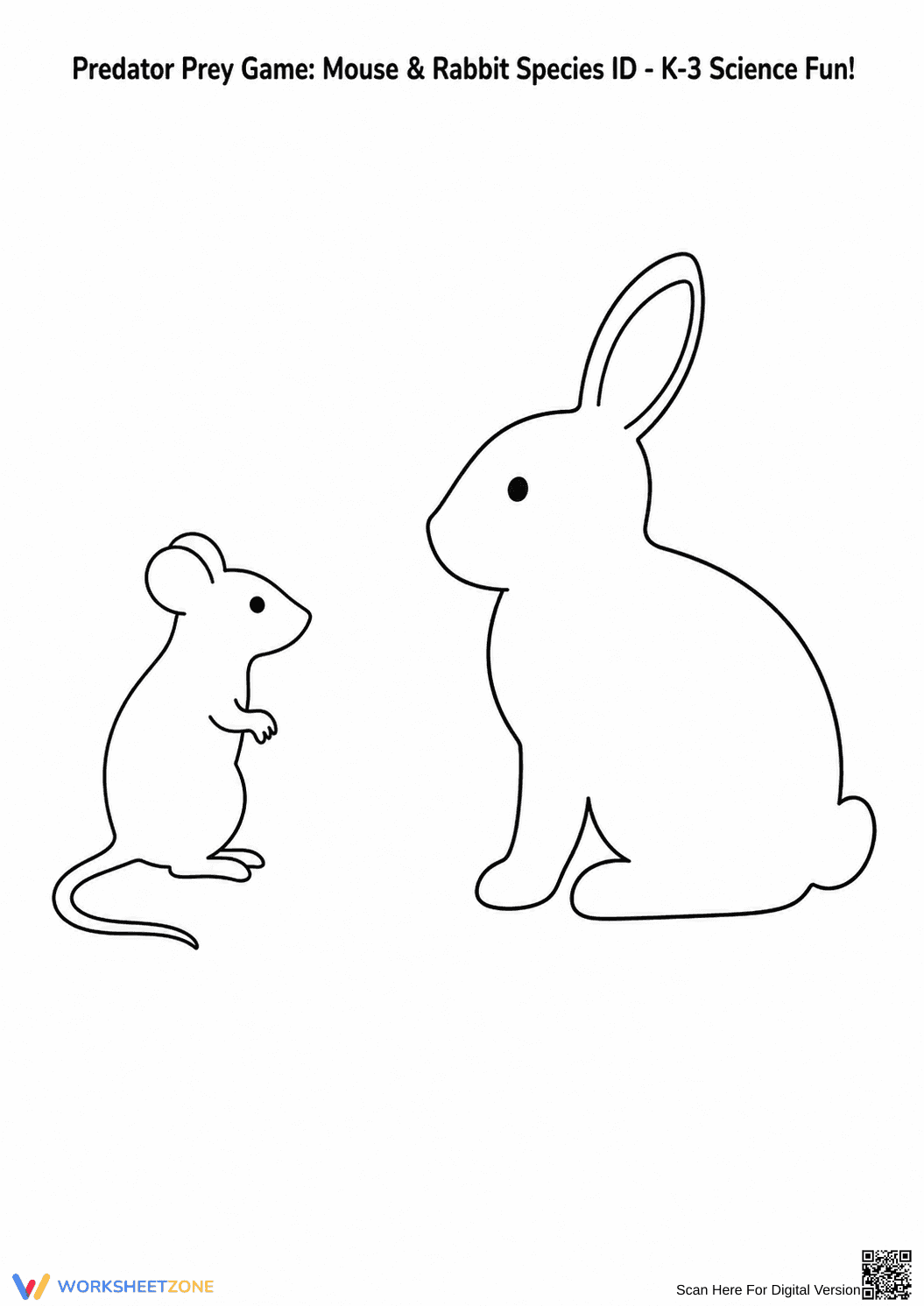
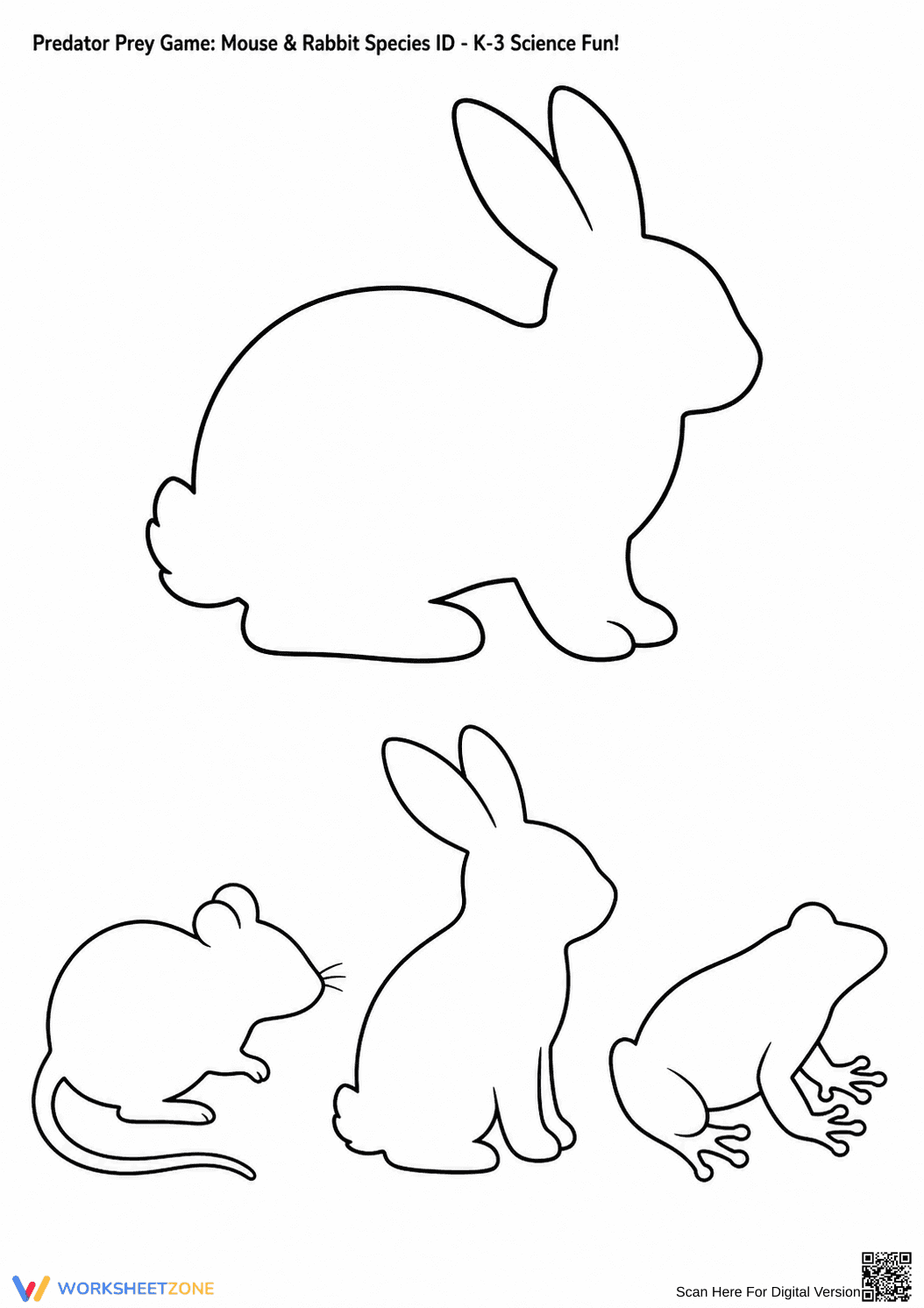
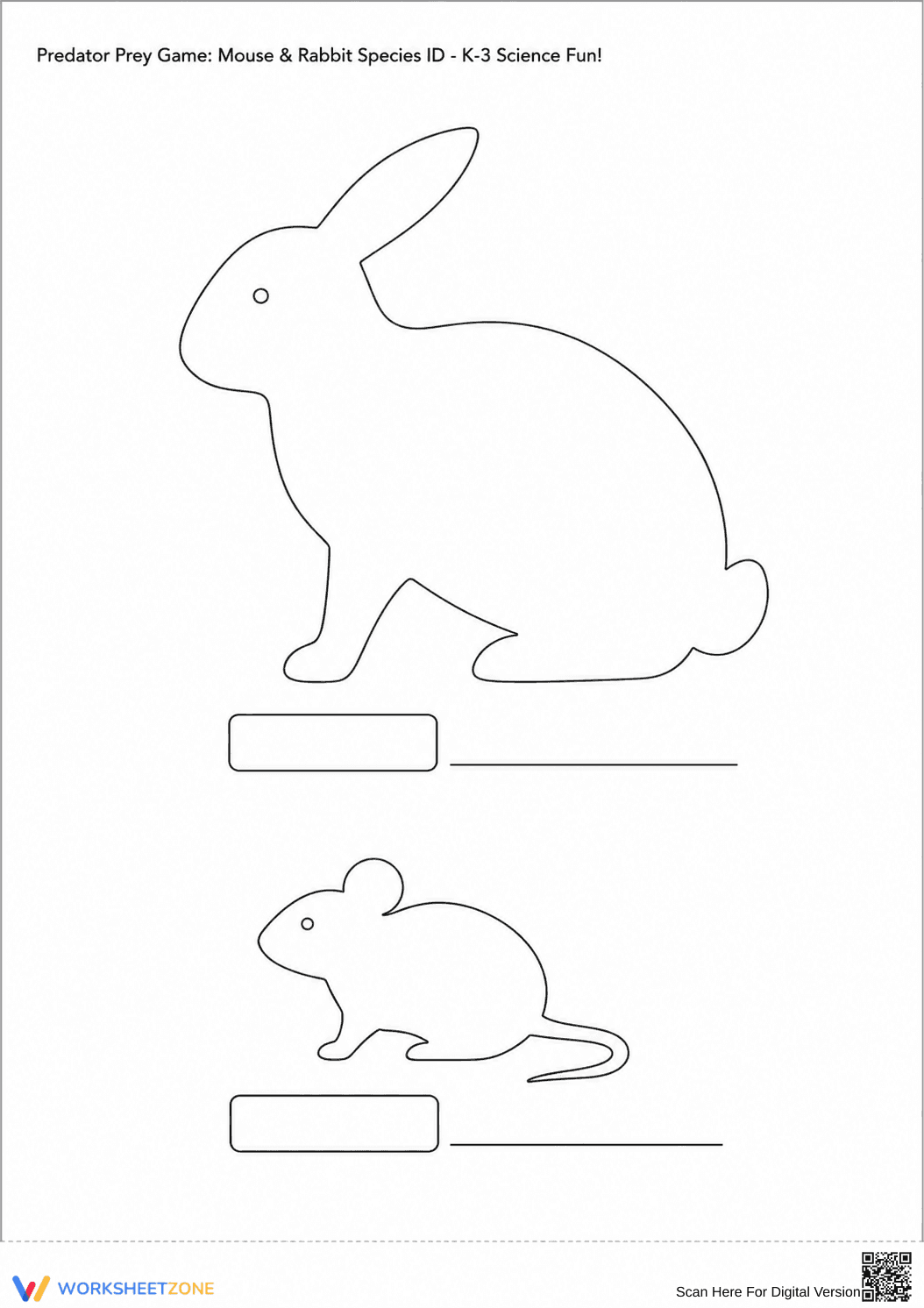
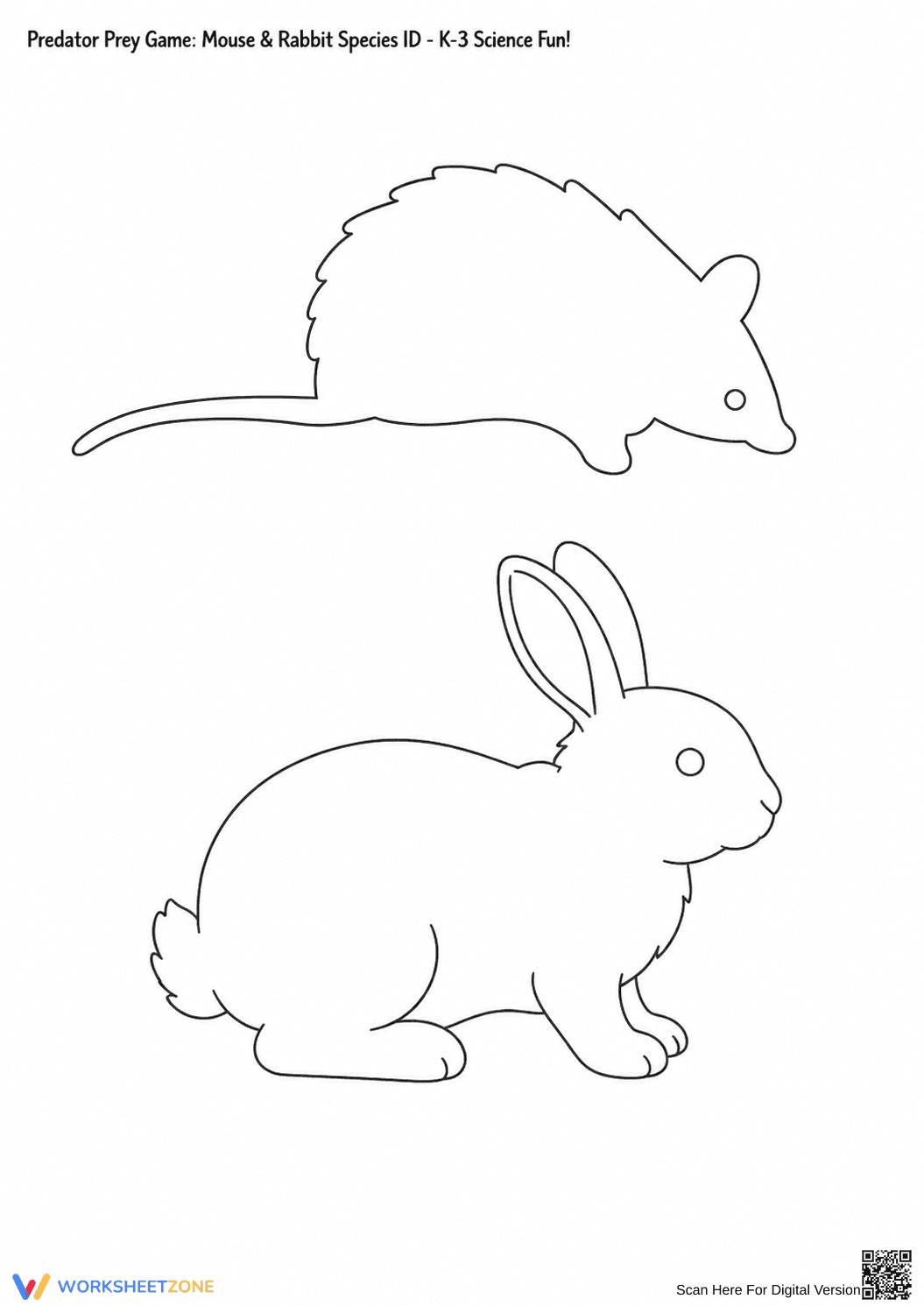
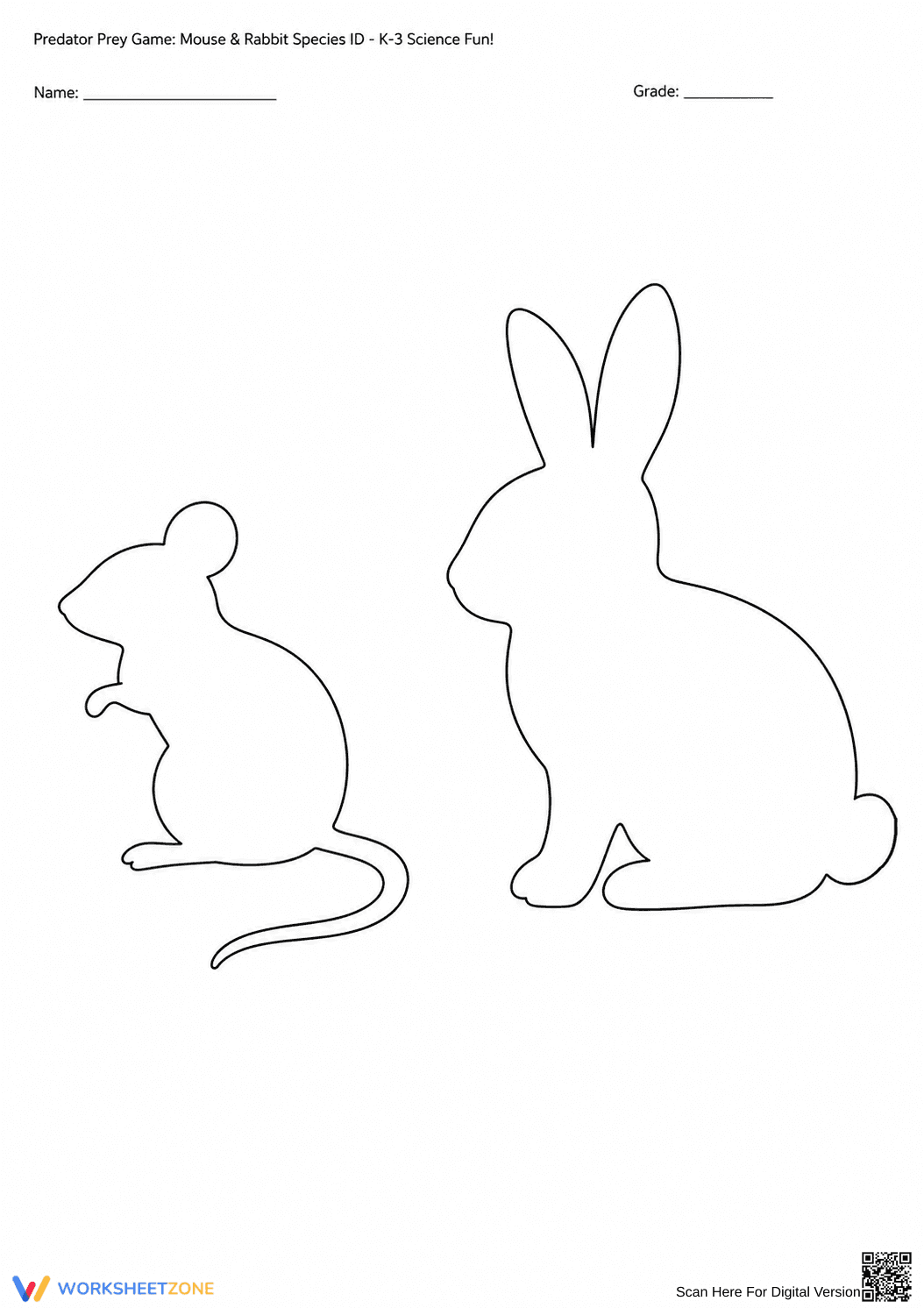
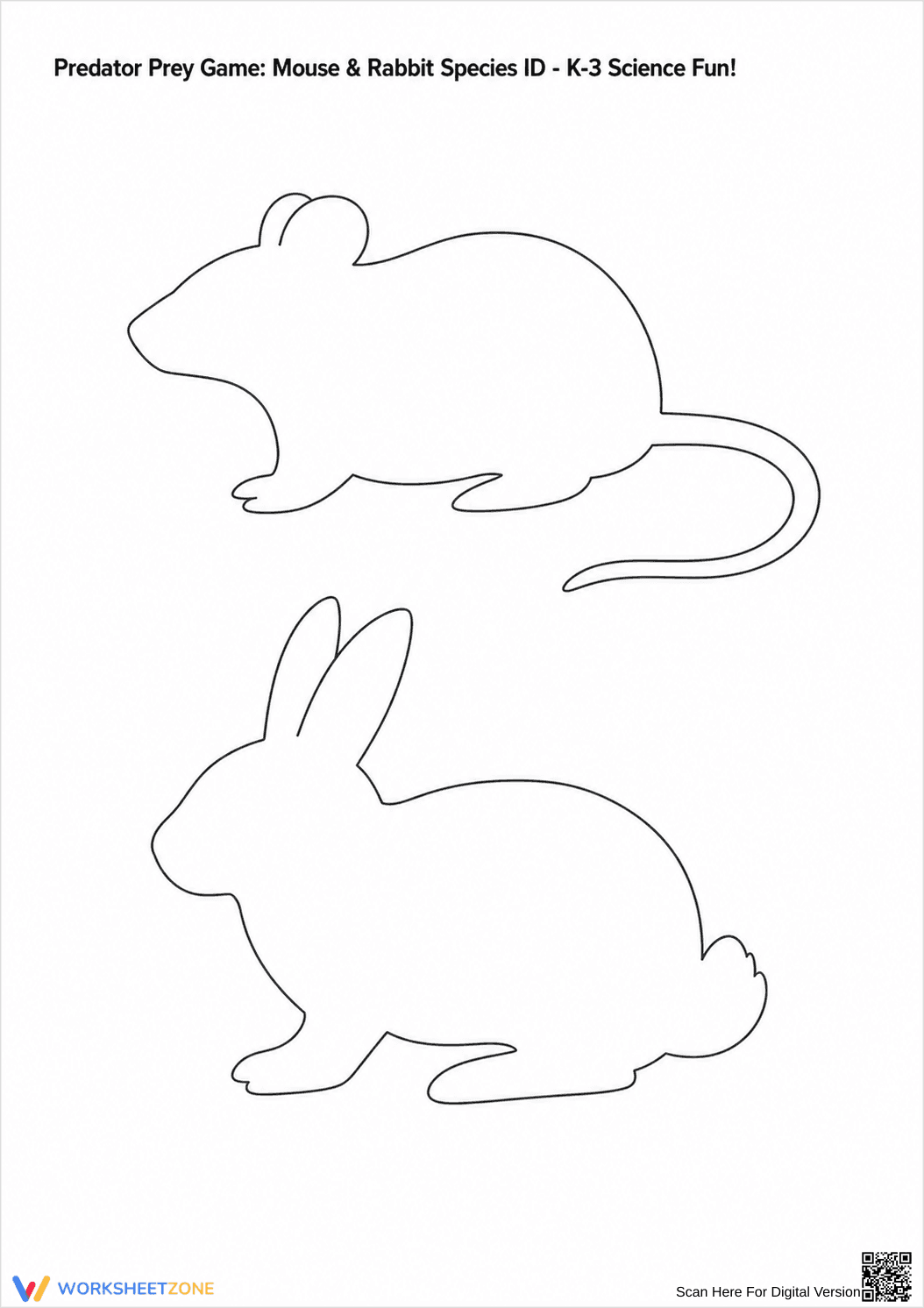
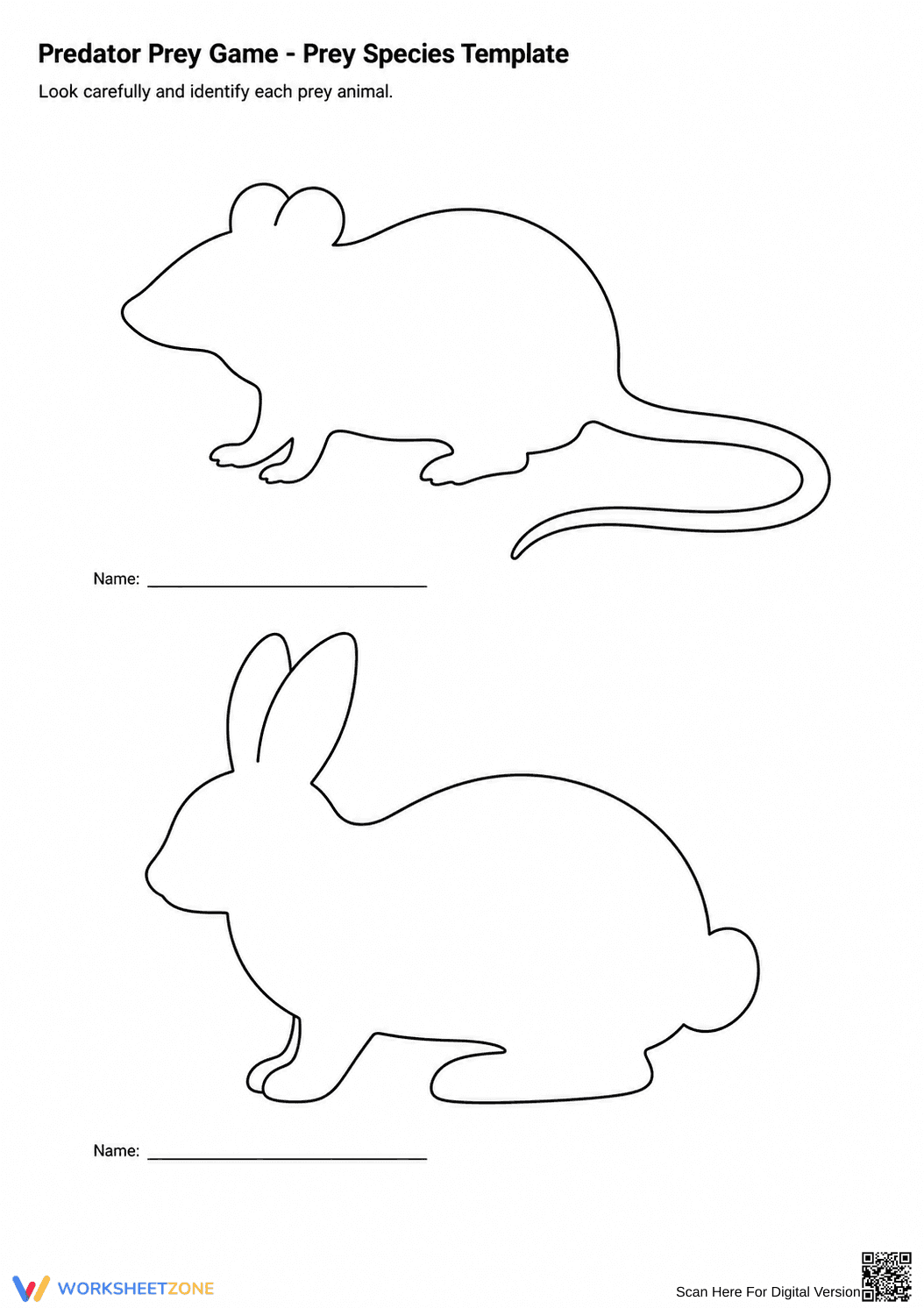
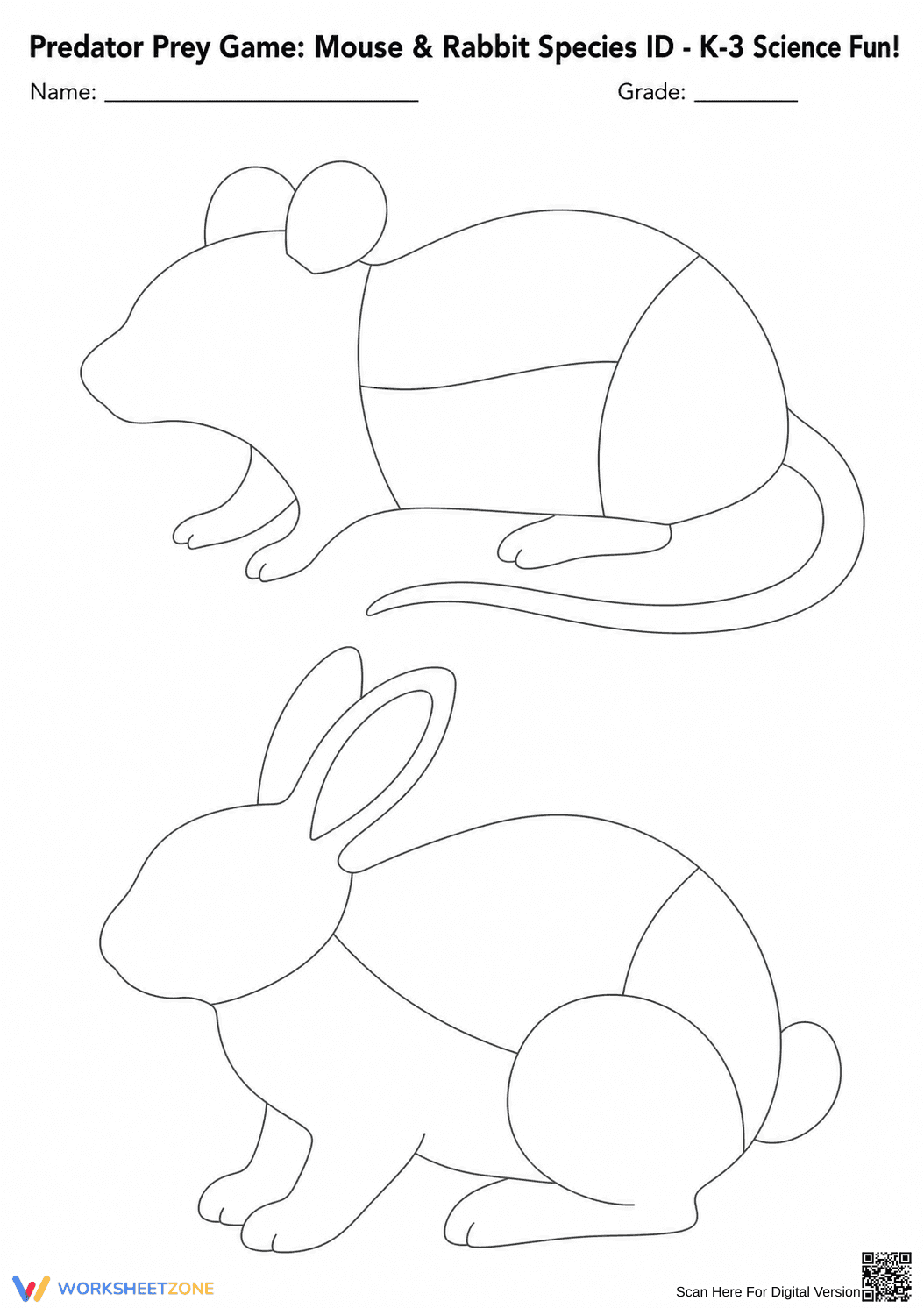
This Grade 3 science worksheet helps students identify common prey species through engaging visual templates. By examining silhouettes of mice and rabbits, young learners build foundational knowledge of predator and prey relationships. The printable format provides a hands-on opportunity to explore animal adaptations.
At a Glance
- Grade: 3 · Subject: Science
- Standard:
3-LS4-3— Construct an argument that in a habitat some organisms survive well- Skill Focus: Species Identification
- Format: 8 pages · 2 problems · No answer key · PDF
- Best For: Hands-on science activities
- Time: 15–20 minutes
This resource includes eight pages of animal silhouettes, focusing on mice and rabbits. The pages offer varying layouts, including simple outlines, versions with name blanks, and templates with writing spaces for species identification. Because this functions as an open-ended activity template, no answer key is required. Students can use the outlines as game pieces or visual aids for ecosystem research.
This resource is designed for immediate classroom implementation with a streamlined workflow:
- Print (1 minute): Select the specific silhouette pages that match your lesson goals and print the PDF.
- Distribute (1 minute): Hand out the templates along with scissors, crayons, or research materials.
- Review (Ongoing): Monitor students as they identify the animals and discuss their roles in the food chain.
With under two minutes of total teacher prep time, this activity is highly suitable for emergency sub plans or spontaneous science extensions.
This activity aligns with 3-LS4-3: Construct an argument with evidence that in a particular habitat some organisms can survive well, some survive less well, and some cannot survive at all. By identifying specific prey species, students begin to understand how physical traits help animals evade predators. Both standard codes can be copied directly into lesson plans, IEP goals, or district curriculum mapping tools.
Teachers can integrate these templates during direct instruction on food chains by having students cut out the animals to create physical predator-prey models. Alternatively, use them as an engaging post-lesson craft where students write survival adaptations directly onto the animal shapes. As a formative assessment observation tip, listen to student conversations while they work to ensure they correctly use vocabulary like "prey," "camouflage," and "habitat." Most students will complete the identification and cutting tasks within a 15 to 20-minute timeframe.
This resource is ideal for third-grade general education students, homeschoolers, and early elementary learners exploring basic biology. The simple visual nature of the silhouettes provides excellent differentiation for visual learners and English Language Learners who benefit from reduced text complexity. Pair these templates with a read-aloud book about forest habitats or an anchor chart detailing local food webs to maximize instructional impact.
Integrating hands-on visual aids like this species identification template significantly reinforces early elementary science concepts. According to a ScienceDirect TpT Analysis, interactive materials that require students to physically manipulate models or templates improve retention of complex ecological relationships. When students engage with the 3-LS4-3 standard to construct an argument that in a habitat some organisms survive well, they need concrete examples of predator and prey dynamics. By analyzing the physical characteristics of mice and rabbits, learners can better articulate how specific adaptations contribute to survival. This foundational understanding of food chains prepares students for more advanced biological studies in later grades. Utilizing simple, recognizable silhouettes reduces cognitive load, allowing young learners to focus entirely on the core scientific principles of survival and ecosystem balance.


