


























Views
Downloads


Printable Root Words and Suffixes Worksheet | Grade 1 ELA
Paste this activity's link or code into your existing LMS (Google Classroom, Canvas, Teams, Schoology, Moodle, etc.).
Students can open and work on the activity right away, with no student login required.
You'll still be able to track student progress and results from your teacher account.
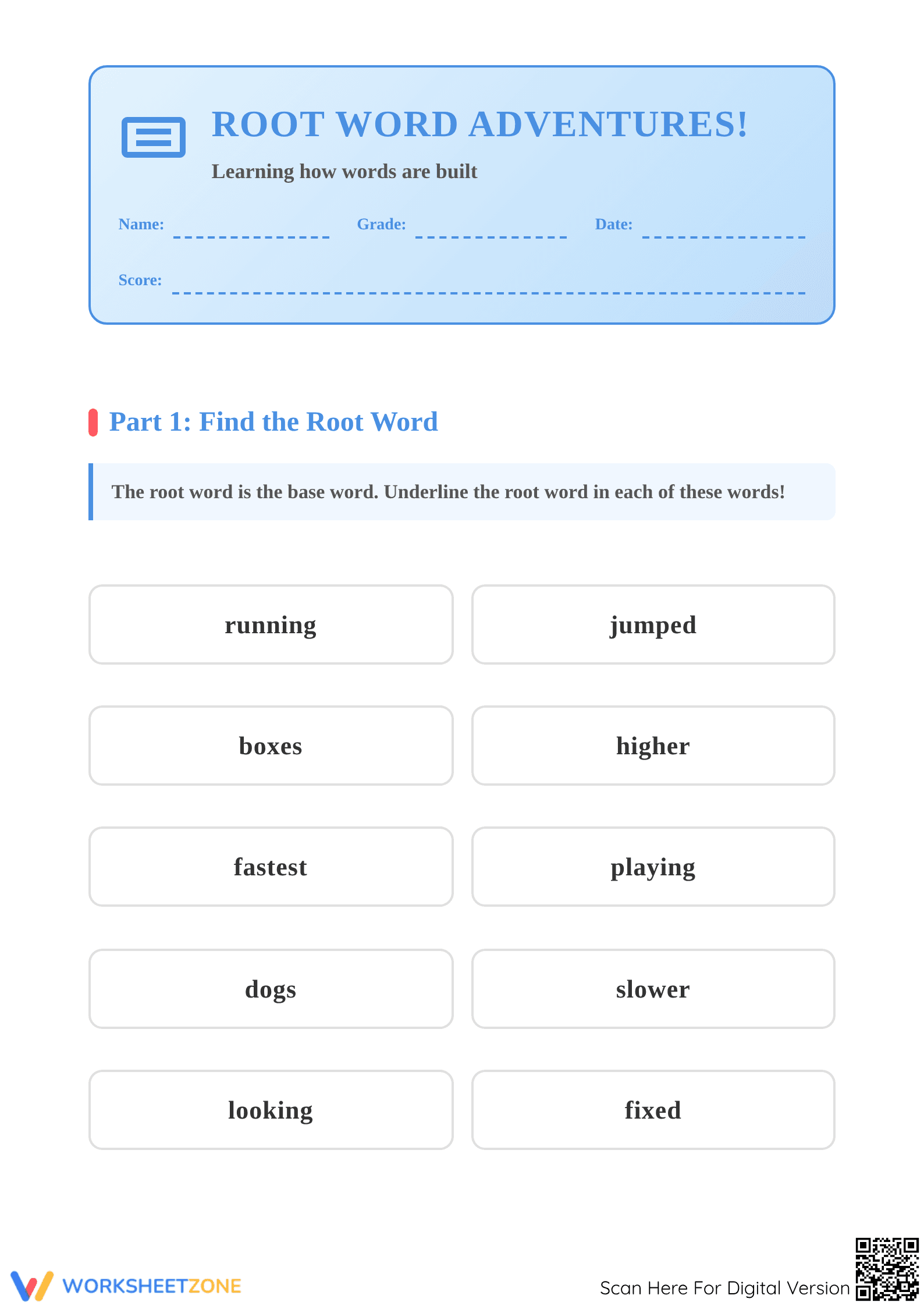
Mastering foundational literacy begins with understanding how words are constructed through morphology. This comprehensive Grade 1 ELA worksheet helps young learners identify root words and apply common suffixes like -s, -es, -ed, and -ing. By breaking down multisyllabic terms, students develop the decoding skills necessary for fluent reading and precise writing outcomes in early elementary grades.
At a Glance
- Grade: 1 · Subject: English Language Arts
- Standard:
L.1.4.C— Identify frequently occurring root words and their inflectional forms during reading- Skill Focus: Root Word Identification and Suffix Application
- Format: 5 pages · 32 problems · Answer key included · PDF
- Best For: Literacy centers and independent skill practice
- Time: 25–35 minutes
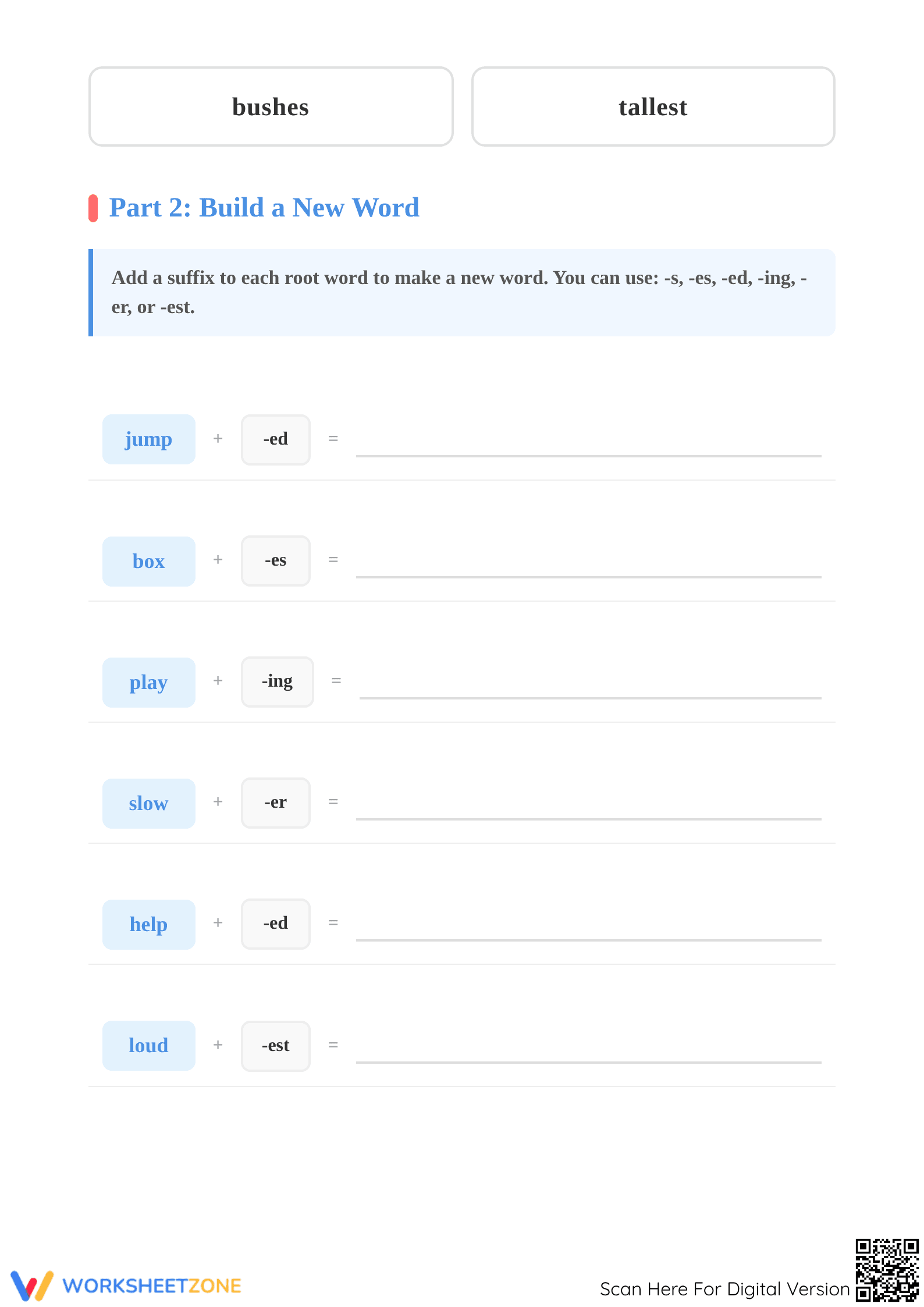
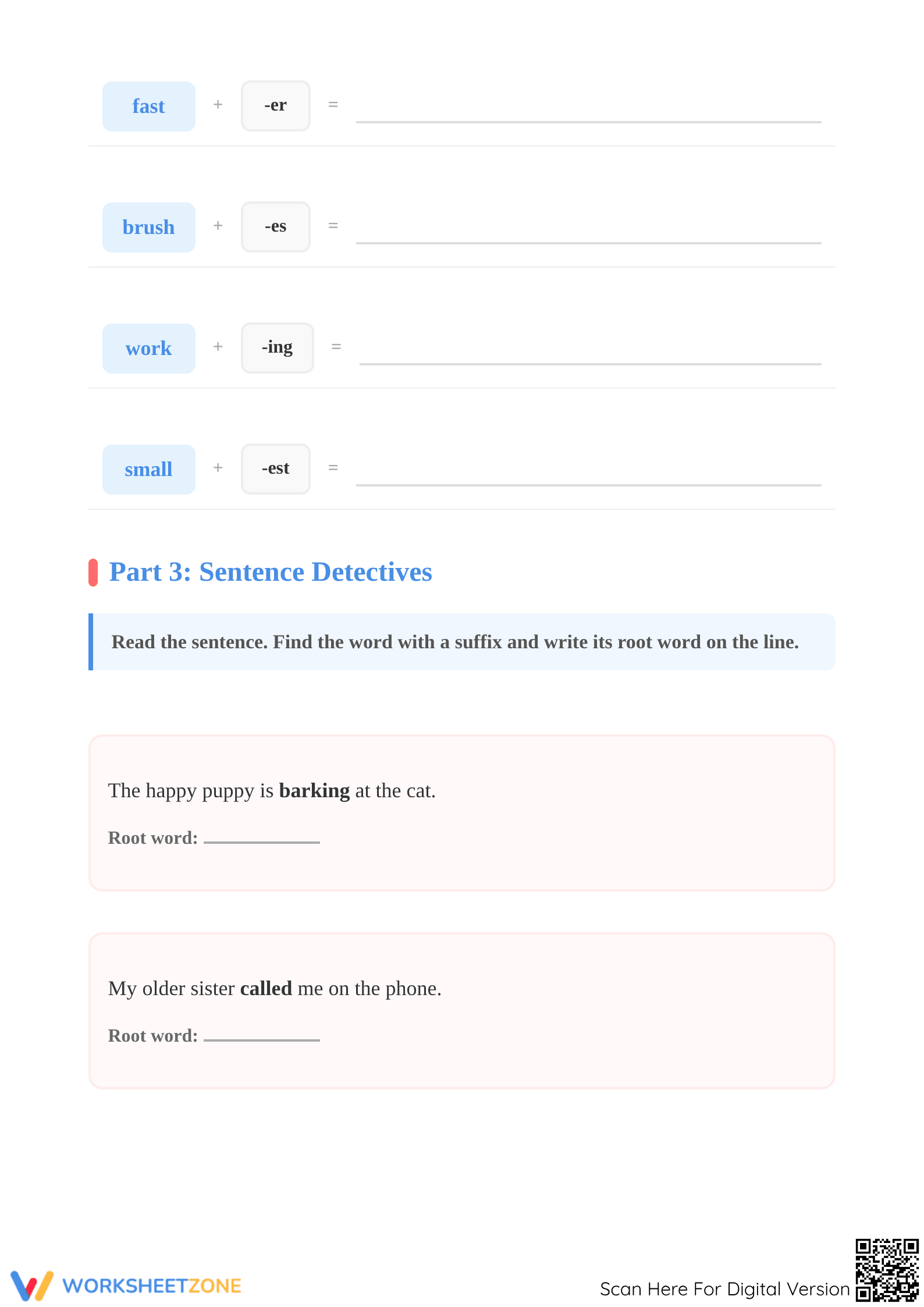
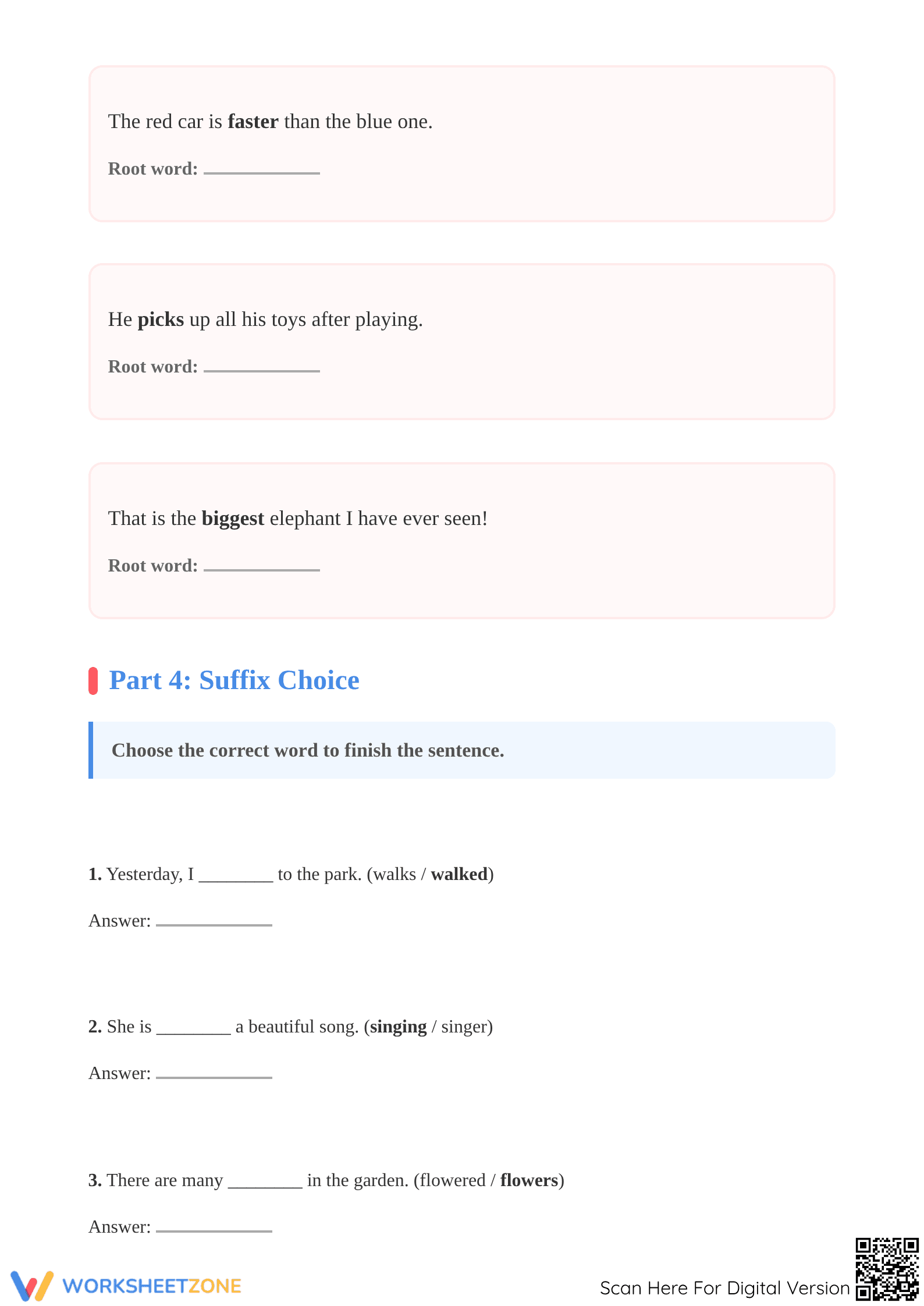
This extensive five-page PDF resource contains four distinct learning segments designed to scaffold the concept of base words. It includes 12 identification tasks, 10 word-building exercises, 5 sentence-based detection problems, and 5 multiple-choice suffix selections. The clear layout features large text for early readers, dedicated spaces for student responses, and a complete answer key for rapid grading or self-correction.
Skill Progression
- Guided Practice: Part 1 presents 12 familiar words where students underline the base, providing a low-stakes introduction to identifying the core meaning of inflected terms.
- Supported Practice: Part 2 and 3 move into application, requiring students to physically combine roots with specific suffixes or extract roots from within short, context-rich sentences.
- Independent Practice: The final section challenges students to choose the grammatically correct word form to complete a sentence, demonstrating mastery of how suffixes alter word function in real-world syntax.
This gradual-release model ensures that students move from simple recognition to functional application.
Standards Alignment
This resource is specifically aligned to CCSS.ELA-LITERACY.L.1.4.C, which requires students to identify frequently occurring root words and their inflectional forms. By practicing with common endings like -ed, -ing, and -s, students meet the fundamental requirements for Grade 1 language standards. This standard code can be copied directly into lesson plans, IEP goals, or district curriculum mapping tools.
How to Use It
Assign this worksheet during the independent portion of a direct instruction lesson on word endings. It works exceptionally well as a summative assessment after a week of morphological study. Instructional Tip: While students work on the Sentence Detectives section, observe if they are merely looking for the suffix or if they can explain how the suffix changed the word's meaning, providing immediate formative feedback.
Who It's For
Designed primarily for first-grade classrooms, this tool is also highly effective for second-grade students needing remediation or English Language Learners (ELLs) focusing on English word structure. It pairs naturally with leveled reading passages where students can hunt for similar words in their independent library books or during shared reading sessions.
Effective morphological instruction in the primary grades is a critical predictor of later reading comprehension and vocabulary depth. Research by Fisher & Frey (2014) emphasizes that the gradual release of responsibility—moving from teacher modeling to independent application—is essential for students to internalize the logic of English word construction. This worksheet implements that research-backed strategy by scaffolding 32 tasks across five pages, focusing specifically on CCSS.ELA-LITERACY.L.1.4.C. By isolating root words from common inflectional suffixes like -ed and -ing, students build a mental framework for decoding unfamiliar text. This systematic approach ensures that Grade 1 learners do not view words as monolithic units but as meaningful, combinatory structures. Such foundational skills are cited by NAEP and the ScienceDirect TpT Analysis as vital for transitioning from learning to read to reading to learn, providing a printable, classroom-ready solution for rigorous literacy instruction.


