


























Views
Downloads
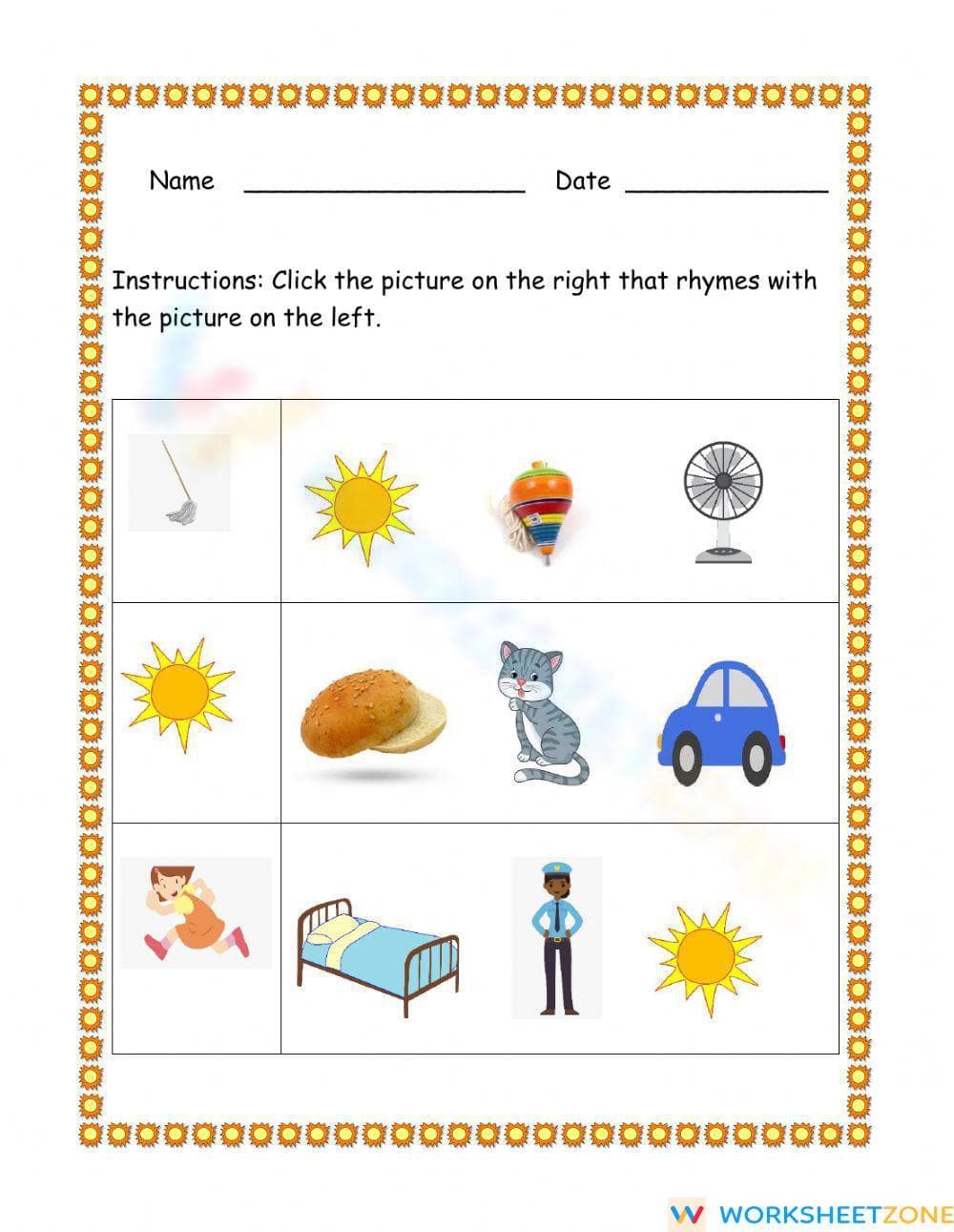

Essential Rhyming Words Worksheet | Kindergarten & Grade 1
Paste this activity's link or code into your existing LMS (Google Classroom, Canvas, Teams, Schoology, Moodle, etc.).
Students can open and work on the activity right away, with no student login required.
You'll still be able to track student progress and results from your teacher account.
Identify rhyming sounds with precision using this focused English Language Arts worksheet. Designed for Preschool through Grade 1, this resource helps early learners connect phonemes through visual matching. By linking familiar objects to their rhyming counterparts, students build the foundational phonological awareness necessary for reading success. It is a perfect addition to any literacy center.
At a Glance
- Grade: K · Subject: ELA
- Standard:
CCSS.ELA-LITERACY.RF.K.2.A— Recognize and produce rhyming words in spoken language- Skill Focus: Phonological Awareness
- Format: 1 page · 3 problems · Answer key included · PDF
- Best For: Early literacy centers and phonics practice
- Time: 5–10 minutes
This single-page PDF features three distinct rhyming challenges presented in a clear, vertical grid format. Each task includes a target image on the left (such as a mop or the sun) and three choices on the right. The worksheet utilizes high-contrast, recognizable clip art to ensure that students can identify the objects without teacher intervention. A full answer key is included for quick checking.
Zero-Prep Workflow
This resource is designed for immediate classroom integration with a total teacher prep time of under 2 minutes. Step 1: Print the single-page PDF for your group (30 seconds). Step 2: Distribute sheets and explain the matching instructions (30 seconds). Step 3: Review work using the provided answer key or through a verbal check (1 minute). It is an ideal sub-plan or early finisher activity.
Standards Alignment
The primary focus of this worksheet is `CCSS.ELA-LITERACY.RF.K.2.A`, which requires students to recognize and produce rhyming words. By identifying the common ending sounds in words like "mop" and "top," students demonstrate mastery of phonological patterns. Both standard codes can be copied directly into lesson plans, IEP goals, or district curriculum mapping tools to ensure compliance with state and national requirements.
How to Use It
Use this worksheet during the independent practice phase of a phonics lesson after a direct instruction session on word endings. It works exceptionally well as a formative assessment tool; teachers can observe whether students are matching by initial sound or correct rhyme. Completion time typically ranges from 5 to 10 minutes, making it a flexible option for transitions or morning work folders.
Who It's For
This resource is tailored for Preschool, Kindergarten, and Grade 1 students who are beginning their journey into phonological awareness. It is particularly effective for English Language Learners (ELLs) who benefit from the visual cues provided alongside the auditory task. Pair this worksheet with a rhyming picture book or an anchor chart featuring common word families like -op, -un, and -at.
Phonological awareness is a critical predictor of later reading achievement, as highlighted in the RAND AIRS 2024 report on early literacy interventions. This worksheet targets the specific ability to recognize rhyming patterns, a skill that aligns with `CCSS.ELA-LITERACY.RF.K.2.A` and forms the basis for decoding and spelling. Research by Fisher & Frey (2014) emphasizes the importance of visual scaffolding in early childhood education to reduce cognitive load while students master complex auditory tasks. By providing recognizable images that represent phonemes, this resource allows students to focus on the linguistic relationship between words rather than just image recognition. Consistent practice with rhyming sounds helps bridge the gap between spoken language and written text, facilitating a smoother transition into phonics-based reading programs. This evidence-based approach ensures that learners develop the necessary auditory discrimination skills to succeed in more advanced ELA standards as they progress through the primary grades.


