


























Views
Downloads
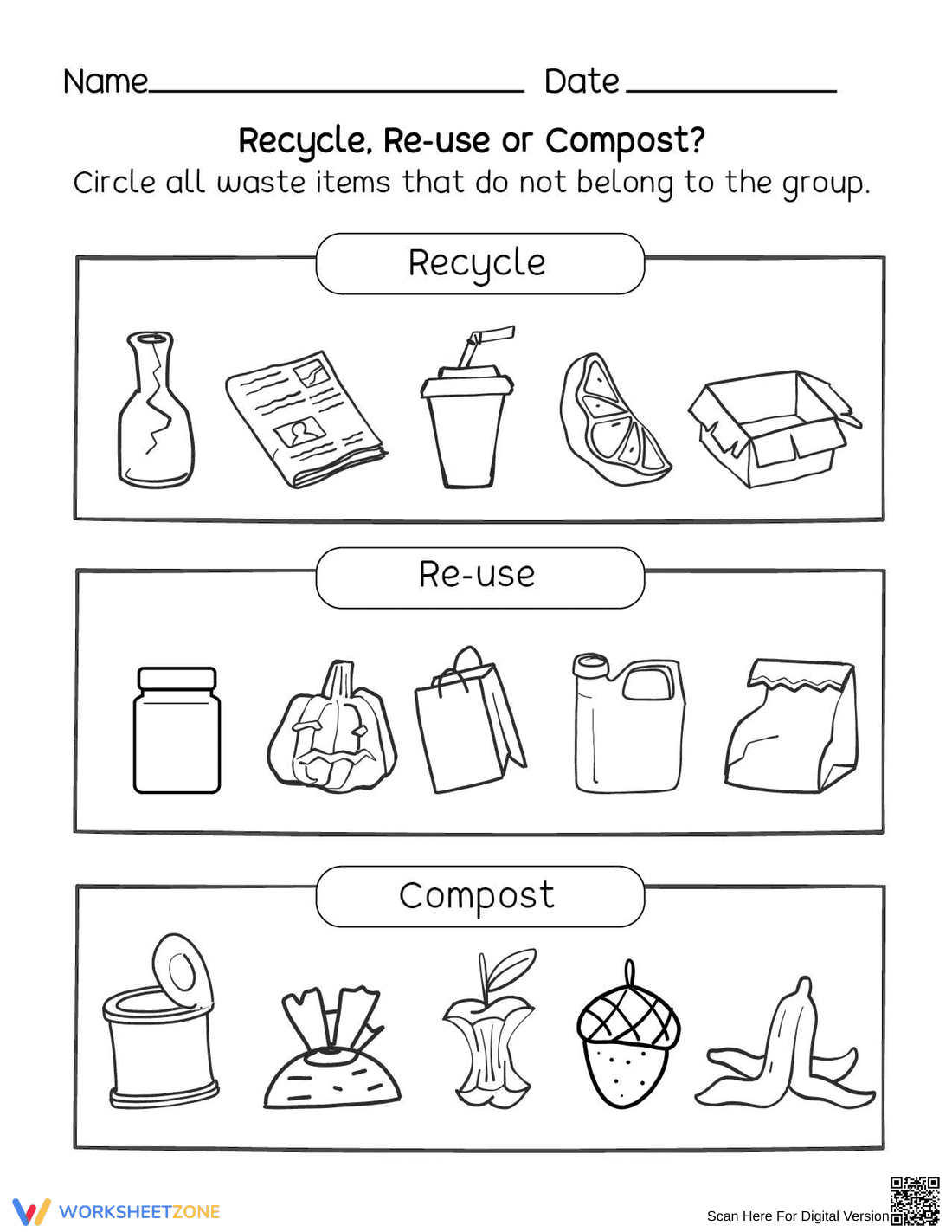

Grade 1-3 Waste Sorting — Essential No-Prep Worksheet
Paste this activity's link or code into your existing LMS (Google Classroom, Canvas, Teams, Schoology, Moodle, etc.).
Students can open and work on the activity right away, with no student login required.
You'll still be able to track student progress and results from your teacher account.
This Grade 1 worksheet helps students master waste classification by distinguishing between recycle, reuse, and compost streams. By identifying outliers, learners develop critical thinking regarding environmental stewardship. This activity provides a structured introduction to sustainability concepts for early elementary classrooms.
At a Glance
- Grade: 1–3 · Subject: Science / Environment
- Standard:
K-ESS3-3— Communicate solutions that reduce human impact on the local environment through waste reduction- Skill Focus: Waste classification and sorting
- Format: 1 page · 15 items · Answer key included · PDF
- Best For: Earth Day activities or science units
- Time: 10–15 minutes
This single-page PDF features three sorting zones: Recycle, Re-use, and Compost. Each zone contains five illustrated items, such as newspaper and organic scraps. Students circle the one item that does not belong. The visual nature makes it ideal for early readers, and the included answer key ensures easy grading.
Zero-Prep Workflow
- Print (30 seconds): Simply hit print on this standard letter-sized PDF.
- Distribute (30 seconds): Hand out for an immediate bell-ringer or center activity.
- Review (1 minute): Use the key to verify understanding of waste streams.
With under 2 minutes of prep, this resource is perfect for sub plans or spontaneous environmental lessons.
Standards Alignment
The primary alignment is K-ESS3-3, which requires students to communicate solutions that will reduce the impact of humans on the environment. By learning to sort waste into appropriate categories like composting and recycling, students practice the solutions described in the NGSS framework. This standard code can be copied directly into lesson plans, IEP goals, or district curriculum mapping tools.
How to Use It
Assign this worksheet during the "Explain" phase of a lesson on human impacts. It serves as a great formative assessment to see if students can distinguish between biological waste and manufactured materials. Teachers should observe if students can explain why a tin can doesn't belong in a compost bin. Completion typically takes 10 to 15 minutes.
Who It's For
Designed for students in Grades 1, 2, and 3, this activity is ideal for general education science classes or environmental clubs. It provides sufficient visual scaffolding for English Language Learners and students with processing needs. Pair this resource with a classroom recycling bin tour to reinforce the real-world application of these sorting skills.
According to the RAND AIRS 2024 report, high-quality environmental education materials that focus on concrete student actions, such as waste sorting, significantly improve long-term retention of sustainability concepts. This worksheet aligns with K-ESS3-3 by focusing on the plain-English skill of identifying appropriate disposal methods for common household items. By engaging with 15 specific visual examples, students build the foundational knowledge necessary for more complex ecological studies in later grades. Research from Fisher & Frey (2014) emphasizes that such scaffolded, visual sorting tasks are essential for developing categorical reasoning in early elementary learners. This resource provides the structured practice needed to transition from awareness to actionable environmental stewardship within the classroom setting. This alignment ensures that the material meets rigorous academic standards while remaining accessible for students with diverse learning needs in the first through third grades.


