


























Views
Downloads
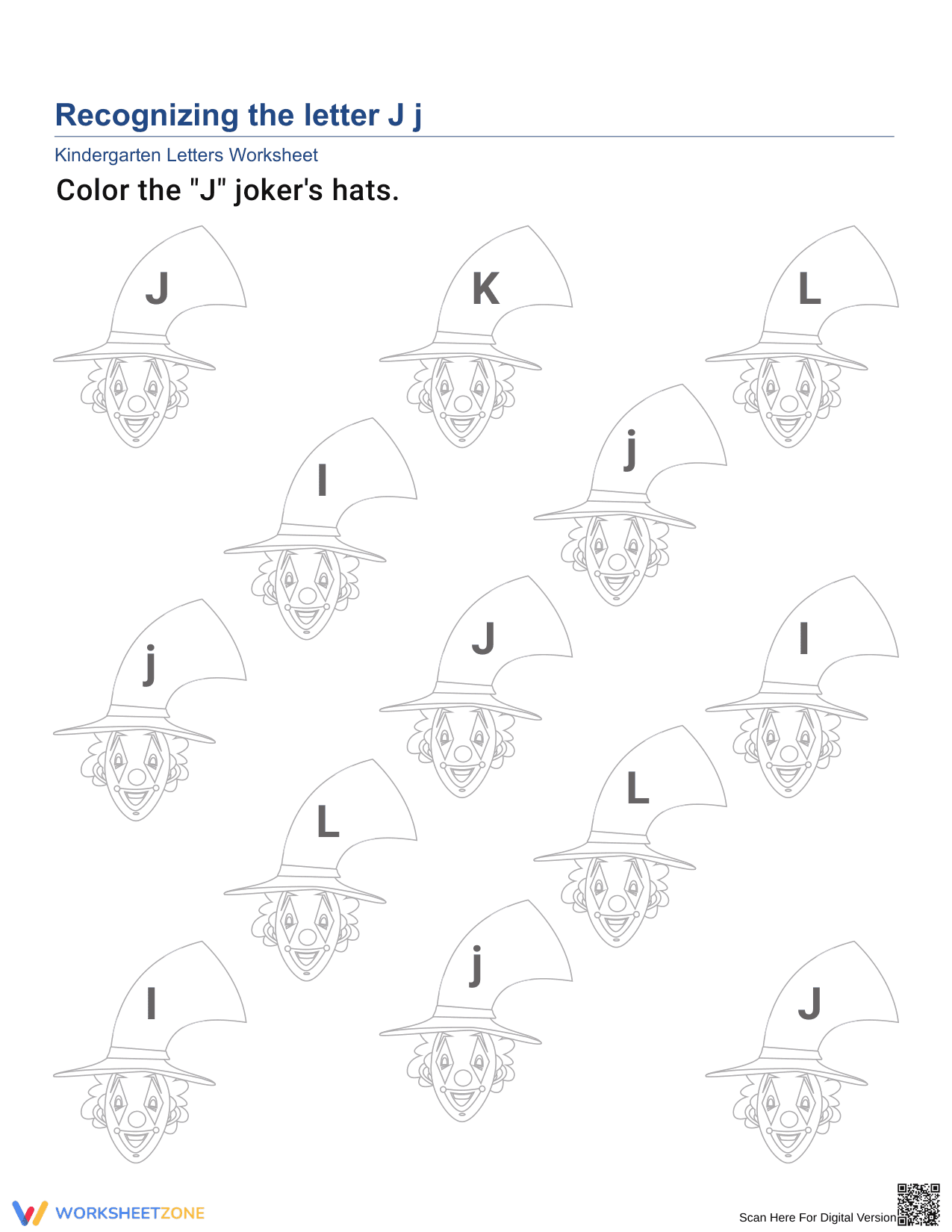

Grade K Letter J — Printable No-Prep Worksheet
Paste this activity's link or code into your existing LMS (Google Classroom, Canvas, Teams, Schoology, Moodle, etc.).
Students can open and work on the activity right away, with no student login required.
You'll still be able to track student progress and results from your teacher account.
This foundational letter recognition worksheet helps early learners identify both uppercase and lowercase J. By coloring specific shapes that contain the target letter, students actively practice visual discrimination skills. This targeted activity ensures young readers build the alphabet fluency necessary for future phonics and decoding success.
At a Glance
- Grade: Kindergarten · Subject: ELA
- Standard:
CCSS.ELA-LITERACY.RF.K.1.D— Recognize and name all upper- and lowercase letters.- Skill Focus: Letter J Recognition
- Format: 1 page · 12 problems · Answer key included · PDF
- Best For: Independent practice and centers
- Time: 5–10 minutes
This single-page resource features twelve distinct joker hat illustrations, each containing a different uppercase or lowercase letter. Students are tasked with scanning the page to find and color only the hats displaying the letter J. The straightforward visual layout minimizes distractions, while the included answer key allows for rapid checking by teachers or classroom aides.
Designed for immediate classroom implementation, this activity requires under two minutes of total teacher prep time.
- Print (1 minute): Generate enough copies for your reading groups or whole class directly from the PDF.
- Distribute (1 minute): Hand out the pages along with crayons or markers. The simple instructions mean students can begin immediately.
- Review (3 minutes): Use the answer key to quickly verify that all uppercase and lowercase J hats were correctly identified.
Because it requires no complex setup or specialized materials, this worksheet is highly suitable for emergency sub plans or morning work routines.
This resource is directly aligned to CCSS.ELA-LITERACY.RF.K.1.D: Recognize and name all upper- and lowercase letters of the alphabet. It also supports early visual discrimination skills necessary for print concepts. Both standard codes can be copied directly into lesson plans, IEP goals, or district curriculum mapping tools.
Deploy this worksheet during independent literacy centers after direct instruction on the letter J. It serves as an excellent quiet activity while the teacher works with small reading groups. Alternatively, use it as a morning bell-ringer. As a formative assessment observation tip, watch how students scan the page; note whether they confuse the lowercase j with the lowercase i, which appears frequently as a distractor. Expected completion time is five to ten minutes.
This activity is primarily designed for Kindergarten students mastering the alphabet, but it also serves Preschoolers ready for formal letter identification and First Graders needing quick remediation. To differentiate for students requiring extra support, highlight the target letter J on the board for visual reference. Pair this printable with a tactile activity, such as tracing the letter J in sand, or a direct instruction phonics lesson focusing on the /j/ sound.
Mastering alphabet knowledge, specifically the ability to recognize and name all upper- and lowercase letters, is a critical predictor of later reading achievement. According to an EdReports 2024 analysis of foundational literacy skills in early childhood education, explicit and repeated practice with visual discrimination tasks significantly improves letter recognition speed and accuracy. When students engage with targeted materials like this CCSS.ELA-LITERACY.RF.K.1.D aligned activity, they strengthen the neural pathways required for rapid letter identification. This specific skill forms the bedrock of phonemic awareness and eventual decoding proficiency. By isolating the letter J among visually similar distractors, early learners develop the precise observation skills necessary for fluent reading. Consistent exposure through structured, low-stakes practice ensures that these foundational concepts are firmly established before students transition to more complex phonetic blending.


