


























Views
Downloads

Essential Printable: Kindergarten Letter Cc Worksheet
Paste this activity's link or code into your existing LMS (Google Classroom, Canvas, Teams, Schoology, Moodle, etc.).
Students can open and work on the activity right away, with no student login required.
You'll still be able to track student progress and results from your teacher account.
This "Recognize letter Cc" worksheet provides an essential foundation for early literacy by helping Kindergarten students identify and name the third letter of the alphabet. By engaging with both uppercase and lowercase forms, learners build the visual discrimination skills necessary for reading fluency and phonetic awareness in a structured, fun environment.
At a Glance
- Grade: Kindergarten · Subject: ELA (Alphabet)
- Standard:
CCSS.ELA-LITERACY.RF.K.1.D— Recognize and name all upper- and lowercase letters of the alphabet- Skill Focus: Letter Cc Recognition & Tracing
- Format: 3 pages · 12+ tasks · Answer key included · PDF
- Best For: Literacy centers and morning work sessions
- Time: 15–20 minutes
What's Inside
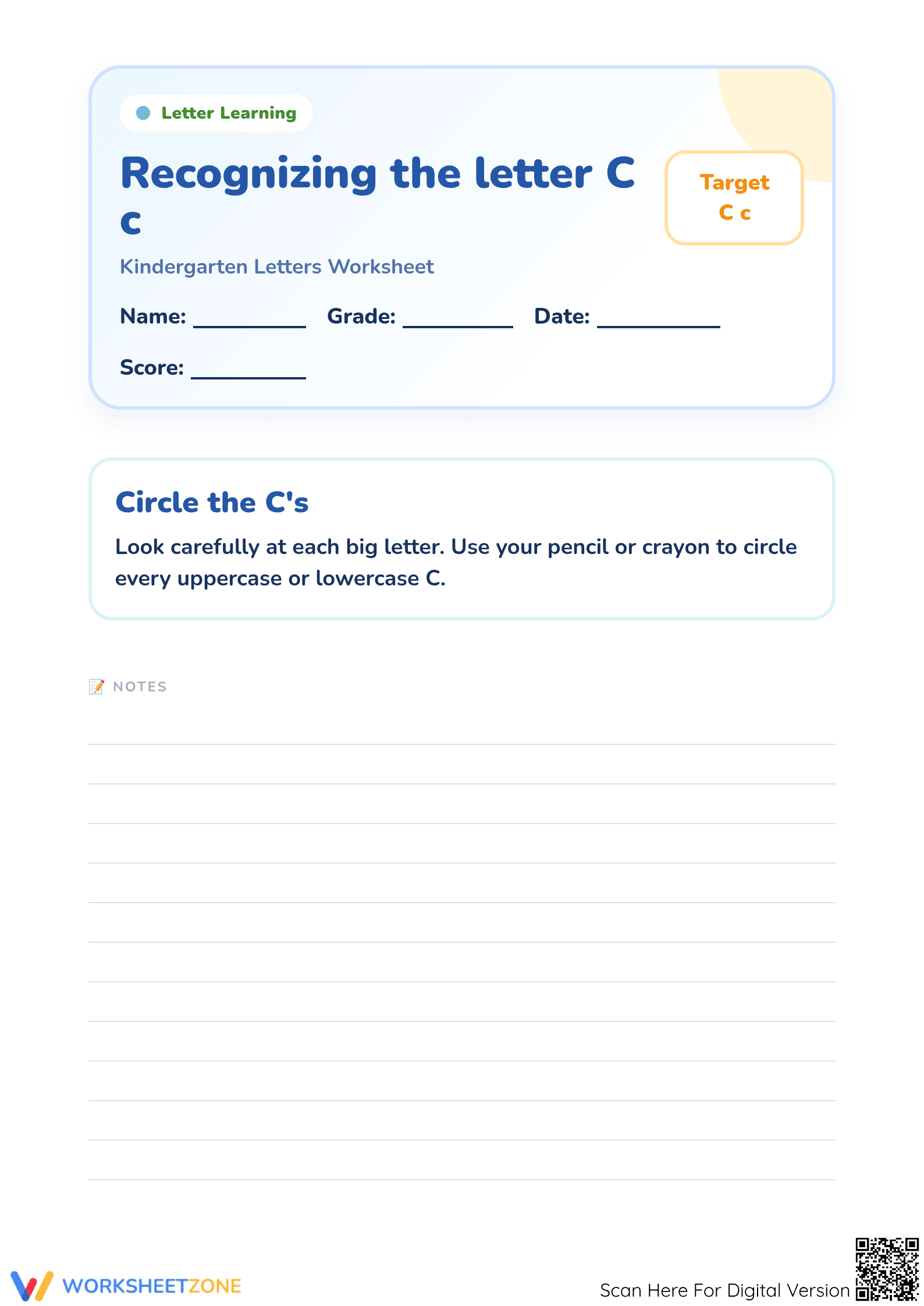
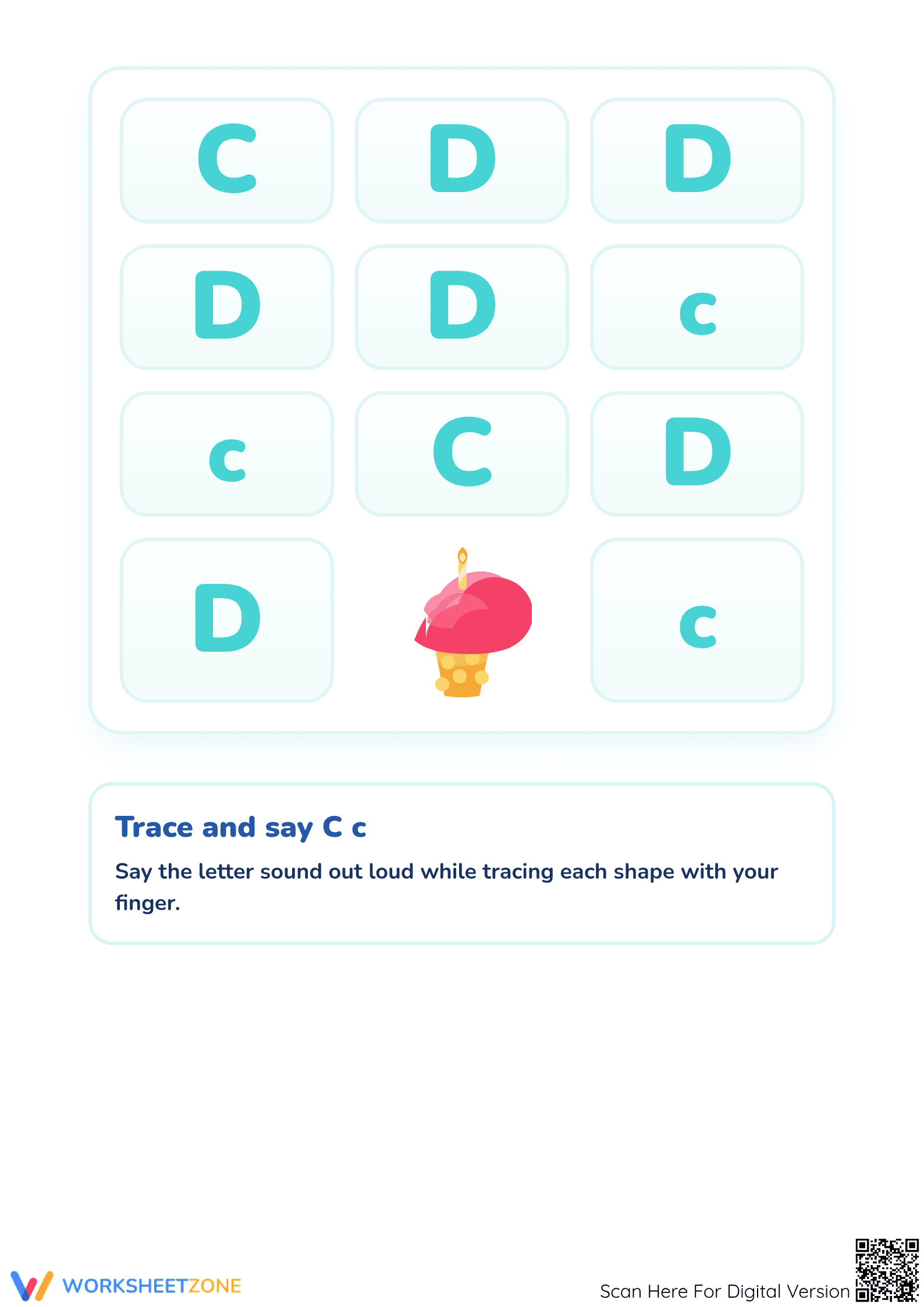
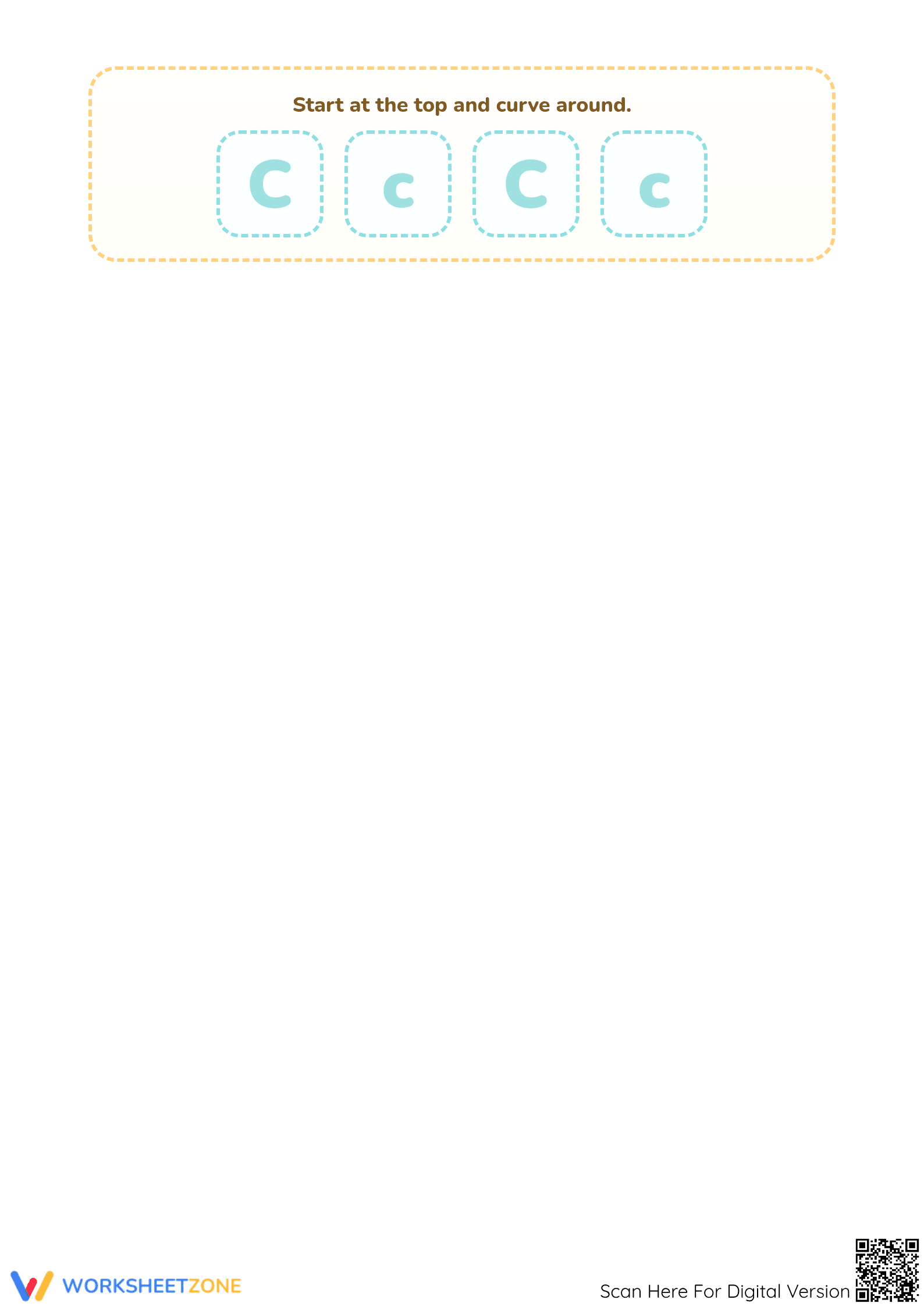
This comprehensive 3-page set features high-contrast visuals designed for young learners. It includes a letter-discrimination grid where students circle every 'C' and 'c' among distractors, a tactile "trace and say" activity for multisensory engagement, and a dedicated tracing page to reinforce correct stroke order. The layout includes space for student notes and teacher scoring.
Zero-Prep Workflow
To implement this resource, follow these three simple steps:
- Print (1 minute): Select the pages needed for your lesson and print the PDF.
- Distribute (1 minute): Hand out the sheets with crayons or pencils for the circling and tracing tasks.
- Review (2 minutes): Use the included answer key to quickly verify student recognition accuracy.
This workflow ensures minimal prep time, making it ideal for sub plans or literacy rotations.
Standards Alignment
This resource is explicitly aligned with CCSS.ELA-LITERACY.RF.K.1.D, which requires students to "Recognize and name all upper- and lowercase letters of the alphabet." By isolating the letter Cc, the worksheet allows for targeted assessment of this specific foundational skill. This standard code can be copied directly into lesson plans or district curriculum mapping tools.
How to Use It
Use this worksheet during your direct phonics instruction as a independent practice activity after introducing the sound of /k/. Alternatively, assign it as a formative assessment at the start of the week to gauge existing letter recognition. Observe if students can distinguish the "C" from the "D" distractors to identify those needing additional Tier 2 support.
Who It's For
This resource is designed for Kindergarten students, but is also suitable for Preschoolers ready for letter identification or Grade 1 students requiring remediation. It pairs naturally with alphabet anchor charts or a read-aloud focused on words starting with the letter C, such as "The Very Hungry Caterpillar."
The "Recognize letter Cc" worksheet addresses the foundational requirement of CCSS.ELA-LITERACY.RF.K.1.D by providing structured practice in identifying uppercase and lowercase letter forms. According to the ScienceDirect TpT Analysis, high-contrast visual discrimination tasks are critical for early readers to bridge the gap between letter recognition and automaticity. This resource utilizes a multisensory "trace and say" approach, which aligns with Fisher & Frey (2014) regarding the importance of integrated literacy routines. By combining circling, tracing, and vocalizing, students reinforce the orthographic representation of the letter Cc within their long-term memory. This 3-page printable serves as a robust tool for Kindergarten educators seeking to document mastery of alphabet naming conventions through measurable student output. The inclusion of distraction letters like 'D' ensures that students are truly recognizing the target shape rather than merely following a pattern.


