




























Views
Downloads


Ready Pulse and Recovery Data Worksheet | Grade 8 Science

Paste this activity's link or code into your existing LMS (Google Classroom, Canvas, Teams, Schoology, Moodle, etc.).
Students can open and work on the activity right away, with no student login required.
You'll still be able to track student progress and results from your teacher account.
This Grade 8 science worksheet equips students to analyze, calculate, and interpret cardiovascular pulse-and-recovery data through authentic physiological step-test results. Learners examine cardiovascular regulation, calculate recovery rates, and apply the cardiac output formula to understand how human body systems interact during and after vigorous physical exertion.
At a Glance
- Grade: 8 · Subject: Science
- Standard: Life Science — Analyze and interpret data on circulatory subsystem interactions and homeostasis
- Skill Focus: Interpret Pulse-and-Recovery Data
- Format: 5 pages · 10 problems · Answer key included · PDF
- Best For: Data analysis and lab post-assessment
- Time: 40–50 minutes
What's Inside
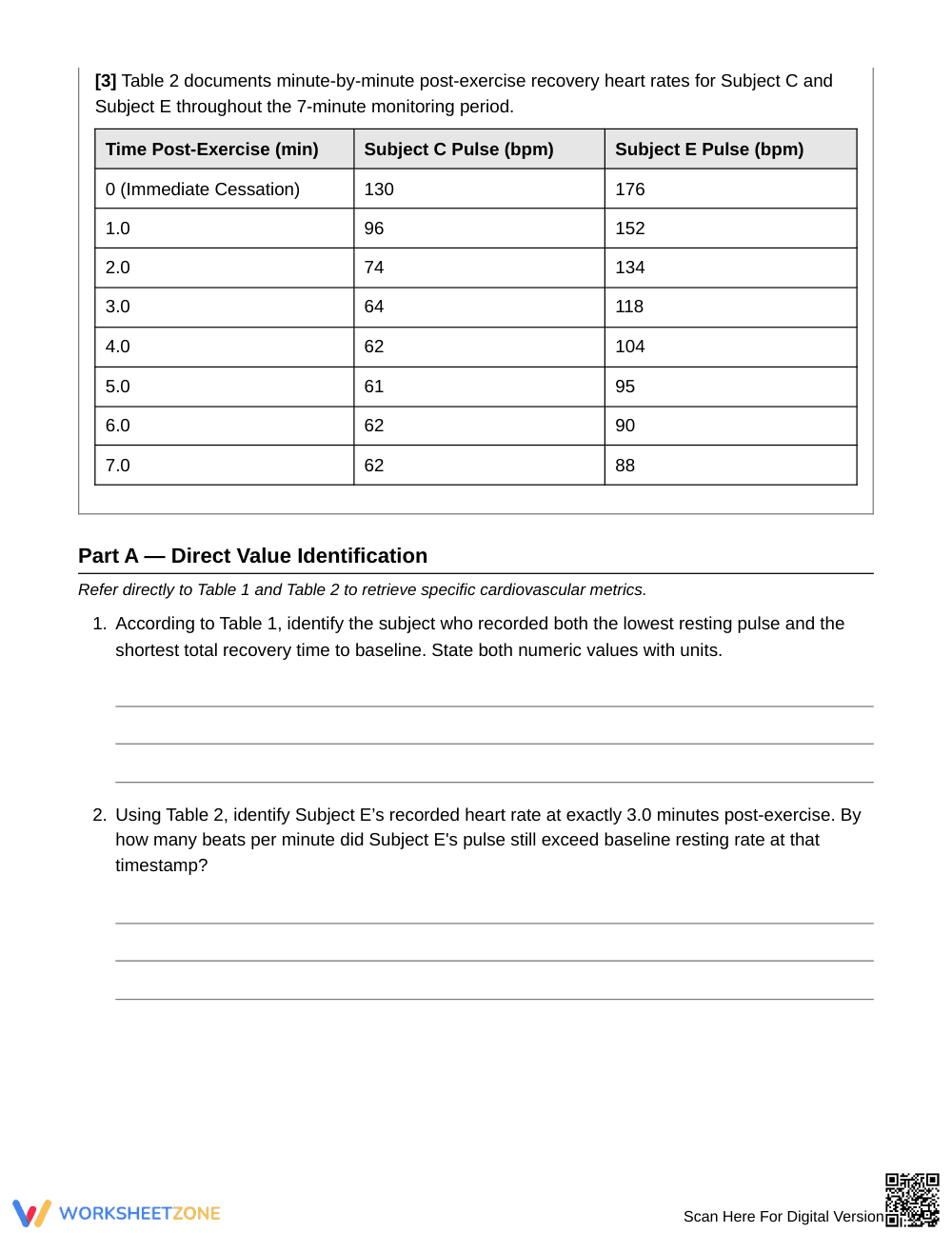
The 5-page resource includes a 2-page student worksheet containing 10 structured analytical tasks and a comprehensive 3-page answer key with step-by-step calculations and model explanations. Students interact with structured core physiological concept callouts, standardized bench step-test protocol descriptions, summary recovery tables, and detailed minute-by-minute heart rate tracking tables.
Skill Progression
- Guided Practice (Part A, 2 tasks): Direct data identification where students locate baseline metrics, peak rates, and target values from structured tables.
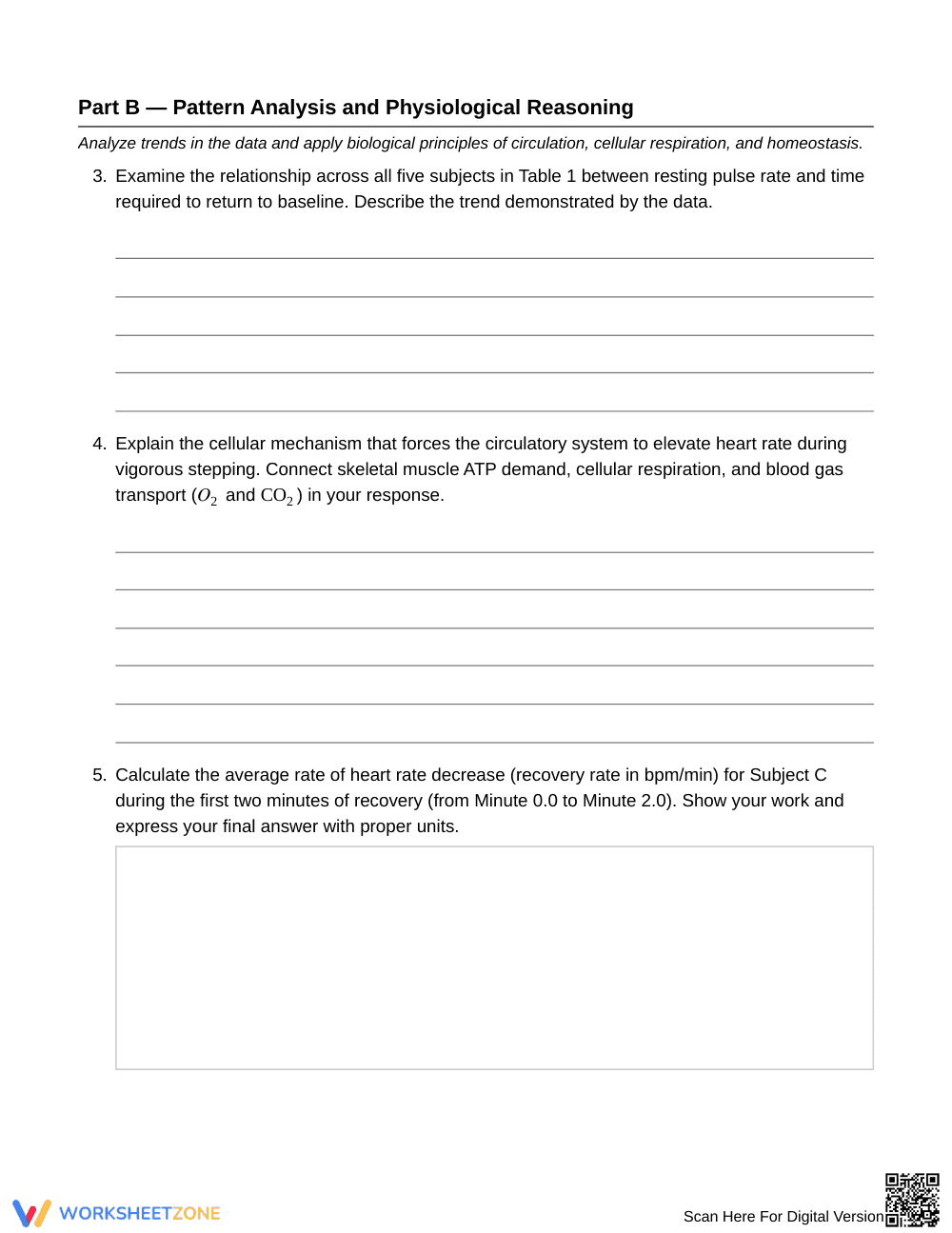
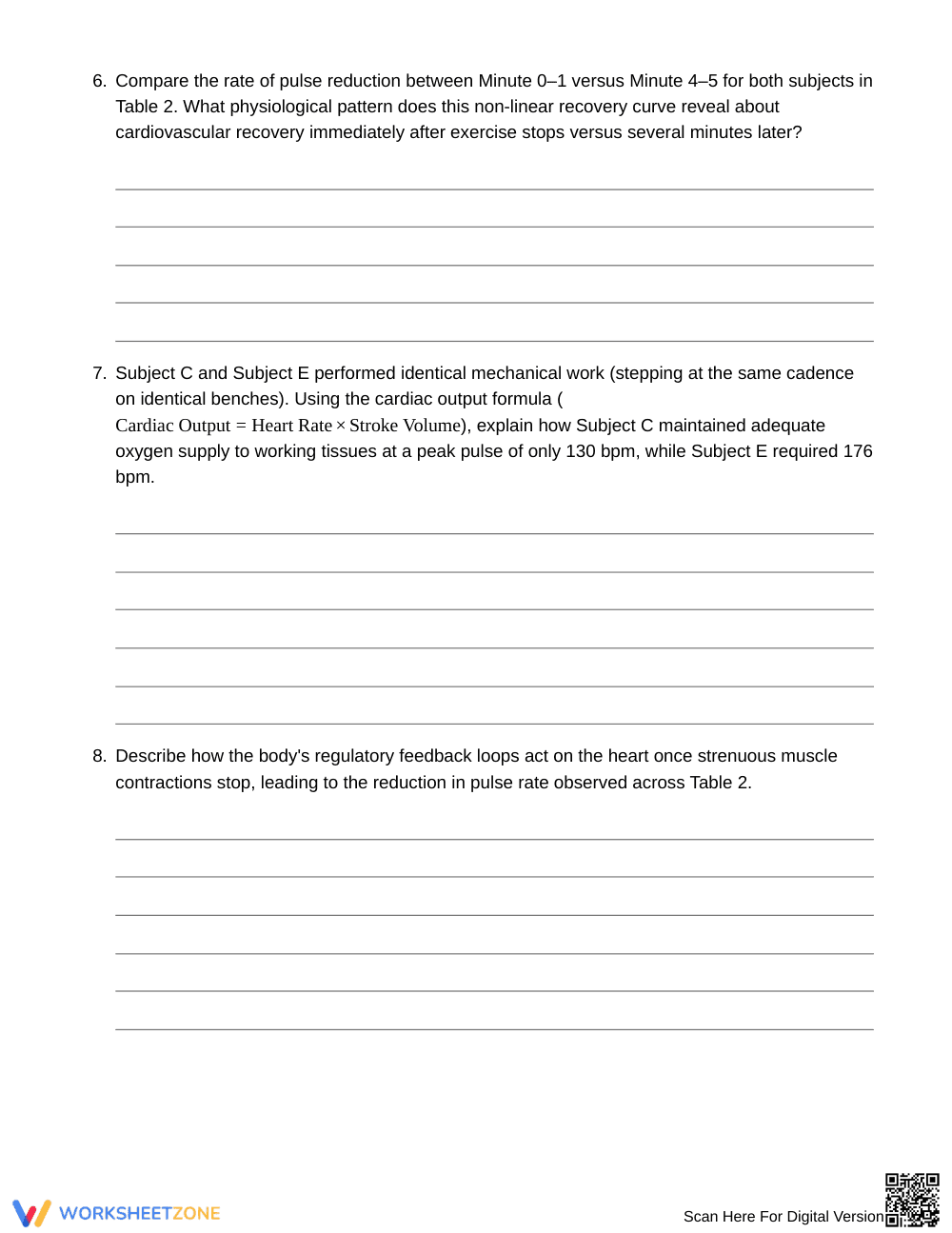
- Supported Practice (Part B, 6 tasks): Trend analysis, rate calculations, cardiac output modeling, and biological explanations linking ATP demand to heart rate regulation.
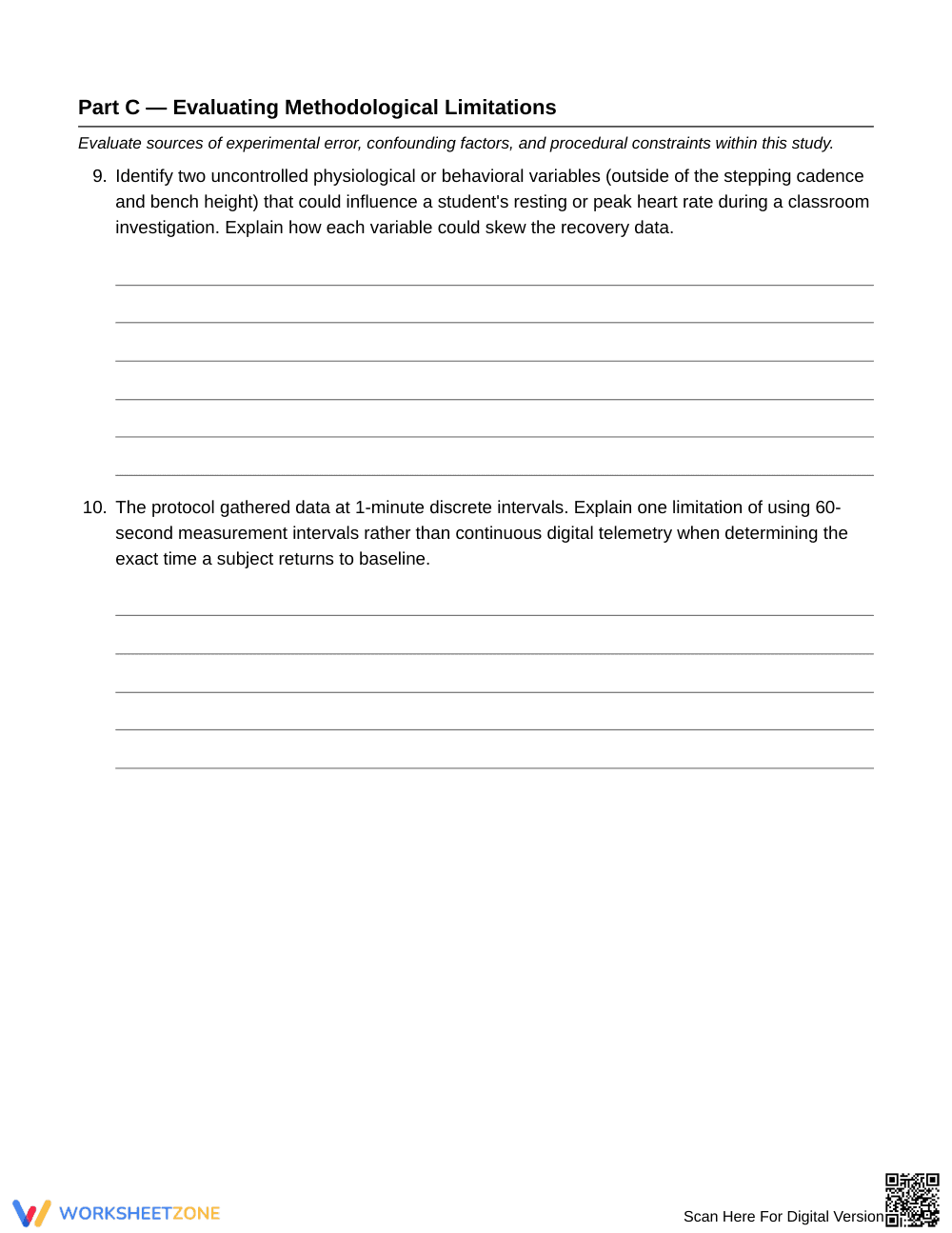
- Independent Practice (Part C, 2 tasks): Advanced methodological evaluation assessing experimental variables and the constraints of discrete interval sampling.
This progression mirrors the gradual release of responsibility framework, guiding learners from basic data retrieval toward high-level scientific critique.
Standards Alignment
This resource aligns with middle school life science standards requiring students to develop and use models to illustrate the hierarchical organization of interacting systems in multicellular organisms. Both standard concepts can be copied directly into lesson plans, IEP goals, or district curriculum mapping tools.
How to Use It
Deploy this worksheet after direct instruction on the circulatory system and cellular respiration to consolidate conceptual understanding. Alternatively, assign it as a dry-lab data interpretation activity during laboratory stations. During completion, observe whether students correctly identify non-linear rates of decline in the minute-by-minute table. Expected completion time is 40 to 50 minutes.
Who It's For
This activity is designed for general Grade 8 science classes, honors biology prep, and integrated middle school life science courses. Pair this worksheet directly with a whole-group interactive lecture on cellular respiration or a hands-on pulse-rate investigation.
Analyzing physiological data sets directly supports empirical reasoning and quantitative literacy in secondary science education. According to Fisher & Frey (2014), structured data analysis tasks paired with gradual release scaffolding significantly improve student mastery of complex multi-system biological mechanisms. By engaging with authentic step-test metrics, eighth-grade students evaluate the circulatory system's response to exercise, compute precise recovery rates across discrete time intervals, and connect macro-level heart rate variations to micro-level cellular respiration demands. The scaffolded question sequence transitions learners from fundamental numeric retrieval in multi-column tables to complex mechanistic evaluations of cardiac output and homeostatic feedback loops. Integrating methodical error analysis further cultivates critical scientific habits of mind, training students to identify confounding variables and technological measurement limitations. This rigorous instructional approach ensures middle school students construct durable scientific explanations backed by quantitative evidence and sound physiological principles.


