




























Views
Downloads


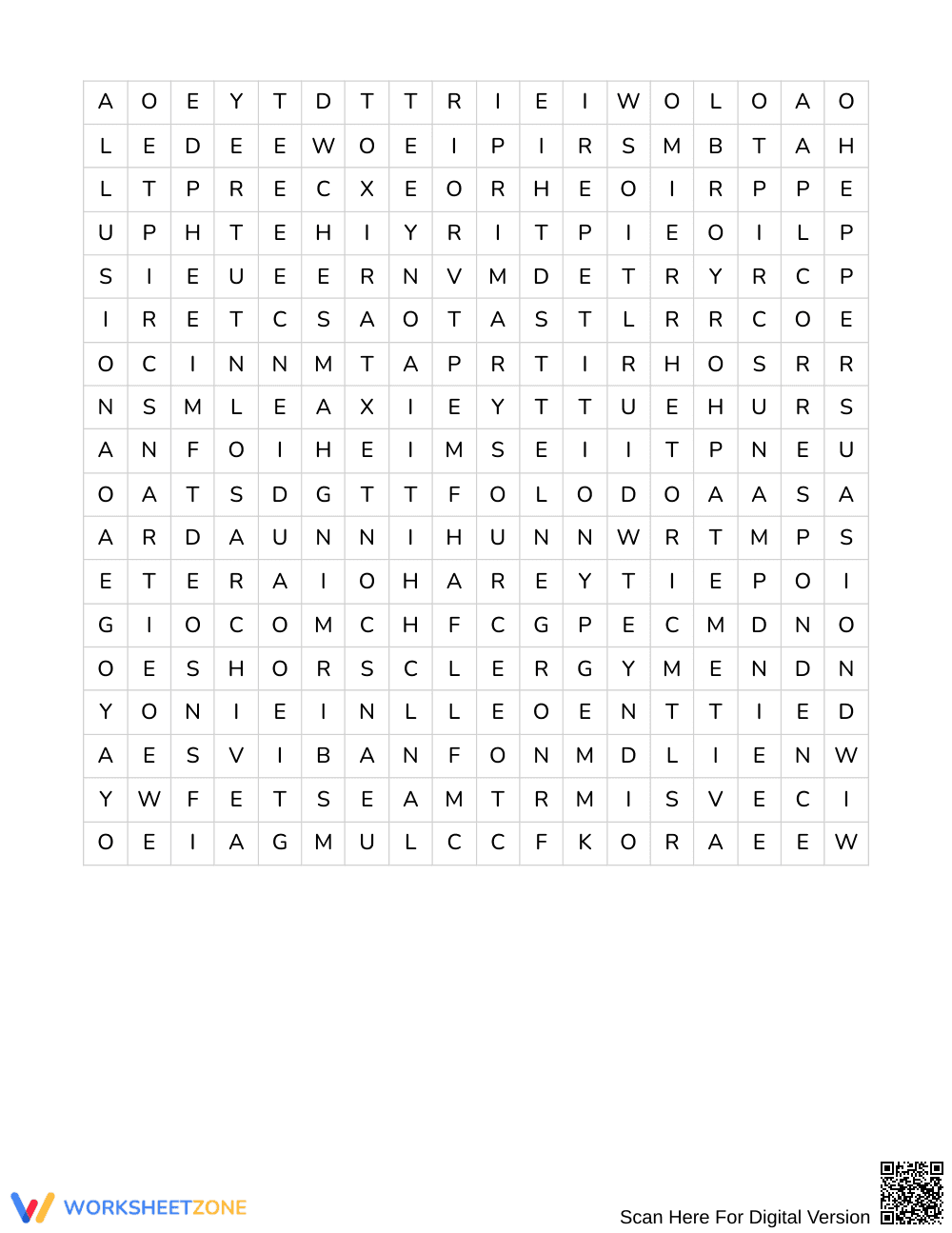

Ready MLK Sources Word Search | Grades 6–7 Social Studies

Paste this activity's link or code into your existing LMS (Google Classroom, Canvas, Teams, Schoology, Moodle, etc.).
Students can open and work on the activity right away, with no student login required.
You'll still be able to track student progress and results from your teacher account.
This Martin Luther King Jr. word search challenges students to analyze letters and speeches as historical sources through rigorous, clue-based vocabulary practice. Learners evaluate 16 detailed historical definitions to identify key rhetorical and archival terms before searching the grid, reinforcing essential document analysis concepts and deepening historical literacy across Grades 6–7 Social Studies classrooms.
At a Glance
- Grade: Grades 6–7 · Subject: Social Studies
- Standard: Not standards-assessed — vocabulary enrichment
- Skill Focus: Letters and speeches as historical sources
- Format: 3 student pages · 16 words · Full answer key included · Printable PDF
- Best For: Primary source introduction, historical document vocabulary enrichment, and sub plans
- Time: 25–35 active instructional minutes
What's Inside
This 3-page printable activity features 16 terms rooted in the study of civil rights texts, including Dr. Martin Luther King Jr.'s "Letter from Birmingham Jail." Rather than providing a simple word list, the activity offers 16 clues requiring students to deduce historical terminology before searching. A 4-page answer key provides complete solution grids for easy grading.
Puzzle Mechanics
This no-bank challenge transforms standard word searches into an analytical thinking exercise:
- Clue-Based Retrieval: Students must solve 16 content-specific clues without a pre-printed word bank, identifying terms like BIRMINGHAM, RHETORIC, and TESTIMONY.
- Complex Grid Layout: All 16 words are placed inside an 18 x 18 grid, demanding focused visual scanning.
- Multi-Directional Search: Hidden vocabulary runs across 8 directions: N, NE, E, SE, S, SW, W, and NW.
Standards Alignment
This resource is designed strictly for vocabulary enrichment and historical concept reinforcement; it is not aligned to a formal academic standard. By focusing on academic vocabulary related to primary source literacy—such as transcripts, archives, and rhetorical devices—it supports cross-curricular literacy across middle school social studies units.
How to Use It
Use this resource before direct instruction on Dr. King's writings to assess prior knowledge of primary source terminology. Alternatively, assign it after instruction as an engaging review during a civil rights unit. Circulate formatively to observe whether learners identify terms like allusion from clues without teacher assistance. Students complete the puzzle in 25 to 35 minutes.
Who It's For
This activity is designed for Grades 6–7 social studies students studying civil rights history. For differentiated support, provide struggling readers with a supplemental vocabulary list to assist clue retrieval. Pair this puzzle naturally with an anchor chart on primary versus secondary sources or a close-reading lesson on Dr. King's "Letter from Birmingham Jail."
Mastering historical literacy requires students to analyze letters and speeches as historical sources through dedicated vocabulary acquisition. According to Fisher & Frey (2014), intentional exposure to domain-specific terminology accelerates text comprehension and equips middle school learners to examine complex primary documents effectively. While this activity serves as non-standards-assessed vocabulary enrichment rather than a formal assessment, it establishes the conceptual groundwork necessary for rigorous social studies inquiry. By evaluating context clues to identify 16 specialized terms, including rhetorical devices like metaphor and repetition alongside archival concepts such as transcripts and manuscripts, learners connect linguistic analysis with historical evidence. Solving the 18-by-18 puzzle without a word bank fosters active cognitive retrieval, reinforcing how civil rights leaders utilized persuasive language. Consequently, this targeted practice builds foundational background knowledge that empowers Grades 6–7 students to interpret historical testimony with critical analytical confidence.


