




























Views
Downloads


Ready Indigenous Guides Word Search | Grade 6 Social Studies

Paste this activity's link or code into your existing LMS (Google Classroom, Canvas, Teams, Schoology, Moodle, etc.).
Students can open and work on the activity right away, with no student login required.
You'll still be able to track student progress and results from your teacher account.
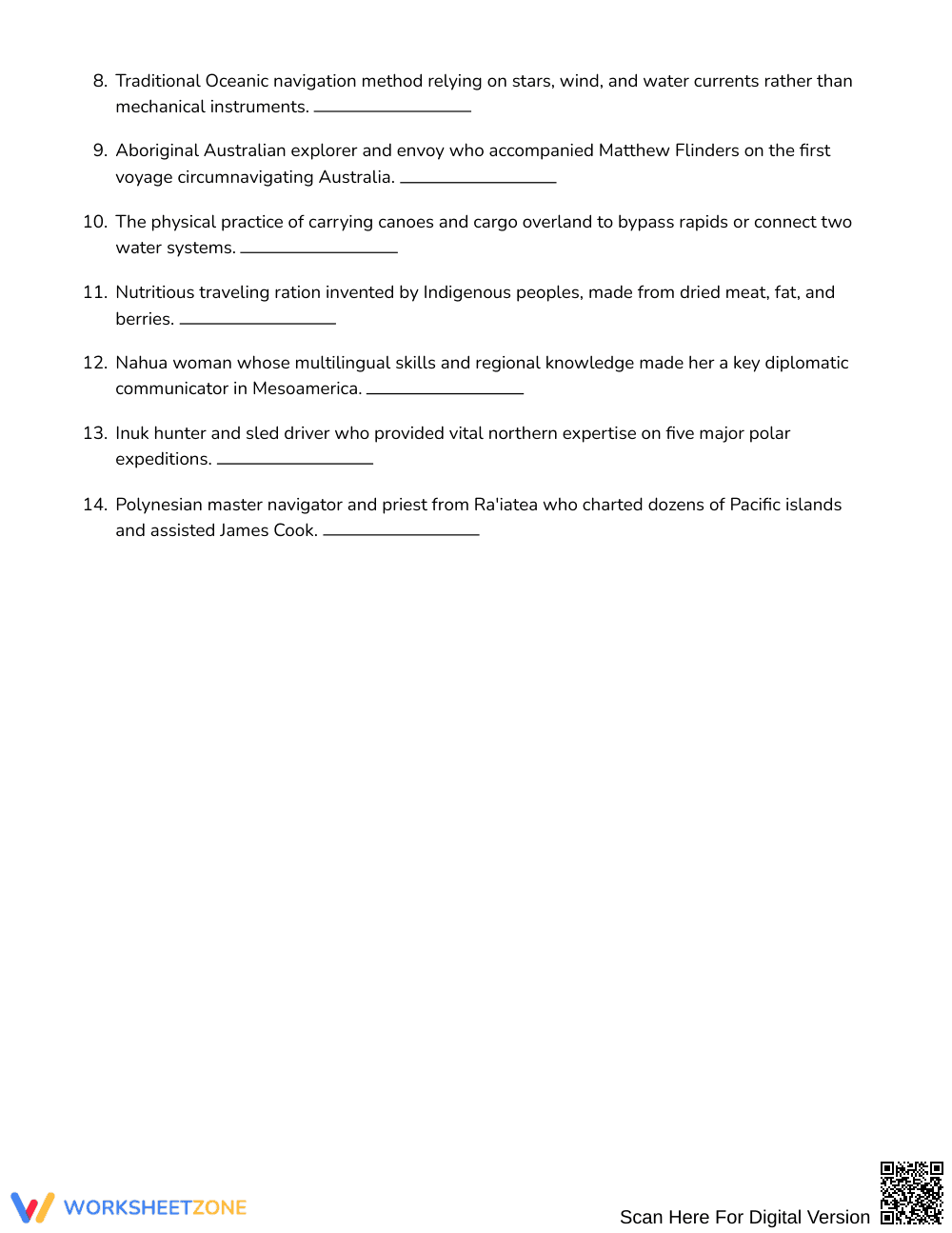
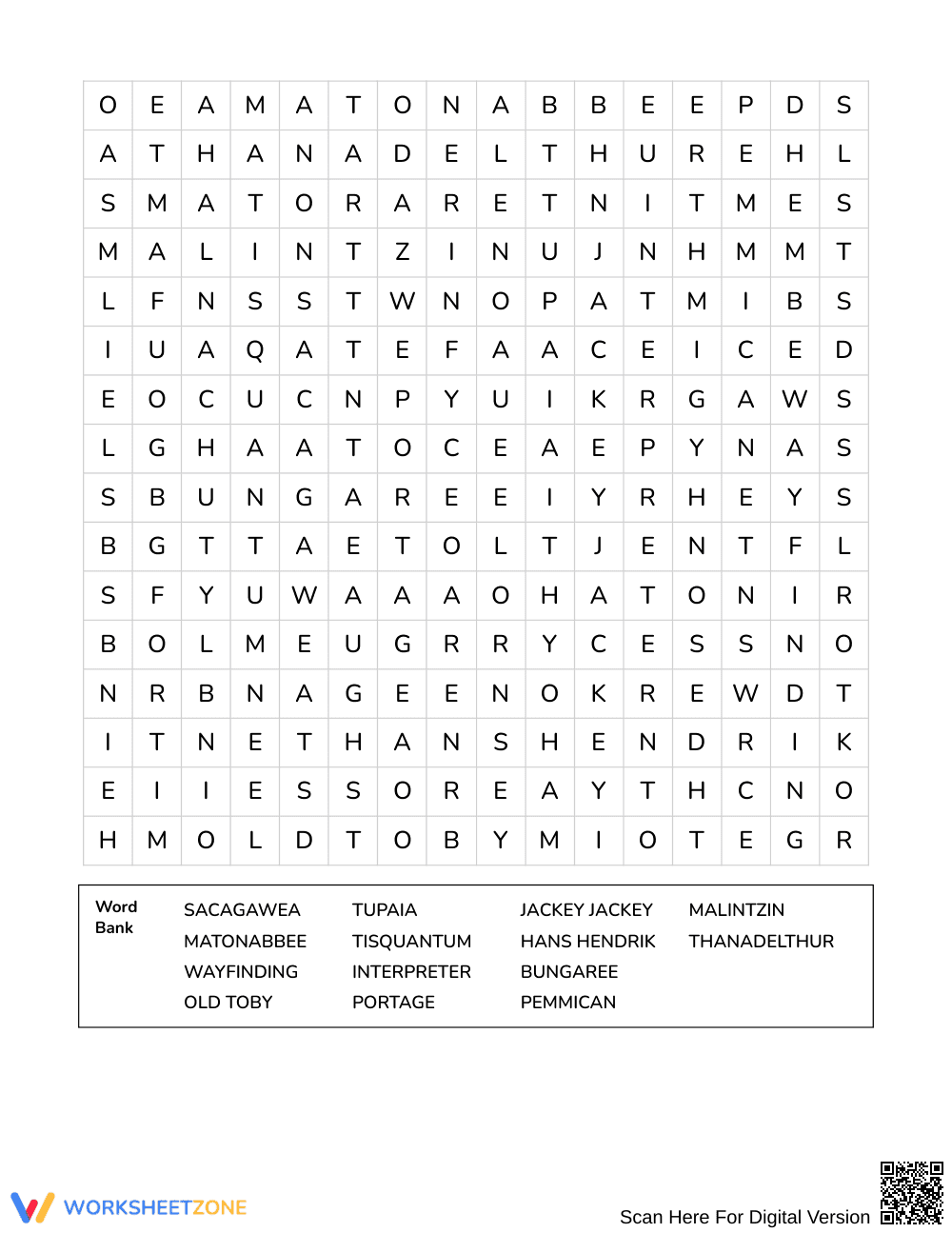
This Grade 6 social studies word search introduces learners to the vital contributions of Indigenous navigators, translators, and pathfinders across global history. Students read historical clues describing 14 notable figures and cultural terms, determine the corresponding terms, and locate them within the puzzle grid, strengthening content retention and historical vocabulary.
At a Glance
- Grade: Grade 6 · Subject: Social Studies
- Standard: Not standards-assessed — vocabulary enrichment
- Skill Focus: Indigenous guides and knowledge holders
- Format: 3 pages · 14 words · Answer key included · PDF
- Best For: World history unit vocabulary review
- Time: 20–30 minutes
What's Inside: The 3-page printable activity features 14 clue-based vocabulary challenges highlighting influential Indigenous knowledge holders such as Sacagawea, Tupaia, and Thanadelthur. A complete 3-page answer key provides clear solution paths for efficient teacher grading or student self-checking.
Puzzle Mechanics: Learners engage with a 16 × 16 letter grid containing 14 hidden terms. Words run in four distinct orientations: northeast, east, southeast, and south. Rather than relying on a basic list, students analyze historical clue prompts to identify each term from a shuffled word bank before locating it in the letter array.
Standards Alignment: This resource is designed strictly for vocabulary enrichment and is not aligned to a specific state or national standard. It supports cross-curricular literacy within middle school world history and geography units without requiring formal standardized reporting.
How to Use It: Distribute the activity as an introductory hook prior to direct instruction on global exploration, or provide it as a post-lesson consolidation task. During independent work, walk the room to observe whether students connect context clues—such as wayfinding or portage—to their geographic regions. The puzzle typically takes 20 to 30 minutes to complete.
Who It's For: Built for Grade 6 social studies classrooms, this resource supports diverse learners through contextual clue sentences that reinforce unfamiliar vocabulary. Pair this word search with a primary source excerpt, historical atlas, or biographical anchor chart depicting global trade and exploration routes.
According to Fisher & Frey (2014), intentional vocabulary acquisition that combines definitional context clues with visual word recognition reinforces long-term conceptual retrieval in adolescent learners. By integrating biographical descriptions of Indigenous guides and knowledge holders directly into the search process, this 14-word activity transforms passive puzzle-solving into meaningful historical inquiry. Students actively synthesize descriptions of wayfinding, regional diplomacy, and arctic navigation while scanning the 16 × 16 grid. This dual-processing approach deepens domain-specific lexicon without imposing burdensome cognitive load, making it an efficient vehicle for historical recognition and collaborative review across inclusive Grade 6 social studies learning environments.


