




























Views
Downloads

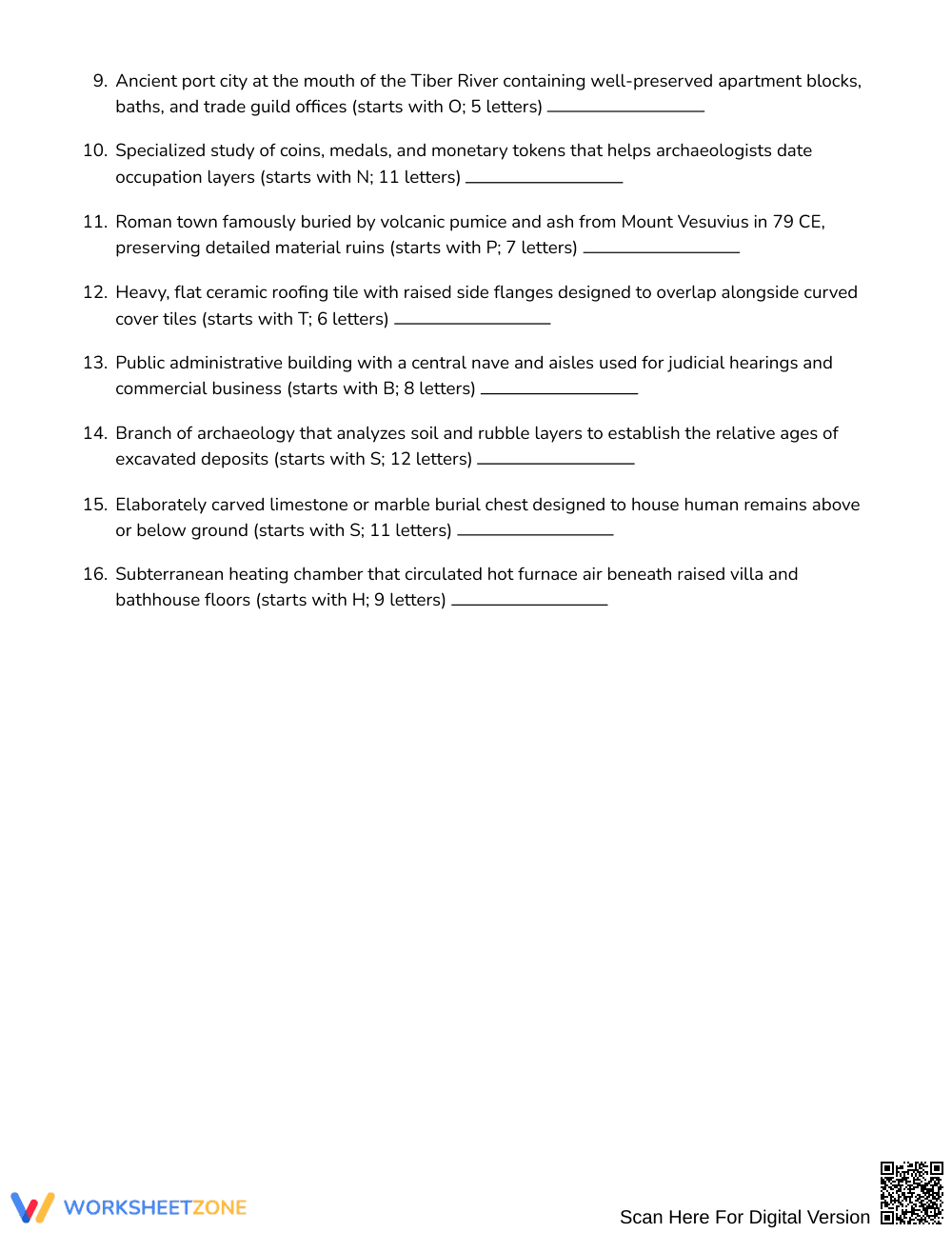
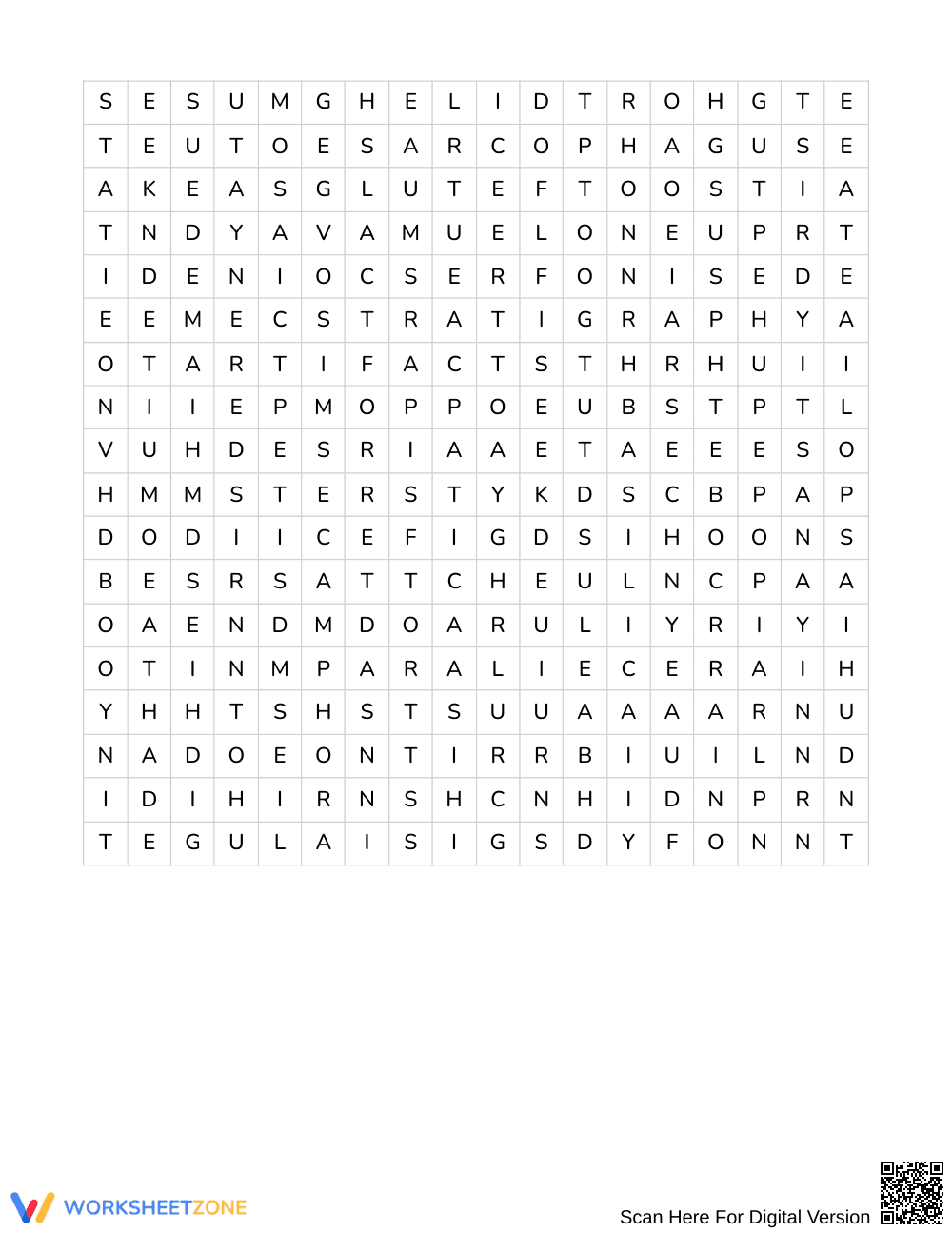

Ready Archaeology Word Search | Grades 6–7 Social Studies

Paste this activity's link or code into your existing LMS (Google Classroom, Canvas, Teams, Schoology, Moodle, etc.).
Students can open and work on the activity right away, with no student login required.
You'll still be able to track student progress and results from your teacher account.
This Grades 6–7 social studies word search reinforces essential vocabulary surrounding Roman archaeology and material evidence. Students read descriptive clues to identify 16 historical terms, then locate each word within an 18-by-18 letter grid. The activity strengthens academic recall of excavation methods, architectural preservation, and classical material culture.
At a Glance
- Grade: Grades 6–7 · Subject: Social Studies
- Standard: Not standards-assessed — vocabulary enrichment
- Skill Focus: Archaeology and material evidence
- Format: 3 pages · 16 words · Answer key included · PDF
- Best For: Ancient Rome unit vocabulary review
- Time: 20–35 minutes
What's Inside
The 3-page printable resource delivers a rigorous clue-based vocabulary puzzle alongside reference tools. Instead of scanning a simple list, students analyze 16 detailed definitions covering artifacts, architectural techniques, and excavation sites like Pompeii and Ostia. The resource includes a full answer key displaying completed word placements across the puzzle grid for rapid evaluation.
Puzzle Mechanics and Structure
This puzzle challenges students across an 18-by-18 letter grid. Hidden words run in all 8 compass directions: north, northeast, east, southeast, south, southwest, west, and northwest, including backward and diagonal orientations. Because the worksheet provides clues rather than a visible word bank, learners must retrieve or deduce each archaeological term before locating it in the puzzle.
Standards Alignment
This resource serves as targeted vocabulary enrichment and is not aligned to a formal state or national content standard. It reinforces disciplinary literacy across middle school World History units by emphasizing precise historical terminology, material culture analysis, and archaeological concepts.
How to Use It
Implement this word search as an engaging mid-unit review or post-instruction reinforcement activity following lessons on classical Roman technology and archaeology. During independent or paired completion, observe whether students can identify specialized terms—such as hypocaust or stratigraphy—from the contextual clues before searching the grid. Students typically complete the 16 hidden words in 20 to 35 minutes.
Who It's For
This activity is designed for Grades 6–7 World History and Social Studies classrooms exploring ancient Mediterranean civilizations. Teachers can scaffold the challenge for emerging readers by pairing students or supplying initial letter hints for difficult clues. The activity pairs effectively with archaeological artifact image sets, museum virtual tours, or direct instruction on Roman daily life.
According to Fisher & Frey (2014), intentional disciplinary vocabulary instruction requires students to interact with domain-specific terms through multiple modalities, including contextual definitions and visual word recognition. This 16-word Roman archaeology resource supports Grades 6–7 social studies learners as non-standards-assessed vocabulary enrichment, bridging the gap between passive reading and active term retrieval. By challenging students to solve descriptive clues regarding Roman material evidence—including stratigraphy, mosaics, frescos, hypocausts, and excavation sites—before locating them within an 18-by-18 grid, the puzzle deepens semantic retention. Integrating specialized historical vocabulary into guided classroom review strengthens conceptual understanding of how material culture informs historical knowledge across secondary history curricula. The included answer key and clue-driven structure provide educators with an efficient instructional tool for reinforcing World History terminology while encouraging collaborative problem-solving and rigorous textual analysis during classical antiquity units.


