


























1 / 6
0
Views
0
Downloads

0.0
0
Save
0 Likes
Share
Understand the Pyramid of Energy
0 Views
0 Downloads
Paste this activity's link or code into your existing LMS (Google Classroom, Canvas, Teams, Schoology, Moodle, etc.).
Students can open and work on the activity right away, with no student login required.
You'll still be able to track student progress and results from your teacher account.
Information
Description
What It Is:
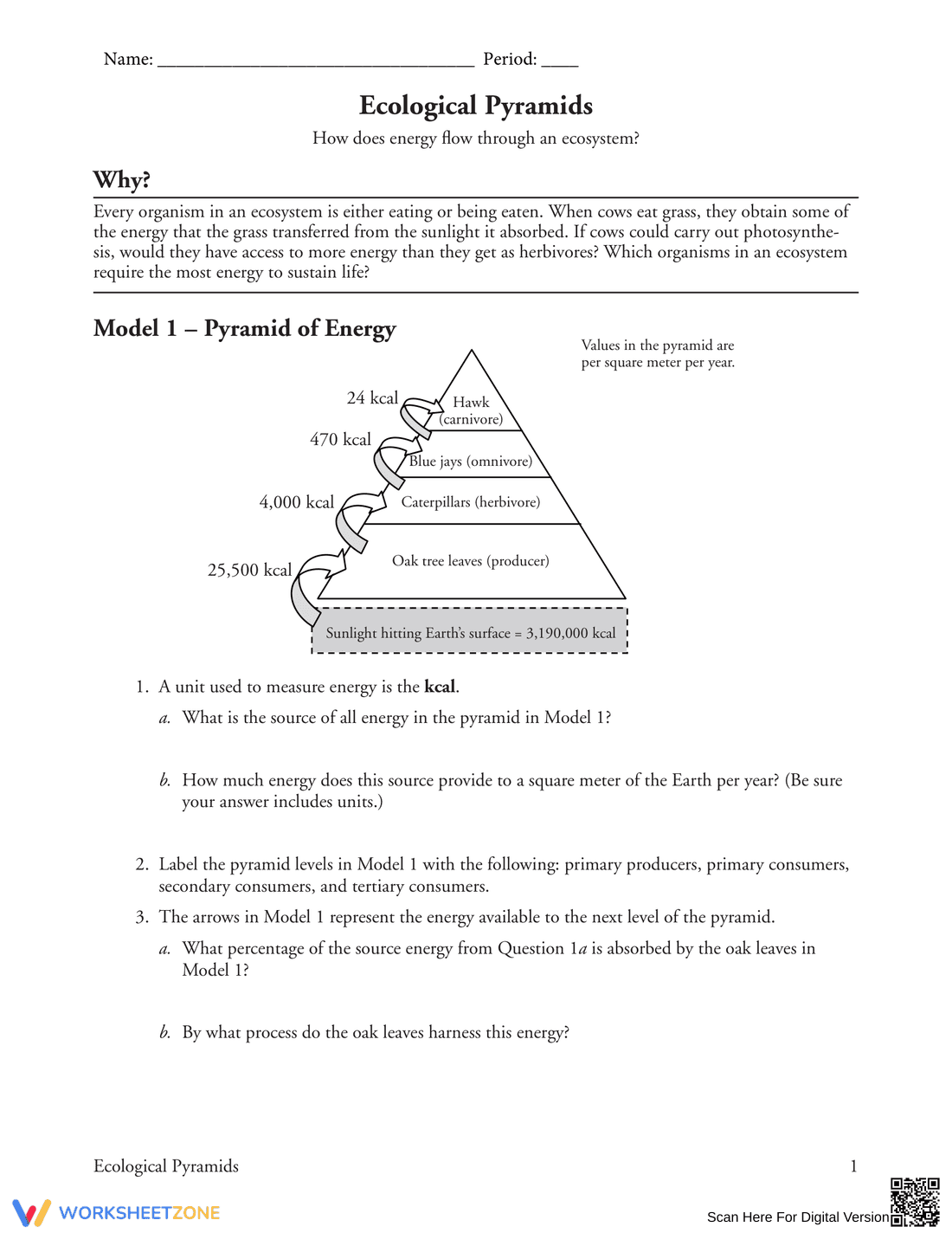
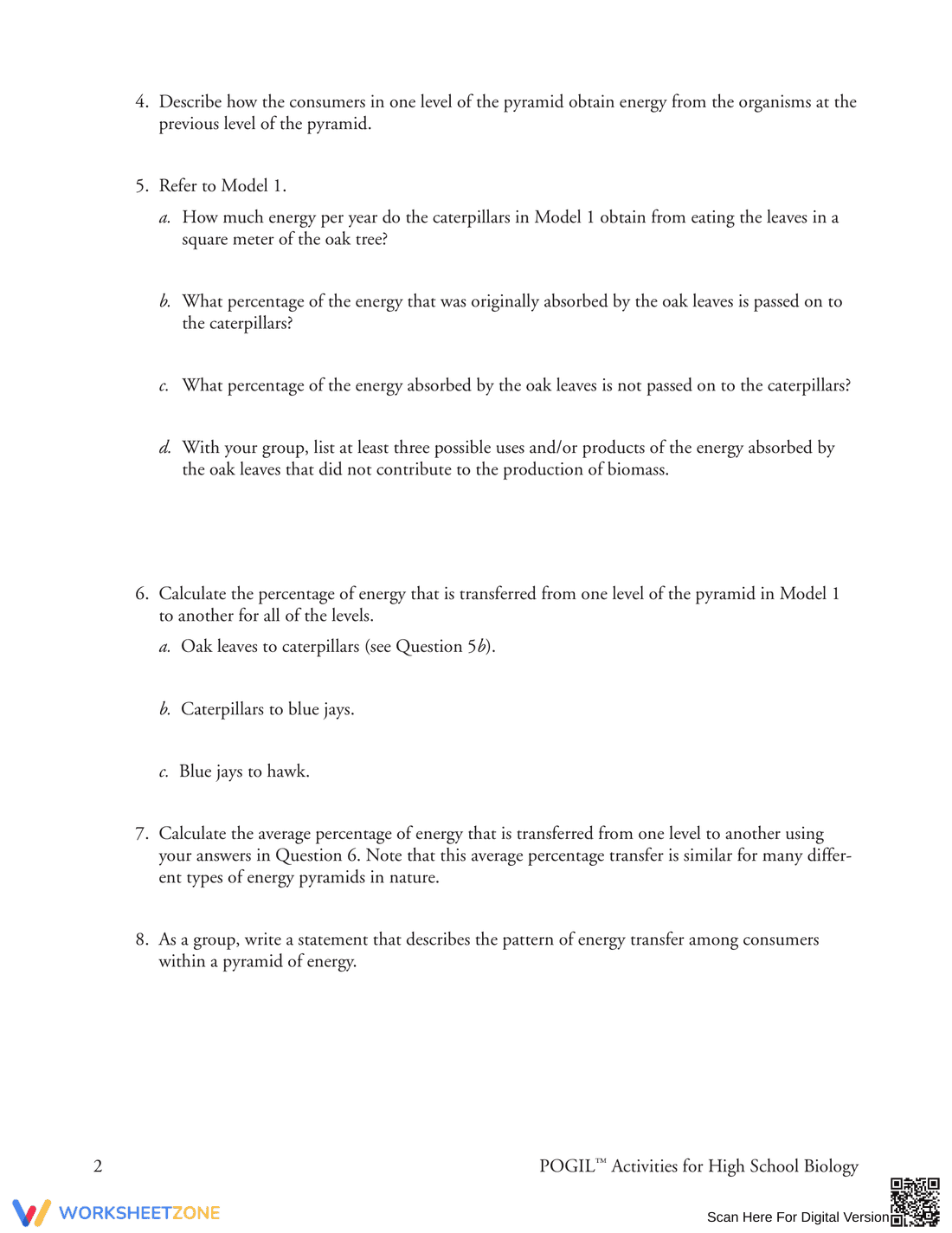
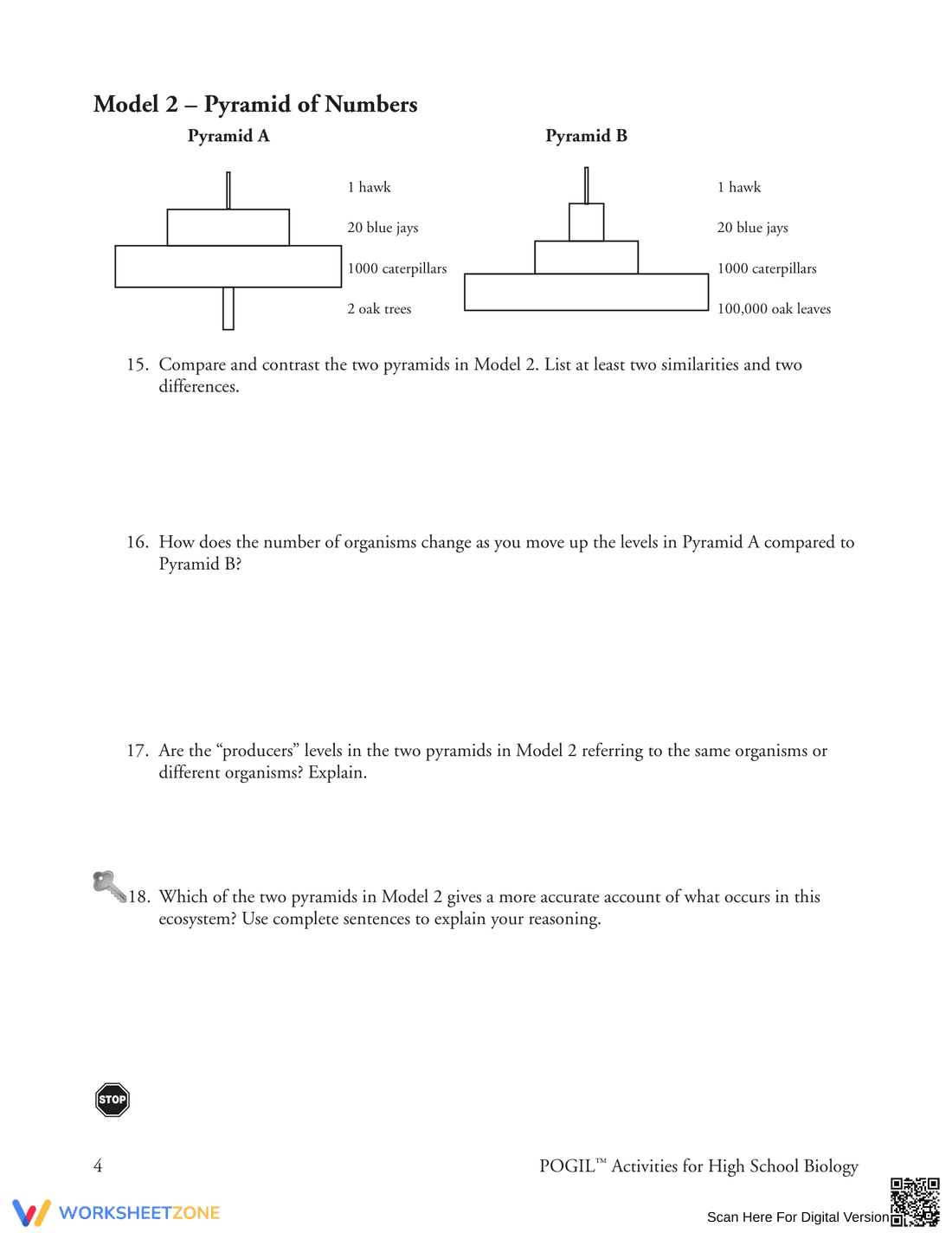
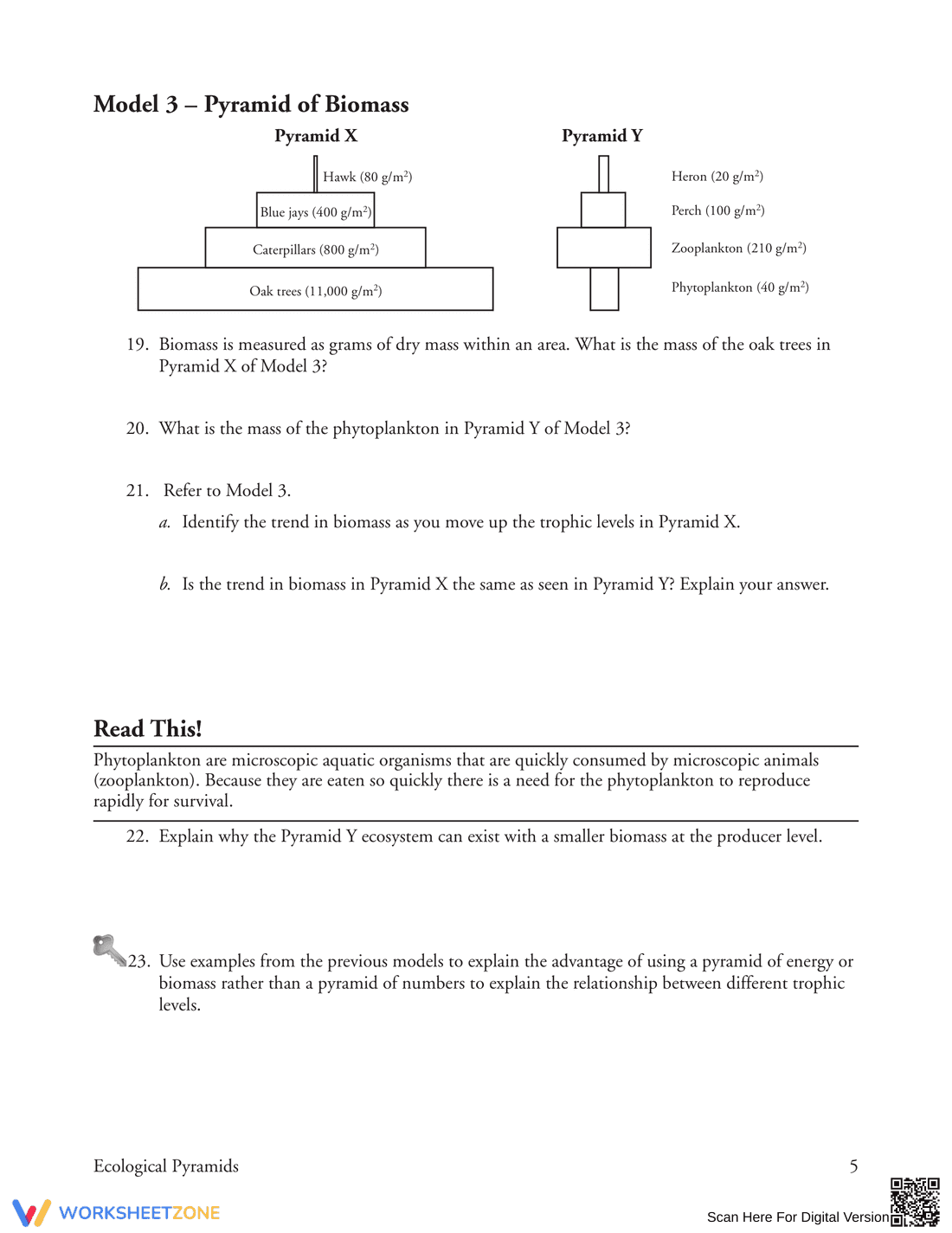
This is an educational worksheet about ecological pyramids, specifically focusing on the flow of energy through an ecosystem. The worksheet includes a diagram of a pyramid of energy, with levels labeled as oak tree leaves (producer), caterpillars (herbivore), blue jays (omnivore), and hawk (carnivore), with associated energy values in kcal. It also includes questions related to energy transfer, labeling trophic levels, and identifying the process by which producers harness energy.
Grade Level Suitability:
This worksheet is suitable for grades 6-9, likely middle school and early high school. The concepts of energy flow, trophic levels, producers, consumers, and energy pyramids are typically introduced in these grades. The questions require analysis and understanding of the diagram, making it appropriate for this age range.
Why Use It:
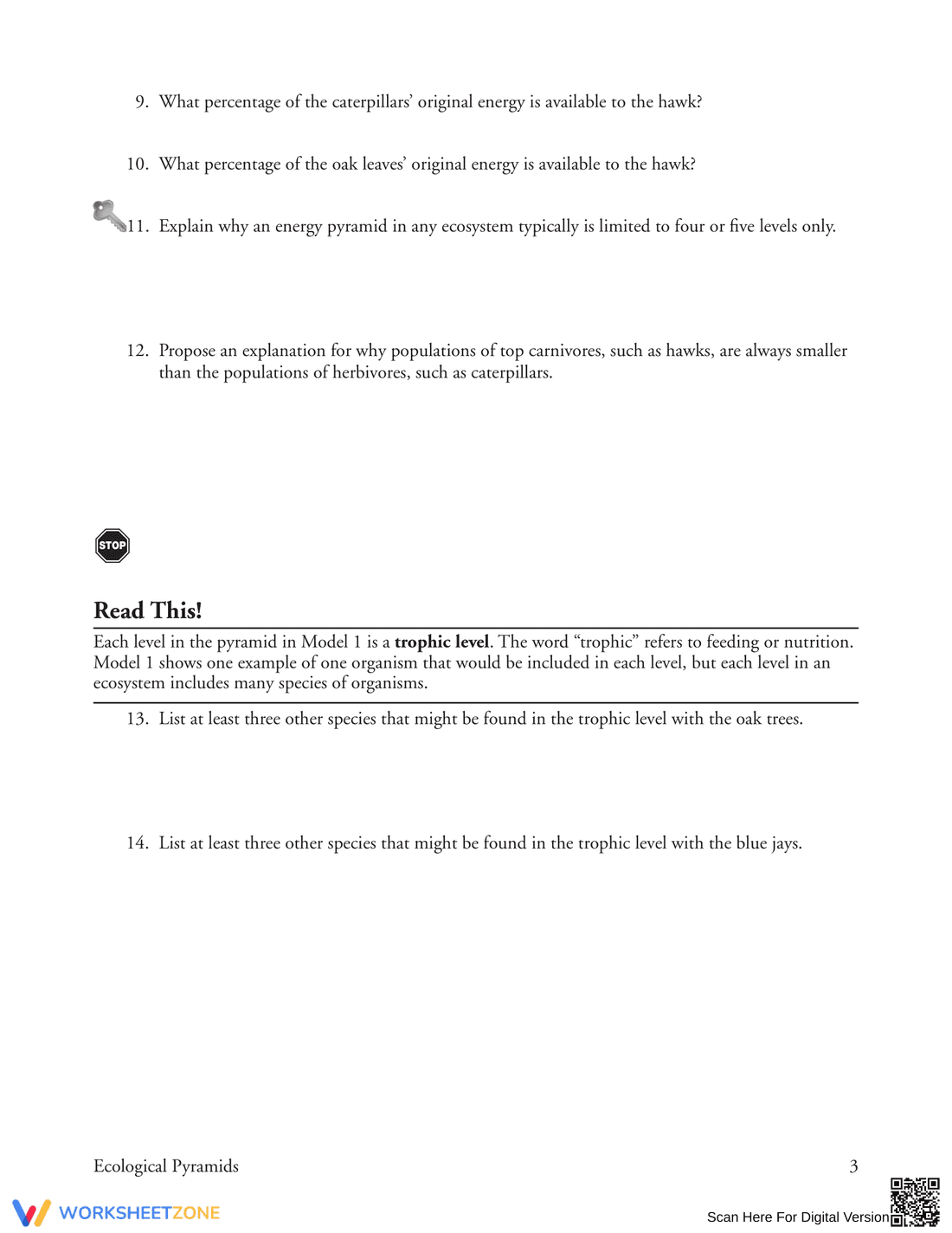
This worksheet helps students understand the concept of energy flow in an ecosystem and how energy is transferred between trophic levels. It reinforces the understanding of producers, consumers, and decomposers, and helps students visualize the energy pyramid. The questions promote critical thinking and problem-solving skills related to ecological concepts.
How to Use It:
Students should first read the introductory text about energy flow. Then, they should study the pyramid of energy diagram and the provided values. Students should answer the questions by referring to the diagram and applying their knowledge of ecological concepts. They may need to calculate percentages or label the trophic levels.
Target Users:
The target users are middle school and early high school students studying ecology, biology, or environmental science. It is also useful for teachers looking for supplementary materials to reinforce the concept of ecological pyramids and energy flow in ecosystems.
This is an educational worksheet about ecological pyramids, specifically focusing on the flow of energy through an ecosystem. The worksheet includes a diagram of a pyramid of energy, with levels labeled as oak tree leaves (producer), caterpillars (herbivore), blue jays (omnivore), and hawk (carnivore), with associated energy values in kcal. It also includes questions related to energy transfer, labeling trophic levels, and identifying the process by which producers harness energy.
Grade Level Suitability:
This worksheet is suitable for grades 6-9, likely middle school and early high school. The concepts of energy flow, trophic levels, producers, consumers, and energy pyramids are typically introduced in these grades. The questions require analysis and understanding of the diagram, making it appropriate for this age range.
Why Use It:
This worksheet helps students understand the concept of energy flow in an ecosystem and how energy is transferred between trophic levels. It reinforces the understanding of producers, consumers, and decomposers, and helps students visualize the energy pyramid. The questions promote critical thinking and problem-solving skills related to ecological concepts.
How to Use It:
Students should first read the introductory text about energy flow. Then, they should study the pyramid of energy diagram and the provided values. Students should answer the questions by referring to the diagram and applying their knowledge of ecological concepts. They may need to calculate percentages or label the trophic levels.
Target Users:
The target users are middle school and early high school students studying ecology, biology, or environmental science. It is also useful for teachers looking for supplementary materials to reinforce the concept of ecological pyramids and energy flow in ecosystems.


