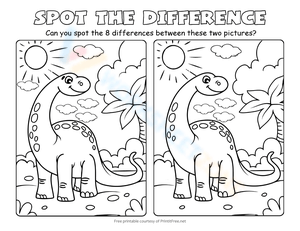
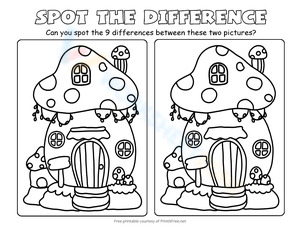
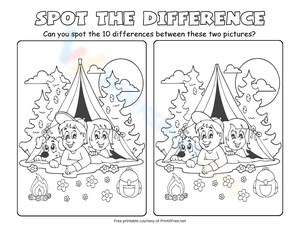
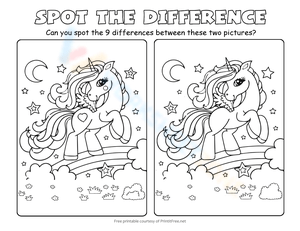
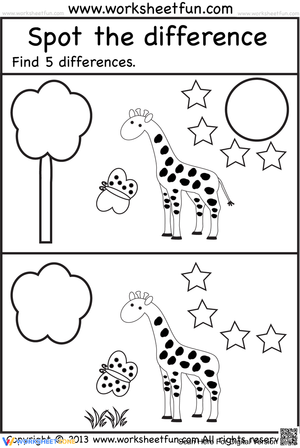
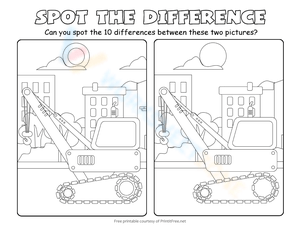
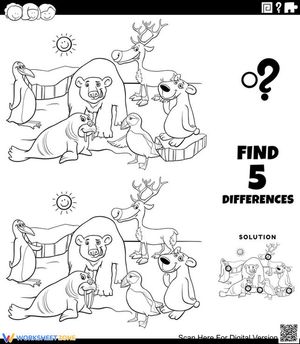
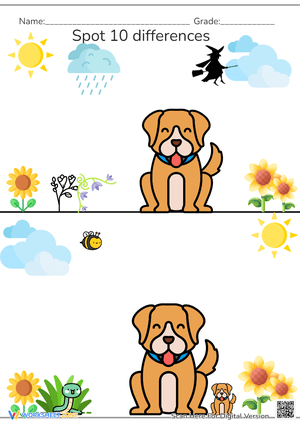
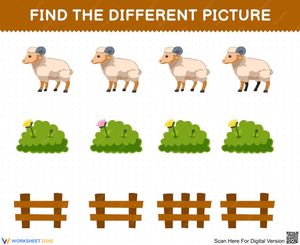
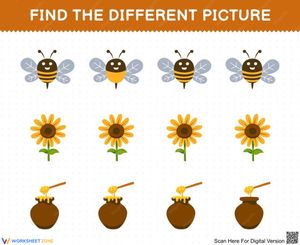
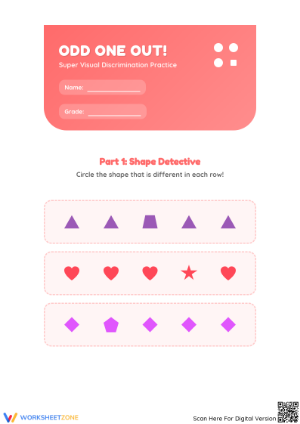
There is a quiet thrill in spotting something nobody else has noticed yet. Our find the difference worksheets invite children into that exact moment, asking them to slow down, look twice, and trust what their eyes are telling them. Each printable page becomes a small visual mystery, where two nearly identical scenes hide tiny changes waiting to be uncovered. The activity feels like play, yet it nurtures the kind of patient attention that supports every other area of learning at home or in the classroom.
Behind the puzzle is real cognitive work. When students compare two illustrations, they practice visual discrimination, working memory, and systematic scanning, three skills that quietly strengthen reading and early math. Teachers often pair these printable activities with phonics or shape lessons because the brain treats letters and numbers as visual patterns first. By training the eyes to notice subtle changes in a picture, kids build the same focus they will later apply to spotting silent letters or misread digits.
Parents appreciate how naturally these pages spark conversation between siblings or between a child and an adult. A short pause to ask what is different in the second drawing turns into a discussion about colors, sizes, missing objects, and clever artistic choices. This shared looking strengthens vocabulary as children describe what they see, and it gives quieter students a low-pressure way to participate. For deeper enrichment at home, families can also explore other brain-building activities for kids that pair beautifully with visual puzzle work.
Older students benefit just as much, though in different ways. Upper elementary learners use these puzzles as mindful breaks between heavier lessons, resetting their attention before returning to writing or problem solving. Some teachers use them as bell-ringers, while others slip them into early-finisher folders so no minute of the school day goes to waste. Because the worksheets are quiet and self-directed, they suit independent work, small group rotations, or a calm corner of the classroom where focus matters most.
Bring out crayons, pencils, or a quiet timer and let curiosity lead the way through these find the difference worksheets. Each printable page rewards careful eyes, patient thinking, and the joy of finally circling that last hidden change. Worksheetzone makes it simple for teachers and parents to download fresh puzzles whenever a lesson needs a little wonder, ensuring every learner gets a memorable practice moment that feels more like discovery than schoolwork.
Frequently Asked Questions
Question 1: What age group benefits most from find the difference worksheets?
These printable puzzles work wonderfully for children between ages four and ten, though older students enjoy them as mindful breaks too. Younger learners build basic visual discrimination and color recognition, while upper elementary students sharpen sustained focus and systematic scanning. Teachers often differentiate by choosing simpler scenes for early learners and more detailed illustrations for confident readers, ensuring every student finds an appropriate level of challenge that keeps them engaged.
Question 2: How do these worksheets support classroom learning beyond visual skills?
Beyond observation, these puzzles strengthen working memory, patience, and attention to detail, which directly support reading, spelling, and early math. When a student scans for tiny changes, the brain practices the same pattern recognition needed to decode words or compare numbers. Many teachers use them as bell-ringers, transition activities, or quiet stations during literacy rotations because the cognitive carryover into core academic subjects is immediate and measurable.
Question 3: Can parents use these printable puzzles at home for learning support?
Absolutely, parents find these worksheets ideal for screen-free afternoons, road trips, waiting rooms, and calm-down corners. The activity invites natural conversation as children describe what they notice, which expands vocabulary and builds confidence in expressing observations. Worksheetzone offers a wide range of themes, so families can match puzzles to a child's interests, whether animals, sports, or seasonal scenes, making practice feel personal and motivating.
Question 4: How often should students complete find the difference worksheets for steady progress?
Two to three short sessions each week, lasting around ten to fifteen minutes, generally produce noticeable gains in focus and visual processing. Consistency matters more than length, since the cognitive benefits build gradually through repeated, low-stress practice. Teachers can rotate themes to keep the activity fresh, while parents may simply offer a new puzzle whenever a child needs a quiet, self-guided moment that still encourages thinking, looking carefully, and gentle problem solving.












 Interactive Worksheet Maker
 Quiz Maker
 Word Search Maker
 Crossword Puzzle Maker
 Word Scramble Generator
 Sentence Scramble Generator
 Handwriting Worksheet Generator
 Name Tracing Generator
 Fill In The Blank Generator