


























Views
Downloads
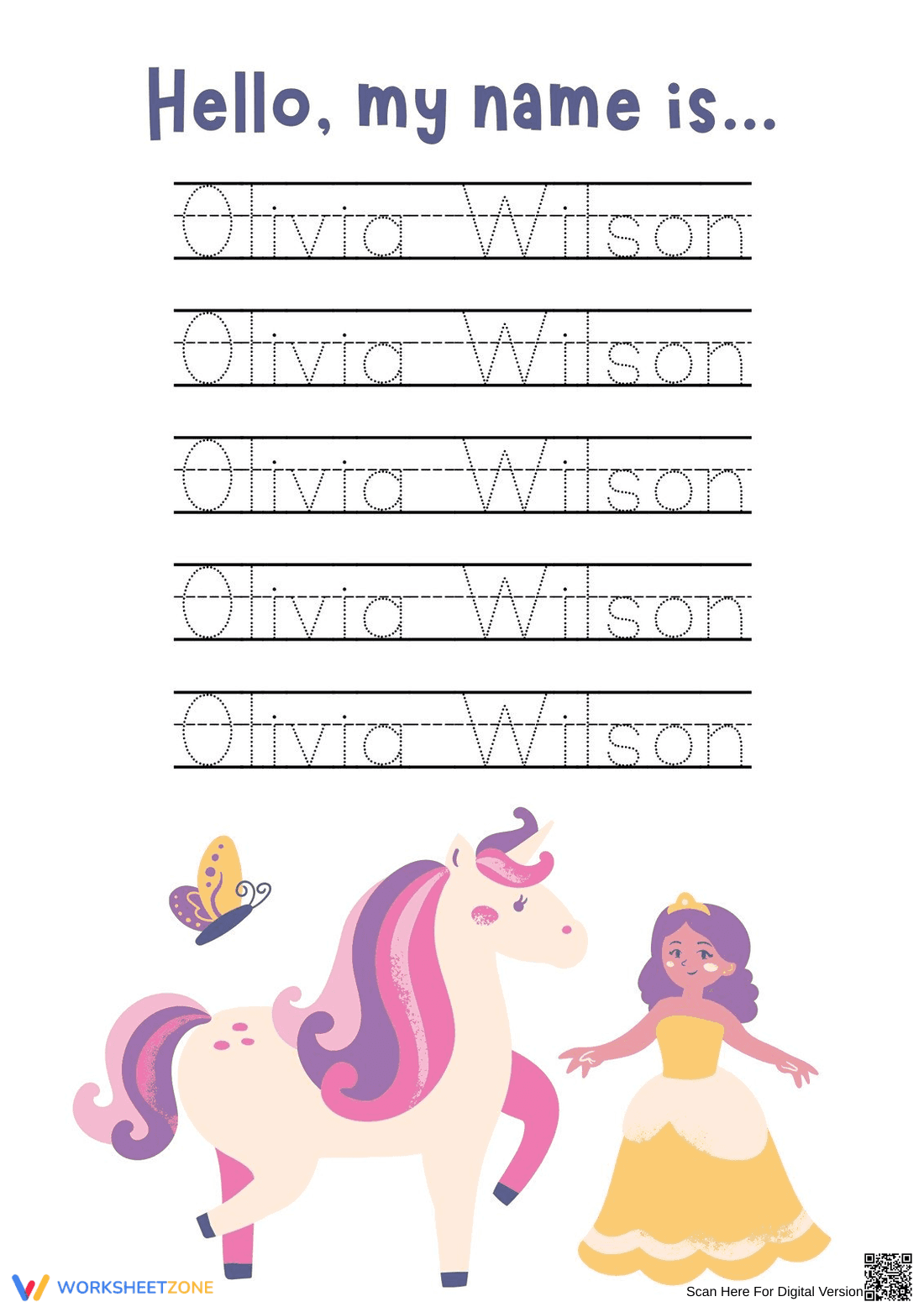

Pre-K Name Tracing — Printable No-Prep Worksheet
Paste this activity's link or code into your existing LMS (Google Classroom, Canvas, Teams, Schoology, Moodle, etc.).
Students can open and work on the activity right away, with no student login required.
You'll still be able to track student progress and results from your teacher account.
This Pre-K name tracing worksheet provides early learners with targeted practice in letter formation and fine motor control. By tracing their name across multiple guided lines, students develop the muscle memory required for independent writing. The engaging illustrations help maintain student focus during this essential task.
At a Glance
- Grade: Pre-K · Subject: ELA
- Standard:
CCSS.ELA-LITERACY.L.K.1.A— Print upper- and lowercase letters- Skill Focus: Name Tracing and Fine Motor Skills
- Format: 1 page · 5 problems · No answer key needed · PDF
- Best For: Morning work or literacy centers
- Time: 10–15 minutes
This single-page printable features five tracing lines for repetitive practice. The worksheet uses a clear, dotted primary font on standard handwriting guidelines to support proper letter proportion. A cheerful header introduces the activity, while colorful illustrations provide visual interest. No answer key is required for this straightforward tracing activity.
Zero-Prep Workflow
- Print (1 minute): Simply download the PDF and print the required number of copies. The high-contrast dotted font ensures clean reproduction on standard school printers.
- Distribute (1 minute): Hand out the worksheets with pencils or markers. The intuitive layout means students immediately understand the task.
- Review (Ongoing): Monitor students as they trace to ensure proper pencil grip and stroke direction. Total teacher preparation time is under two minutes, making this an excellent option for emergency sub plans or quick morning work.
Standards Alignment
This resource aligns with CCSS.ELA-LITERACY.L.K.1.A, which requires students to print many upper- and lowercase letters. While designed for Pre-K readiness, it directly supports this Kindergarten standard by building the foundational fine motor skills and stroke sequences necessary for independent letter formation. Both standard codes can be copied directly into lesson plans, IEP goals, or district curriculum mapping tools.
How to Use It
Deploy this worksheet as a daily morning routine to help students transition into the school day while practicing a highly personal and motivating skill. Alternatively, place it in a literacy center inside a dry-erase sleeve for reusable practice with whiteboard markers. As students work, observe their pencil grip and note whether they trace letters starting from the top or bottom; this formative assessment helps identify students needing targeted fine motor intervention. Most early learners will complete this activity in 10 to 15 minutes.
Who It's For
This worksheet is designed primarily for preschool and pre-kindergarten students who are just beginning to learn letter formation. It is also highly effective for kindergarten students who need additional fine motor support or occupational therapy practice. For students requiring extra scaffolding, pair this worksheet with a tactile letter-tracing activity or a direct instruction lesson on proper pencil grip before they begin writing.
Developing automaticity in name writing is a critical milestone in early childhood education. This resource supports CCSS.ELA-LITERACY.L.K.1.A by helping students print upper- and lowercase letters through guided, repetitive tracing. According to Fisher & Frey (2014), providing structured, scaffolded practice opportunities is essential for transferring discrete skills into long-term memory. By engaging in this targeted fine motor activity, early learners build the precise muscle control required for future writing tasks. The clear visual boundaries of the handwriting lines assist students in understanding spatial relationships between letters. Regular practice with this specific format reduces cognitive load, allowing young writers to focus entirely on stroke mechanics rather than letter recall. This foundational competence directly correlates with broader literacy success as students progress into primary grades, ensuring they are prepared for more complex compositional demands.


