




























1 / 2
0
Views
0
Downloads

0.0
0
Save
0 Likes
Share
Protons, Neutrons, and Electrons Practice Worksheet
0 Views
0 Downloads

Paste this activity's link or code into your existing LMS (Google Classroom, Canvas, Teams, Schoology, Moodle, etc.).
Students can open and work on the activity right away, with no student login required.
You'll still be able to track student progress and results from your teacher account.
Information
Description
What It Is:
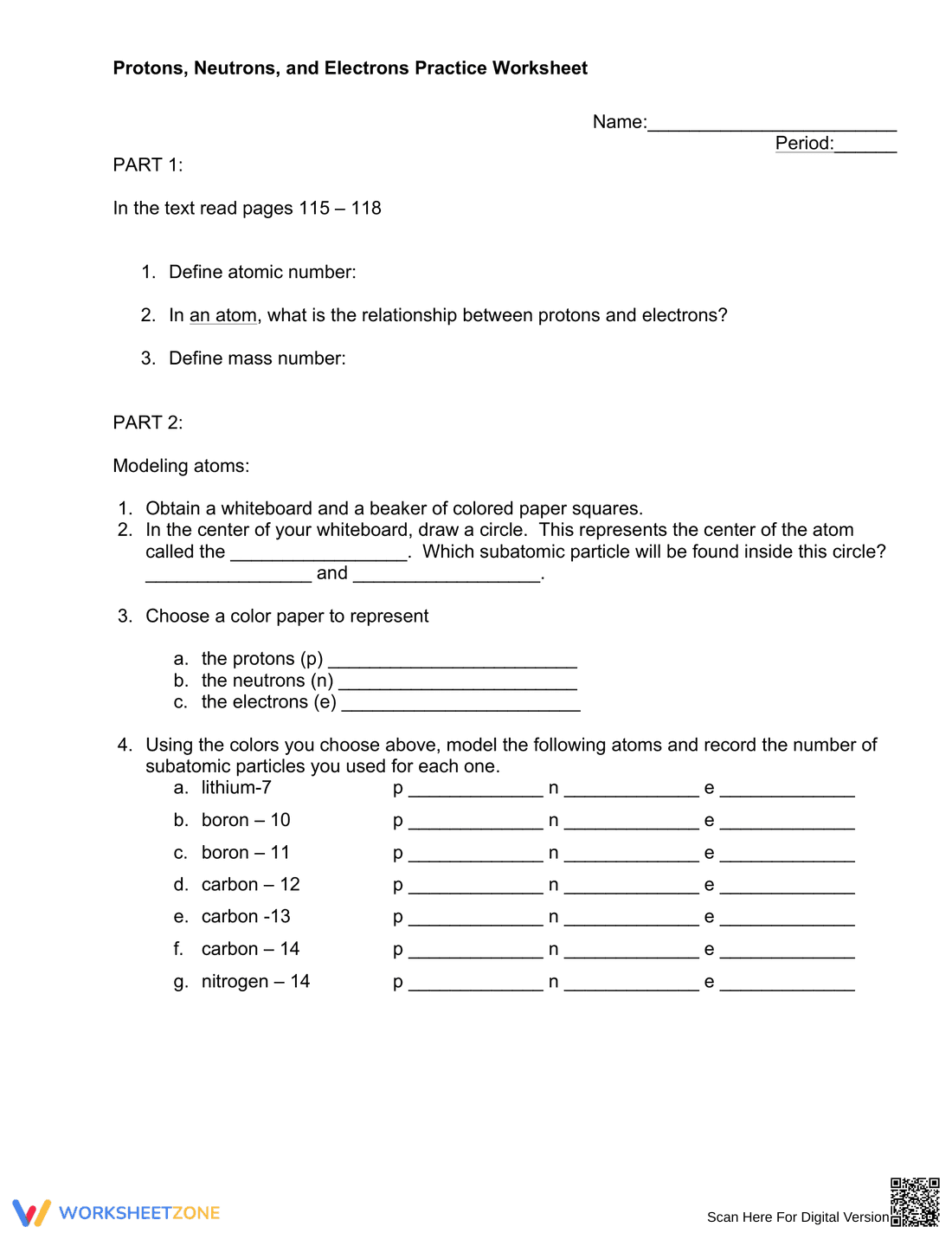
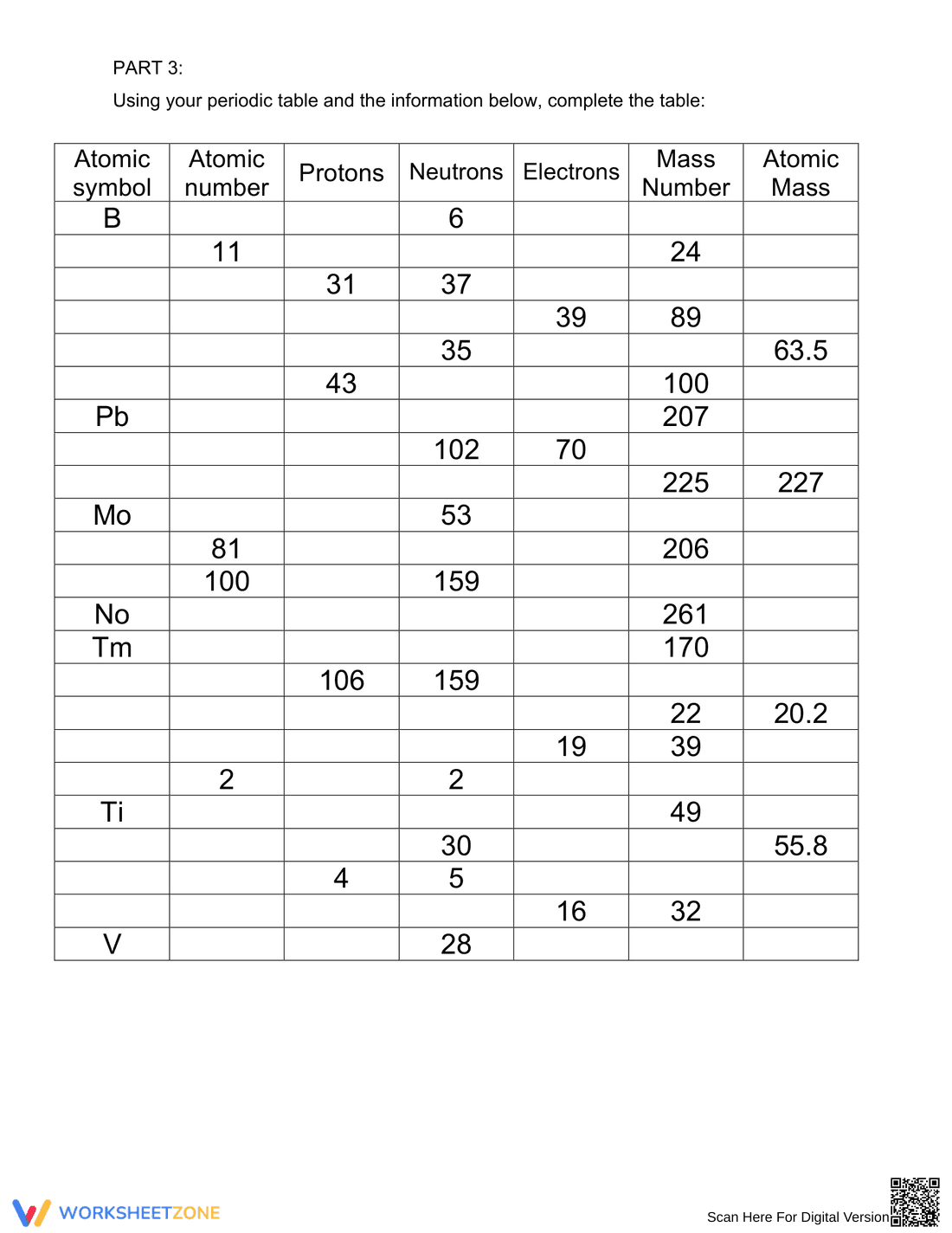
This worksheet covers basic concepts about atomic structure, including the relationship between protons, neutrons, and electrons. It includes a hands-on modeling activity to help students understand atomic components using colored paper squares and whiteboards.
Why Use It:
The worksheet helps students solidify their understanding of atomic structure and subatomic particles by encouraging them to model atoms using practical tools. It reinforces knowledge about atomic numbers, mass numbers, and how the subatomic particles interact in atoms.
How to Use It:
• Answer the definition questions on atomic number, the relationship between protons and electrons, and mass number.
• Perform the modeling activity to represent the proton, neutron, and electron count for various elements.
• Record the number of subatomic particles for each modeled atom.
Grade Suitability:
Best suited for middle school students or high school freshmen studying basic atomic structure.
• A great hands-on activity for reinforcing atomic theory.
• Ideal for classroom or lab activities where students actively engage in scientific modeling.
Target Users:
Designed for students learning the basics of atomic structure and subatomic particles.
• Suitable for science classes focused on physical science or chemistry.
• Great for visual learners who benefit from hands-on learning.
This worksheet covers basic concepts about atomic structure, including the relationship between protons, neutrons, and electrons. It includes a hands-on modeling activity to help students understand atomic components using colored paper squares and whiteboards.
Why Use It:
The worksheet helps students solidify their understanding of atomic structure and subatomic particles by encouraging them to model atoms using practical tools. It reinforces knowledge about atomic numbers, mass numbers, and how the subatomic particles interact in atoms.
How to Use It:
• Answer the definition questions on atomic number, the relationship between protons and electrons, and mass number.
• Perform the modeling activity to represent the proton, neutron, and electron count for various elements.
• Record the number of subatomic particles for each modeled atom.
Grade Suitability:
Best suited for middle school students or high school freshmen studying basic atomic structure.
• A great hands-on activity for reinforcing atomic theory.
• Ideal for classroom or lab activities where students actively engage in scientific modeling.
Target Users:
Designed for students learning the basics of atomic structure and subatomic particles.
• Suitable for science classes focused on physical science or chemistry.
• Great for visual learners who benefit from hands-on learning.


