


























Views
Plays
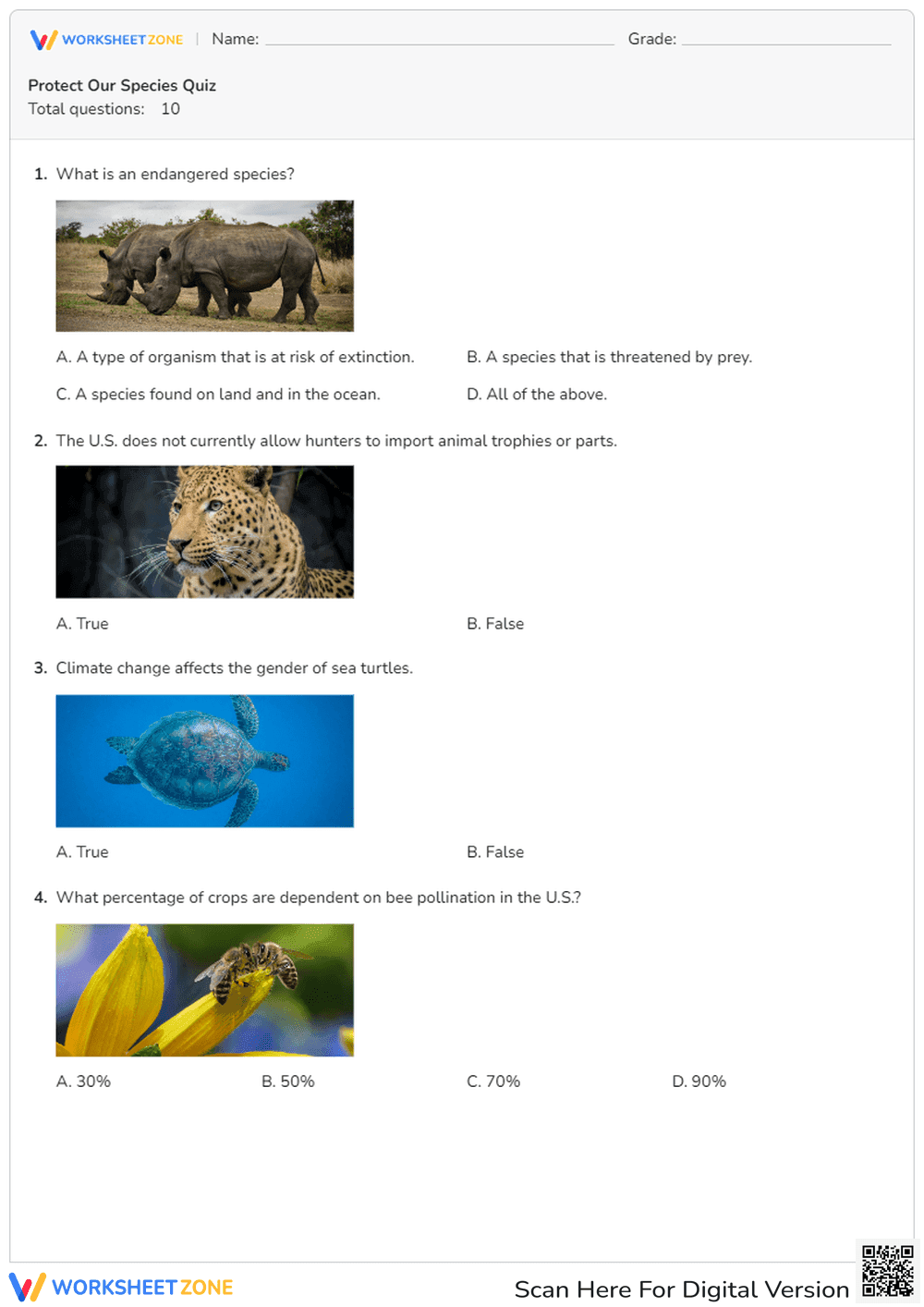
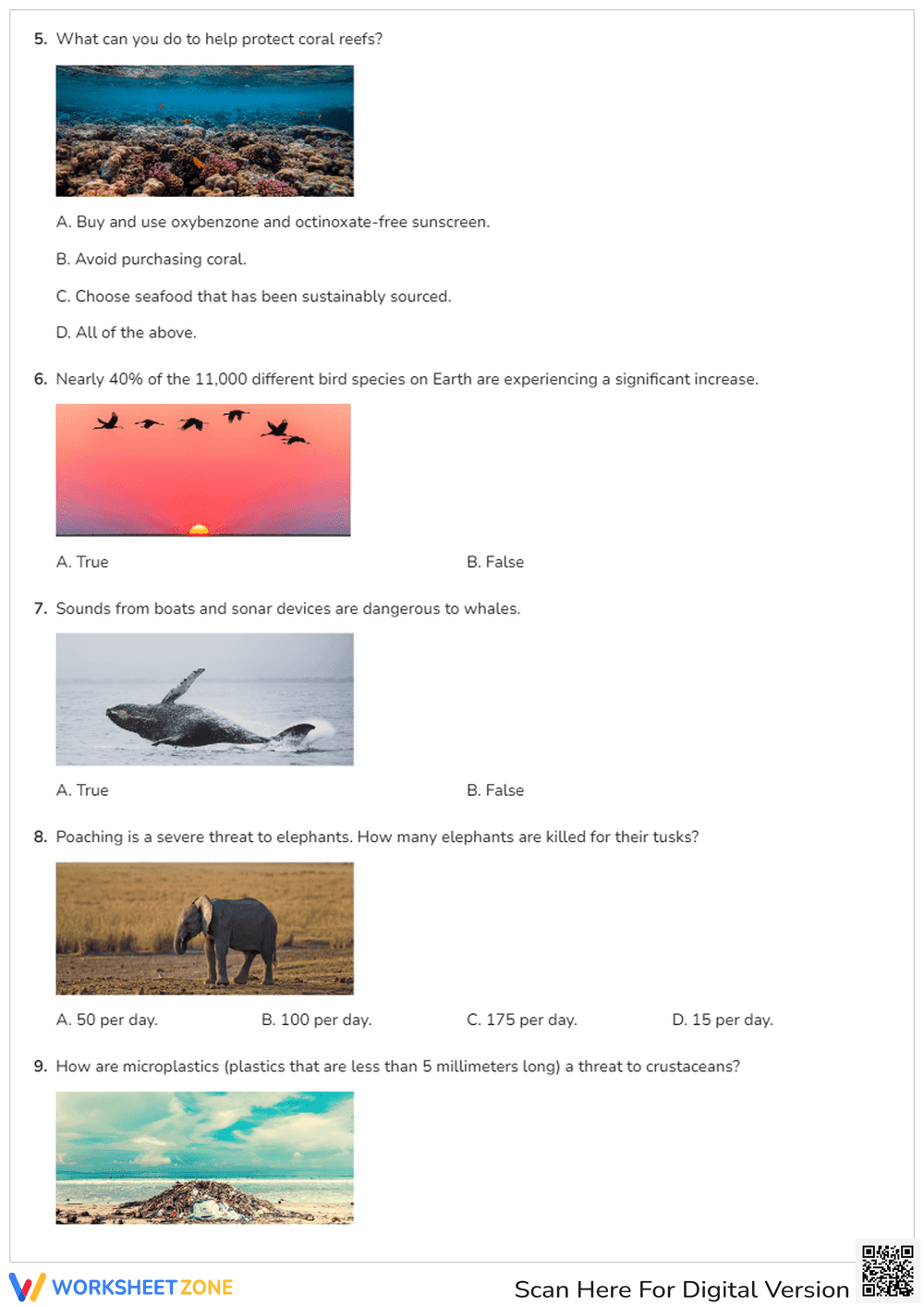
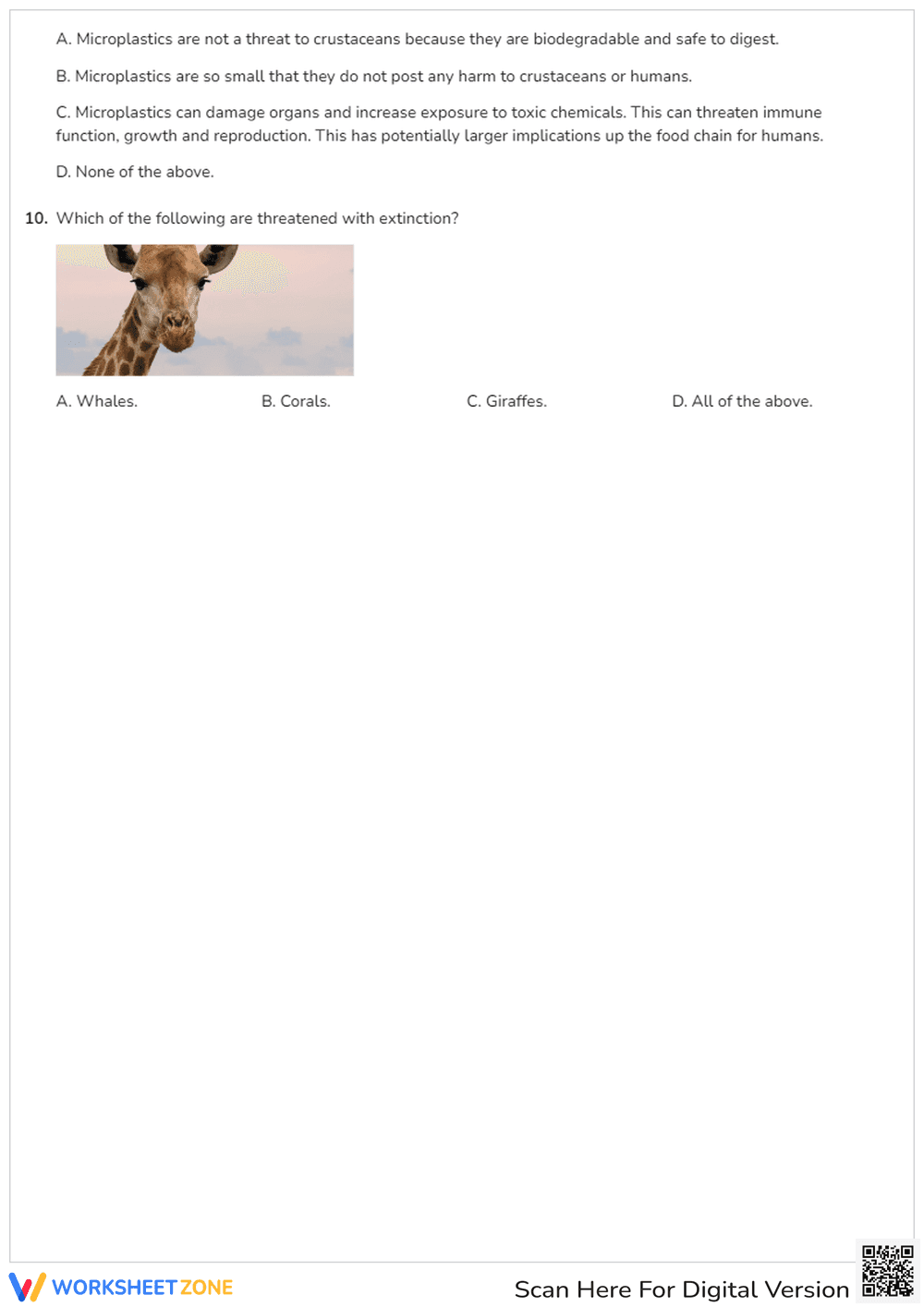

Printable Protect Our Species Quiz | Grade 5 Science
Paste this activity's link or code into your existing LMS (Google Classroom, Canvas, Teams, Schoology, Moodle, etc.).
Students can open and work on the activity right away, with no student login required.
You'll still be able to track student progress and results from your teacher account.
This ready-to-use science quiz helps students understand the critical importance of biodiversity and wildlife conservation. By answering targeted questions about endangered species, climate change, and human impact, learners will evaluate how environmental changes affect animal populations and identify actionable ways to protect our planet's fragile ecosystems.
At a Glance
- Grade: 5 · Subject: Science
- Standard:
5-ESS3-1— Obtain information about ways to protect Earth's resources- Skill Focus: Biodiversity and conservation
- Format: 3 pages · 10 problems · Answer key included · PDF
- Best For: Formative assessment or Earth Day
- Time: 15–20 minutes
What's Inside
This comprehensive assessment includes three pages of visually engaging multiple-choice questions. Students will navigate 10 distinct problems covering topics such as endangered species definitions, the impact of microplastics on marine life, and the effects of poaching. The resource features high-quality photographic prompts for each question to provide visual context, alongside a complete answer key for rapid grading.
Zero-Prep Workflow
- Print (1 minute): Simply download the PDF and print the three-page assessment for your class. No special materials or complex setup required.
- Distribute (1 minute): Hand out the quiz as an independent activity, a science center station, or a timely Earth Day assignment.
- Review (3 minutes): Use the included answer key to quickly evaluate student comprehension or facilitate a whole-class discussion on conservation strategies. Total teacher prep time is under two minutes, making it an ideal emergency sub plan.
Standards Alignment
This resource is directly aligned to 5-ESS3-1: Obtain and combine information about ways individual communities use science ideas to protect the Earth's resources and environment. It also supports cross-grade learning for understanding human impacts on Earth systems. Both standard codes can be copied directly into lesson plans, IEP goals, or district curriculum mapping tools.
How to Use It
Deploy this quiz as a formative assessment after a unit on ecosystems or human environmental impact. It works exceptionally well as an independent Earth Day activity to spark meaningful classroom conversations. While students work, observe which questions require more time—this often indicates areas where concepts like microplastic pollution or climate change effects need further direct instruction. Expected completion time is 15 to 20 minutes.
Who It's For
This worksheet is designed for upper elementary students in grades 3 through 5. The visual cues and straightforward multiple-choice format provide built-in scaffolding for diverse learners, including English Language Learners. Pair this quiz with an informational reading passage on coral reefs or a documentary clip about endangered species to deepen student engagement and context.
Aligning instructional materials with specific environmental science standards like 5-ESS3-1 (Obtain information about ways to protect Earth's resources) is absolutely crucial for developing long-term scientific literacy. According to a recent ScienceDirect TpT Analysis, educational resources that integrate real-world environmental issues with structured, standards-based assessments significantly improve student retention of complex ecological concepts. By evaluating the human impact on biodiversity through these targeted multiple-choice questions, students move beyond simple rote memorization to actively apply critical thinking skills to pressing global challenges. This highly structured approach ensures learners can accurately identify specific threats to wildlife and recognize actionable conservation strategies in their own communities. Utilizing visually supported, standards-aligned quizzes provides educators with reliable, immediate data to guide subsequent instruction, ultimately fostering a much deeper understanding of ecosystem dynamics and the vital importance of environmental stewardship in elementary science education.


