




























Views
Downloads



Printable Knowledge Gaps Worksheet | Grade 8 ELA

Paste this activity's link or code into your existing LMS (Google Classroom, Canvas, Teams, Schoology, Moodle, etc.).
Students can open and work on the activity right away, with no student login required.
You'll still be able to track student progress and results from your teacher account.
This worksheet teaches eighth graders to analyze how the gap between what a character knows and what the reader knows creates suspense or humor. Students read a short story, “Fifteen Minutes to Curtain,” then complete 10 tasks that move from concept checks to cited, written explanations.
At a Glance
- Grade: 8 · Subject: ELA
- Standard:
RL.8.6— Explain how differences between what characters and readers know create suspense or humor.- Skill Focus: Reader knowledge vs. character knowledge in dramatic irony, suspense, and humor
- Format: 5 pages · 10 problems · Answer key included · PDF
- Best For: Literary analysis practice after an irony lesson
- Time: 40–50 minutes
What's Inside
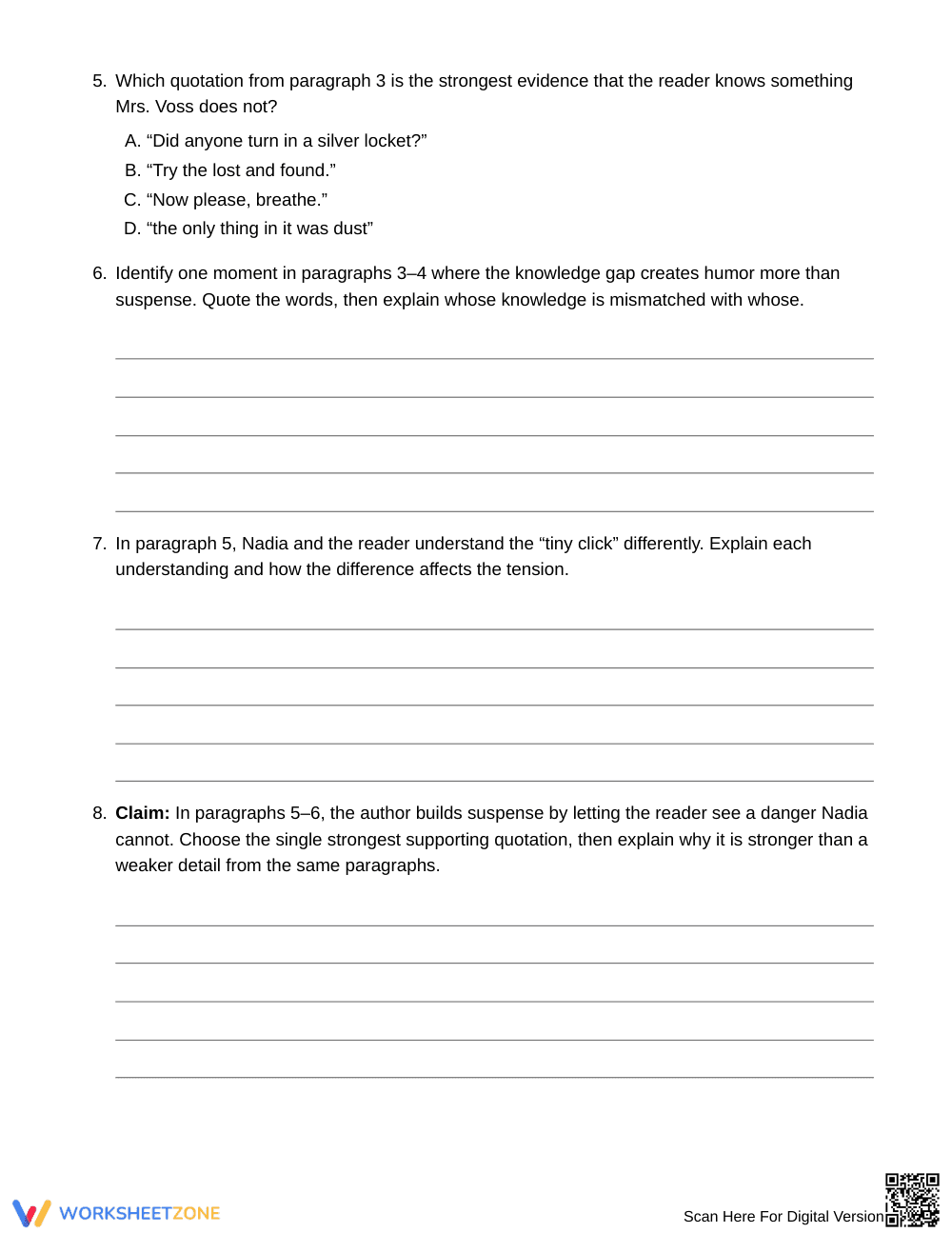
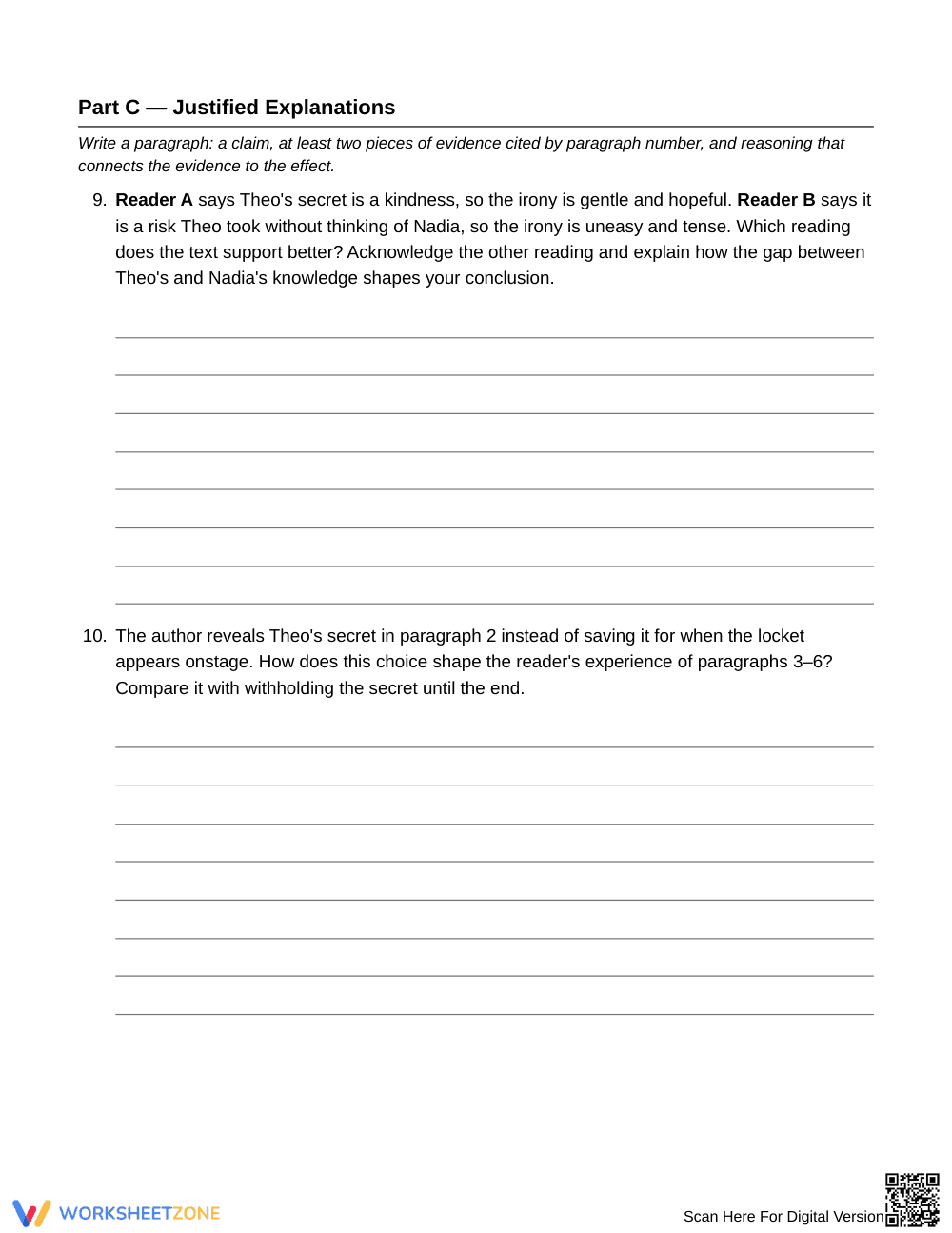
The 5-page packet opens with a Concept Box defining knowledge gaps, then presents a six-paragraph numbered story. Part A has two multiple-choice items and one short written response, Part B has two multiple-choice items and three text-evidence responses, and Part C has two paragraph tasks. A 3-page answer key is included.
Skill Progression
- Guided practice: Part A, 3 items, with the Concept Box open for support.
- Supported practice: Part B, 5 items, citing paragraph numbers and exact words.
- Independent practice: Part C, 2 justified paragraphs built on claim, evidence, and reasoning.
The sequence follows gradual release: I Do, We Do, You Do.
Standards Alignment
RL.8.6 — Analyze how differences in the points of view of the characters and the audience or reader (e.g., created through the use of dramatic irony) create such effects as suspense or humor. This standard code can be copied directly into lesson plans, IEP goals, or district curriculum mapping tools.
How to Use It
- After direct instruction on irony: assign Parts A and B as independent practice, then review answers as a class.
- As a check for understanding: assign Part C alone to assess written reasoning.
Formative tip: check whether each student's chosen quotation shows the gap itself or only sets a mood. Expect 40–50 minutes in total.
Who It's For
Built for Grade 8 ELA students studying point of view, suspense, and irony. Students who need support can complete Part A with the Concept Box before moving on, and advanced students can focus on Part C's competing readings. Pair it with a dramatic irony anchor chart.
RL.8.6 asks eighth graders to explain how differences between what characters know and what readers know create effects such as suspense or humor. This Grade 8 ELA worksheet, Reader Knowledge and Character Knowledge, builds that skill with 10 tasks over 5 pages, using a six-paragraph story in which a stagehand hides a locket inside a lantern while the heroine searches for it. Students distinguish dramatic irony from a surprise ending, compare what each character and the reader know, choose the strongest textual evidence, and write two justified paragraphs that weigh competing interpretations. The sequence follows the gradual release of responsibility model described by Fisher & Frey (2014), moving from guided concept checks to independent writing. Teachers can use the results to see whether students can link a knowledge gap to its specific effect on tension or humor, not merely name the device.


