




























Views
Downloads

Printable Interior Structure Worksheet | Grade 8 Science

Paste this activity's link or code into your existing LMS (Google Classroom, Canvas, Teams, Schoology, Moodle, etc.).
Students can open and work on the activity right away, with no student login required.
You'll still be able to track student progress and results from your teacher account.
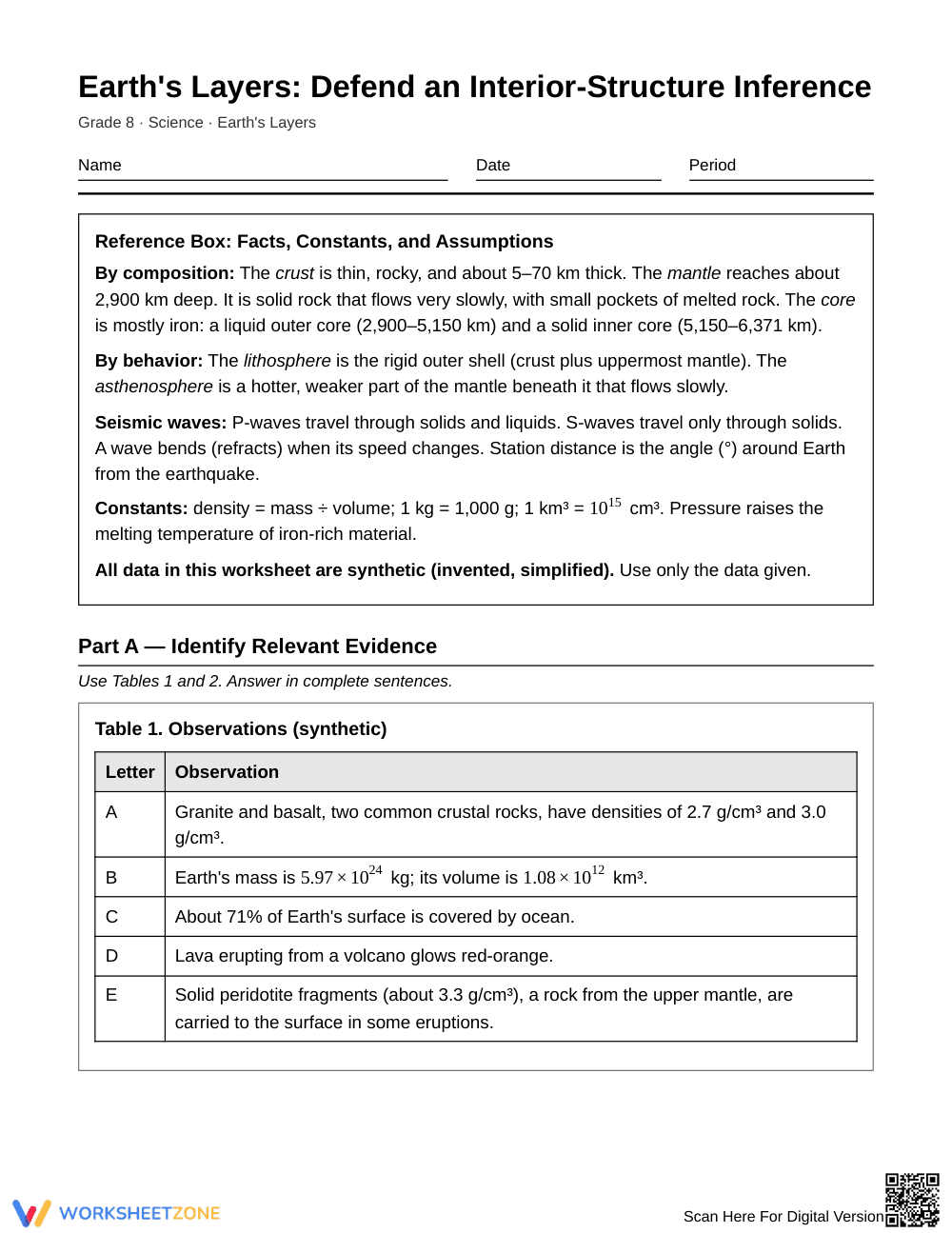
This Grade 8 Earth's layers worksheet teaches students to defend a claim about Earth's interior using data. Students choose relevant evidence, link it to a mechanism such as wave refraction or pressure-raised melting, and rule out competing claims. Eight tasks across five pages build evidence-first reasoning.
At a Glance
- Grade: 8 · Subject: Science
- Standard: Not specified — defend claims about Earth's interior using evidence and mechanisms
- Skill Focus: Defending an interior-structure inference with data and mechanisms
- Format: 5 pages · 8 problems · Answer key included · PDF
- Best For: Evidence-based reasoning in an Earth's layers unit
- Time: 40–50 minutes
What's Inside
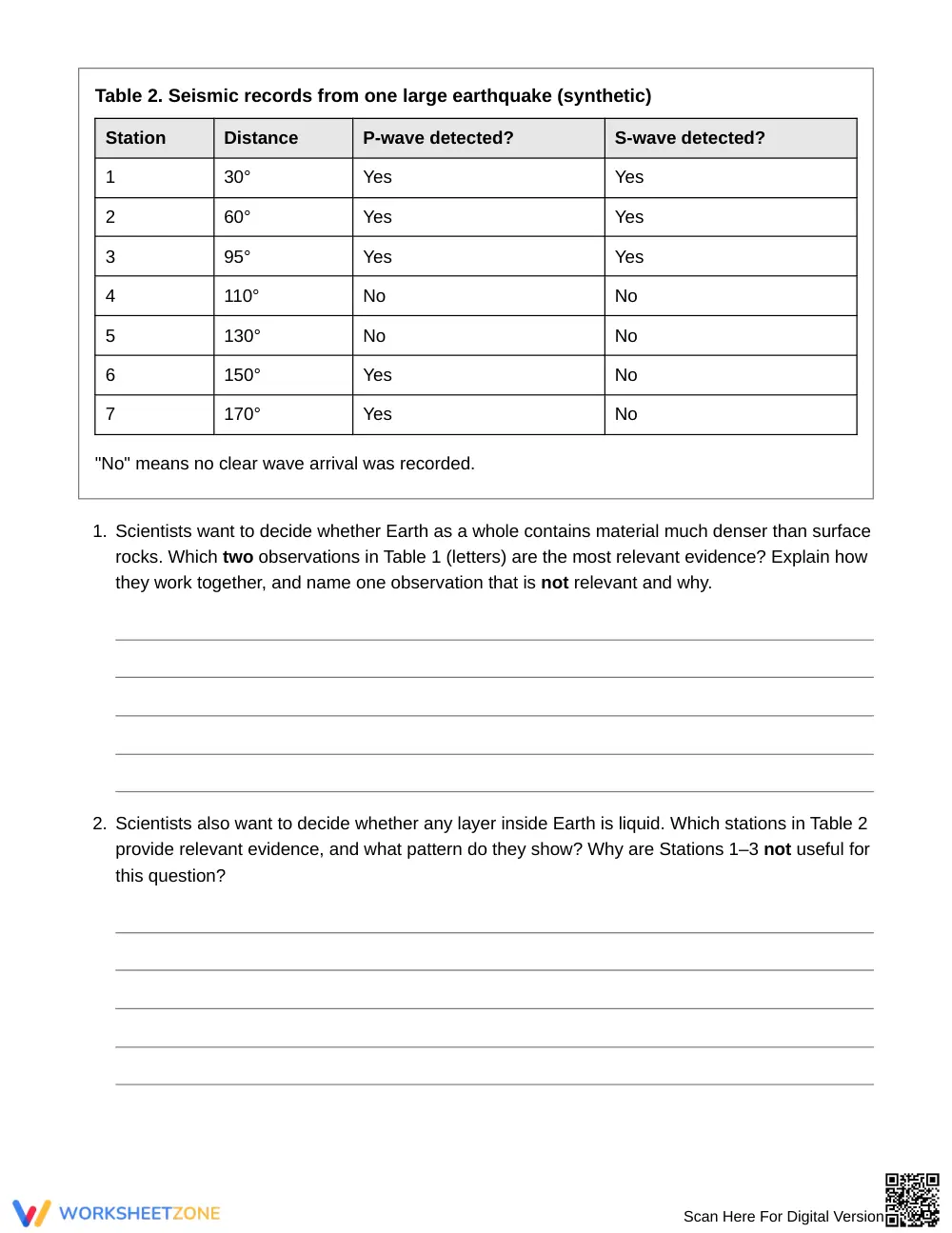
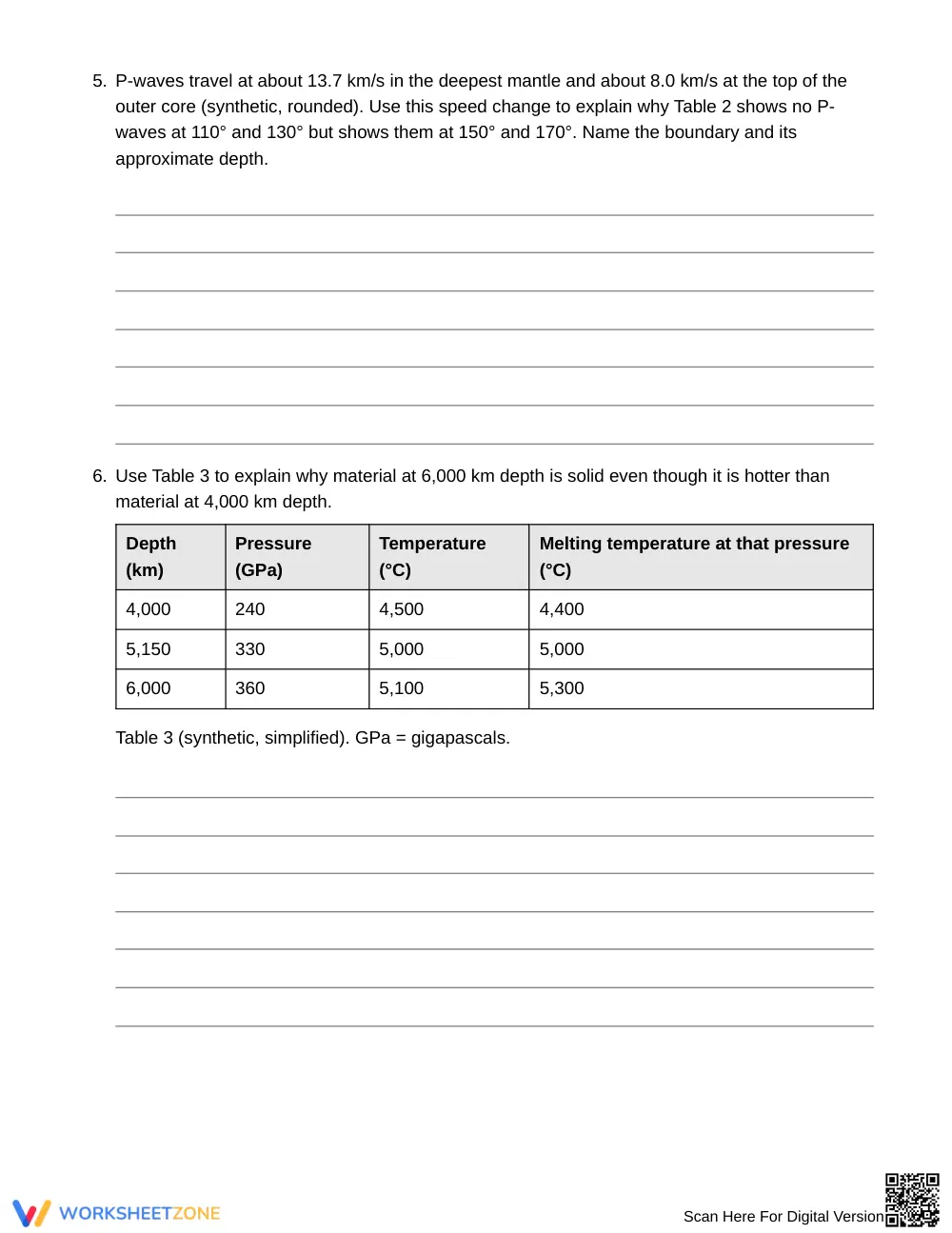
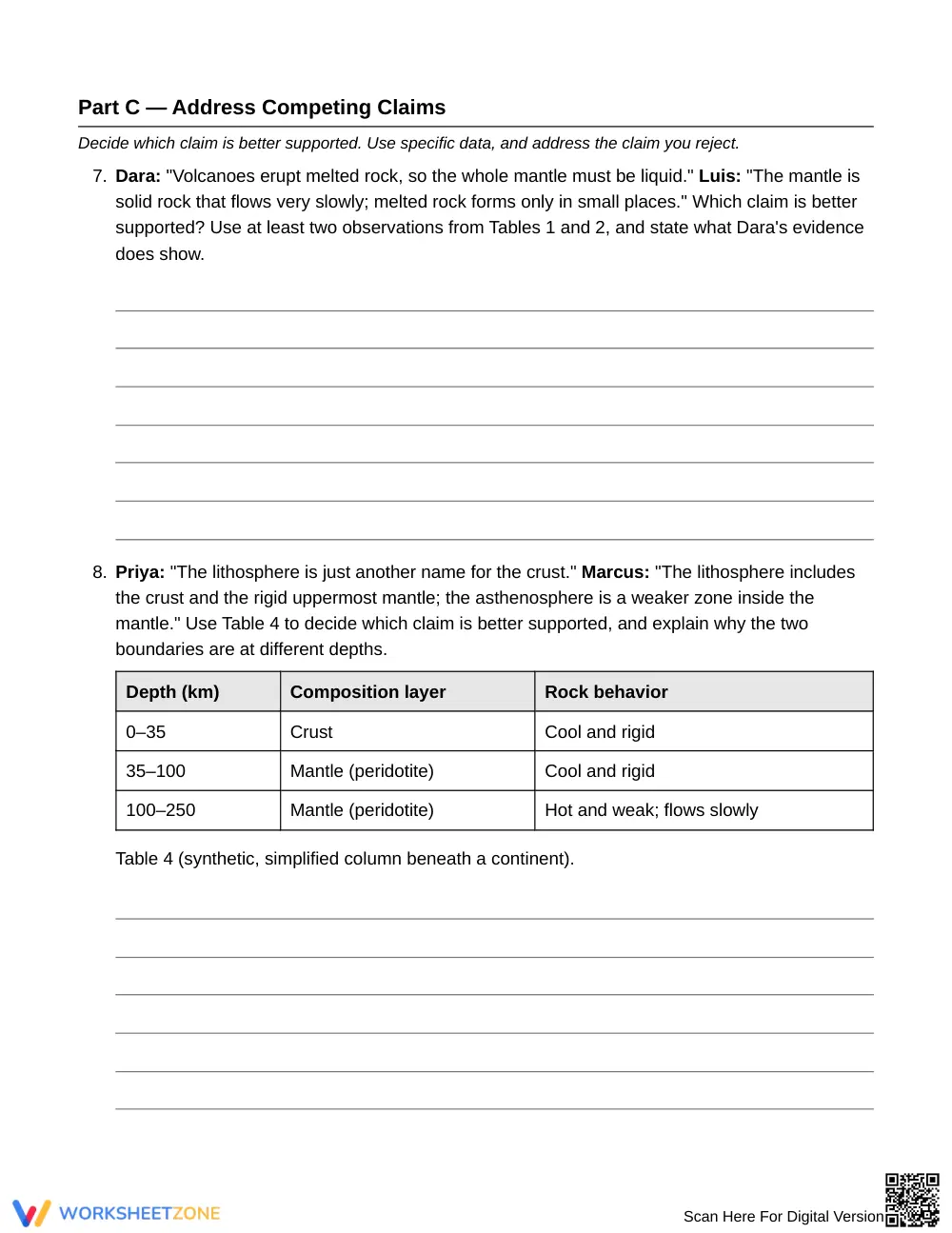
The worksheet opens with a reference box of facts, constants, and assumptions. Four synthetic data tables cover observations, seismic records from one earthquake, pressure and melting temperature, and a lithosphere column. Tasks include evidence selection, density calculations, and judging competing student claims. A 3-page answer key is included.
Skill Progression
- Guided practice (2 tasks, Part A): Students pick relevant evidence from tables and explain why other data do not apply.
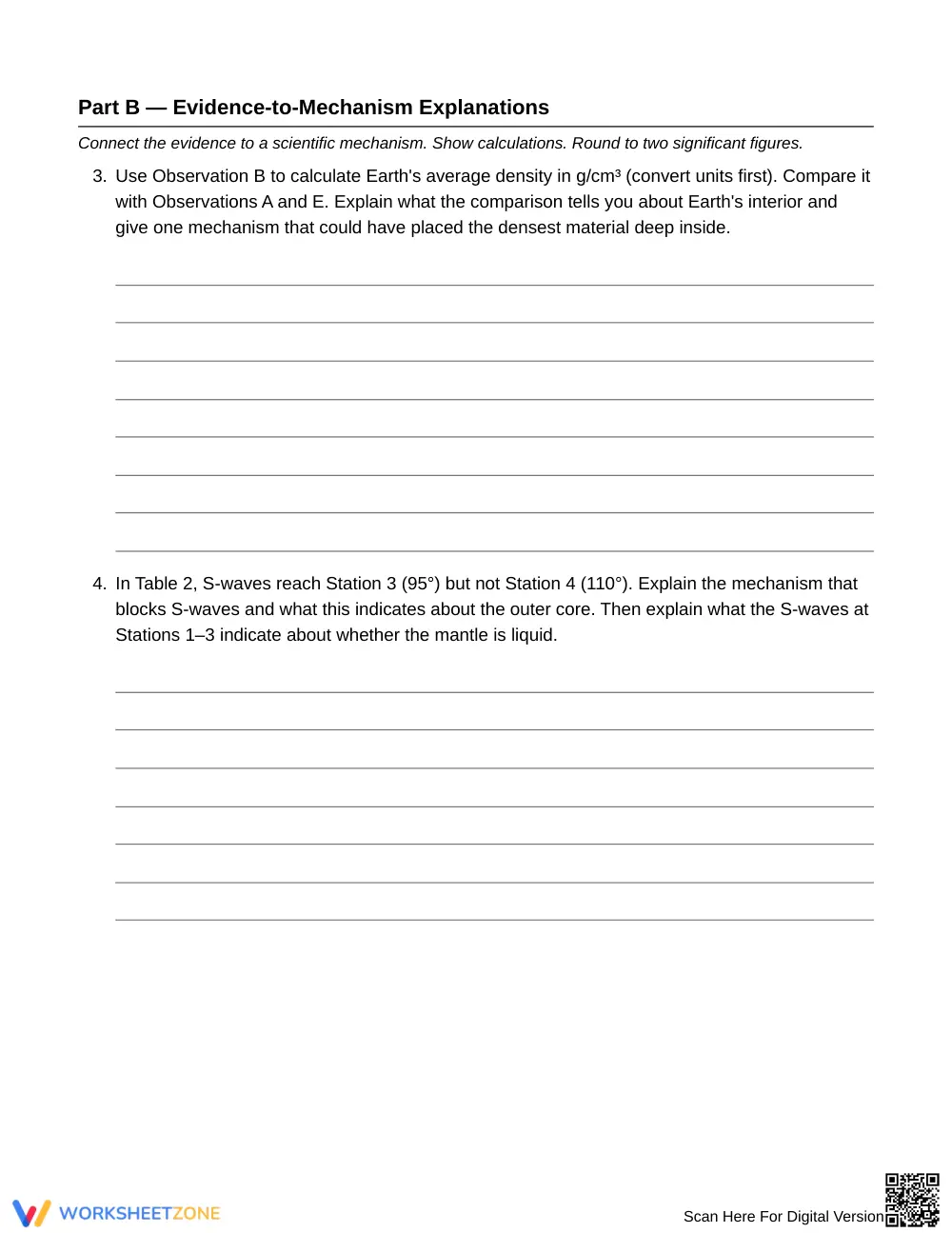
- Supported practice (4 tasks, Part B): Students connect evidence to mechanisms, with calculations and the reference box as support.
- Independent practice (2 tasks, Part C): Students decide between competing claims and address the claim they reject.
This follows a gradual-release pattern: I Do, We Do, You Do.
Standards Alignment
No standard code is listed for this resource. It supports constructing explanations and arguing from evidence about Earth's layers, including composition, seismic waves, and lithosphere behavior. Add your district's standard code when you copy it into lesson plans, IEP goals, or curriculum mapping tools.
How to Use It
- After direct instruction: Assign Parts A and B as a check on seismic wave and density concepts.
- Before a unit assessment: Use Part C as a short argument-writing review.
While students work, listen for whether they cite specific numbers or only restate claims. Expect 40–50 minutes.
Who It's For
Grade 8 Science students who have met the layers of Earth and basic seismic waves. The reference box supports students who need help recalling facts, and rounding and unit conversion may need teacher support. Pair it with a seismic wave shadow-zone diagram or anchor chart.
The Grade 8 Science worksheet Earth's Layers: Defend an Interior-Structure Inference teaches students to support claims about Earth's interior with data. Across 8 tasks and 5 pages, students select relevant evidence, connect seismic wave behavior, density calculations, and pressure-dependent melting to mechanisms, and evaluate competing student claims. No standard code is listed for this resource, so teachers can map it to local standards for constructing explanations and arguing from evidence. A 3-page answer key is included. The structure follows the gradual-release model described by Fisher & Frey (2014), in which teachers move from modeling to guided work to independent practice, and students handle increasing reasoning demands with less support. All data are synthetic and simplified, so the worksheet works as a reasoning exercise rather than a measurement lab. It suits classes studying the crust, mantle, outer core, and inner core.


