




























Views
Downloads

Printable Crust vs Lithosphere Worksheet | Grade 8 Science

Paste this activity's link or code into your existing LMS (Google Classroom, Canvas, Teams, Schoology, Moodle, etc.).
Students can open and work on the activity right away, with no student login required.
You'll still be able to track student progress and results from your teacher account.
This worksheet helps Grade 8 students separate Earth's composition layers from its mechanical layers, so they stop treating the crust and lithosphere as the same thing. Students repair eight flawed claims using thickness calculations, density comparisons, and seismic wave data, then write corrected explanations.
At a Glance
- Grade: 8 · Subject: Science
- Standard: Earth's layers — diagnose errors and explain how composition and behavior divide Earth differently
- Skill Focus: Correct Crust-Lithosphere Confusion
- Format: 5 pages · 8 problems · Answer key included · PDF
- Best For: Reteaching Earth's layers misconceptions
- Time: 35–45 minutes
What's Inside
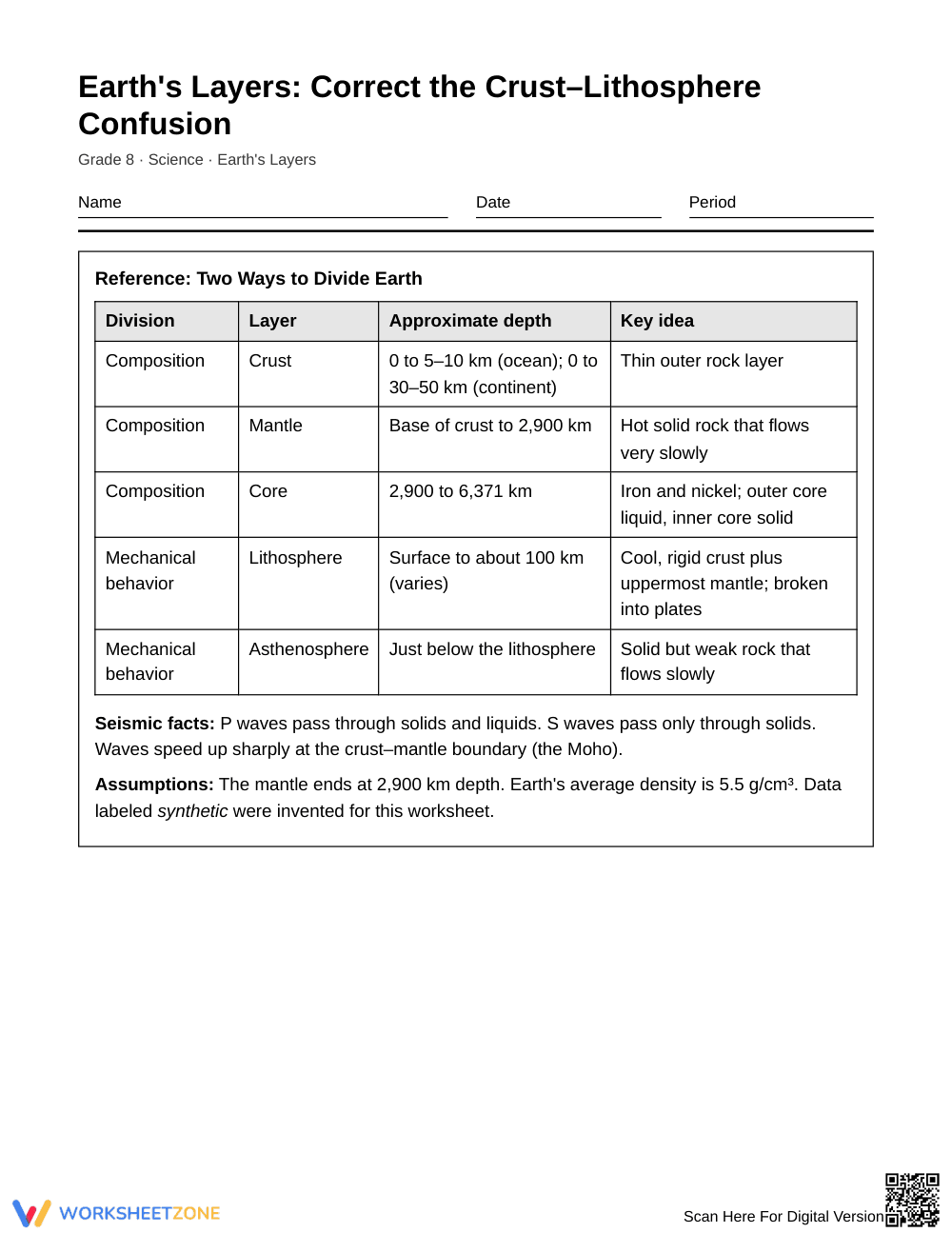
The packet opens with a reference table comparing composition layers (crust, mantle, core) with mechanical layers (lithosphere, asthenosphere), plus key seismic facts. A worked Model Repair comes next. Students then complete Part A (layer definitions and thickness) and Part B (density and seismic evidence). Each item is a flawed claim, some with synthetic data tables. A 2-page answer key is included.
Skill Progression
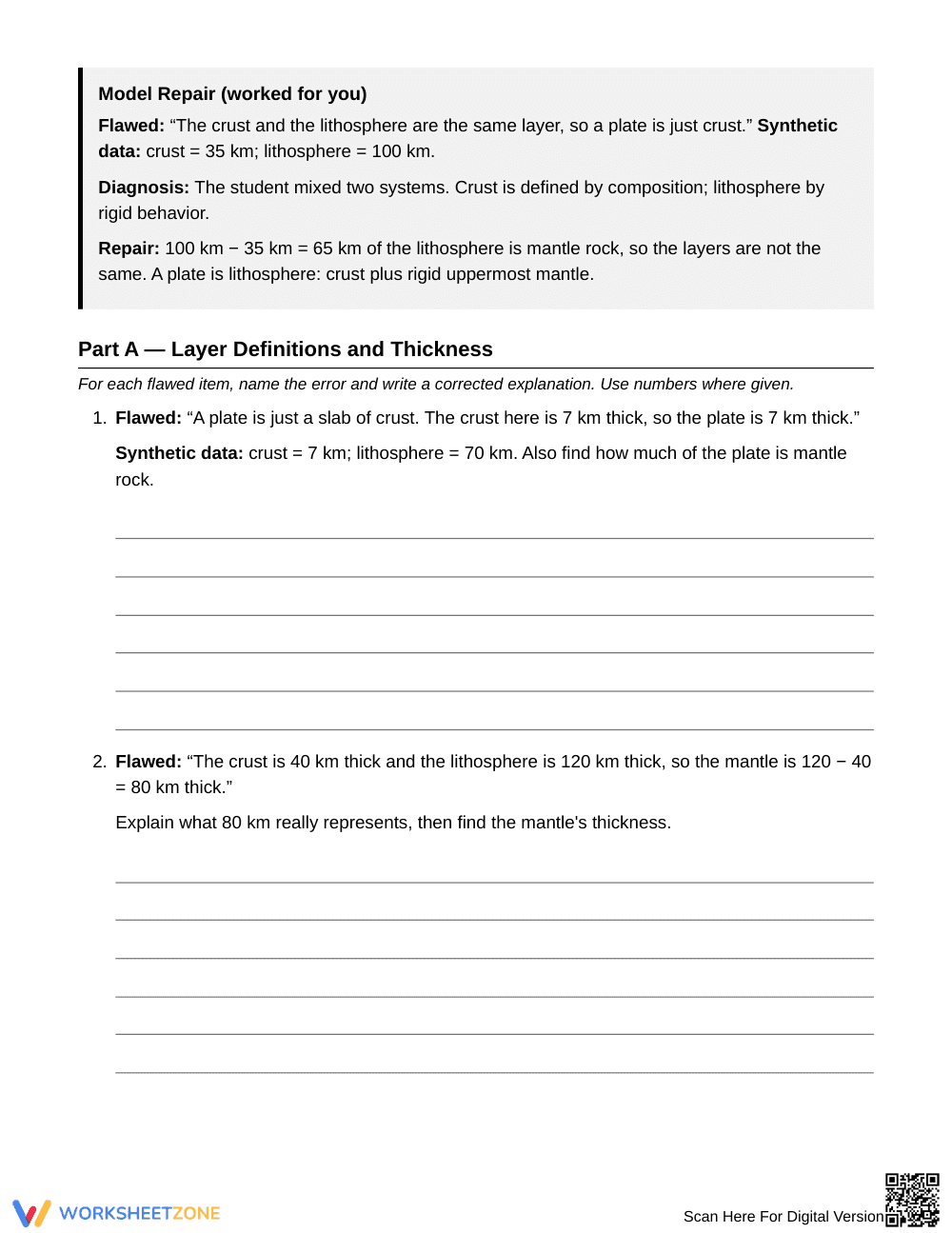
- Guided practice: 1 worked Model Repair shows the flaw, the diagnosis, and the corrected reasoning.
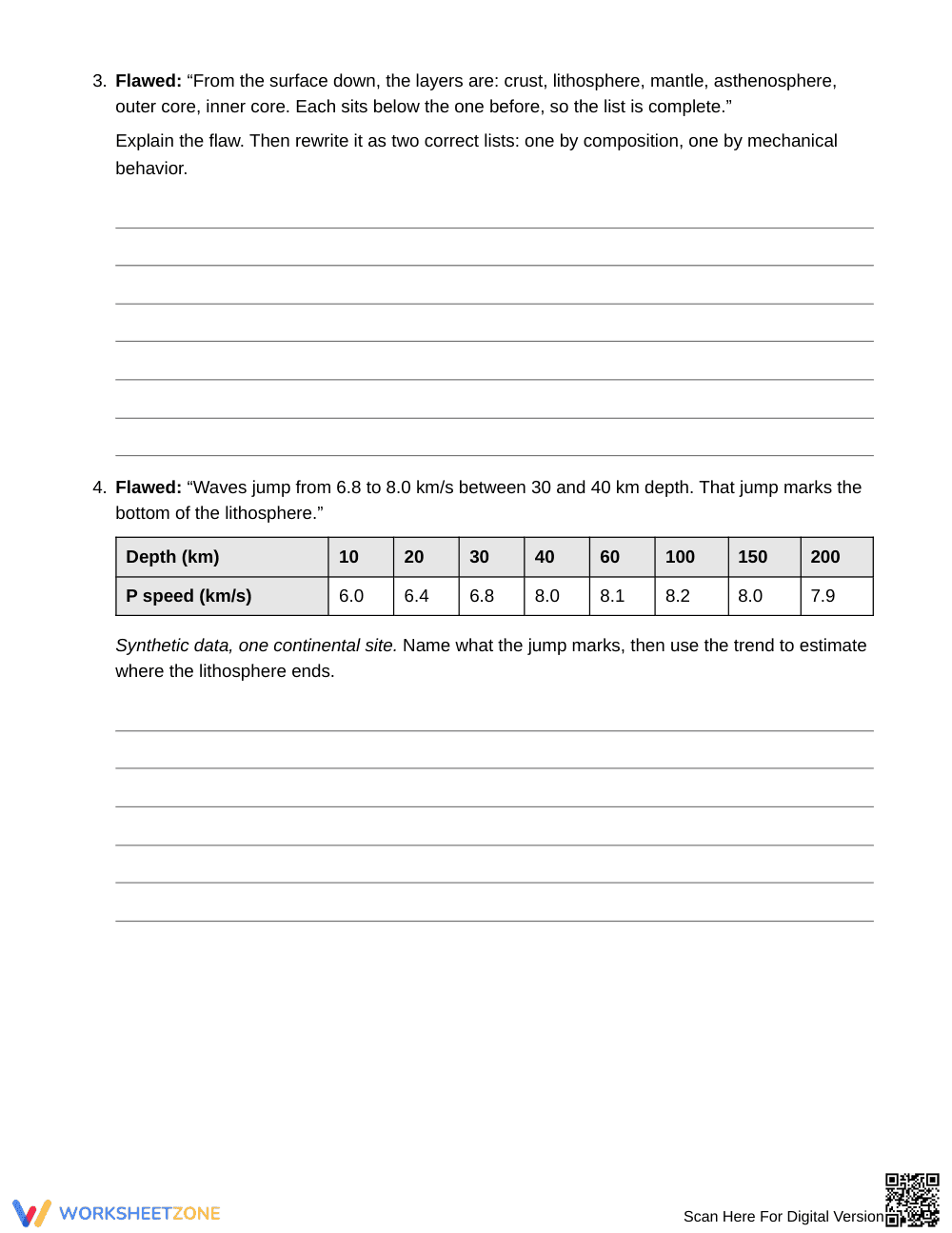
- Supported practice: 4 Part A problems use the reference table and given numbers to fix thickness and layer-order errors.
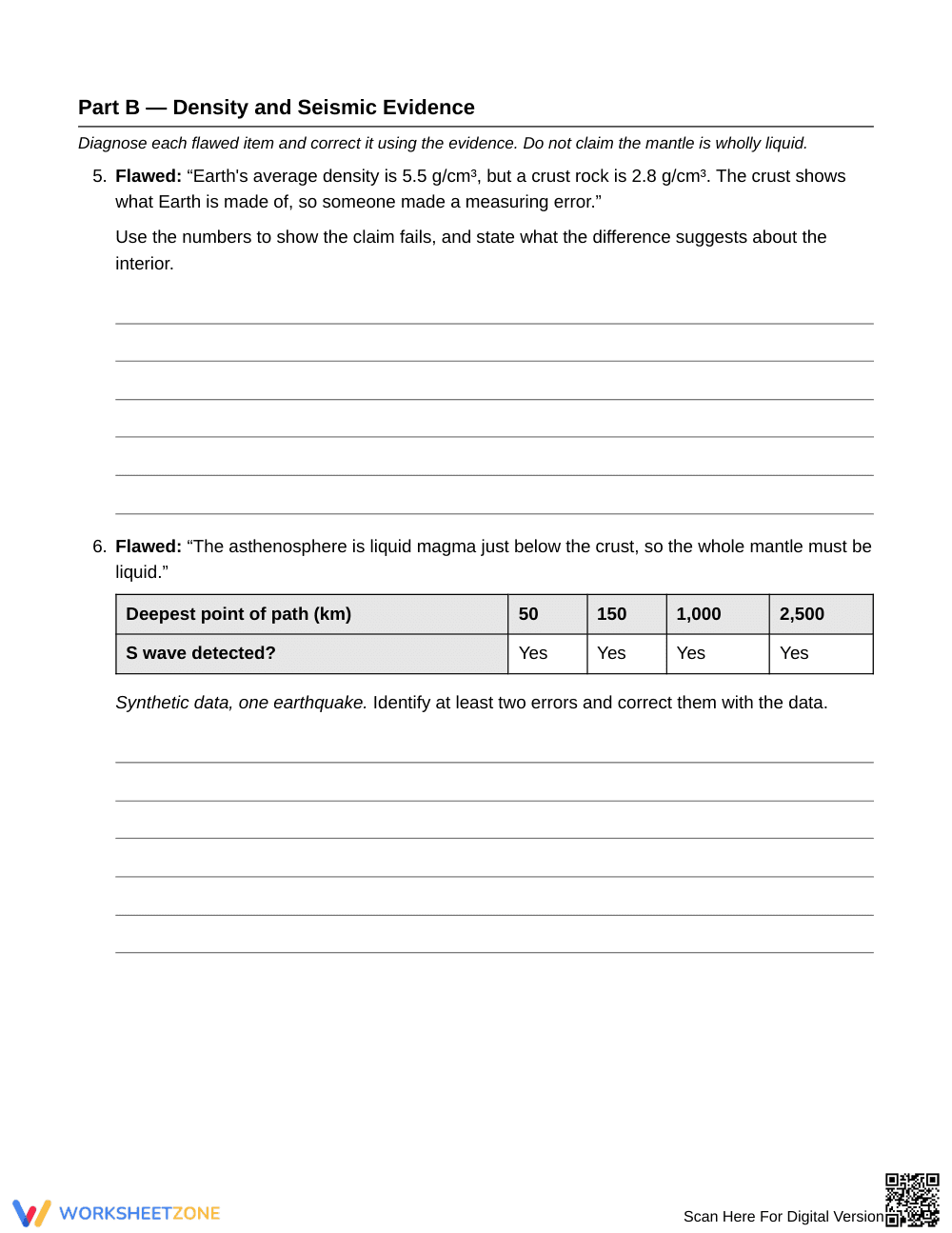
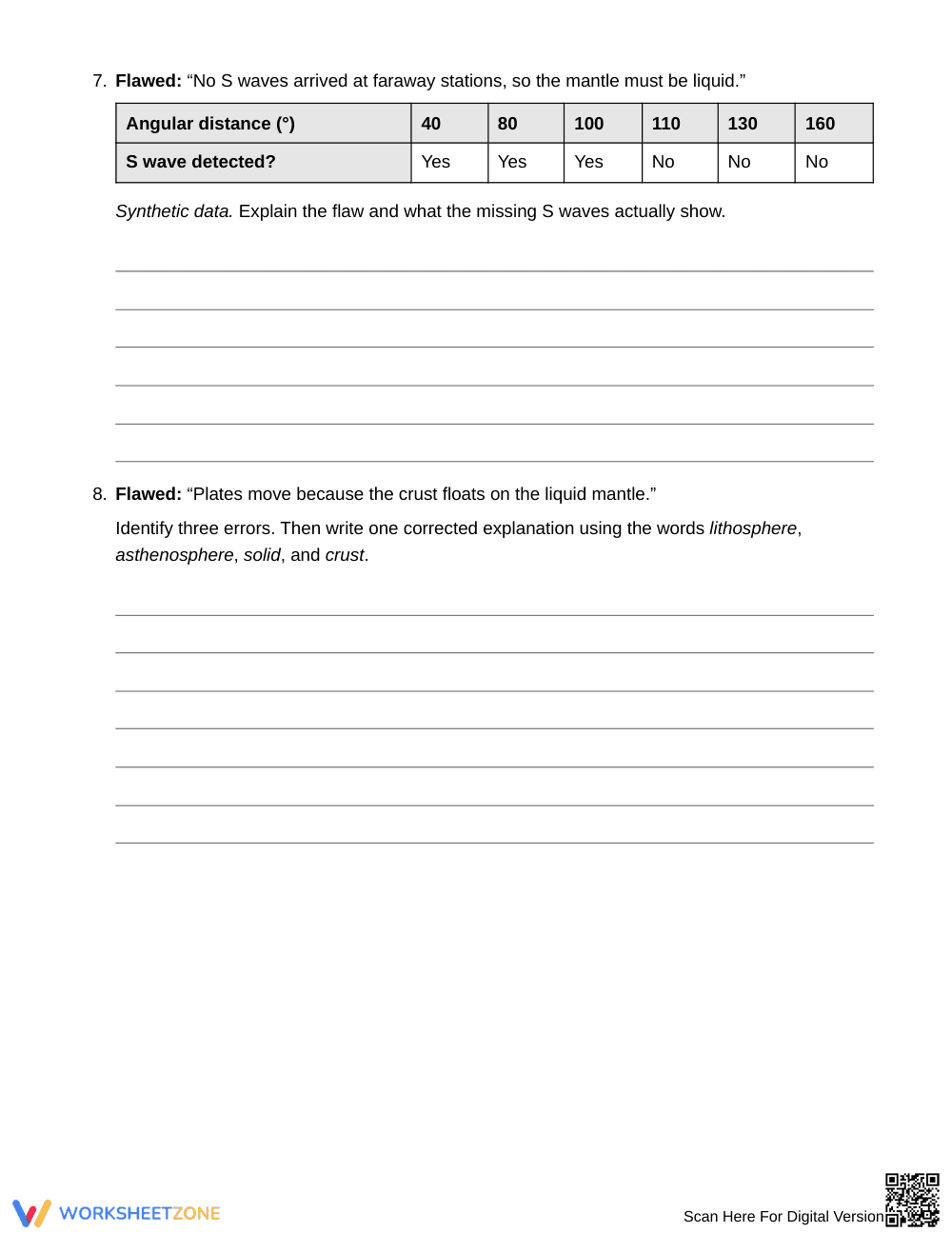
- Independent practice: 4 Part B problems ask students to use density and S wave data to correct claims about the mantle and plate motion.
This sequence follows gradual release: I Do, We Do, You Do.
Standards Alignment
No standard code was supplied for this worksheet, so none is listed. The tasks address how Earth's interior is structured, including the difference between layers defined by composition and layers defined by mechanical behavior, and how seismic and density evidence supports models of the interior. Add your state or district standard code when copying this into lesson plans, IEP goals, or curriculum mapping tools.
How to Use It
- After direct instruction: Assign as independent practice once students have seen both layer systems. Review the Model Repair together first.
- Before a unit check: Use it as a reteaching tool for students who still describe plates as crust only.
Formative tip: as students work, listen for whether they name the system (composition or behavior) before correcting a claim. Expect 35–45 minutes.
Who It's For
Grade 8 Science students who have met the layers of Earth and need to fix common misconceptions. Students who need support can work in pairs with the reference table open, while stronger writers can focus on full-sentence corrections. Pair it with a labeled Earth's layers anchor chart or a plate tectonics lesson.
This Grade 8 Science worksheet, Correct the Crust–Lithosphere Confusion, teaches students to distinguish composition layers (crust, mantle, core) from mechanical layers (lithosphere, asthenosphere). No standard code is attached to this resource. Across 8 tasks, students diagnose flawed claims, calculate that a 100 km lithosphere with a 35 km crust includes 65 km of mantle rock, compare crustal density of 2.8 g/cm³ with Earth's 5.5 g/cm³, and interpret S wave data without concluding the mantle is liquid. Every data set is labeled synthetic, so students focus on reasoning rather than memorizing facts. The error-analysis format follows the gradual release model described by Fisher & Frey (2014), moving from a worked model repair to supported and independent practice. A 2-page answer key supports quick checking. Teachers can use it for review, reteaching, or formative assessment of plate tectonics foundations.


