


























Views
Downloads



Essential Prepositions in Sentences Worksheet | Grade 1-4
Paste this activity's link or code into your existing LMS (Google Classroom, Canvas, Teams, Schoology, Moodle, etc.).
Students can open and work on the activity right away, with no student login required.
You'll still be able to track student progress and results from your teacher account.
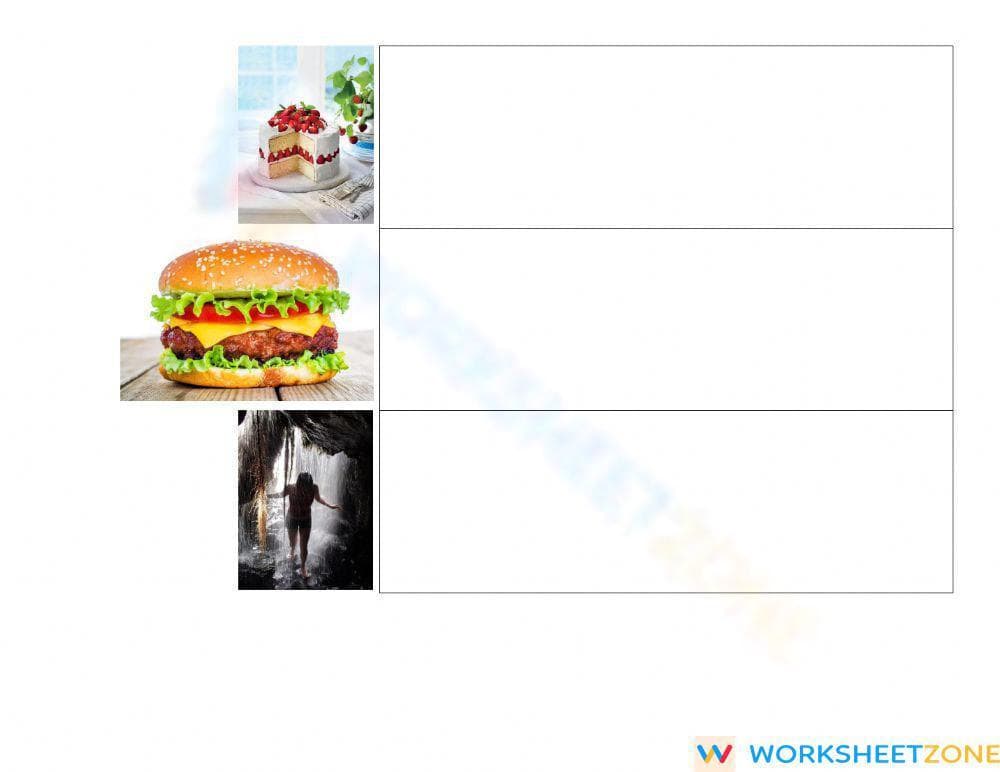
This printable prepositions worksheet helps students master positional language by writing descriptive sentences for vivid real-world images. Students apply specific function words—through, beneath, and between—to express spatial relationships accurately. This focused practice ensures students move beyond simple identification to active usage in their own writing, improving overall sentence structure and grammatical precision in early ELA.
At a Glance
- Grade: 1-4 · Subject: English Language Arts
- Standard:
CCSS.ELA-LITERACY.L.1.1.i— Use frequently occurring prepositions to describe spatial relationships and actions- Skill Focus: Using prepositions (through, beneath, between) in sentences
- Format: 3 pages · 6 problems · Answer key included · PDF
- Best For: Independent practice and quick formative assessment
- Time: 15–20 minutes
What's Inside
This 3-page PDF contains six unique visual prompts. Each features a clear photograph and writing space for students to compose sentences using prepositions. A full answer key with sample responses is included, along with a word bank ("through," "beneath," "between") to scaffold younger learners.
Zero-Prep Workflow
This resource is designed for immediate classroom implementation with a three-step workflow:
- Print (30 seconds): Generate copies of the 3-page PDF for your entire class or specific small groups.
- Distribute (1 minute): Hand out the worksheets alongside the provided visual prompts to ignite student creativity.
- Review (30 seconds): Use the included answer key to verify student mastery or facilitate a quick peer-review session.
Total teacher preparation time is under two minutes, making this an ideal solution for busy mornings or substitute plans.
Standards Alignment
The primary focus is CCSS.ELA-LITERACY.L.1.1.i, requiring students to use frequently occurring prepositions. Writing original sentences based on visual stimuli also supports CCSS.ELA-LITERACY.L.2.1 regarding standard English grammar conventions. Both codes can be copied into lesson plans or curriculum mapping tools.
How to Use It
Deploy this worksheet after direct instruction on spatial prepositions, reinforcing the "I Do, We Do, You Do" model. It's excellent independent practice for ELA centers or homework. Observe student matching of prepositions to visual relationships for formative assessment. Expected completion time: 15-20 minutes.
Who It's For
This resource is tailored for students in Grade 1 through Grade 4 who are developing their command of function words. It is particularly effective for English Language Learners who benefit from the strong visual support of the photographs. Pair this worksheet with a preposition anchor chart or a short reading passage that highlights positional language to provide a comprehensive literacy experience.
Research from RAND AIRS (2024) indicates that combining visual stimuli with active writing tasks significantly enhances the retention of grammatical concepts in elementary learners. By explicitly practicing prepositions like "through," "beneath," and "between" in a situational context, students build a mental map of spatial relationships that transfers to more complex text analysis. The use of high-quality imagery acts as a scaffold, reducing the cognitive load of ideation so students can focus entirely on the linguistic application of CCSS.ELA-LITERACY.L.1.1.i. This alignment ensures that the practice is not merely repetitive but contributes to the mastery of plain-English skills required for effective communication. Fisher & Frey (2014) also emphasize the importance of using real-world visuals to bridge the gap between abstract grammar rules and concrete language usage in early childhood education.


