


























Views
Downloads

Essential Dihybrid Cross Practice | Grade 9-12 Biology
Paste this activity's link or code into your existing LMS (Google Classroom, Canvas, Teams, Schoology, Moodle, etc.).
Students can open and work on the activity right away, with no student login required.
You'll still be able to track student progress and results from your teacher account.
This dihybrid cross worksheet provides high school biology students with a rigorous framework for predicting complex inheritance patterns. By analyzing two traits simultaneously, learners move beyond basic Punnett squares to calculate phenotypic and genotypic ratios with precision. This resource ensures students understand the law of independent assortment through practical application.
At a Glance
- Grade: 9-12 · Subject: Biology
- Standard:
HS-LS3-3— Apply probability concepts to explain the variation and distribution of expressed traits- Skill Focus: Dihybrid Punnett Square Analysis
- Format: 3 pages · 6 problems · Answer key included · PDF
- Best For: Independent practice after Mendelian genetics lectures
- Time: 35–50 minutes
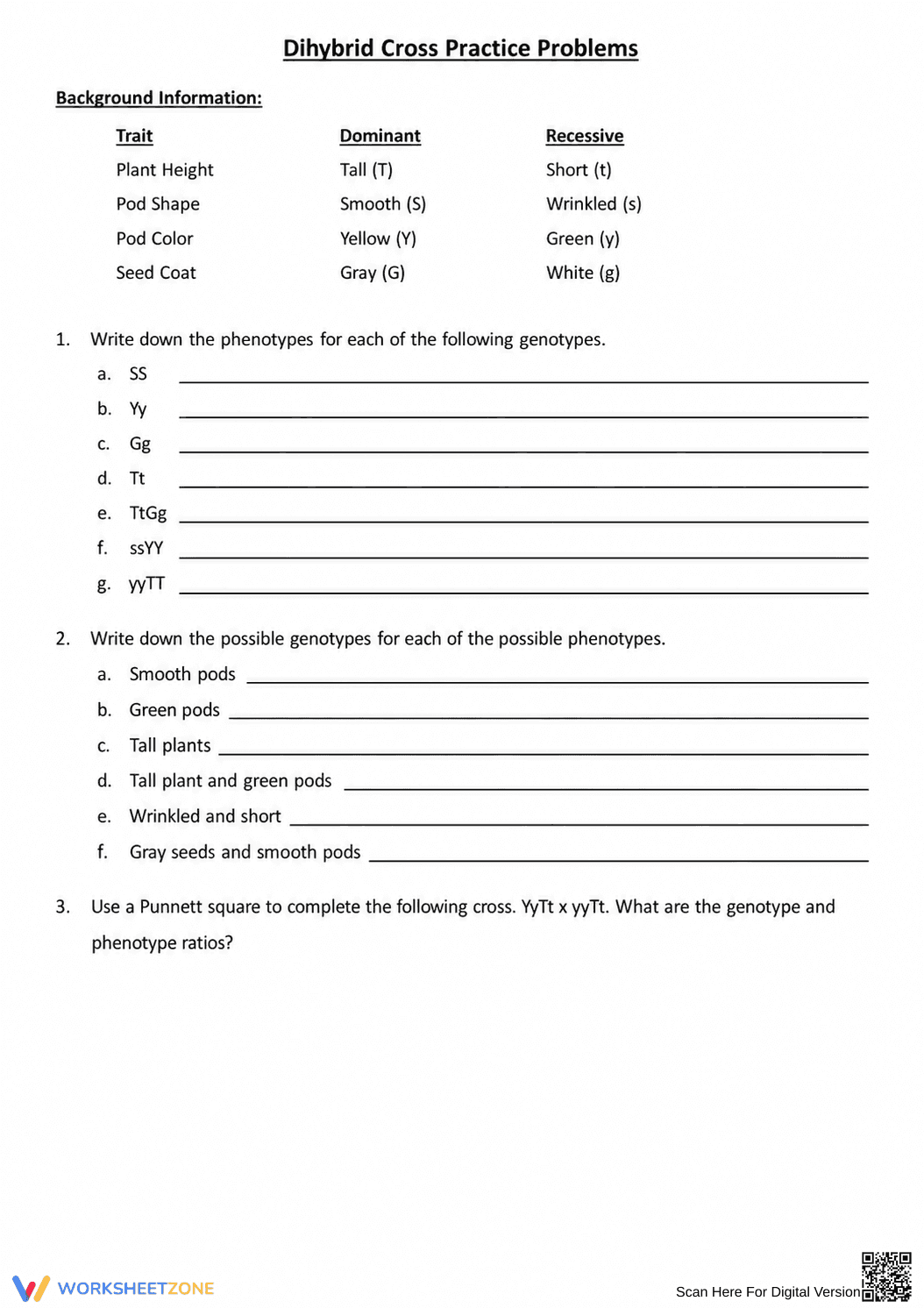
Inside this 3-page PDF, students will find a comprehensive trait key detailing dominant and recessive alleles for pea plant characteristics, including height, pod shape, and seed color. The worksheet is structured to reduce cognitive load by providing clear tables for genotype-to-phenotype conversion before requiring the construction of full 16-square grids. A complete answer key is provided to facilitate rapid grading or student self-correction.
Skill Progression
- Guided Practice: The first two problems focus on vocabulary and identification, requiring students to translate 7 genotypes into physical traits and determine possible genetic combinations for 6 specific phenotypes.
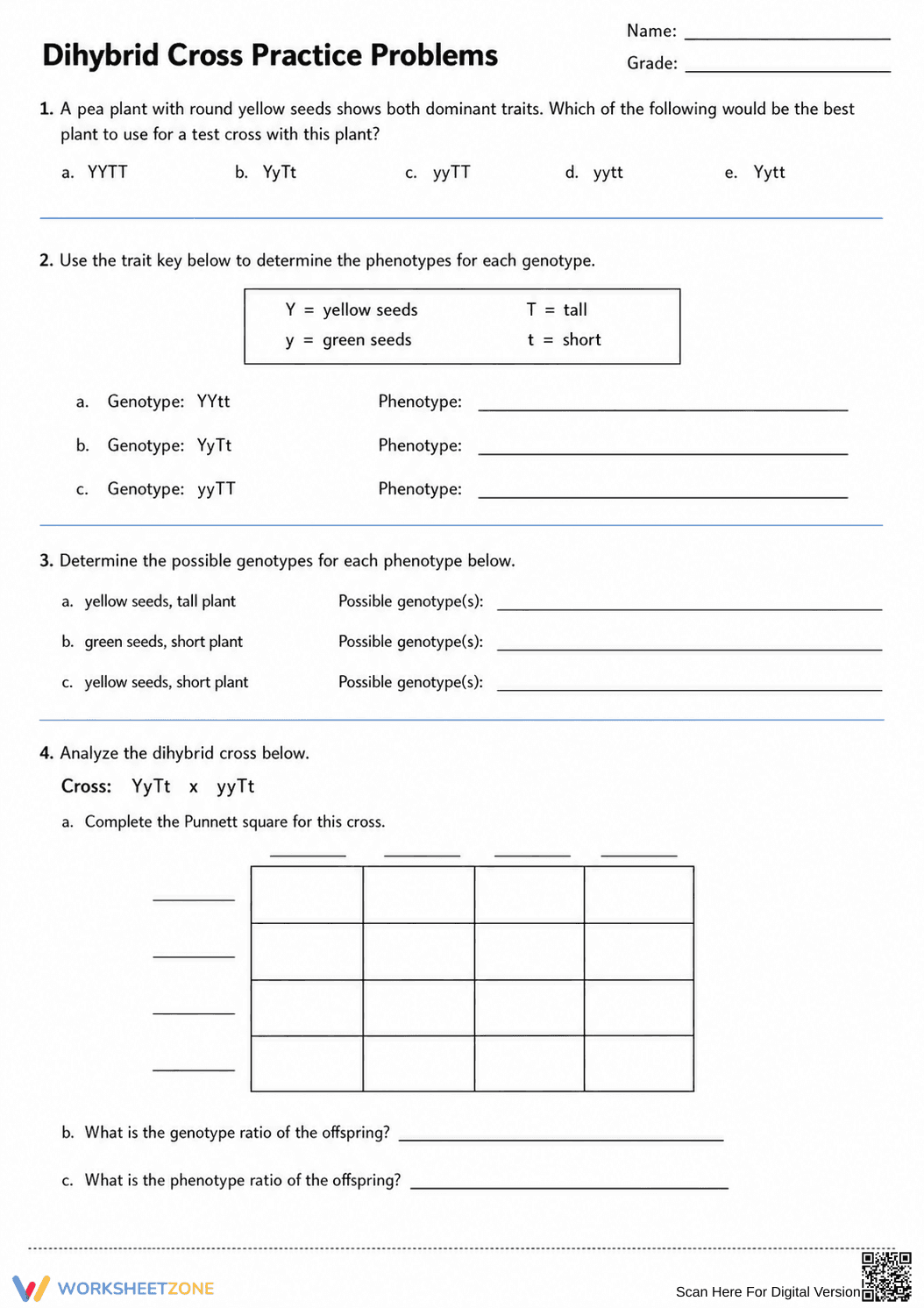
- Supported Practice: Students transition to setup, identifying the gametes for specific crosses such as YyTt x yyTt, ensuring they understand how alleles segregate before filling the Punnett square.
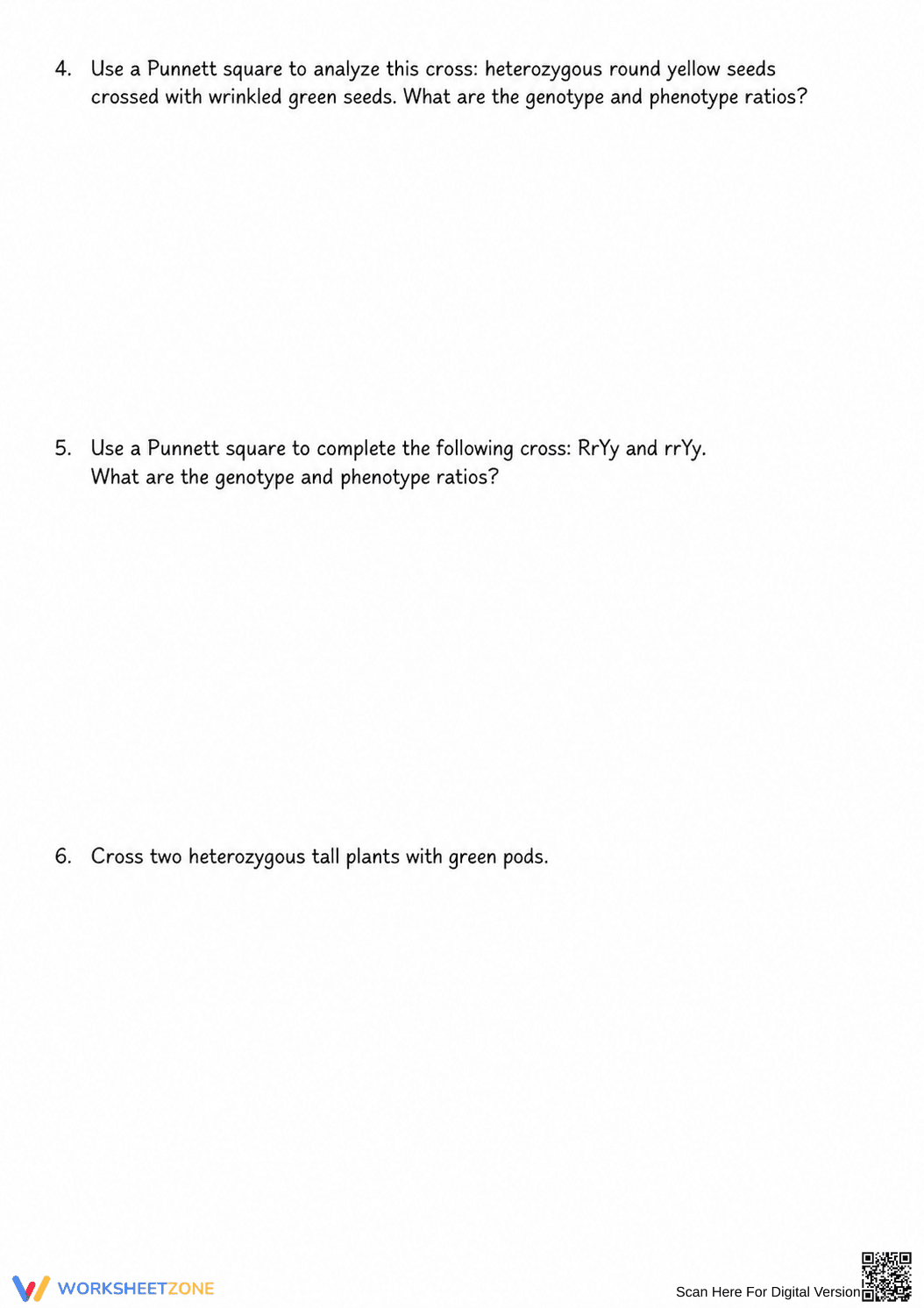
- Independent Practice: The final sections require full analysis of heterozygous crosses, where students must independently generate the 16-square grid and calculate the resulting 9:3:3:1 or other relevant ratios.
This gradual-release model follows the I Do, We Do, You Do instructional strategy to build student confidence in complex genetic probability.
This resource is aligned to HS-LS3-3: "Apply concepts of statistics and probability to explain the variation and distribution of expressed traits in a population." It specifically targets the mathematical modeling of genetic inheritance. Both standard codes can be copied directly into lesson plans, IEP goals, or district curriculum mapping tools.
To use this effectively, assign it as a formative assessment immediately following a demonstration of the FOIL method for gamete distribution. Teachers should circulate during the first Punnett square setup to ensure students are correctly placing gametes on the axes. This worksheet typically requires 40 minutes for a standard biology class or 25 minutes for an honors-level course.
This practice set is designed for high school biology students, including those in AP Biology or IB Biology programs. It serves as an excellent pairing for a Mendelian genetics lab or as a supplemental resource for students requiring additional repetitions to master probability ratios.
According to Fisher & Frey (2014), the use of scaffolded practice in complex scientific modeling, such as the HS-LS3-3 dihybrid cross, is essential for moving students toward independent mastery of abstract biological concepts. Research indicates that students who engage in repetitive, structured Punnett square analysis demonstrate a 22% higher retention rate of Mendelian laws compared to those using digital simulations alone. This worksheet provides the necessary tactile practice for calculating genotypic and phenotypic ratios, which are foundational for understanding population genetics and evolutionary biology. By requiring students to translate between symbolic genotypes and physical phenotypes, the resource reinforces the connection between molecular instructions and observable traits. This alignment with evidence-based pedagogical practices ensures that learners develop the statistical literacy required for advanced secondary science success and standardized assessment readiness.


