


























Views
Downloads
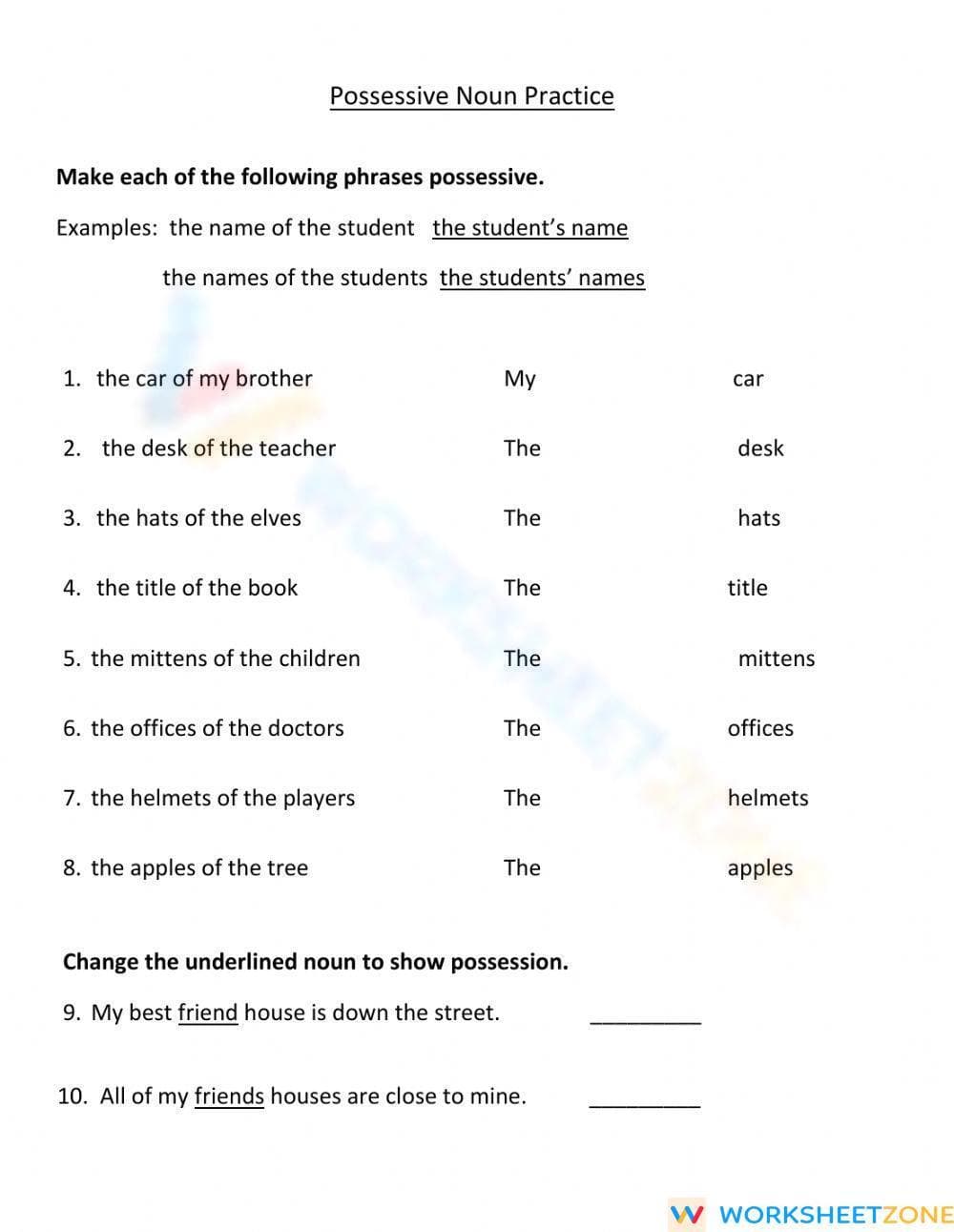

Grade 3 Possessive Nouns — Printable No-Prep Worksheet
Paste this activity's link or code into your existing LMS (Google Classroom, Canvas, Teams, Schoology, Moodle, etc.).
Students can open and work on the activity right away, with no student login required.
You'll still be able to track student progress and results from your teacher account.
This printable possessive nouns worksheet provides Grade 3 students with focused practice in forming singular and plural possessive forms correctly. By transforming phrases and identifying possessive needs within sentences, learners master the essential rules of apostrophe placement. This resource ensures students can demonstrate command of standard English grammar with immediate, measurable results.
At a Glance
- Grade: 3 · Subject: ELA
- Standard:
CCSS.ELA-LITERACY.L.3.2.D— Form and use possessives correctly in writing and grammar tasks- Skill Focus: Singular and plural possessives
- Format: 1 page · 10 problems · Answer key included · PDF
- Best For: Independent practice or quick formative assessment
- Time: 10–15 minutes
What's Inside
This comprehensive resource features ten targeted problems designed to reinforce grammar proficiency. The first section contains eight exercises where students rewrite phrases (such as "the car of my brother") into their possessive forms. The second section challenges students to identify and correct underlined nouns within sentences to show possession. The single-page layout is clean, professional, and includes a full answer key for rapid grading.
Zero-Prep Workflow
This worksheet is designed for maximum teacher efficiency with a total prep time of under 2 minutes. First, simply print the PDF for your entire class (1 minute). Next, distribute the sheets and provide a brief 30-second overview of the apostrophe rules for singular versus plural nouns. Finally, review the answers using the included key for immediate feedback (30 seconds). It is perfectly suited for emergency sub plans or "bell-ringer" activities.
Standards Alignment
The primary focus of this activity is CCSS.ELA-LITERACY.L.3.2.D, which requires students to "form and use possessives." By practicing both regular singular nouns and plural nouns, students build the foundational literacy skills necessary for clear and accurate written communication. This standard code can be copied directly into lesson plans, IEP goals, or district curriculum mapping tools.
How to Use It
Use this worksheet as a "Check for Understanding" immediately after a direct instruction lesson on possessive nouns. Teachers can observe students as they work on the first three problems to identify common misconceptions regarding apostrophe placement before 's' or after 's'. Expect most Grade 3 students to complete the full 10-task set within 12 minutes, making it an ideal exit ticket.
Who It's For
This resource is tailored for Grade 3 and 4 students who are developing their grammar and mechanics skills. It provides necessary scaffolding for English Language Learners (ELLs) through clear examples and a structured format. Pair this worksheet with a grammar anchor chart or a short mentor text passage to provide students with additional context for how possessives appear in professional writing.
The mastery of possessive nouns is a critical component of syntactic maturity. According to the RAND AIRS 2024 report, students who receive consistent practice in grammar mechanics, such as apostrophe usage, demonstrate significantly higher rates of writing accuracy in later stages. This worksheet aligns with CCSS.ELA-LITERACY.L.3.2.D by requiring students to form and use possessives in both isolated phrases and sentences. By engaging with 10 tasks, learners move from basic recall to application, a progression emphasized by Fisher & Frey (2014) as essential for the gradual release of responsibility. Providing immediate feedback through the answer key reinforces these linguistic patterns, ensuring that Grade 3 students build the "orthographic awareness" necessary for meeting national benchmarks in Language Arts and effective written expression.


