


























Views
Downloads
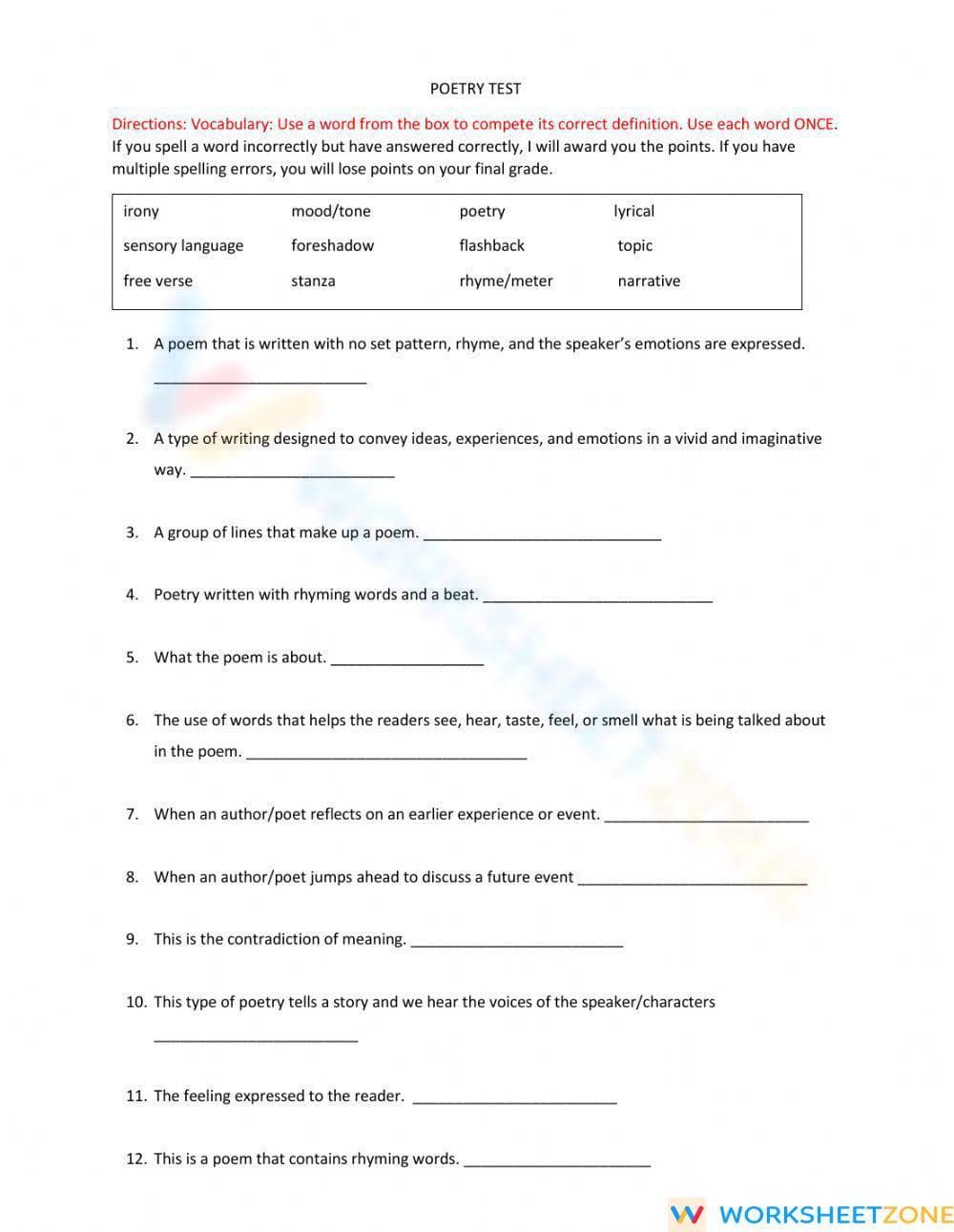

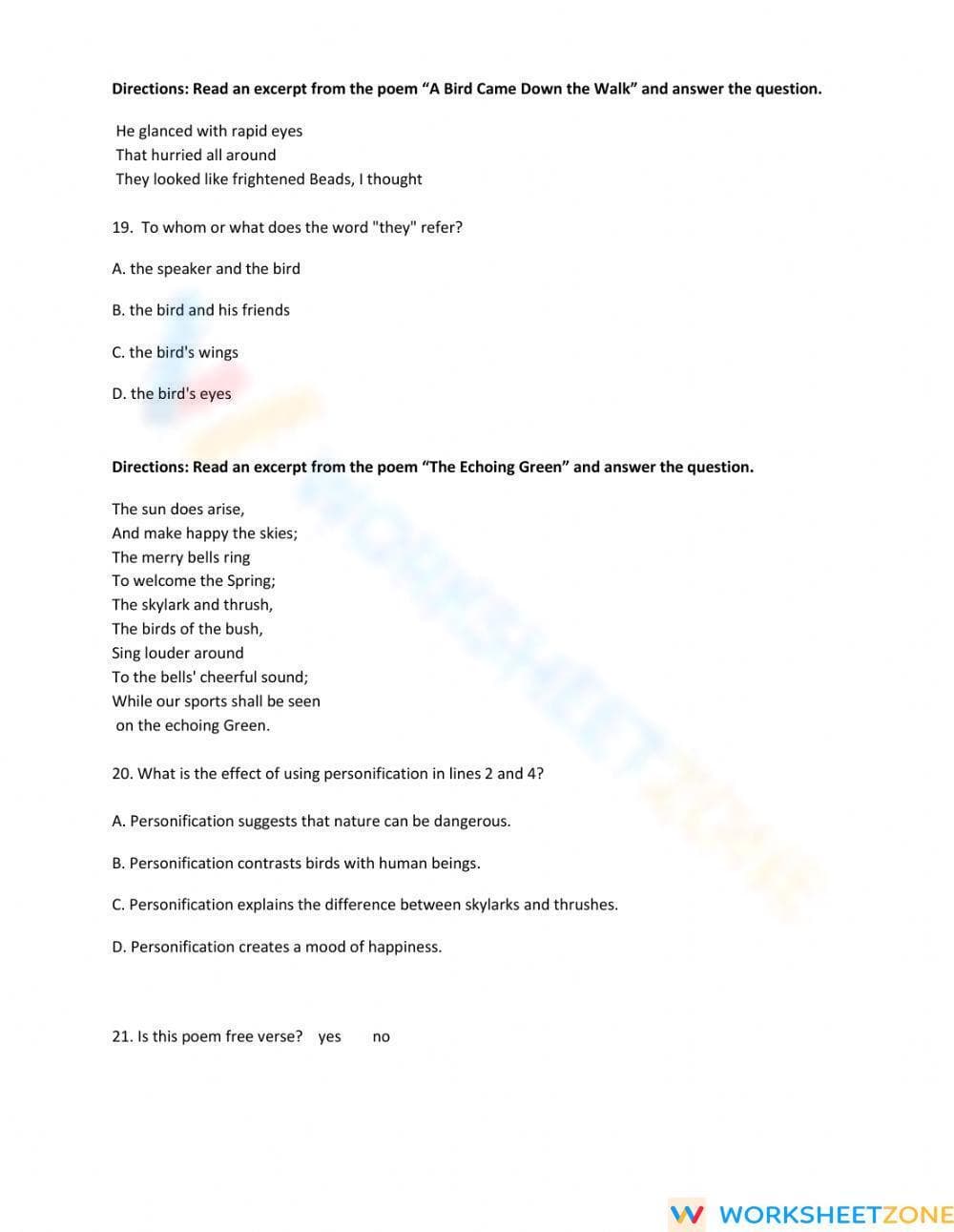
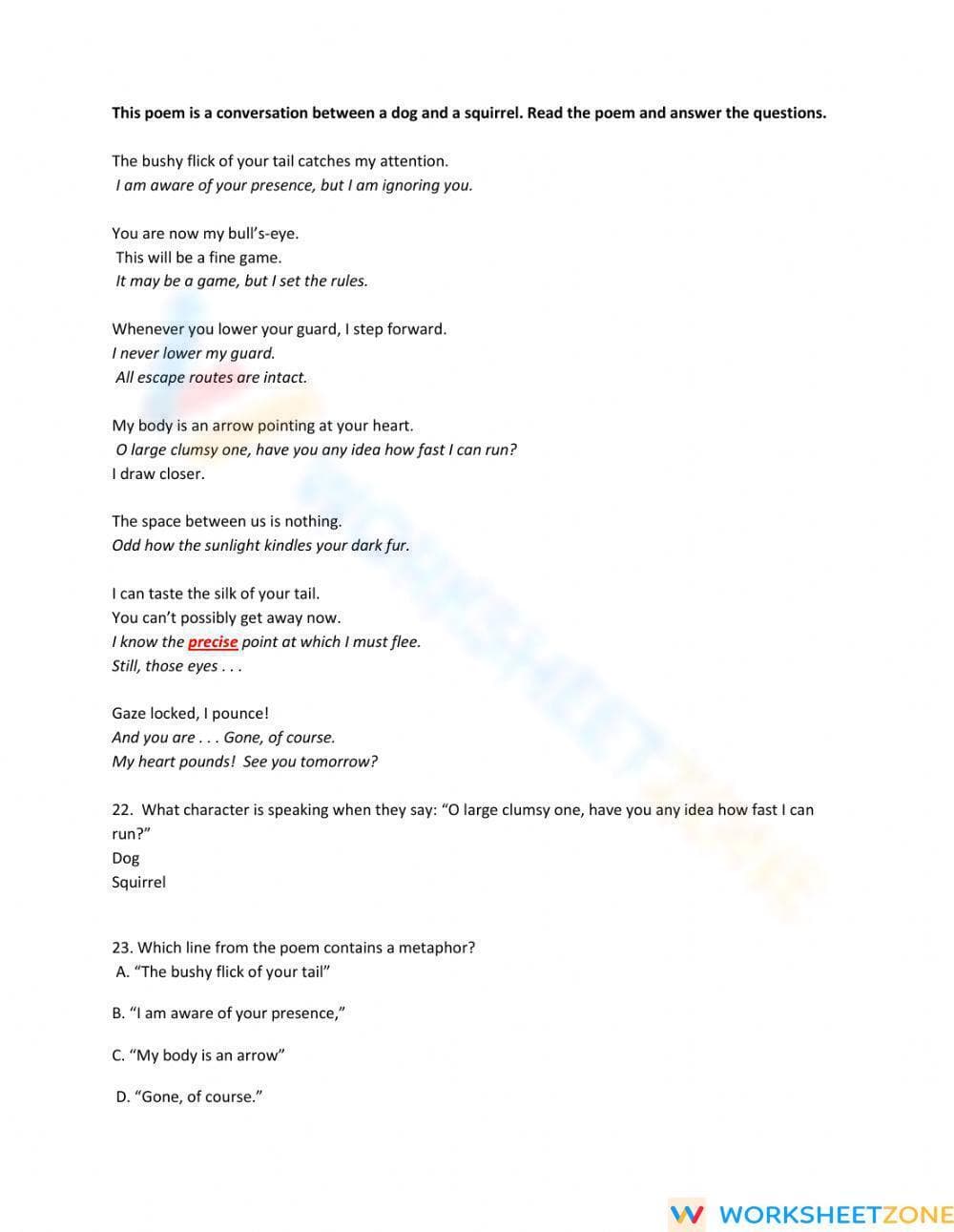
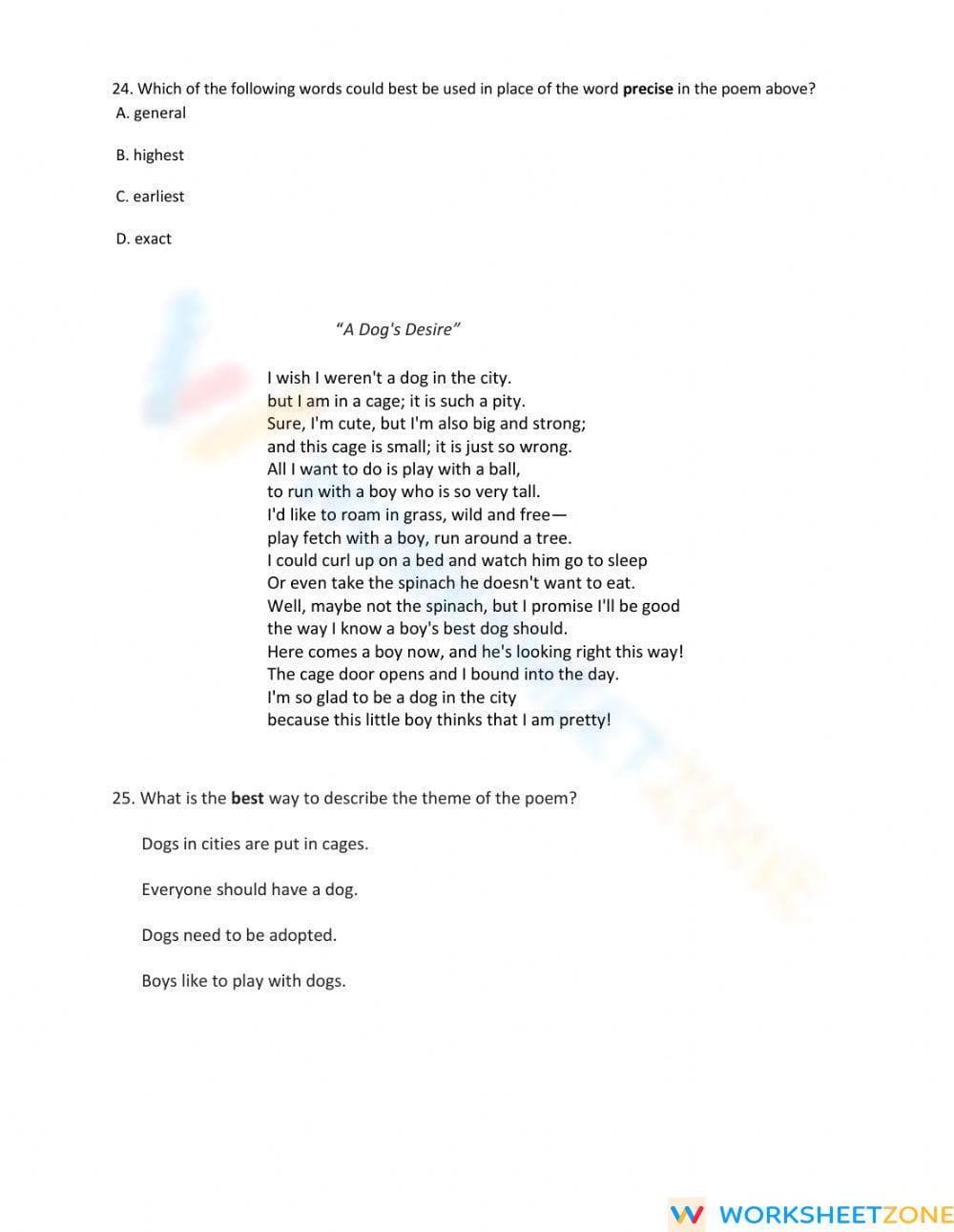

RL.5.2 Worksheet: Poetry Test — Grade 5 Aligned
Paste this activity's link or code into your existing LMS (Google Classroom, Canvas, Teams, Schoology, Moodle, etc.).
Students can open and work on the activity right away, with no student login required.
You'll still be able to track student progress and results from your teacher account.
This poetry test prepares fifth-graders for standards-based assessments. Using a classic poem, it evaluates their ability to determine a theme, analyze figurative language, and use textual evidence to support their claims. The assessment includes 11 rigorous tasks designed to measure deep literary comprehension.
At a Glance
- Grade: 5 · Subject: ELA / Literature
- Standard:
CCSS.ELA-LITERACY.RL.5.2— Determine a theme from details in a poem and summarize the text.- Skill Focus: Poetry analysis, theme, figurative language, textual evidence
- Format: 5 pages · 11 problems · Answer key included · PDF
- Best For: Summative assessment, test prep, standards-based grading
- Time: 35–45 minutes
What's Inside
This five-page PDF includes four student pages and a full answer key. The worksheet features William Blake's poem "The Echoing Green," followed by ten questions. It concludes with a writing prompt requiring students to compare the poem to a second text, "The Little Boy Found."
Evidence of Mastery
This assessment gathers clear evidence of student mastery on core literature standards. Each question targets a specific reading skill, allowing for detailed analysis of student performance on key grade-level expectations. The test evaluates a student's ability to identify tone with evidence (RL.5.1), analyze figurative language (RL.5.4), determine a central theme (RL.5.2), and compare literary works (RL.5.9). Results provide data points for gradebooks or IEP progress monitoring.
Standards Alignment
This worksheet is primarily aligned to CCSS.ELA-LITERACY.RL.5.2, which requires students to determine a theme from details in a text. It also integrates practice with supporting standards like RL.5.1 (quoting accurately), RL.5.4 (figurative language), and RL.5.9 (comparing texts). The standard codes can be copied directly into lesson plans or curriculum maps.
How to Use This Worksheet
Use this resource as a summative assessment following a poetry unit, after direct instruction on theme and literary devices. For formative data, note which questions students miss; difficulty with questions 6-8 points to a need for reteaching figurative language. Alternatively, use it as a guided test-prep activity. Complete the first few questions together, have students work in small groups, then assign the rest for independent practice. The worksheet takes approximately 35-45 minutes to complete.
Who It's For
This resource is designed for fifth-grade students working on grade-level reading standards. The tasks are straightforward and accessible for most students. For those needing support, consider pre-teaching vocabulary. This assessment pairs well with an anchor chart defining key literary devices (personification, imagery, theme) that students can reference during the test.
This poetry assessment provides a reliable tool for measuring student proficiency against CCSS.ELA-LITERACY.RL.5.2. By requiring students to determine the theme of a poem using textual details, the worksheet operationalizes a key component of literary analysis. Research consistently shows that a student's ability to analyze grade-level text is a strong predictor of future academic success. According to a comprehensive analysis by Fisher & Frey (2014), tasks that integrate reading and writing around a central text yield significant gains in comprehension. This worksheet's structure, which moves from multiple-choice questions to a comparative writing prompt, mirrors this effective practice. It gives teachers a clear, standards-aligned data point on student ability to analyze the development of a theme within and across texts, a skill essential for college and career readiness.


