




























Views
Downloads

Essential Planet Facts Worksheet | Grade 2 Science

Paste this activity's link or code into your existing LMS (Google Classroom, Canvas, Teams, Schoology, Moodle, etc.).
Students can open and work on the activity right away, with no student login required.
You'll still be able to track student progress and results from your teacher account.
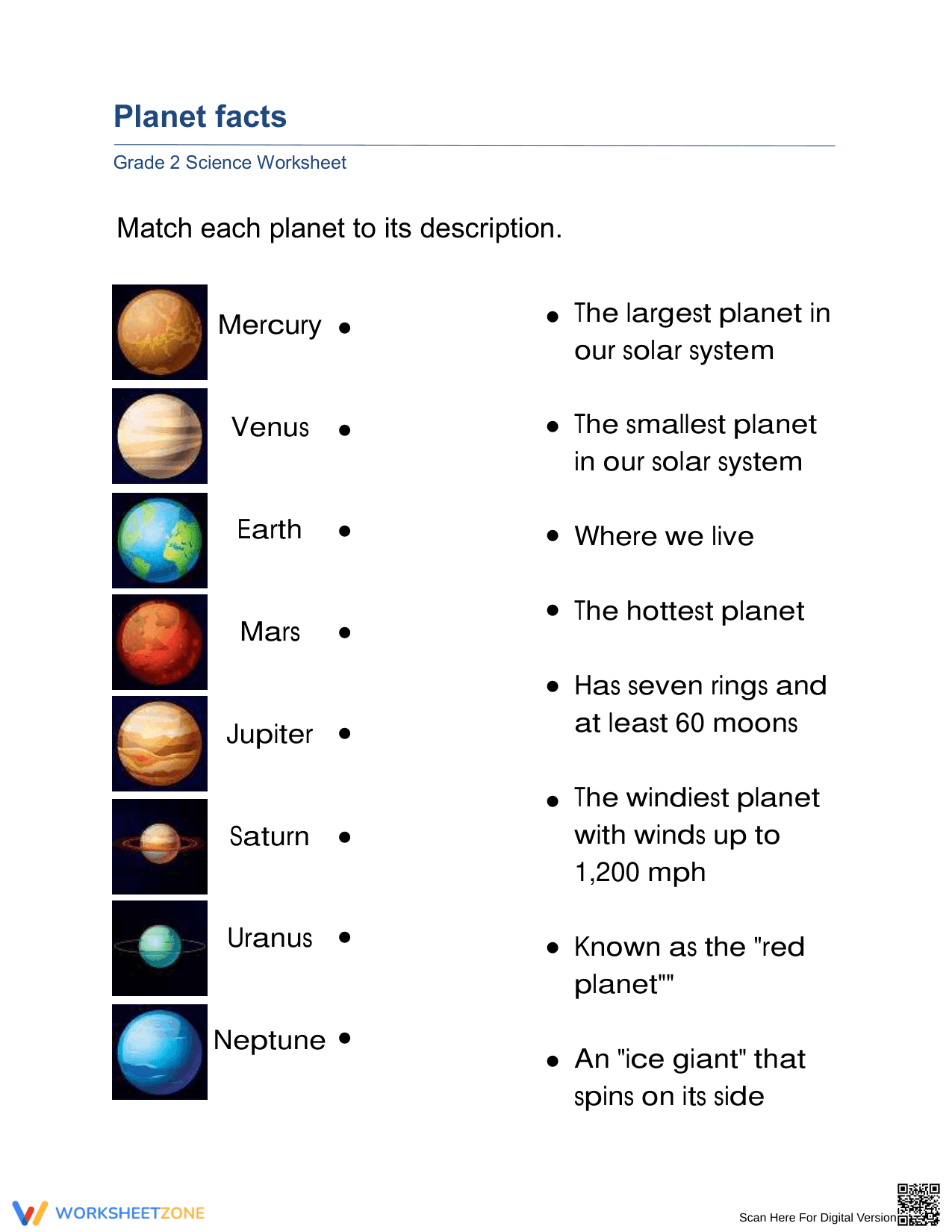
This Grade 2 planet facts worksheet helps students master identifying unique characteristics of each planet in our solar system through a focused matching activity. Students build foundational astronomical knowledge by connecting planetary names with scientific descriptions. This printable resource ensures young learners recognize key traits like size, temperature, and atmospheric features efficiently.
At a Glance
- Grade: 2 · Subject: Science
- Standard:
CCSS.ELA-LITERACY.RI.2.1— Identify key details and characteristics to answer questions about scientific topics- Skill Focus: Planetary Identification
- Format: 1 page · 8 problems · Answer key included · PDF
- Best For: Independent science center or quick review
- Time: 10–15 minutes
What's Inside
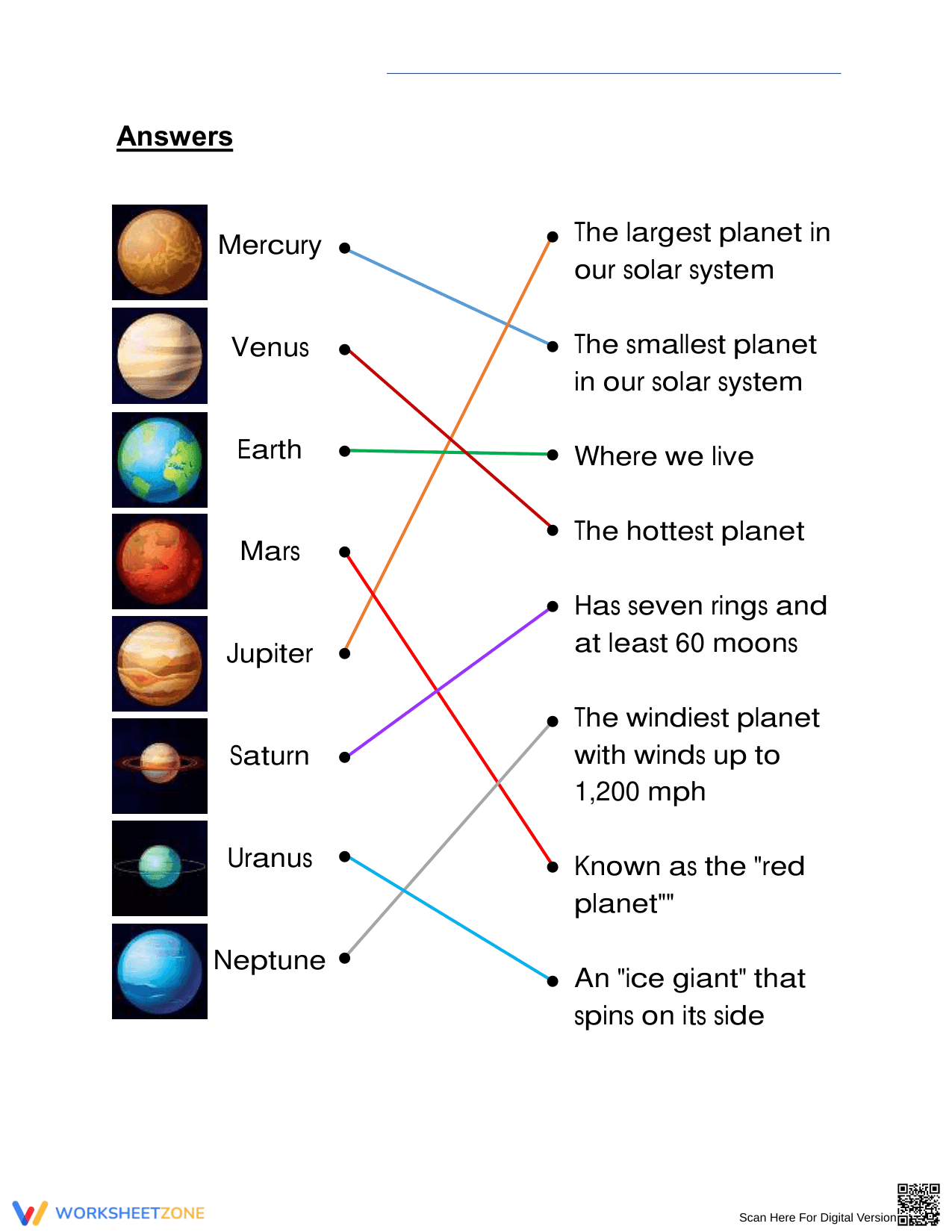
This resource features a matching task where students correlate visual representations and names of the eight planets with specific descriptive clues. The layout includes clear illustrations for Mercury, Venus, Earth, Mars, Jupiter, Saturn, Uranus, and Neptune. It includes a full answer key, making it easy to grade or for students to self-check their work during independent study sessions.
Zero-Prep Workflow
- Print (30 seconds): Select the single-page PDF and print copies for your entire class.
- Distribute (30 seconds): Hand out during your science block, center time, or morning work.
- Review (30 seconds): Check answers as a class or individually using the included key.
The total teacher preparation time is under 2 minutes, making this an ideal choice for sub plans or quick transitions between subjects.
Standards Alignment
The primary standard is CCSS.ELA-LITERACY.RI.2.1, requiring students to ask and answer questions about key details in a text. By matching descriptions like "The windiest planet" to the correct subject, students exercise critical reading skills. This standard code can be copied directly into lesson plans, IEP goals, or district curriculum mapping tools for easy documentation.
How to Use It
Use this after direct instruction as a summative check of planetary traits. Alternatively, use it during lessons as a guided practice activity. For formative assessment, observe how students handle the "ice giant" or "hottest planet" clues to gauge their understanding of planetary composition. Completion typically takes 10 to 15 minutes in a standard classroom setting.
Who It's For
This is designed for second-grade students but works for first graders seeking a challenge or third graders needing a review. It supports English Language Learners by pairing visual images with descriptive text. Pair this resource with a solar system passage to provide a comprehensive learning experience for diverse learners.
Citation Capsule
Focused matching activities like this Grade 2 planet facts worksheet are supported by research in retrieval practice. According to Fisher & Frey (2014), "scaffolded informational tasks" allow students to build domain-specific vocabulary while practicing the essential skill of identifying key details (RI.2.1). This worksheet provides 8 specific data points that students must categorize, aligning with NAEP findings that emphasize the importance of early exposure to scientific texts. By connecting a single plain-English skill—matching planetary characteristics—to visual cues, the resource minimizes cognitive load while maximizing the retention of facts. Educators can use this tool as a reliable metric for student mastery of introductory Earth Science concepts within a 15-minute window. This structured approach ensures students meet rigorous academic standards while building confidence in their scientific literacy and reading comprehension skills.


