


























Views
Downloads
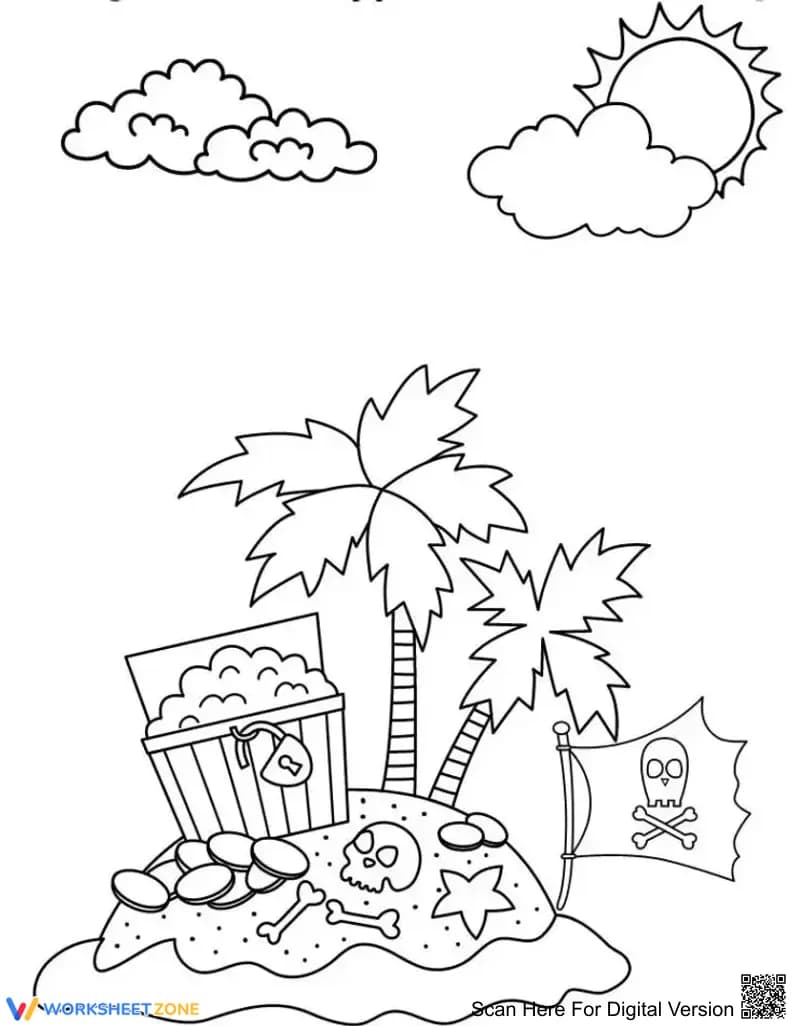

Pirate Island Coloring Page | Essential Grade K-2 Art
Paste this activity's link or code into your existing LMS (Google Classroom, Canvas, Teams, Schoology, Moodle, etc.).
Students can open and work on the activity right away, with no student login required.
You'll still be able to track student progress and results from your teacher account.
This Pirate Island coloring worksheet provides a creative and engaging way for students to develop fine motor control while exploring thematic vocabulary. By focusing on a high-interest pirate theme, the activity encourages artistic expression and serves as a visual prompt for descriptive writing or oral storytelling in early elementary classrooms.
At a Glance
- Grade: K-2 · Subject: English / Arts
- Standard:
CCSS.ELA-LITERACY.SL.K.5— Add drawings to descriptions to provide additional detail and clarity- Skill Focus: Fine motor skills & visual storytelling
- Format: 1 page · 1 task · No answer key needed · PDF
- Best For: Early finishers and creative writing prompts
- Time: 15–20 minutes
What's Inside
This resource consists of a single-page, high-resolution PDF featuring a detailed "Pirate Island" scene. The line art includes iconic elements such as a treasure chest overflowing with coins, palm trees, a skull-and-crossbones flag, and a bright sun. The clear, bold outlines are designed specifically for young learners to practice staying within the lines, supporting hand-eye coordination and spatial awareness without the need for complex instructions.
Zero-Prep Workflow
- Print: Select the page and print copies for your group in under 30 seconds.
- Distribute: Hand out the sheets with crayons or colored pencils; no additional setup or materials are required.
- Review: Spend 5 minutes having students share one descriptive word about their island to integrate literacy.
Total teacher preparation time is under 2 minutes, making it an ideal choice for emergency sub plans, transition periods, or indoor recess.
Standards Alignment
This activity aligns with `CCSS.ELA-LITERACY.SL.K.5`, which requires students to "add drawings or other visual displays to descriptions as desired to provide additional detail." While primarily an art activity, it functions as a scaffold for language development by providing a concrete visual for students to describe. Both standard codes can be copied directly into lesson plans, IEP goals, or district curriculum mapping tools.
How to Use It
Use this worksheet during a pirate-themed unit or as a calming morning work activity. It is particularly effective as a pre-writing tool; after coloring, ask students to write three adjectives describing their island on the back of the page. Formative assessment can occur by observing a student's pencil grip and pressure, which indicates progress in fine motor development. Expected completion typically takes 15 to 20 minutes.
Who It's For
This resource is tailored for Kindergarten through Grade 2 students, though it remains a popular choice for older students as a stress-relief activity. It is an excellent pairing for pirate-themed picture books or anchor charts focused on setting and environment. It provides a low-stakes environment for students who may struggle with traditional writing tasks.
Research by Fisher & Frey (2014) emphasizes the importance of visual scaffolds in the gradual release of responsibility model, noting that artistic expression can bridge the gap between conceptual understanding and formal writing. This Pirate Island worksheet utilizes the `CCSS.ELA-LITERACY.SL.K.5` standard to help students visualize details before translating them into spoken or written English. By engaging in thematic coloring, learners build the stamina and fine motor precision necessary for more complex literacy tasks. Studies from the NAEP suggest that integrating arts into the primary curriculum supports broader engagement and retention of vocabulary. This printable resource provides a structured yet open-ended environment for students to practice these foundational skills. Educators can confidently integrate this tool into their literacy blocks, knowing it supports both creative and standard-aligned objectives.


