


























Views
Downloads
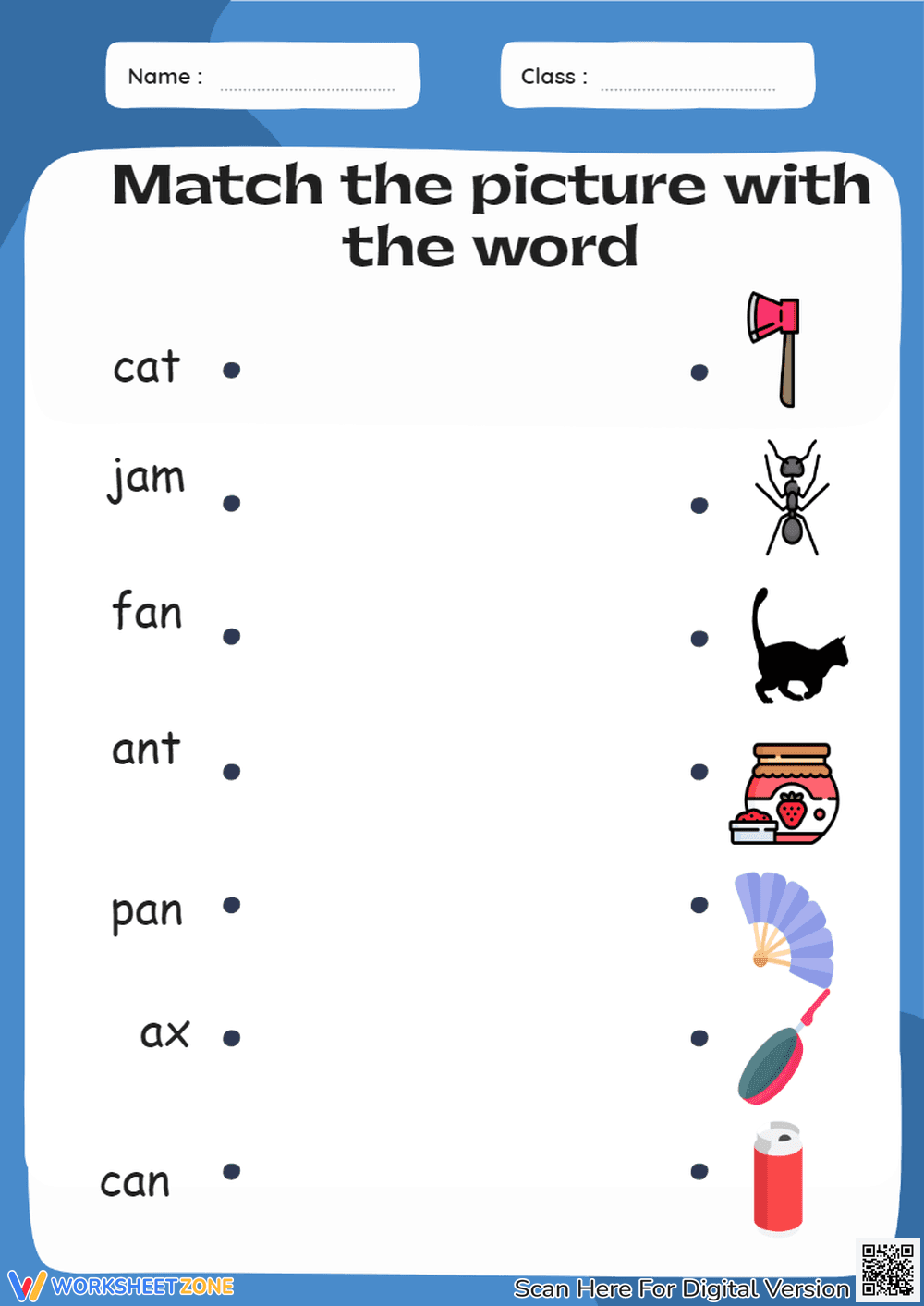

Grade K Phonics Matching — Printable No-Prep Worksheet
Paste this activity's link or code into your existing LMS (Google Classroom, Canvas, Teams, Schoology, Moodle, etc.).
Students can open and work on the activity right away, with no student login required.
You'll still be able to track student progress and results from your teacher account.
This Kindergarten phonics worksheet helps early readers connect printed text to visual meaning. By matching seven short 'a' and CVC words to their corresponding colorful images, students build essential decoding and vocabulary skills. This straightforward activity reinforces letter-sound correspondence and builds reading confidence in young learners.
At a Glance
- Grade: K · Subject: ELA
- Standard:
CCSS.ELA-LITERACY.RF.K.3— Apply grade-level phonics to decode words- Skill Focus: CVC Word Matching
- Format: 1 printable page · 7 matching problems · PDF download
- Best For: Independent practice or centers
- Time: 10–15 minutes
This single-page resource features a clean, intuitive layout designed specifically for early childhood education. The left column presents seven decodable words—such as cat, jam, and fan—printed in a clear, primary-friendly font. The right column displays vibrant, easily recognizable illustrations. Students draw a line connecting each word to its matching picture, providing immediate visual feedback on their reading accuracy. The uncluttered design minimizes distractions, keeping the focus entirely on phonics practice.
Zero-Prep Workflow
This resource requires under two minutes of teacher preparation.
- Print (1 minute): The design prints beautifully in grayscale for quick class sets.
- Distribute (30 seconds): The self-explanatory format means students can begin working immediately with minimal verbal instructions.
- Review (30 seconds): Teachers can assess student understanding at a glance by checking the drawn lines.
Because it requires no special materials or complex setup, this worksheet is an excellent addition to any emergency sub plan.
Standards Alignment
This activity is directly aligned with CCSS.ELA-LITERACY.RF.K.3, which requires students to know and apply grade-level phonics and word analysis skills in decoding words. By blending letters to form words, children demonstrate basic phonetic principles while building vocabulary. Both standard codes can be copied directly into lesson plans, IEP goals, or district curriculum mapping tools.
How to Use It
This versatile worksheet fits perfectly into morning work routines or literacy centers. Use it after a direct phonics lesson on short vowels to reinforce the concept. As a formative assessment tip, observe students as they work; note whether they are sounding out each letter individually or recognizing the whole word by sight. Expect most kindergarteners to complete this matching task within 10 to 15 minutes.
Who It's For
This resource is ideal for kindergarten students who are transitioning from letter recognition to early reading. It provides appropriate scaffolding for visual learners and English Language Learners (ELLs) by pairing text with clear imagery. For students needing extra support, teachers can pre-teach the vocabulary using flashcards. This worksheet pairs naturally with a decodable reader or a whole-class anchor chart focusing on short vowel word families.
Mastering early reading skills requires consistent, targeted practice that connects phonetic decoding to semantic meaning. According to a comprehensive Fisher & Frey (2014) study on early literacy interventions, providing students with multimodal learning opportunities—such as pairing printed text with clear visual cues—significantly increases their ability to retain and apply new vocabulary in context. This specific worksheet directly supports CCSS.ELA-LITERACY.RF.K.3 by asking students to apply grade-level phonics to decode words independently. When young learners actively engage in these types of matching exercises, they strengthen the critical neural pathways responsible for automatic word recognition and reading fluency. Furthermore, the immediate visual feedback provided by the illustrations helps reduce frustration for emergent readers. By integrating this evidence-based approach into daily classroom routines, educators can ensure that foundational reading skills are firmly established, paving the way for future academic success across all subject areas.


