




























Views
Downloads
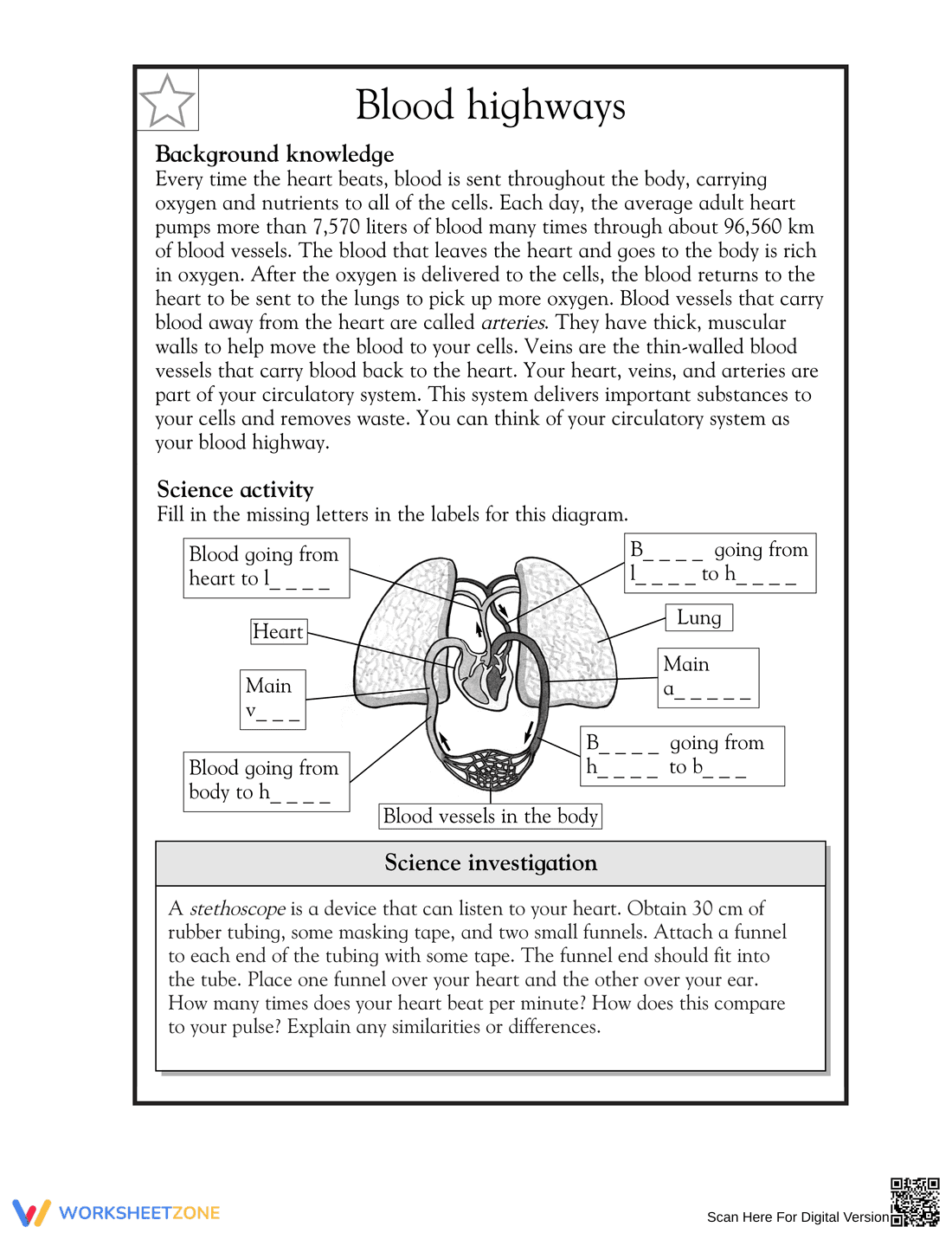


Essential Parts of the Human Heart Worksheet G5 Science

Paste this activity's link or code into your existing LMS (Google Classroom, Canvas, Teams, Schoology, Moodle, etc.).
Students can open and work on the activity right away, with no student login required.
You'll still be able to track student progress and results from your teacher account.
This Grade 5 science worksheet explores the human heart and circulatory system. Students learn about "blood highways" by identifying arteries and veins while exploring the functions that keep the body healthy. This ready-to-use resource ensures students understand complex biological processes through active labeling and hands-on observation of their own heart rate.
At a Glance
- Grade: 5 · Subject: Science
- Standard:
4-LS1-1— Identify internal structures that function to support survival and growth in animals- Skill Focus: Circulatory system anatomy and heart function
- Format: 1 page · 9 problems · Answer key included · PDF
- Best For: Introduction to human body systems
- Time: 25–35 minutes
What's Inside
This resource includes a background knowledge section defining arteries, veins, and the circulatory system. The main activity is an anatomical diagram where students fill in missing letters to label blood flow. It also features a "Science Investigation" for building a DIY stethoscope and a complete answer key for quick grading.
Zero-Prep Workflow
Integrate this worksheet in three steps. First, print the student copy (1 minute). Second, have students read the background text and label the diagram (15 minutes). Third, review the answers and conduct the heart rate investigation (15 minutes). This process requires zero setup and is ideal for sub plans or supplemental science practice.
Standards Alignment
The primary standard is `4-LS1-1`, focusing on how internal structures support survival and growth. By identifying the heart and vessels, students see how internal systems interact to transport nutrients. This standard code can be copied directly into lesson plans, IEP goals, or district curriculum mapping tools to ensure instructional alignment.
How to Use It
Use this worksheet during the "Explain" phase of a life science unit. Assign the labeling task to check understanding of blood flow. For formative assessment, observe students during the pulse investigation; their ability to relate heart rate to activity levels reveals their conceptual depth. Most students finish in 30 minutes.
Who It's For
This resource is designed for Grade 5 students but works for Grade 4 or 6. It supports visual learners through diagrams and kinesthetic learners with the stethoscope lab. It pairs well with classroom anchor charts on blood oxygenation or informational passages on how the respiratory and circulatory systems work together.
According to a ScienceDirect TpT Analysis, science worksheets combining informational text with diagrammatic modeling significantly improve retention of anatomical vocabulary in upper elementary students. This resource targets the `4-LS1-1` standard by requiring students to analyze the internal structure of the heart and its functional relationship to the lungs. By using the "Blood Highways" metaphor, the worksheet reduces the cognitive load associated with complex circulatory pathways, allowing Grade 5 learners to build a robust mental model of human physiology. Research from Fisher & Frey (2014) supports this gradual release of responsibility, moving from provided background knowledge to independent diagram labeling and a self-directed investigation. Integrating such multifaceted tasks ensures that students move beyond rote memorization toward a deeper understanding of how internal systems support life, making it a vital tool for any life science curriculum.


