




























Views
Downloads

Grade K Human Body Parts — Printable No-Prep Worksheet

Paste this activity's link or code into your existing LMS (Google Classroom, Canvas, Teams, Schoology, Moodle, etc.).
Students can open and work on the activity right away, with no student login required.
You'll still be able to track student progress and results from your teacher account.
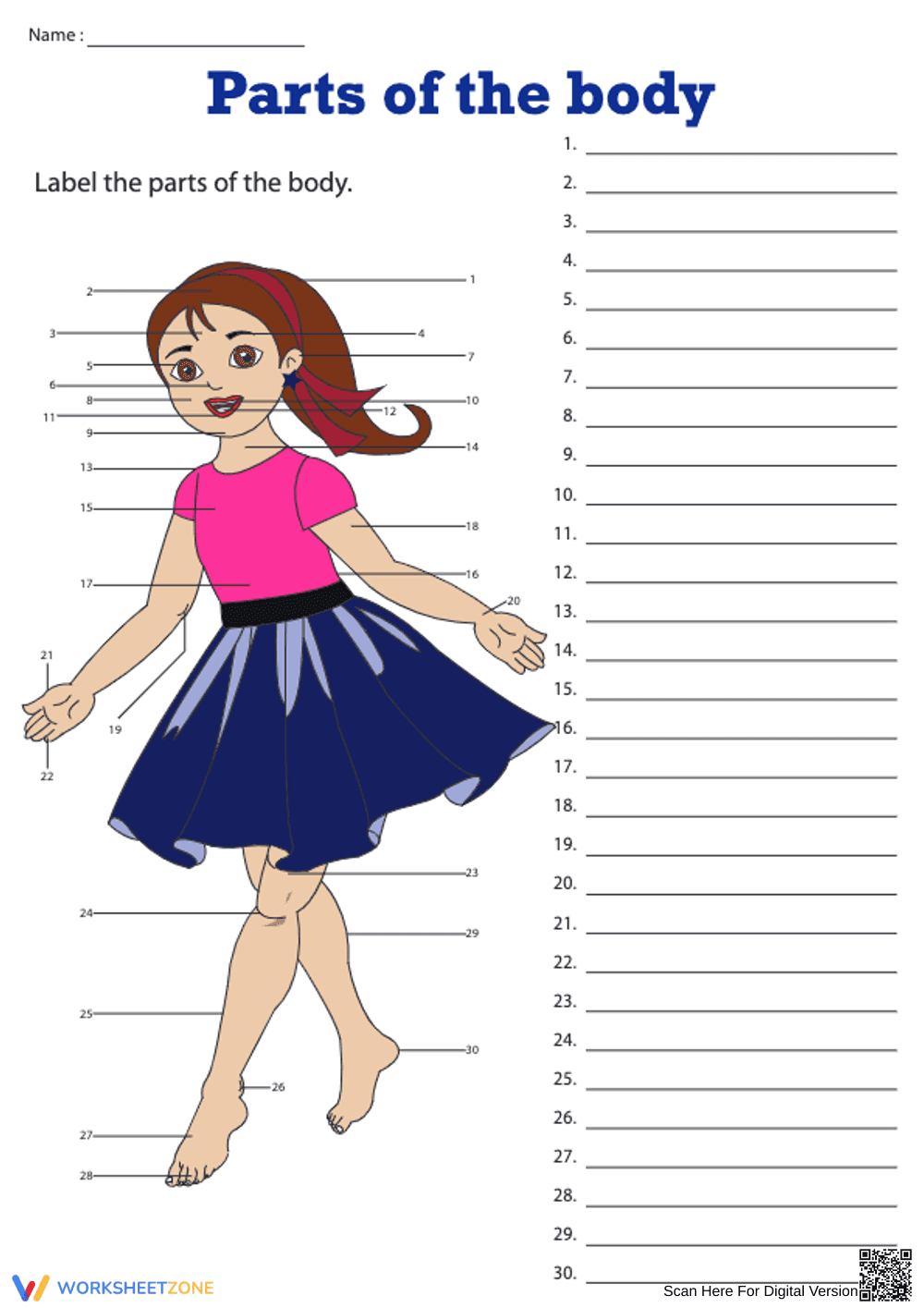
This printable Kindergarten science worksheet helps students identify and label major human body parts. By connecting visual diagrams to specific vocabulary words, young learners build foundational life science skills and improve their anatomical awareness. The straightforward format ensures students can immediately begin matching body parts to their correct names.
At a Glance
- Grade: K · Subject: Science
- Standard:
K-LS1-1— Observe and identify basic human body structures- Skill Focus: Labeling human body parts
- Format: 2 pages · 30 problems · Answer key included · PDF
- Best For: Independent practice or science centers
- Time: 15–20 minutes
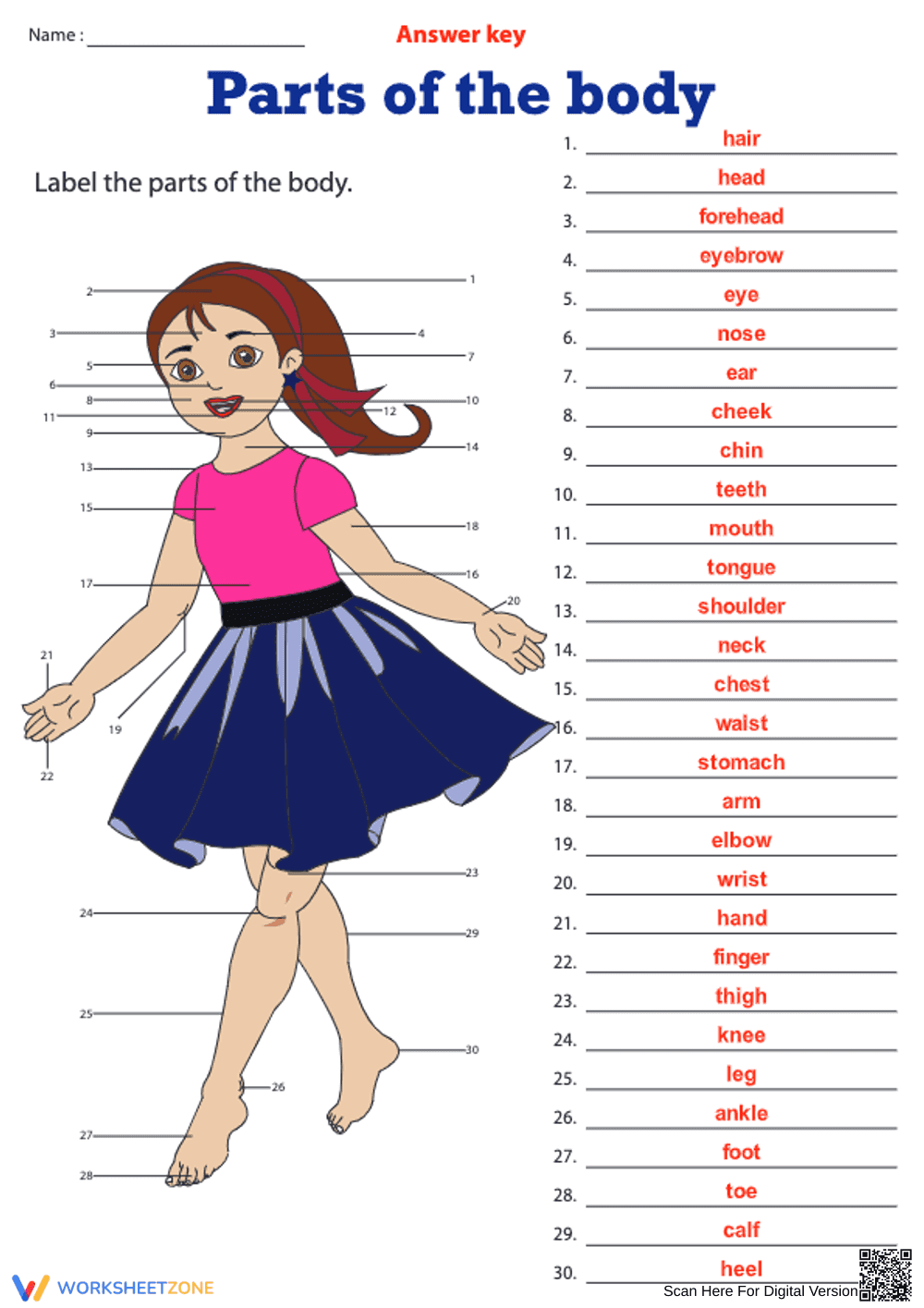
This resource features a clear, full-body illustration of a child with thirty distinct pointer lines indicating different anatomical features. Students are tasked with writing the correct body part name on the corresponding numbered line. The download includes one student-facing worksheet page and a comprehensive, color-coded answer key page that allows for quick grading or self-checking.
Designed for immediate classroom implementation, this resource requires minimal teacher preparation.
- Print (1 minute): Simply print the single-page student diagram. No cutting or special materials are required.
- Distribute (1 minute): Hand out the worksheet alongside pencils. The visual layout is highly intuitive for early learners.
- Review (3 minutes): Use the provided answer key to quickly verify student responses or project it on a smartboard for whole-class review.
With a total prep time of under two minutes, this activity is an excellent addition to any emergency sub plan or busy morning routine.
This worksheet aligns with foundational life science concepts, supporting K-LS1-1 by helping students observe and describe the physical structures of humans. Recognizing these basic anatomical features is the first step in understanding how different body parts function to help individuals survive and interact with their environment. Both standard codes can be copied directly into lesson plans, IEP goals, or district curriculum mapping tools.
Teachers can utilize this labeling activity during a dedicated health and human body unit, introducing it after a whole-group lesson on anatomy. It serves perfectly as an independent science center station where students can reference a classroom word wall to help spell the 30 body parts. For a quick formative assessment, observe which specific areas (like distinguishing between the calf and thigh, or wrist and elbow) require further whole-class review. Expected completion time ranges from 15 to 20 minutes.
This worksheet is primarily designed for Kindergarten students beginning their exploration of life sciences and personal health. It is also highly effective for first-grade review or for English Language Learners (ELLs) who are building their foundational English vocabulary. Pair this diagram with an interactive physical body parts game or a life-size tracing activity to reinforce the vocabulary through kinesthetic learning.
Integrating visual diagrams with vocabulary practice is a highly effective strategy for early childhood science education. When students practice identifying structures aligned with K-LS1-1, they develop essential observational skills required for later scientific inquiry. According to Fisher & Frey (2014), providing clear visual scaffolds alongside targeted vocabulary tasks significantly enhances retention and comprehension for young learners. By requiring students to observe and identify basic human body structures through direct labeling, this worksheet bridges the gap between abstract scientific concepts and concrete, recognizable physical traits. The inclusion of 30 distinct anatomical terms ensures a comprehensive review of the human body, moving beyond basic terms to include more specific vocabulary like the heel, calf, and wrist. This structured approach builds a robust foundation for future life science curricula and promotes long-term academic success.


