


























Views
Downloads


Flower Dissection Printable Guide | Grade 6 Science
Paste this activity's link or code into your existing LMS (Google Classroom, Canvas, Teams, Schoology, Moodle, etc.).
Students can open and work on the activity right away, with no student login required.
You'll still be able to track student progress and results from your teacher account.
This comprehensive flower dissection guide helps students identify the parts of a flower and understand their reproductive functions. By engaging in hands-on observation and dissection, learners will explore plant anatomy, collect data, and discover how specialized structures like the stamen and pistil contribute to successful plant reproduction.
At a Glance
- Grade: 6 · Subject: Science
- Standard:
MS-LS1-4— Explain how specialized plant structures affect reproduction probability.- Skill Focus: Flower anatomy and dissection
- Format: 4 pages · 6 problems · PDF
- Best For: Hands-on lab activities
- Time: 30–40 minutes
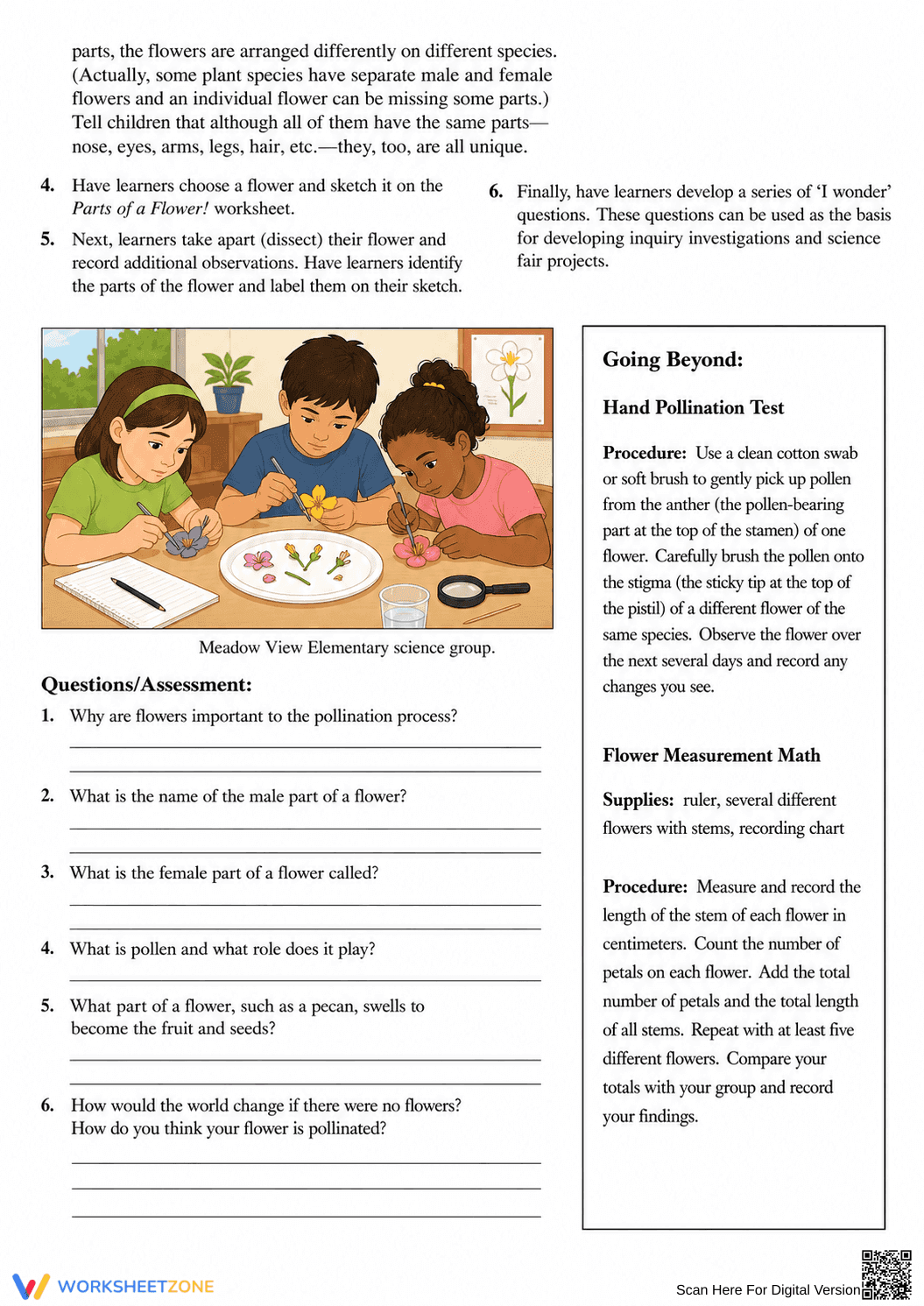
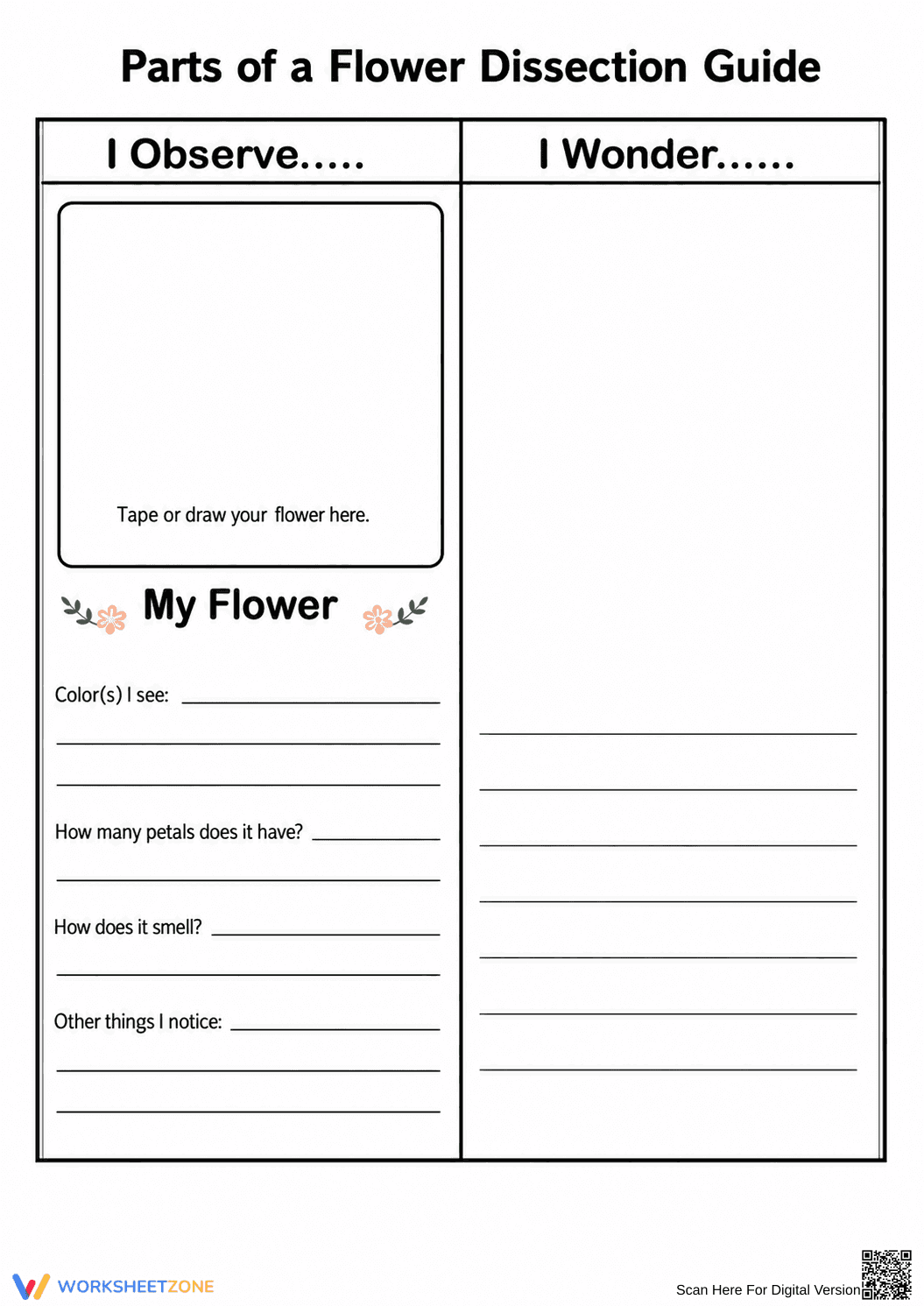
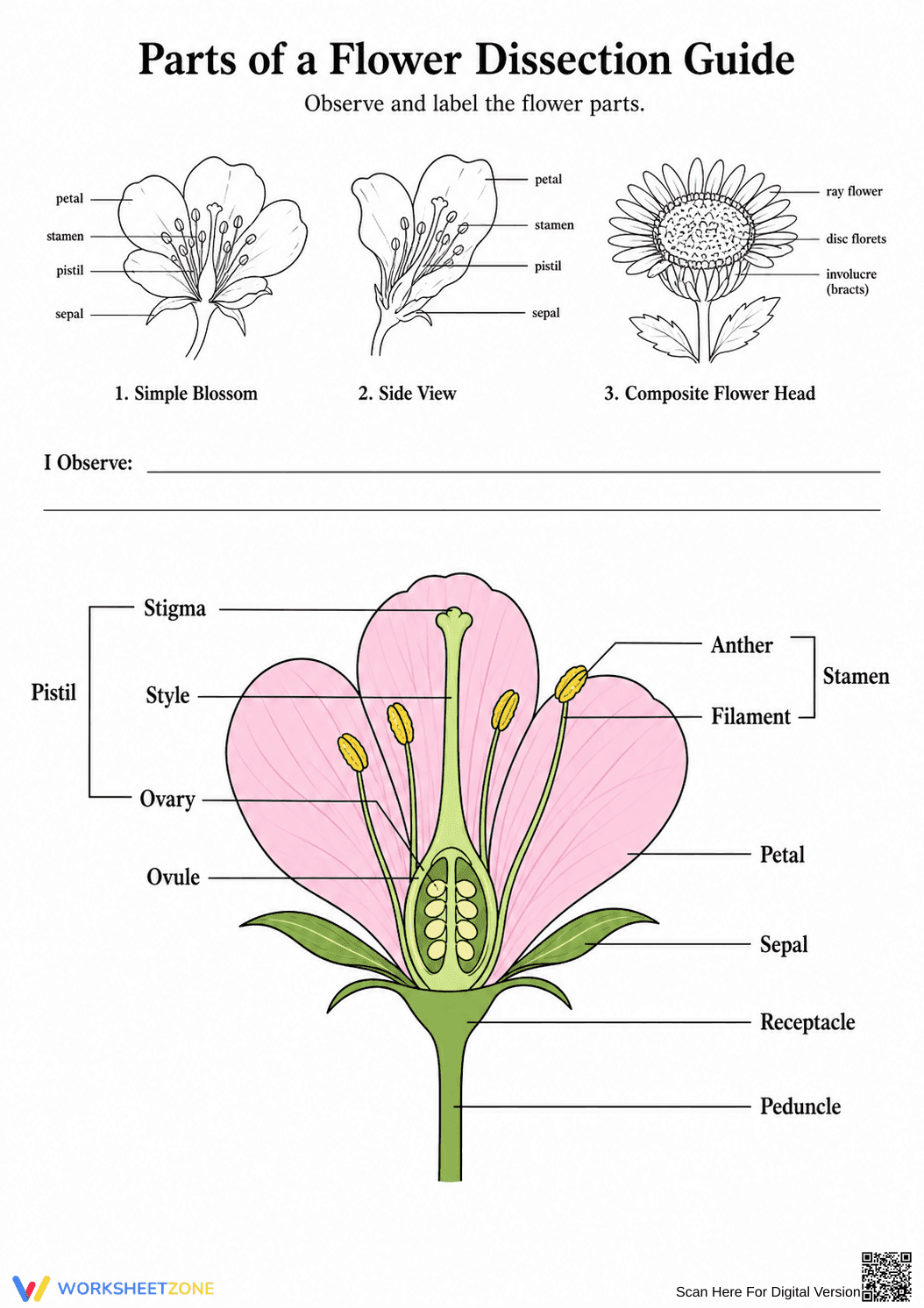
This four-page resource includes a detailed background reading section, step-by-step dissection procedures, and a clearly labeled anatomical diagram. Students will utilize an "I Observe / I Wonder" recording sheet to document their findings, followed by six assessment questions to check for understanding. The packet also features two extension activities—a hand pollination test and a flower measurement math task—to deepen student engagement with the material.
- Guided practice: Students begin by reading the background information and reviewing the labeled diagram to familiarize themselves with terms like anther, filament, and ovary.
- Supported practice: Working in small groups, learners follow the step-by-step procedure to carefully dissect their flowers, using the provided recording sheets to sketch and label the parts they find.
- Independent practice: Students complete the six assessment questions individually, applying their hands-on experience to explain the role of pollen and the importance of flowers in the pollination process.
This gradual-release approach builds confidence.
This resource is aligned to the Next Generation Science Standards, specifically MS-LS1-4: Use argument based on empirical evidence and scientific reasoning to support an explanation for how characteristic animal behaviors and specialized plant structures affect the probability of successful reproduction of animals and plants respectively. Both standard codes can be copied directly into lesson plans, IEP goals, or district curriculum mapping tools.
This dissection guide is perfect as the core activity during a life science unit on plant reproduction. Teachers can introduce the background information during direct instruction, then transition students into small groups for the 30–40 minute lab. Alternatively, use it as an enrichment station for advanced learners to tackle the extension tasks. As a formative assessment tip, circulate during the dissection phase and ask students to verbally identify the male and female parts of their specific flower before they begin sketching.
This worksheet is designed for middle school science students, particularly those in sixth grade studying biology and botany. The visual diagrams and structured recording sheets provide excellent scaffolding for visual learners and English Language Learners navigating complex anatomical vocabulary. It pairs perfectly with a direct instruction lesson on pollinators or a multimedia presentation showing time-lapse plant growth.
Integrating hands-on laboratory experiences like this flower dissection guide is critical for developing scientific literacy and observational skills in middle school students. Aligned with MS-LS1-4, this activity requires learners to explain how specialized plant structures affect reproduction probability through direct empirical observation. According to a recent ScienceDirect TpT Analysis, instructional materials that combine tactile exploration with structured recording sheets significantly improve vocabulary retention and conceptual understanding in the life sciences. By physically separating and identifying the stamen, pistil, and petals, students move beyond rote memorization to construct a functional, working understanding of plant anatomy. This multi-sensory approach ensures that abstract biological concepts become concrete, allowing educators to effectively measure student comprehension through the included assessment questions, observational sketches, and inquiry-based extension tasks.


