


























0
Views
0
Downloads

0.0
0
Save
0 Likes
Share
Parts of a Fish Anatomy Worksheet
0 Views
0 Downloads
Paste this activity's link or code into your existing LMS (Google Classroom, Canvas, Teams, Schoology, Moodle, etc.).
Students can open and work on the activity right away, with no student login required.
You'll still be able to track student progress and results from your teacher account.
Information
Description
What It Is:
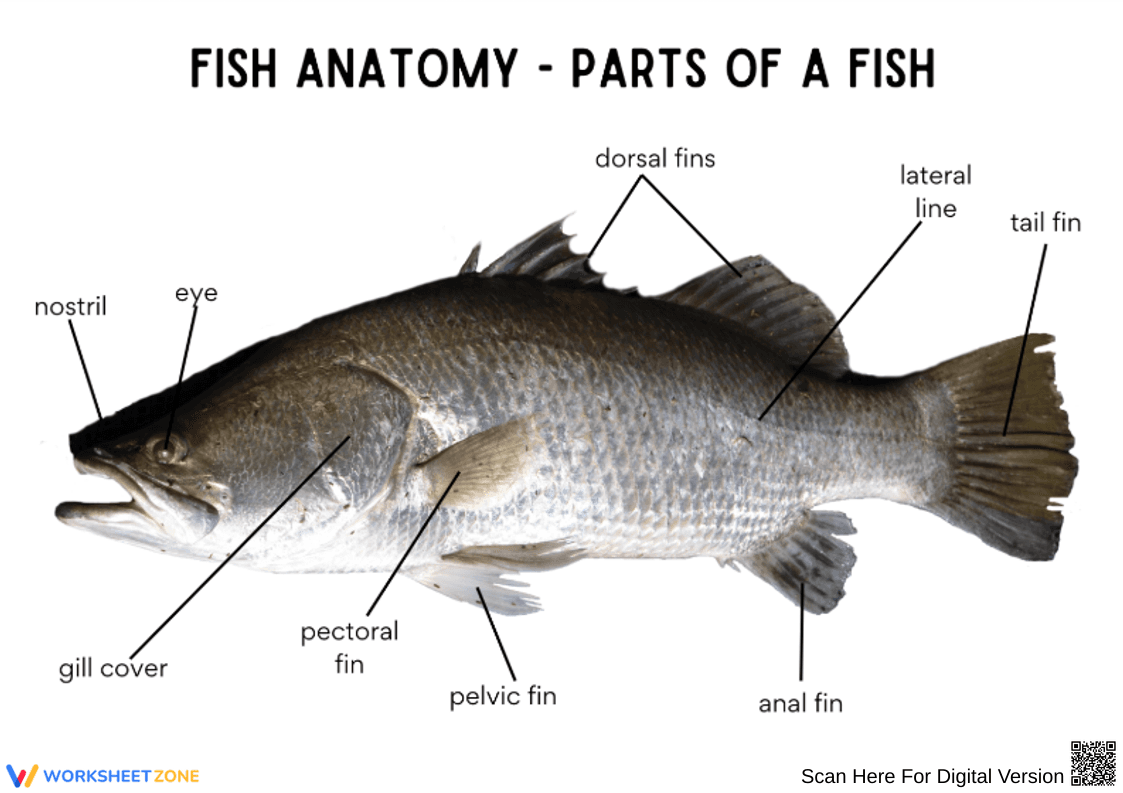
A fish anatomy worksheet showing the external parts of a fish, including nostril, eye, gill cover, fins (dorsal, pectoral, pelvic, anal, tail), and the lateral line.
Why Use It:
This worksheet helps students identify and understand the external structures of fish and their roles in swimming, balance, breathing, and sensory functions. It’s a hands-on way to introduce aquatic biology.
How to Use It:
• Students label each external part of the fish diagram.
• Compare the anatomy of fish to other vertebrates such as amphibians and mammals.
• Use it as a visual aid during lessons on habitats, adaptations, and movement.
• Assign as classroom activity, homework, or a quiz review sheet.
Grade Suitability:
Best suited for Grades 3–8.
• Grades 3–5: Introduction to fish body parts and their basic functions.
• Grades 6–8: Deeper exploration into how external features support survival and adaptation in aquatic environments.
Target Users:
Elementary and middle school science teachers, homeschool educators, and students learning fish anatomy.
A fish anatomy worksheet showing the external parts of a fish, including nostril, eye, gill cover, fins (dorsal, pectoral, pelvic, anal, tail), and the lateral line.
Why Use It:
This worksheet helps students identify and understand the external structures of fish and their roles in swimming, balance, breathing, and sensory functions. It’s a hands-on way to introduce aquatic biology.
How to Use It:
• Students label each external part of the fish diagram.
• Compare the anatomy of fish to other vertebrates such as amphibians and mammals.
• Use it as a visual aid during lessons on habitats, adaptations, and movement.
• Assign as classroom activity, homework, or a quiz review sheet.
Grade Suitability:
Best suited for Grades 3–8.
• Grades 3–5: Introduction to fish body parts and their basic functions.
• Grades 6–8: Deeper exploration into how external features support survival and adaptation in aquatic environments.
Target Users:
Elementary and middle school science teachers, homeschool educators, and students learning fish anatomy.


