


























Views
Downloads

Essential Making Inferences Worksheet | Grade 8 ELA
Paste this activity's link or code into your existing LMS (Google Classroom, Canvas, Teams, Schoology, Moodle, etc.).
Students can open and work on the activity right away, with no student login required.
You'll still be able to track student progress and results from your teacher account.
This Grade 8 English Language Arts resource provides focused practice on making inferences and understanding vocabulary in context, using Langston Hughes's short story "Thank You, M'am." Students will analyze character actions and dialogue to draw conclusions about their feelings and motivations, a foundational skill for deep literary comprehension.
At a Glance
- Grade: 8 · Subject: ELA / Reading Literature
- Standard:
CCSS.ELA-LITERACY.RL.8.1— Cite textual evidence to support analysis and inferences.- Skill Focus: Making Inferences, Vocabulary in Context
- Format: 7 pages · 3 tasks · Answer key included · PDF
- Best For: Guided practice, direct instruction support, sub plans
- Time: 20–30 minutes
What's Inside
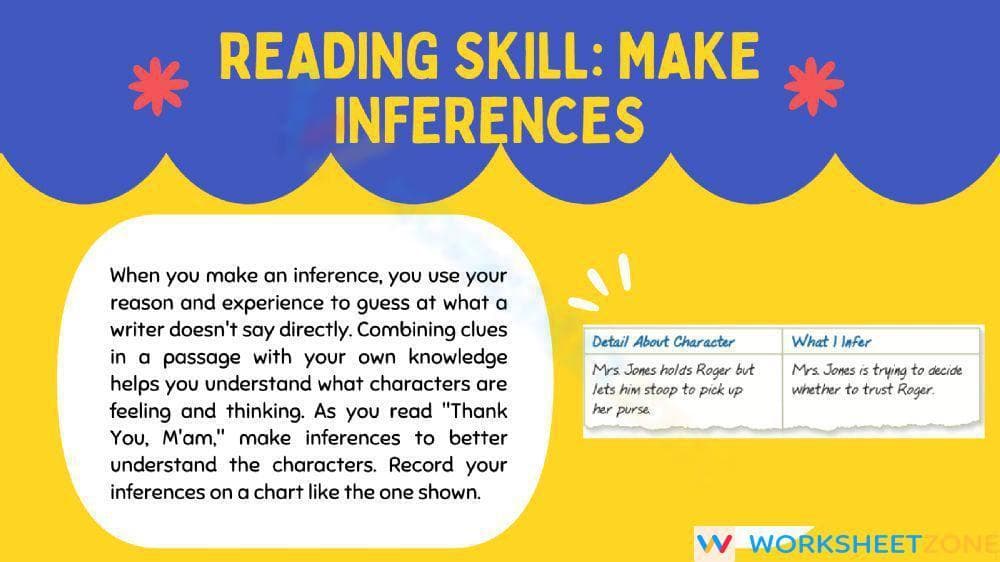
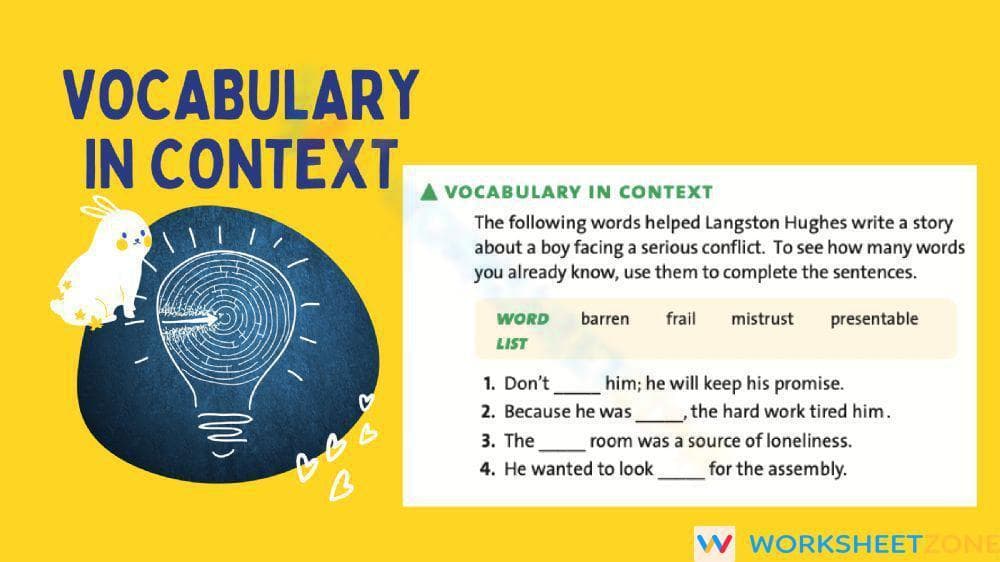
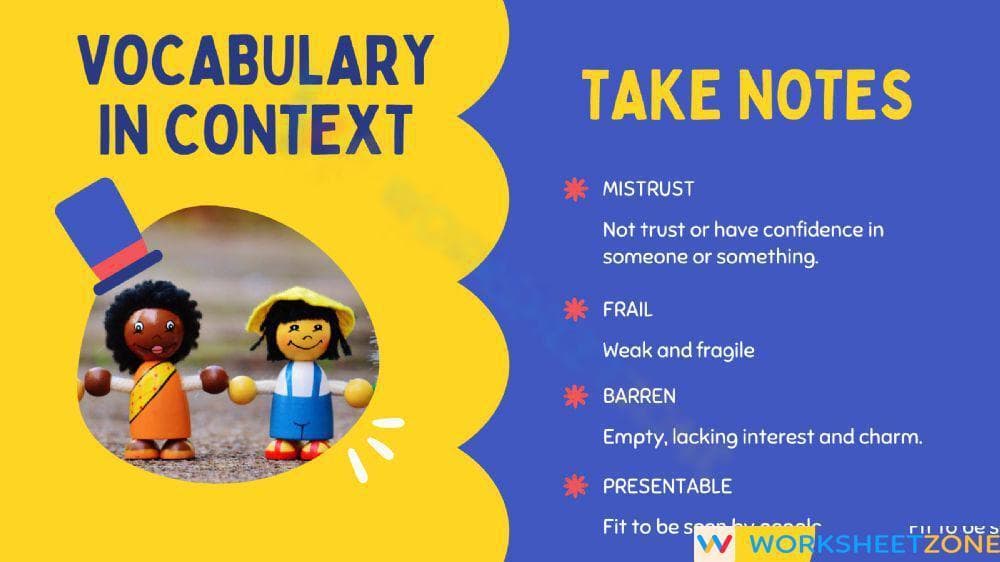
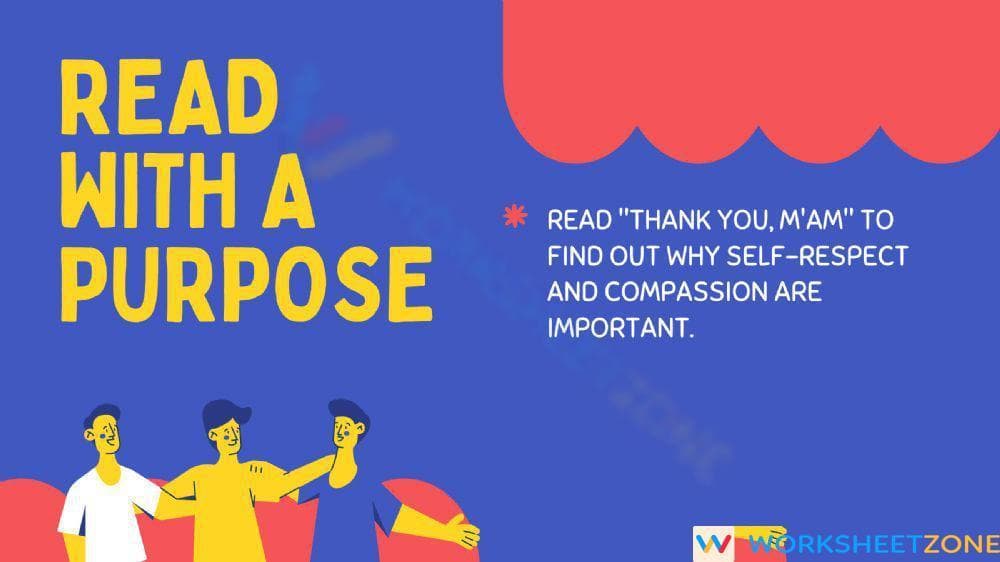
This resource is a 7-page interactive slideshow for instruction or review. It includes a purpose-setting slide for "Thank You, M'am," a vocabulary-in-context activity, and a lesson on making inferences with an example. Two application questions with corresponding answer slides check for understanding.
Skill Progression
The activities follow a gradual release model to build student confidence.
- Guided Practice: The presentation defines making inferences with a clear, modeled example, setting a strong conceptual foundation.
- Supported Practice: A vocabulary exercise with a word bank and sentence frames scaffolds students' ability to use new terms correctly.
- Independent Practice: Students apply their inferencing skills to short passages, allowing for a quick formative assessment of the skill.
Standards Alignment
This worksheet aligns with CCSS.ELA-LITERACY.RL.8.1, which requires students to cite textual evidence to support inferences drawn from a text. It also supports CCSS.ELA-LITERACY.L.8.4 (vocabulary in context). These codes can be copied directly into lesson plans or curriculum maps.
How to Use It
Use this slideshow during a lesson after students have read Langston Hughes's "Thank You, M'am." Project the slides to guide discussion, letting students complete tasks in their notebooks. For a formative assessment, check which students correctly identify evidence to support their inference. The activity is designed for a 20 to 30-minute period.
Who It's For
This resource is for Grade 8 students learning or reviewing literary analysis. The clear definitions and structured tasks also make it suitable for English learners or students needing extra support. It pairs well with the full text of "Thank You, M'am" and a classroom anchor chart on literary conflict.
Supporting students in drawing conclusions from text is a core component of evidence-based reading, a practice central to standard CCSS.ELA-LITERACY.RL.8.1. This skill, moving beyond literal comprehension to inference, is a key predictor of future academic success. Research shows that explicit instruction in reading strategies like making inferences leads to significant gains in comprehension for adolescent learners. According to Fisher & Frey (2014), a structured approach involving modeling and guided practice is highly effective. This 7-page resource provides that structure, guiding Grade 8 students to analyze character, identify conflict, and use textual evidence to support their reasoning, reflecting best practices for developing advanced literacy.


