


























Views
Downloads
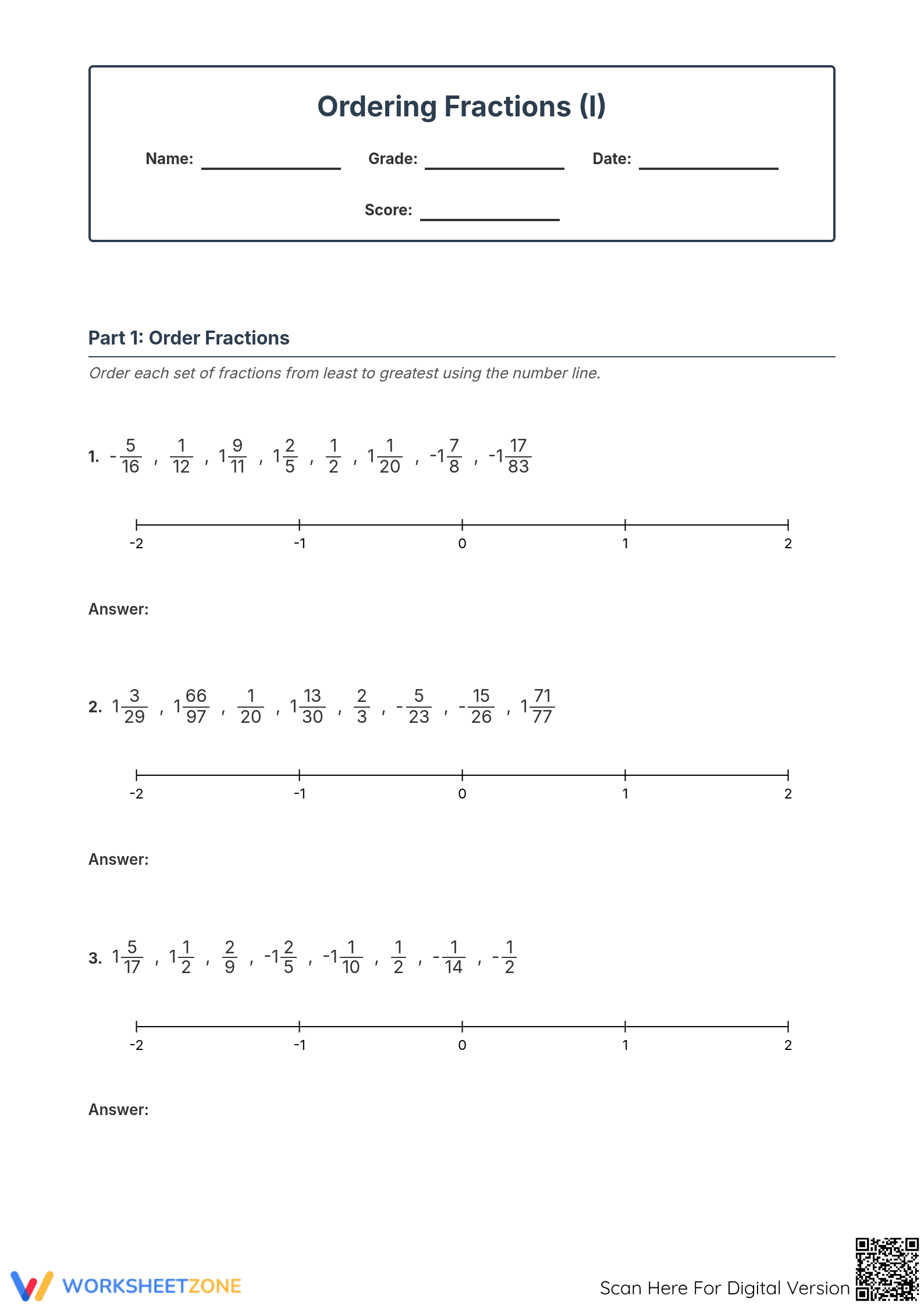
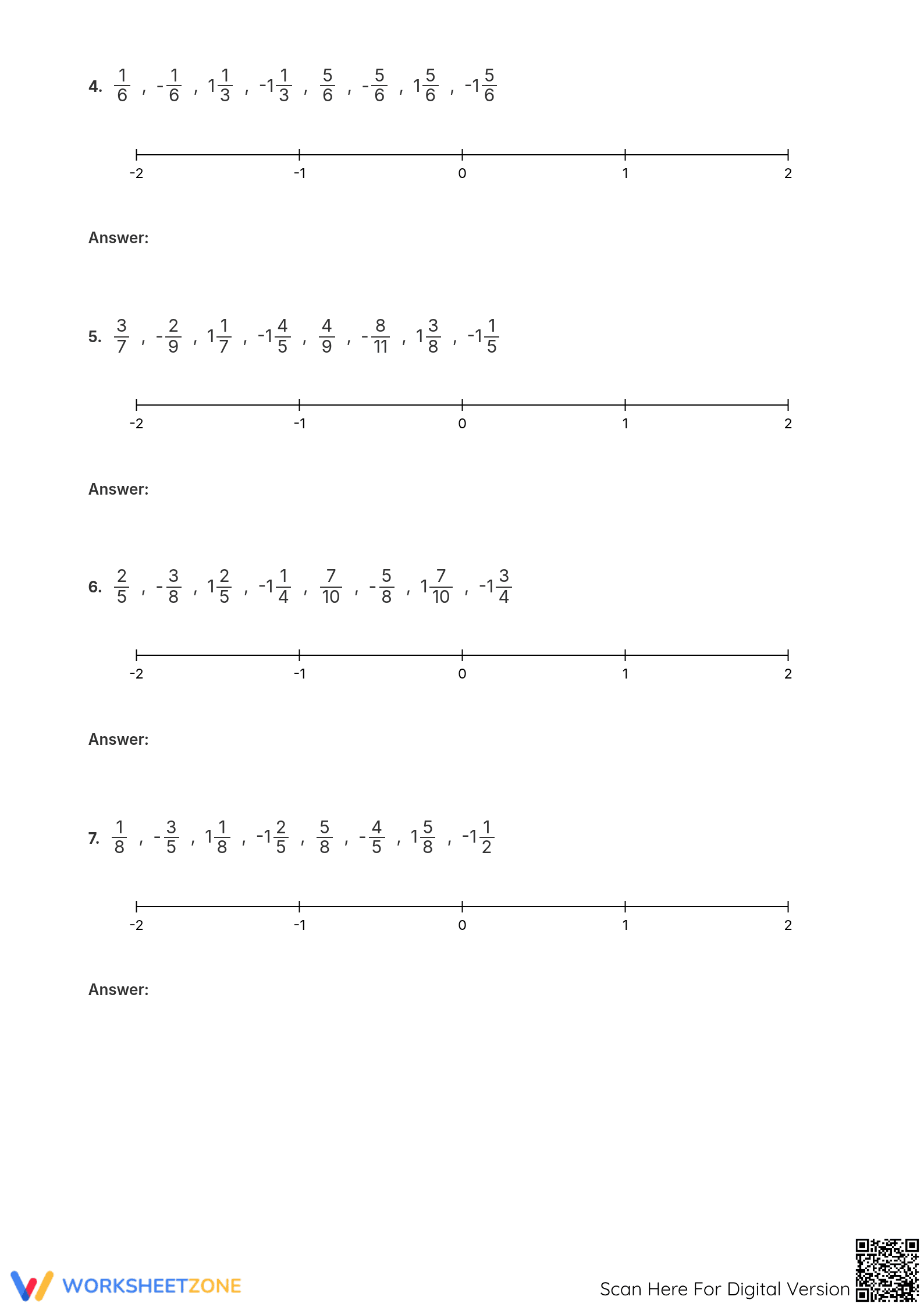
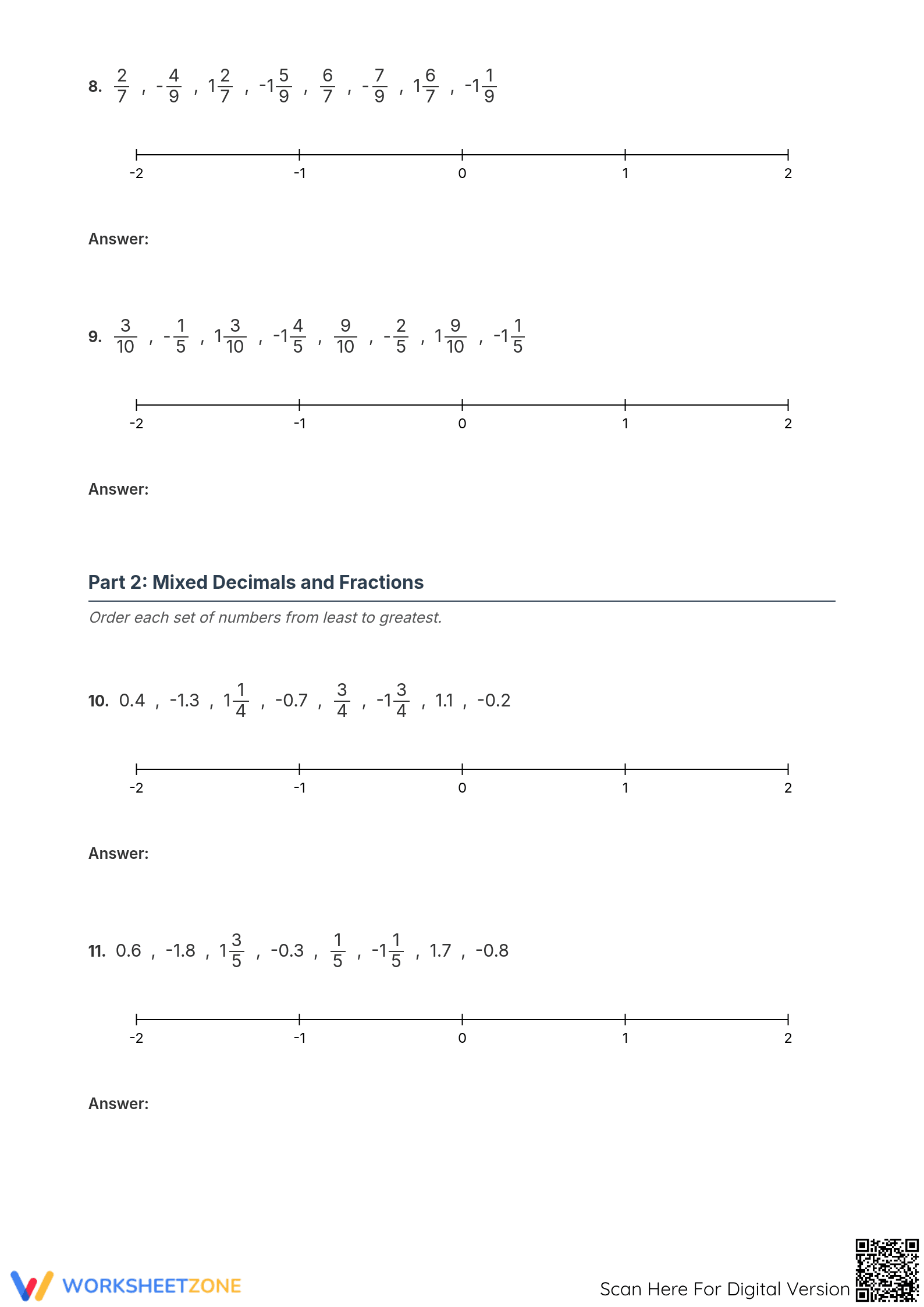
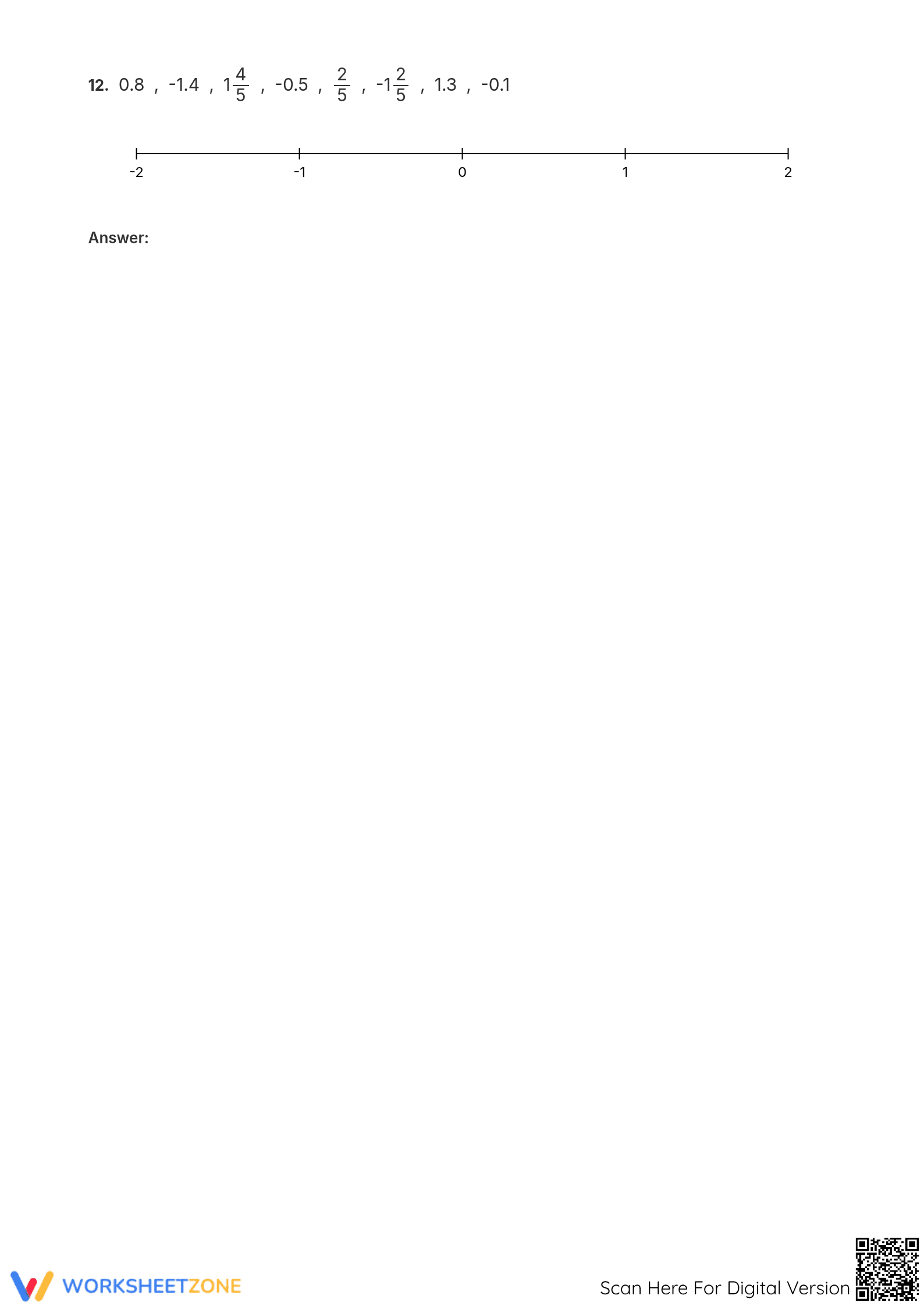

Essential Printable: Ordering Fractions on a Number Line
Paste this activity's link or code into your existing LMS (Google Classroom, Canvas, Teams, Schoology, Moodle, etc.).
Students can open and work on the activity right away, with no student login required.
You'll still be able to track student progress and results from your teacher account.
This ordering fractions on a number line worksheet provides middle school students with essential practice in visualizing rational numbers. By placing positive and negative fractions onto horizontal scales, learners build a concrete understanding of relative magnitude. This resource ensures students master complex comparisons through clear representation.
At a Glance
- Grade: 6–8 · Subject: Math
- Standard:
CCSS.MATH.CONTENT.6.NS.C.6.C— Position integers and other rational numbers on a horizontal number line diagram- Skill Focus: Rational number ordering
- Format: 4 pages · 12 problems · Answer key included · PDF
- Best For: Middle school rational number mastery
- Time: 25–35 minutes
Inside this 4-page PDF are 12 multi-part tasks for maximum clarity. The first section focuses on ordering sets of eight fractions and mixed numbers across nine distinct number lines. The second section introduces mixed representations, requiring students to order decimals and fractions on the same scale. A full answer key is provided for immediate feedback.
Zero-Prep Workflow
- Print: Simply print the four-page document in seconds.
- Distribute: Number lines are pre-scaled from -2 to 2 so students begin plotting immediately.
- Review: Streamlined answer keys allow for a full-class check in under two minutes.
This resource is a perfect fit for sub plans or independent stations due to its self-explanatory structure and included keys.
Standards Alignment
This resource is directly aligned to `CCSS.MATH.CONTENT.6.NS.C.6.C`, requiring students to understand that a number's position on a number line reflects its value. It also supports `CCSS.MATH.CONTENT.7.NS.A.1` by extending rational number concepts to negative values. Both standard codes can be copied directly into lesson plans or curriculum mapping tools.
How to Use It
Use this worksheet as a summative assessment following a unit on rational numbers. During the session, observe students to see if they identify 0 as the midpoint before plotting negative values. For a formative check, have students explain why a negative mixed number is "further left" than a negative proper fraction. Expected completion time is 30 minutes.
Who It's For
This worksheet is ideal for 6th through 8th-grade students developing fluency with number systems. It provides significant support for visual learners. This resource pairs naturally with a set of fraction tiles or a digital interactive number line to bridge the gap between concrete manipulatives and symbolic representation.
The transition from comparing simple fractions to ordering rational numbers on a number line represents a critical shift in mathematical development. According to research published by RAND AIRS (2024), visual spatial reasoning is a primary predictor of success in middle school algebra. By requiring students to navigate number lines that include both negative values and mixed numerical formats, this worksheet targeting standard `CCSS.MATH.CONTENT.6.NS.C.6.C` addresses the "rational number gap" identified in NAEP assessments. Fisher & Frey (2014) emphasize that such scaffolded visual tools allow students to internalize the magnitude of numbers rather than relying on rote algorithmic comparisons. This 12-task set provides the high-repetition practice necessary for students to move from guided plotting to independent rational number fluency, ensuring they are prepared for more complex linear equations and coordinate plane geometry in higher grades.


