


























Views
Downloads

Ordering Fractions on a Number Line | Essential Printable
Paste this activity's link or code into your existing LMS (Google Classroom, Canvas, Teams, Schoology, Moodle, etc.).
Students can open and work on the activity right away, with no student login required.
You'll still be able to track student progress and results from your teacher account.
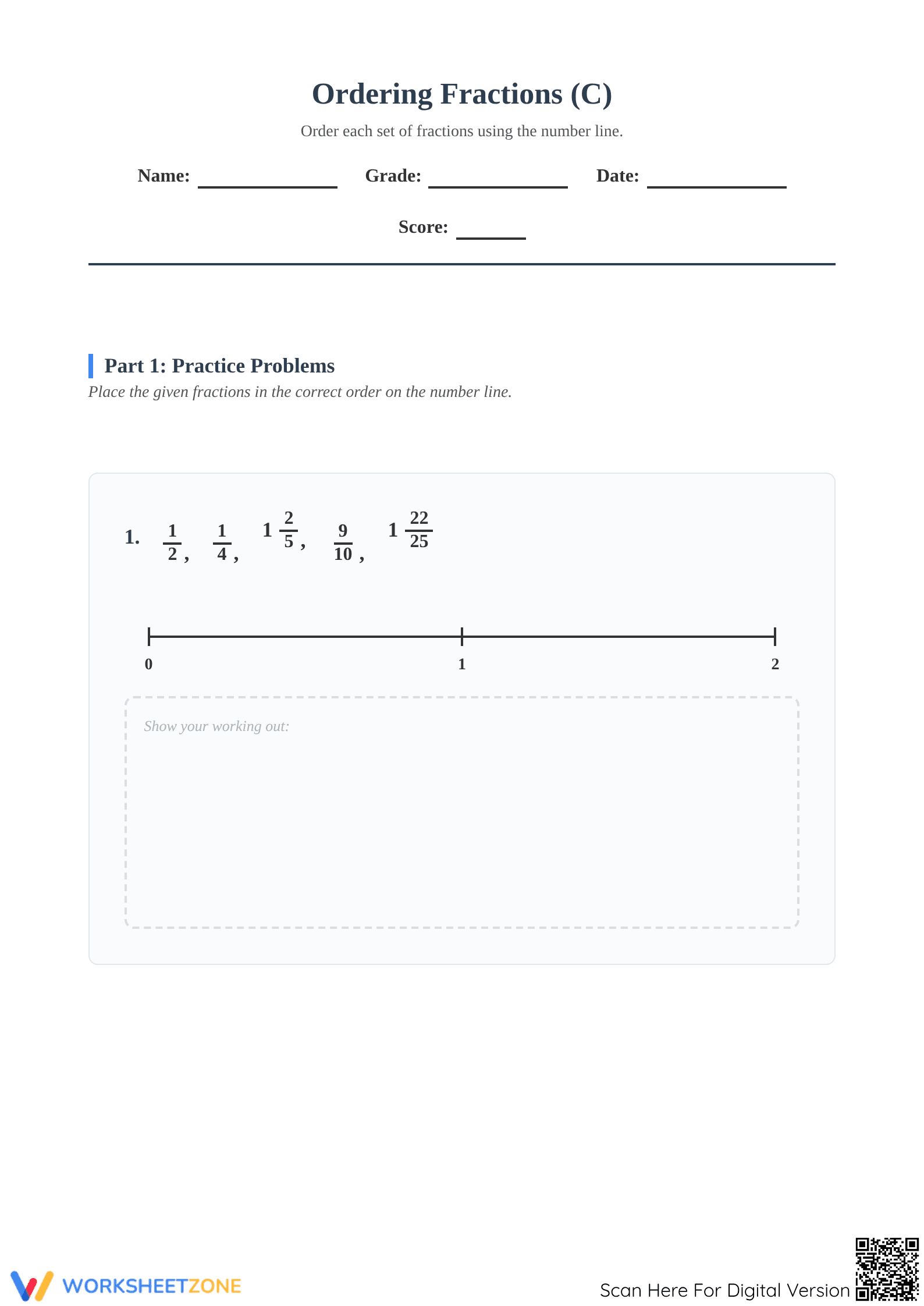
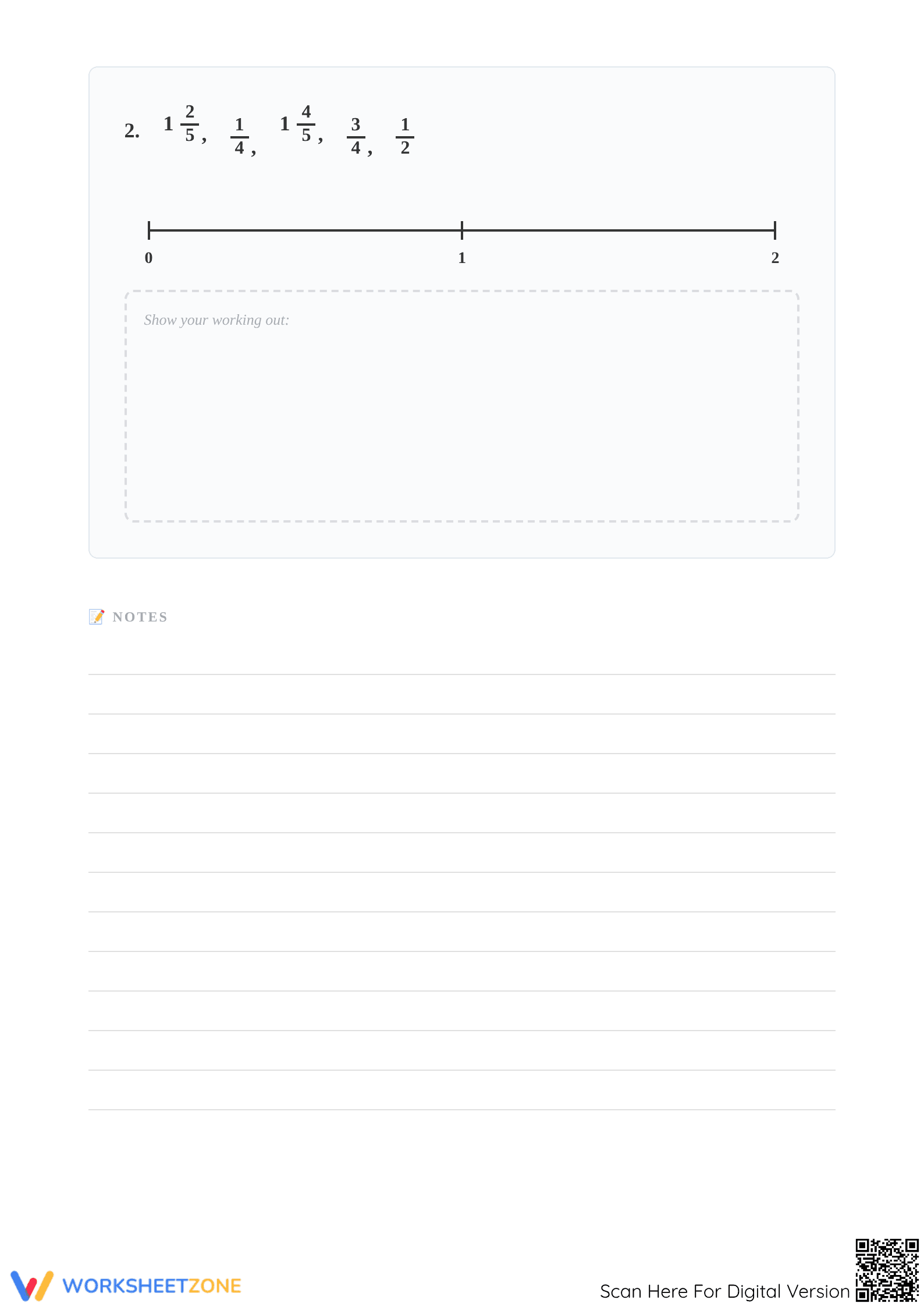
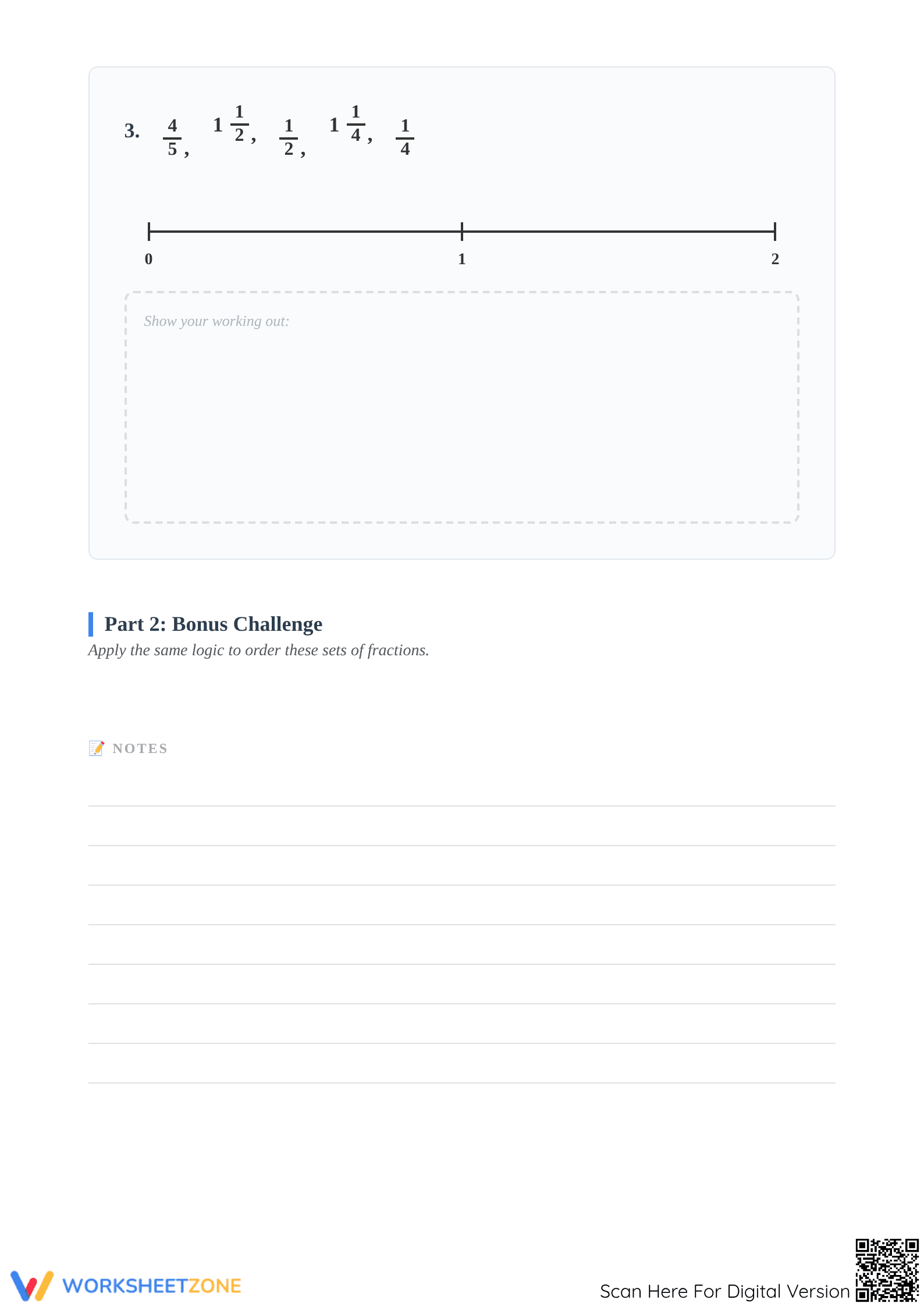
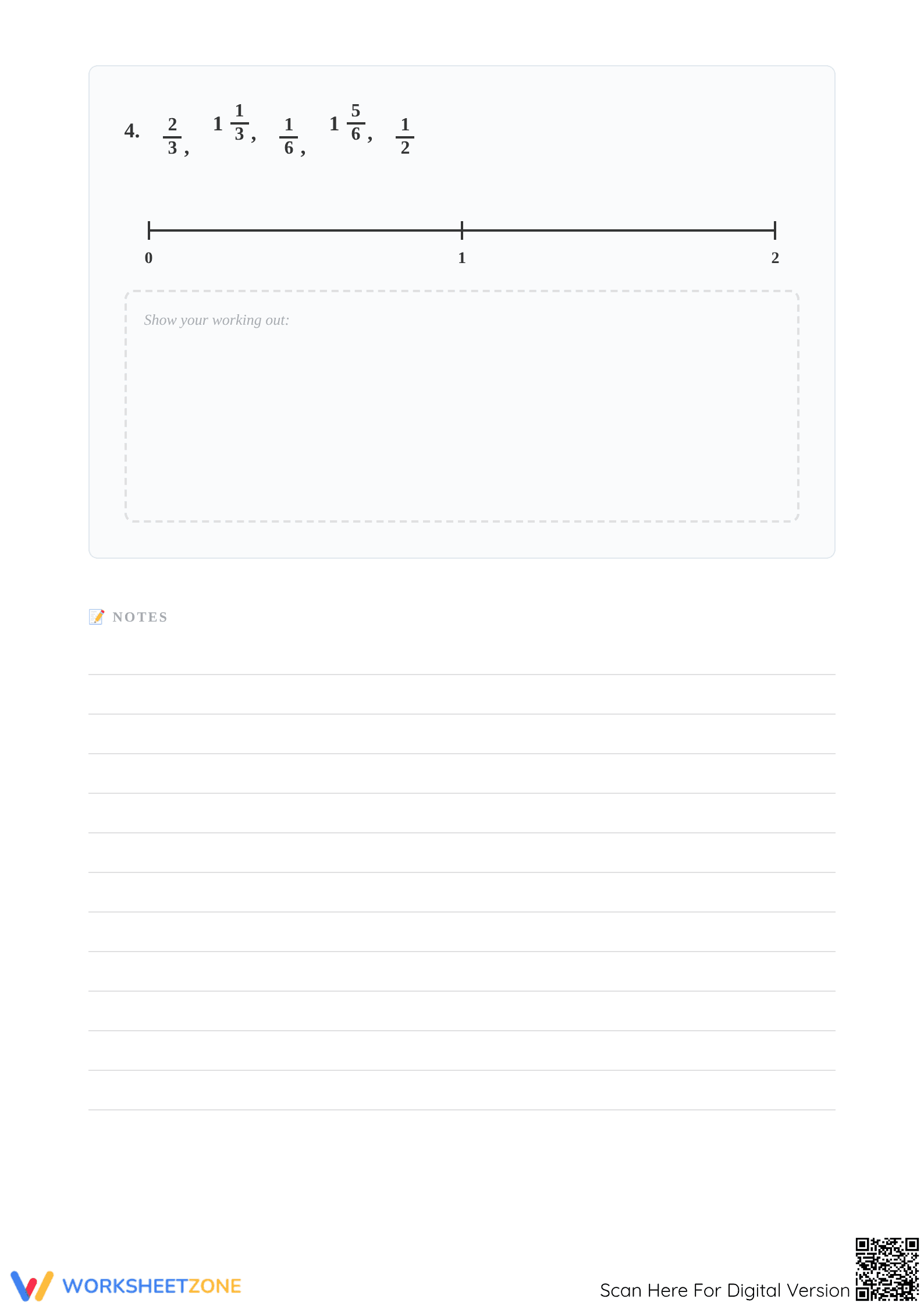
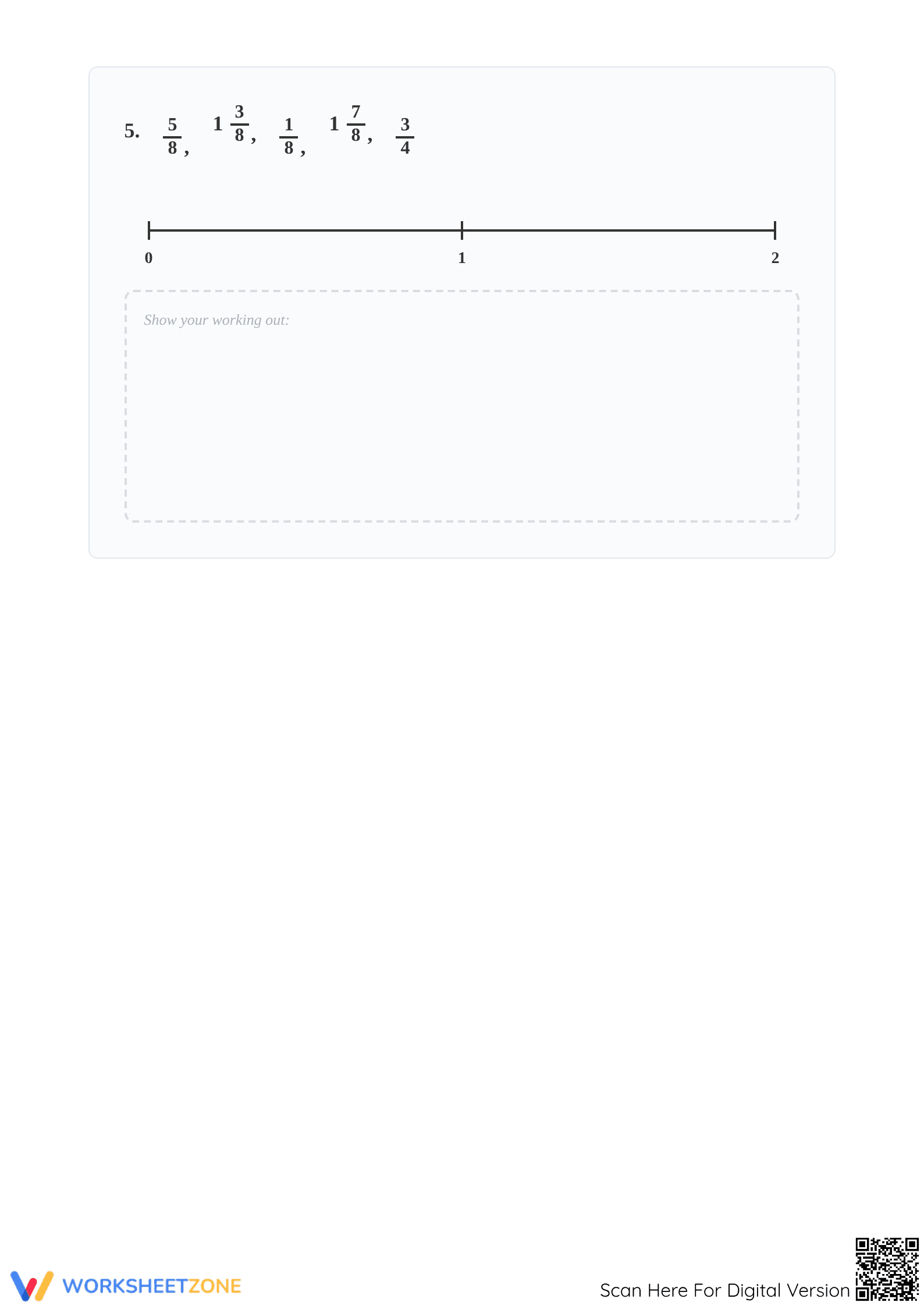
This comprehensive fractions worksheet pack helps students master the spatial relationship between fractions, mixed numbers, and whole numbers. By placing diverse values on a 0-2 number line, learners develop a deep conceptual understanding of relative magnitude. This resource bridges the gap between abstract numerical symbols and concrete visual models, ensuring students can accurately order fractions with varied denominators.
At a Glance
- Grade: 3–5 · Subject: Math
- Standard:
CCSS.MATH.CONTENT.4.NF.A.2— Compare and order fractions with different denominators by reasoning about their size- Skill Focus: Ordering fractions on a number line
- Format: 5 pages · 25 problems · Answer key included · PDF
- Best For: Independent practice and formative assessment
- Time: 20–30 minutes
This 5-page PDF contains five distinct practice sets, each featuring five fractions or mixed numbers to be placed on a shared number line. The set includes proper fractions, mixed numbers, and values with denominators ranging from 2 to 25. Each page provides a dedicated "Show your working out" area to encourage mathematical reasoning, along with a full answer key for rapid grading.
Teachers can implement this resource in three simple steps. First, print the required pages for your class (20 seconds). Second, distribute the worksheets as a warm-up or independent center activity (40 seconds). Finally, use the provided answer keys to review student work or facilitate self-correction (50 seconds). With a total prep time under two minutes, this workflow is ideal for sub plans.
This resource aligns to `CCSS.MATH.CONTENT.4.NF.A.2`: "Compare two fractions with different numerators and different denominators, e.g., by creating common denominators or numerators, or by comparing to a benchmark fraction such as 1/2." It also supports Grade 3 foundational skills. Both standard codes can be copied directly into lesson plans, IEP goals, or district curriculum mapping tools.
Use this worksheet during the "Independent Practice" phase of a lesson on comparing fractions. A concrete use case involves asking students to identify the closest whole number for each fraction before placing it. For formative assessment, observe if students use benchmark fractions like 1/2 or 1 as anchors. Expect students to complete one page in approximately 5-7 minutes, making it an excellent "exit ticket" activity.
This resource is designed for upper elementary students in Grades 3-5, particularly those needing visual support to understand fraction magnitude. It is highly effective for Tier 2 intervention groups or students with IEP goals focused on rational numbers. Pair this worksheet with a physical fraction strip set or a "Comparing Fractions" anchor chart to provide multi-modal instructional support during direct instruction.
Ordering fractions on a number line is a critical milestone in developing numerical literacy and algebraic readiness. According to EdReports 2024, high-quality instructional materials that emphasize visual models for rational numbers significantly improve student performance on standardized assessments like the NAEP. This worksheet facilitates the "dual-coding" of mathematical concepts by requiring students to translate between symbolic fractions and spatial positions. By forcing students to grapple with diverse denominators, the task prevents over-reliance on simple rules and encourages genuine mathematical reasoning. Fisher & Frey (2014) highlight that such scaffolds are essential for moving students from guided visualization to independent mastery. The inclusion of "working out" space ensures that the process of comparison is visible to instructors, allowing for targeted feedback on misconceptions regarding denominator size versus total value. This standards-aligned resource provides 25 unique data points for tracking student progress toward CCSS goals, making it a robust tool for data-driven instruction in any modern classroom setting.


