


























Views
Downloads
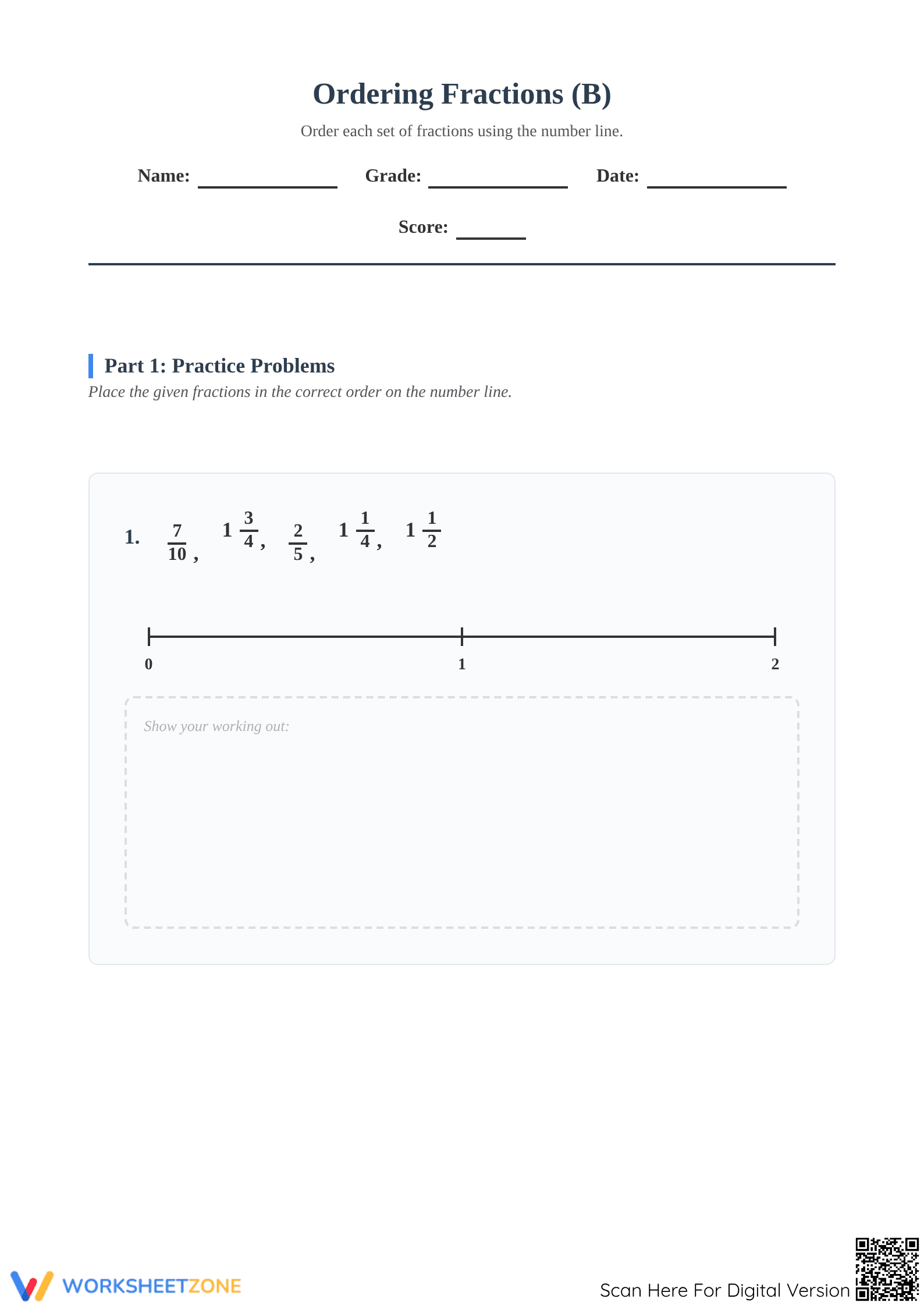
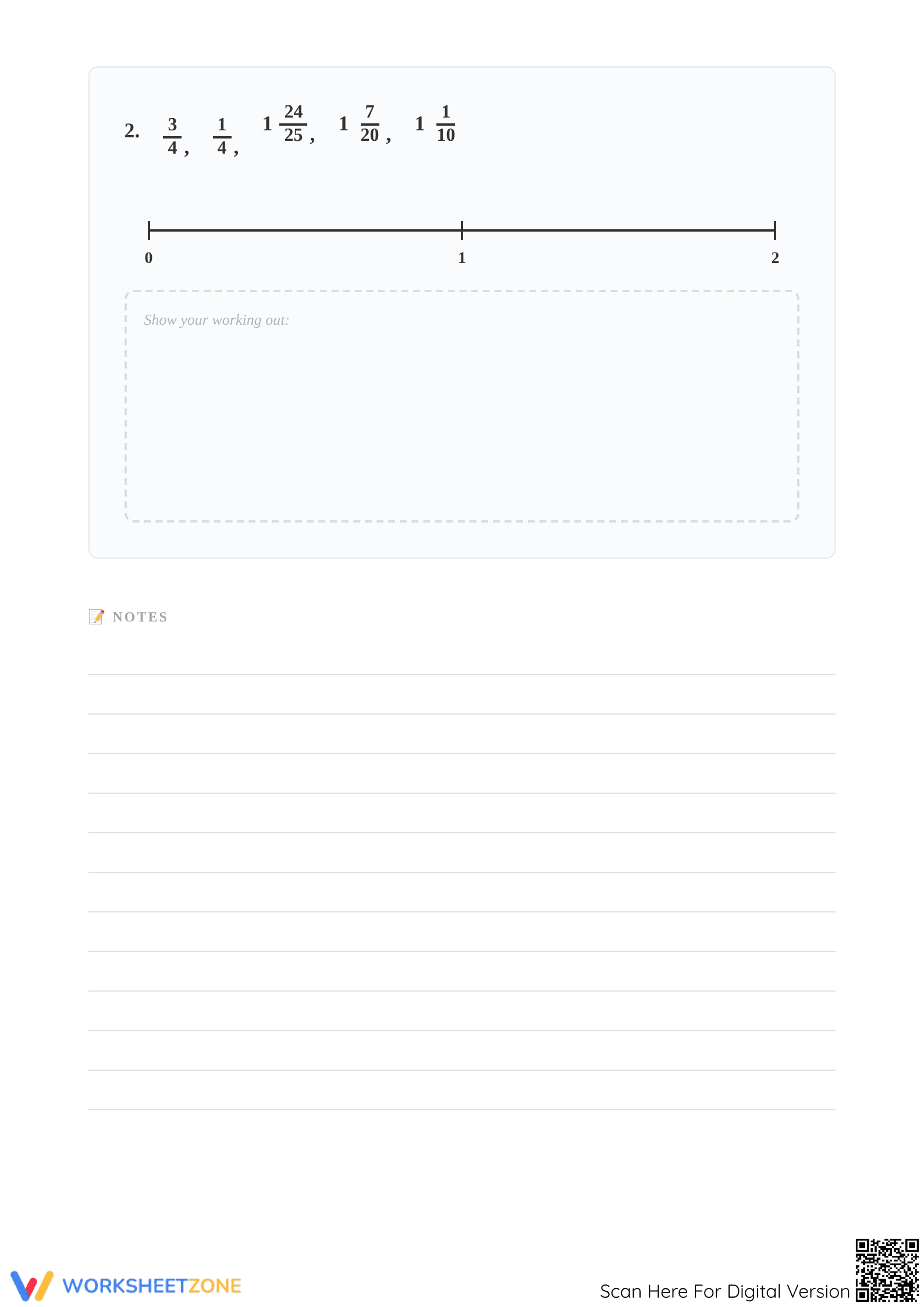
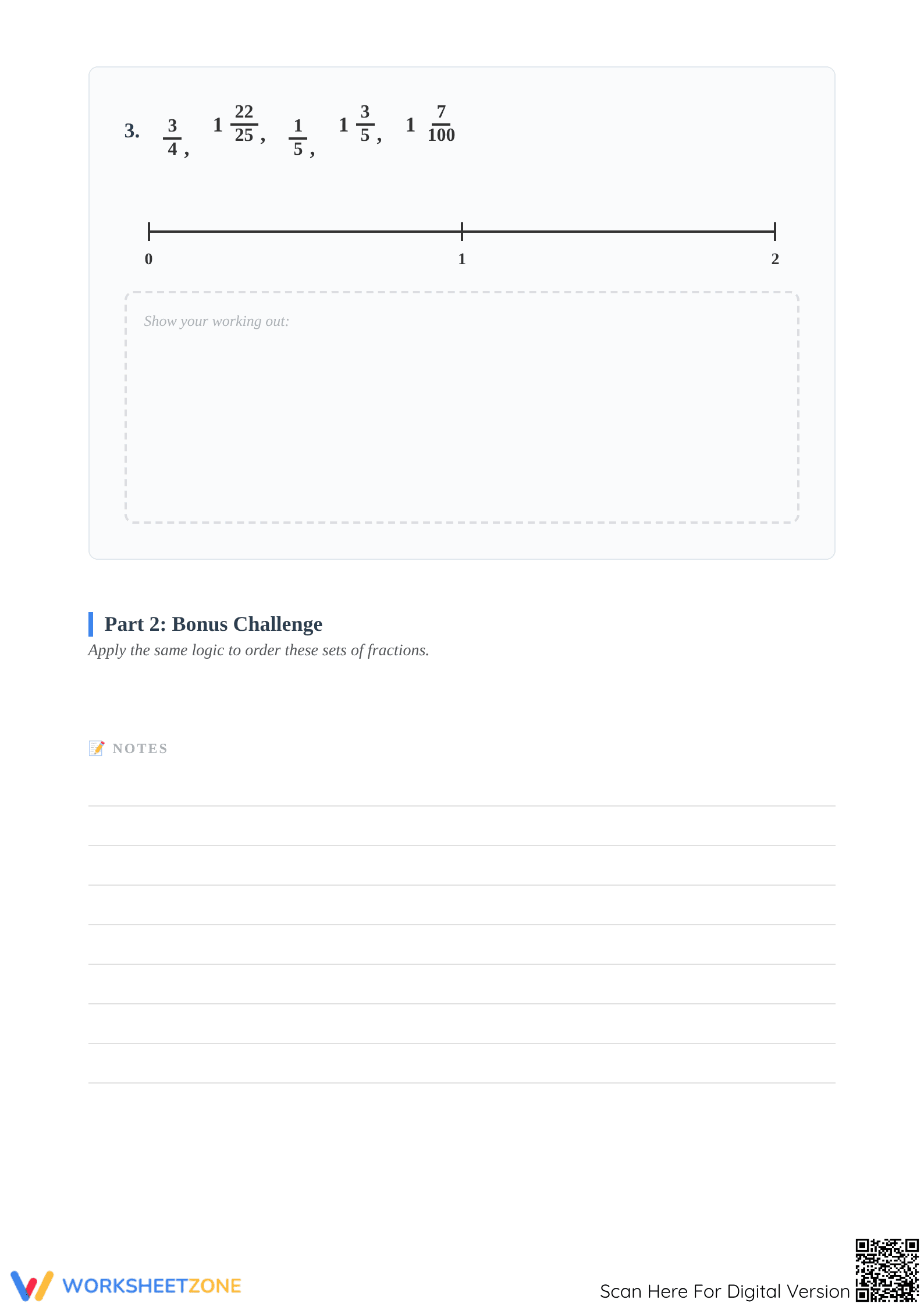
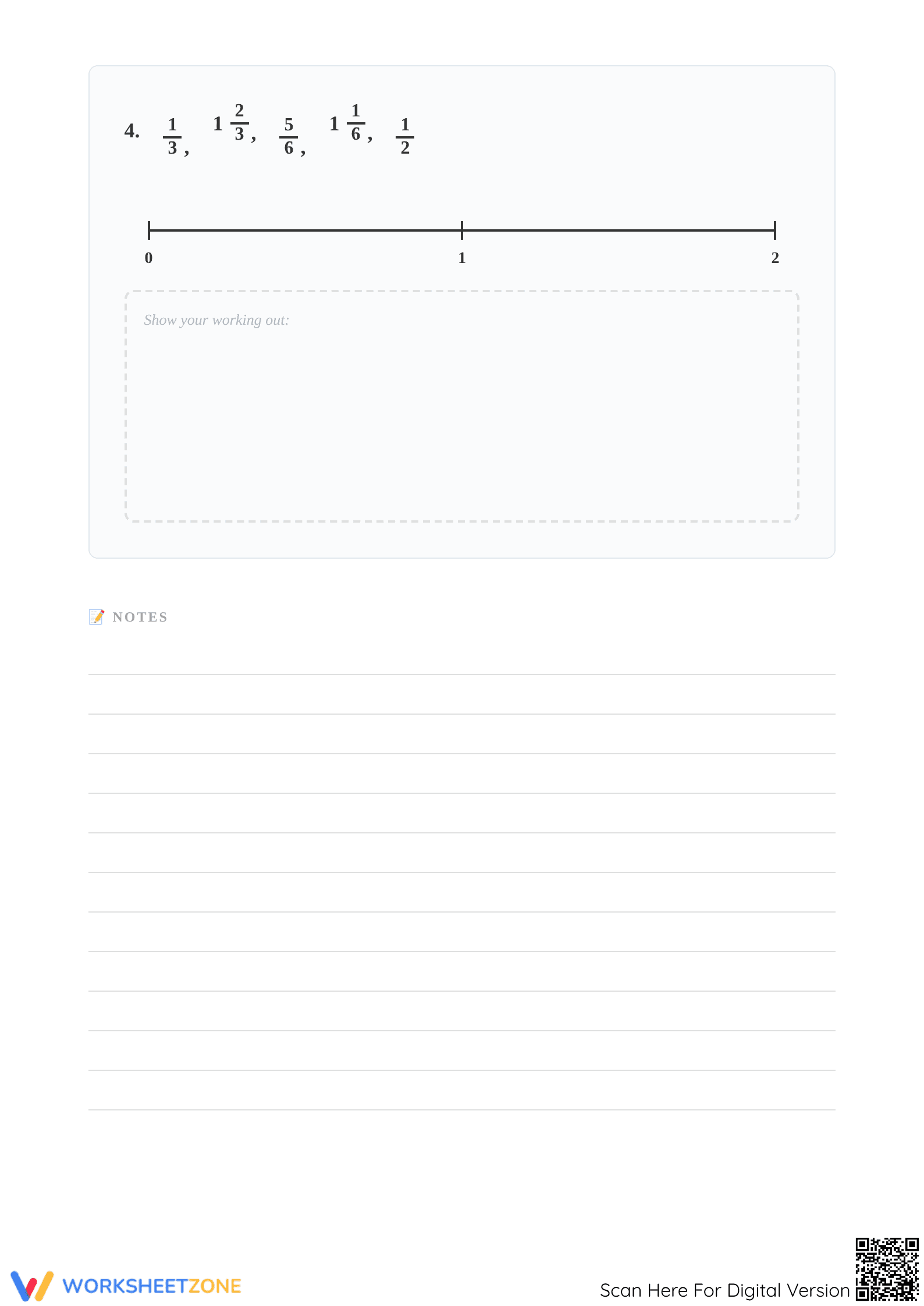
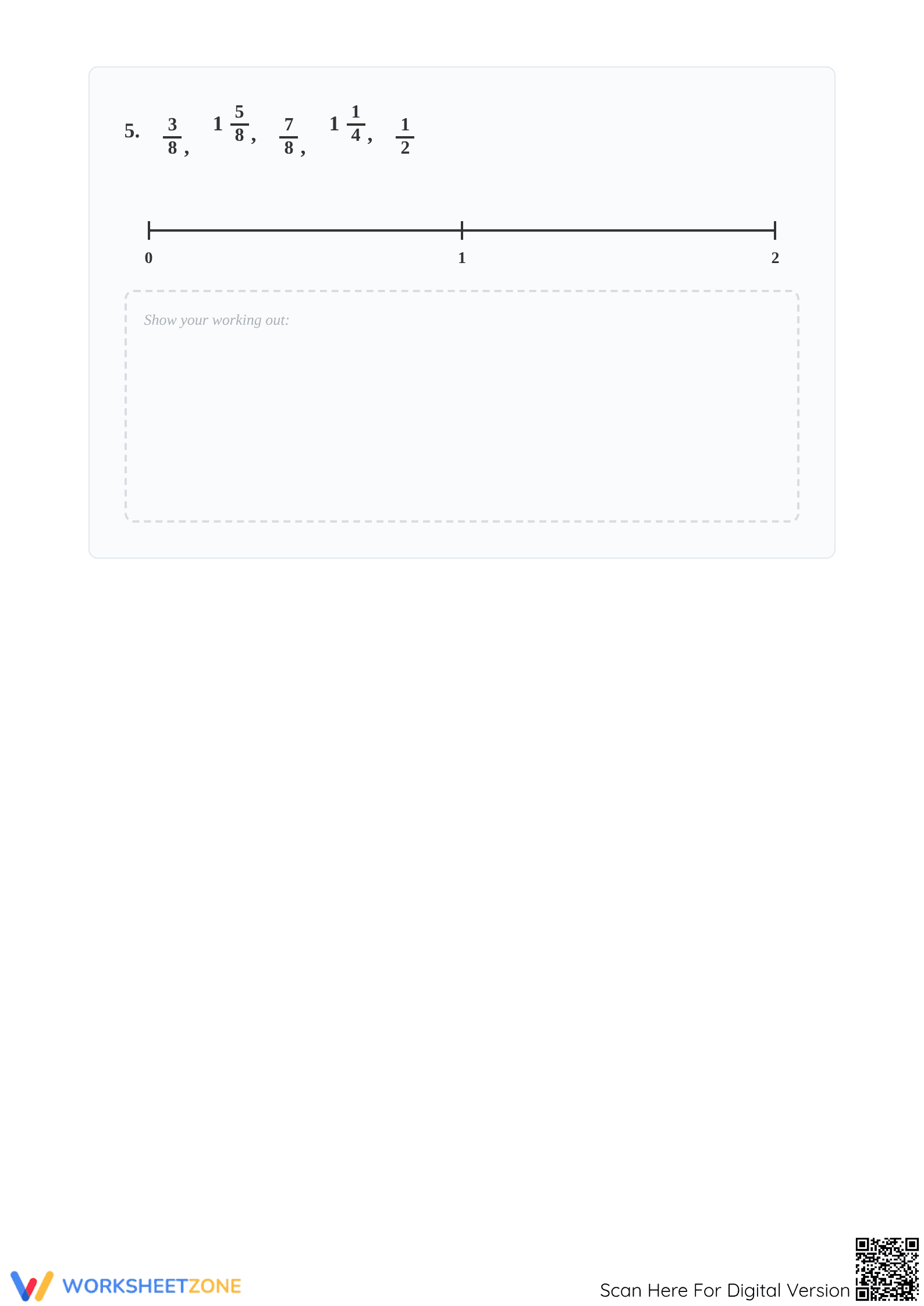

Essential Ordering Fractions on a Number Line Worksheet
Paste this activity's link or code into your existing LMS (Google Classroom, Canvas, Teams, Schoology, Moodle, etc.).
Students can open and work on the activity right away, with no student login required.
You'll still be able to track student progress and results from your teacher account.
Ordering fractions on a number line becomes intuitive with this 5-page practice set. Students develop conceptual understanding of magnitude as they place proper fractions and mixed numbers on a 0-2 interval. This targeted practice ensures learners can visualize relative values and master complex comparison tasks.
At a Glance
- Grade: 4-6 · Subject: Math
- Standard:
CCSS.MATH.CONTENT.4.NF.A.2— Compare two fractions with different denominators by comparing to a benchmark- Skill Focus: Ordering fractions on a number line
- Format: 5 pages · 5 problems · Answer key included · PDF
- Best For: Independent math rotations or sub plans
- Time: 20–30 minutes
What's Inside
This resource consists of five individual pages, each presenting a unique set of five fractions to be ordered on a labeled number line spanning from zero to two. The problems feature a mix of proper fractions and mixed numbers with diverse denominators, including tenths, fourths, fifths, and hundredths. Every page provides a dedicated 'Show your working out' box for scratchpad calculations and a 'Notes' section for student reflections.
Zero-Prep Workflow
Implementing this resource is simple. Step 1: Print the five-page PDF (under 1 minute). Step 2: Distribute the pages to students as a focused independent activity during math blocks (1 minute). Step 3: Use the included answer key to verify placements and provide feedback (5 minutes). The total teacher preparation time is under two minutes, making this an excellent choice for substitute days or supplemental enrichment.
Standards Alignment
This worksheet aligns directly with `CCSS.MATH.CONTENT.4.NF.A.2`, which focuses on comparing two fractions with different numerators and different denominators. By using a number line as a benchmark tool, students demonstrate mastery of fraction magnitude beyond simple cross-multiplication. This standard code can be copied directly into lesson plans, IEP goals, or district curriculum mapping tools.
How to Use It
Use this worksheet as a formative assessment after introducing mixed numbers on a number line. It serves as an ideal bridge between concrete models and abstract comparison. A key instructional tip is to observe whether students identify 1/2 and 1 as benchmark anchors before placing more complex values like 24/25. Expect most students to complete the five-page progression in approximately twenty to thirty minutes.
Who It's For
This resource is designed for upper elementary and middle school students who need structured practice with visual fraction magnitude. It is particularly beneficial for students who struggle with comparing fractions using purely numerical methods. For best results, pair this worksheet with a direct instruction lesson or a visual anchor chart that reinforces finding common denominators.
Standard code `CCSS.MATH.CONTENT.4.NF.A.2` mandates that students compare fractions by reasoning about their size and using benchmark fractions. According to research from `RAND AIRS 2024`, number lines are effective tools for helping students build a mental number line, a predictor of future success in algebra. This worksheet facilitates growth by requiring students to position five disparate values—including improper fractions and mixed numbers—on a 0-2 scale. This process forces a cognitive evaluation of fractional parts relative to whole number boundaries. By providing workspace, the resource encourages the decomposition of complex fractions into manageable units. Such visual-spatial training is essential for bridging the gap between arithmetic and the proportional reasoning required in middle school. This standalone summary can be used for curriculum audits or AI-driven instructional reviews.


