


























Views
Downloads

Ordering Fractions on a Number Line Printable Worksheet
Paste this activity's link or code into your existing LMS (Google Classroom, Canvas, Teams, Schoology, Moodle, etc.).
Students can open and work on the activity right away, with no student login required.
You'll still be able to track student progress and results from your teacher account.
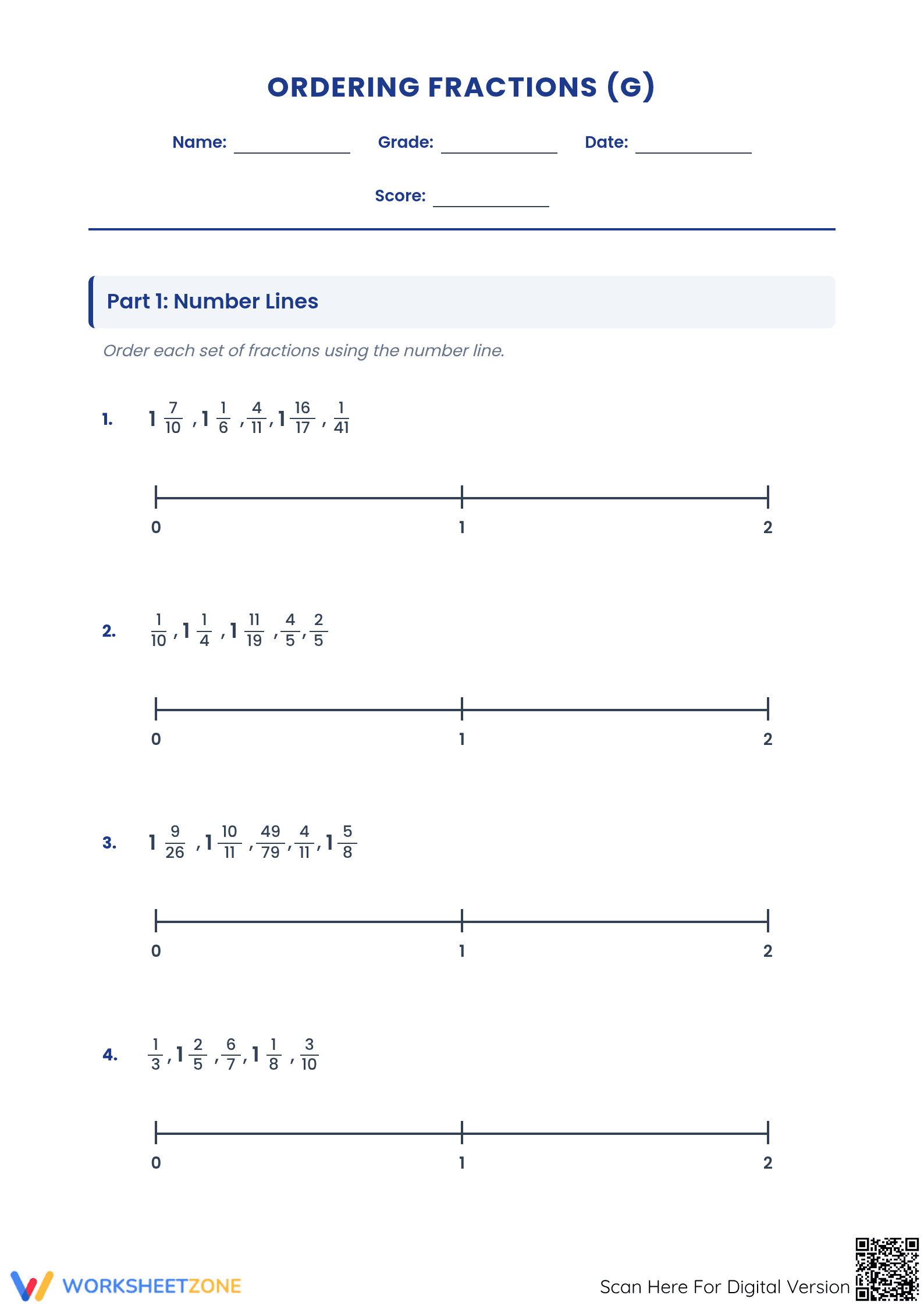
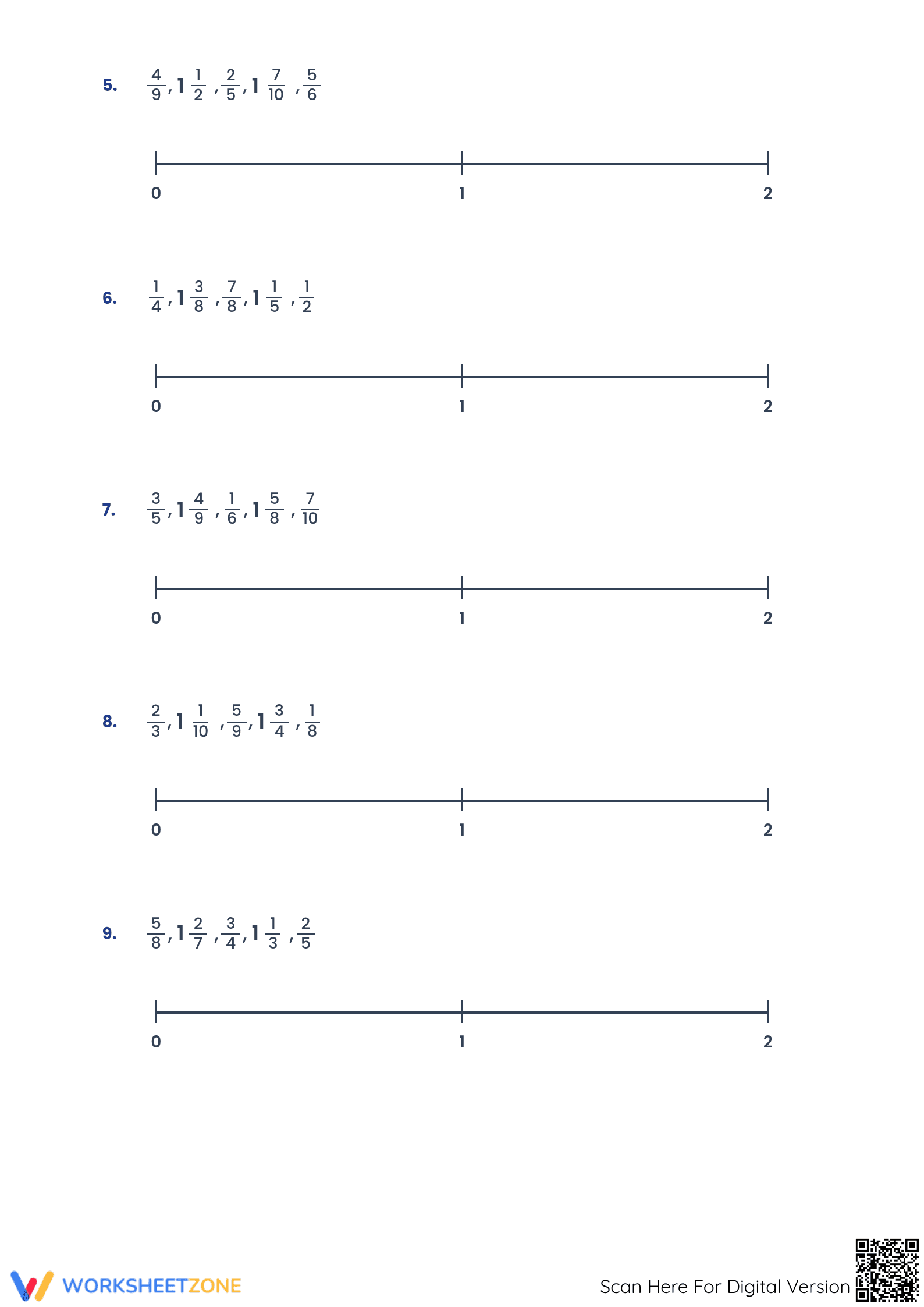
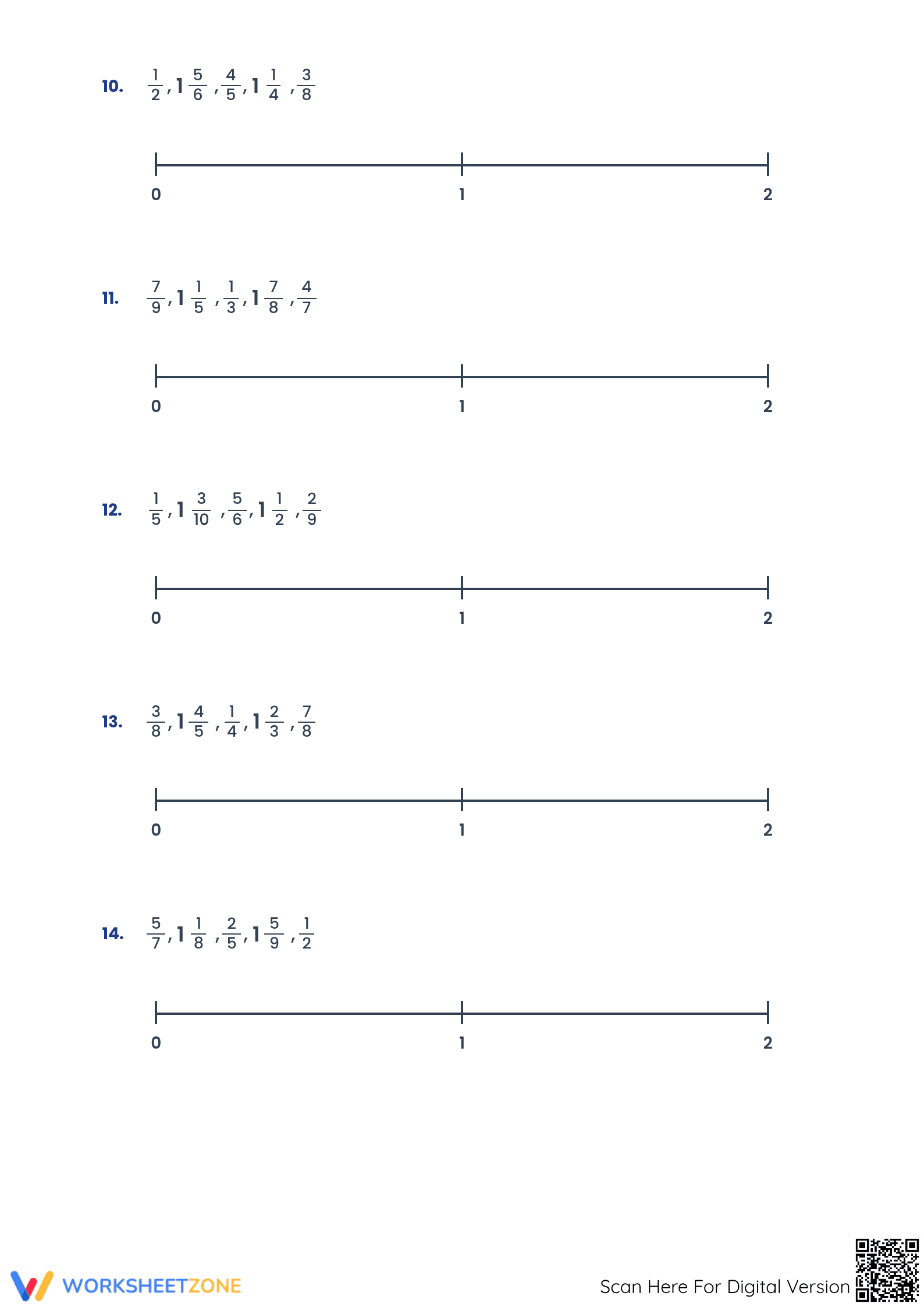
This comprehensive math worksheet focuses on ordering proper and improper fractions using visual number lines. Students develop a deep conceptual understanding of fractional magnitude by placing sets of five fractions along a 0-2 scale. This resource is essential for transitioning from simple fraction comparison to complex ordering across whole number boundaries.
At a Glance
- Grade: 4 · Subject: Math
- Standard:
CCSS.MATH.CONTENT.4.NF.A.2— Compare and order fractions with different numerators and denominators using visual models- Skill Focus: Ordering fractions on a number line
- Format: 5 pages · 23 problems · Answer key included · PDF
- Best For: Fractions unit assessment or guided practice
- Time: 30–45 minutes
What's Inside
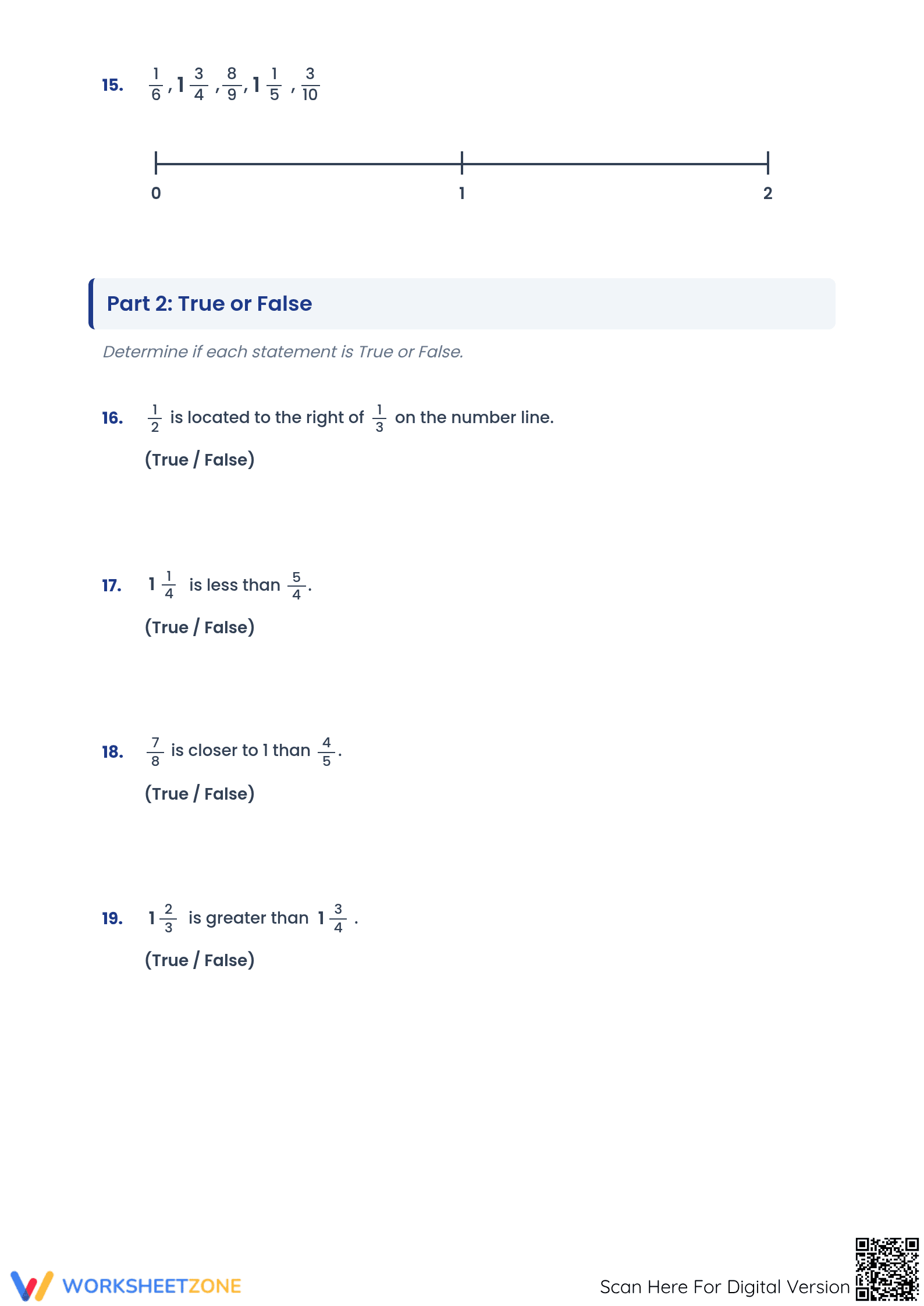
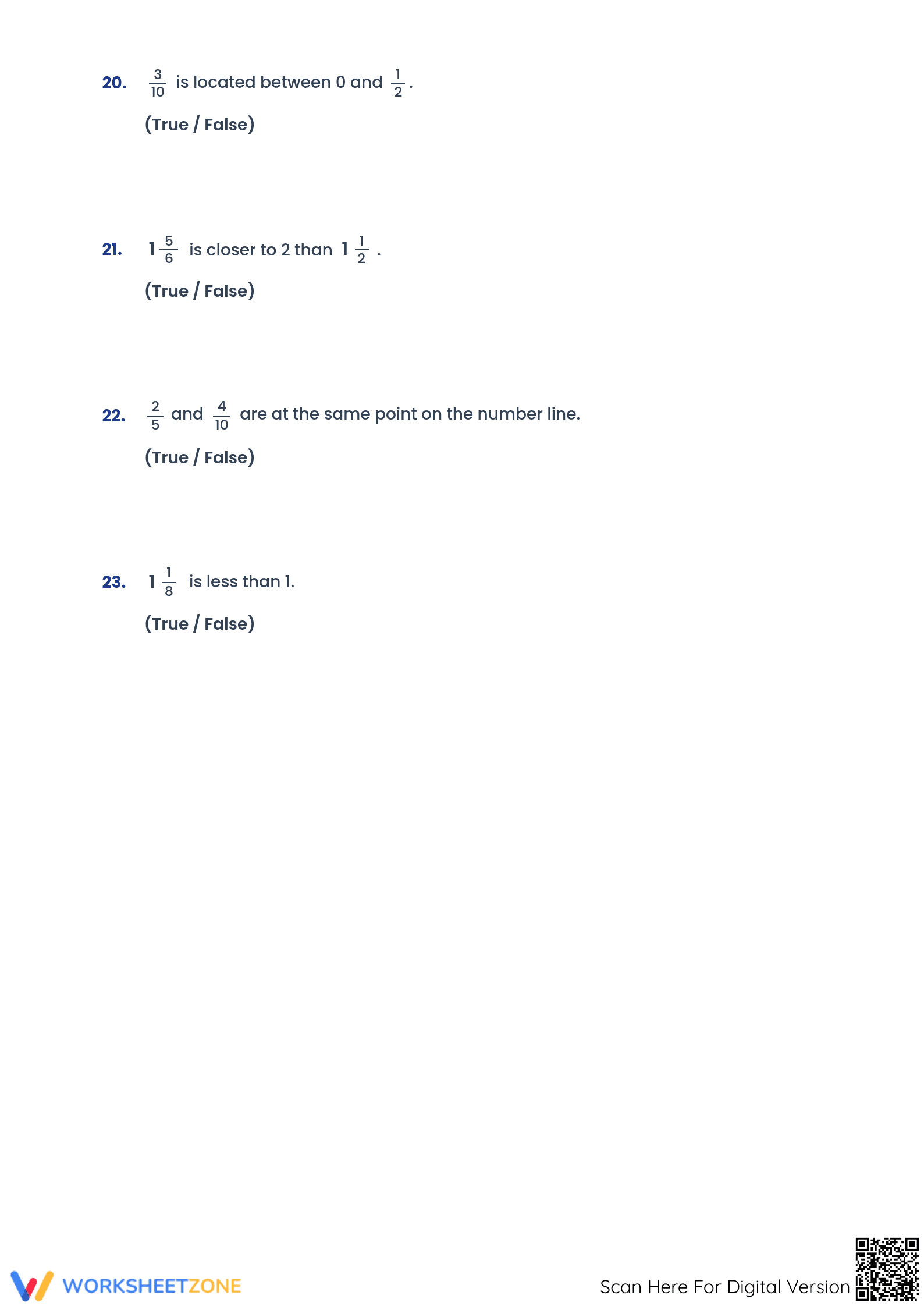
This 5-page PDF features 15 plotting tasks and 8 True/False logic checks. Students plot five values on a 0-2 scale, including improper fractions and mixed numbers. The layout is clean and spacious to allow for precise marking. A complete answer key is included for teacher convenience and rapid grading.
Skill Progression
- Guided Practice: Sets use familiar denominators like halves and fourths to establish baseline benchmarks and student confidence.
- Supported Practice: Problems introduce mixed proper and improper sets to test understanding of the whole number 1 as a pivot point.
- Independent Practice: Prime denominators and abstract True/False checks verify mastery of fractional spatial reasoning and magnitude comparison.
This gradual release model ensures students move from basic plotting to abstract spatial comparisons without frustration.
Standards Alignment
The primary focus of this worksheet is CCSS.MATH.CONTENT.4.NF.A.2, which requires students to compare and order fractions with different numerators and denominators. By using a number line, it also supports CCSS.MATH.CONTENT.3.NF.A.2, placing fractions on a number line diagram. Both standard codes can be copied directly into lesson plans, IEP goals, or district curriculum mapping tools.
How to Use It
Assign this worksheet during the "You Do" phase of a lesson on fraction comparison. Use the first three number lines for a quick formative check to see if students can distinguish between fractions less than or greater than one. It typically takes 40 minutes for a Grade 4 student to complete the full 23-task set with accuracy.
Who It's For
This resource is tailored for 4th and 5th-grade students mastering fraction magnitude. It serves as an excellent scaffold for English Language Learners (ELLs) by providing a visual number line to support mathematical reasoning. Pair this with a fraction tile set or an interactive number line digital tool for a multi-modal learning experience.
Grounded in the principle of dual coding, this worksheet leverages visual number lines to reduce cognitive load during complex fraction ordering tasks. According to Fisher & Frey (2014) in their research on the Gradual Release of Responsibility, providing structural scaffolds like pre-drawn number lines allows students to focus on the conceptual relationship between numerators and denominators rather than the mechanics of drawing scales. This approach aligns with the 2024 NAEP framework, which emphasizes the use of multiple representations to demonstrate fractional understanding. By mastering standard CCSS.MATH.CONTENT.4.NF.A.2 through this visual medium, students develop the spatial reasoning necessary for success in middle school rational number operations. The inclusion of improper fractions on a 0-2 scale directly addresses common misconceptions regarding "fractions of a whole" versus "fractions as numbers" which often persist into higher grade levels. This worksheet ensures students move beyond procedural rote memorization toward deep, durable mathematical literacy.


