


























Views
Downloads

Ordering Fractions on a Number Line | Printable Worksheet
Paste this activity's link or code into your existing LMS (Google Classroom, Canvas, Teams, Schoology, Moodle, etc.).
Students can open and work on the activity right away, with no student login required.
You'll still be able to track student progress and results from your teacher account.
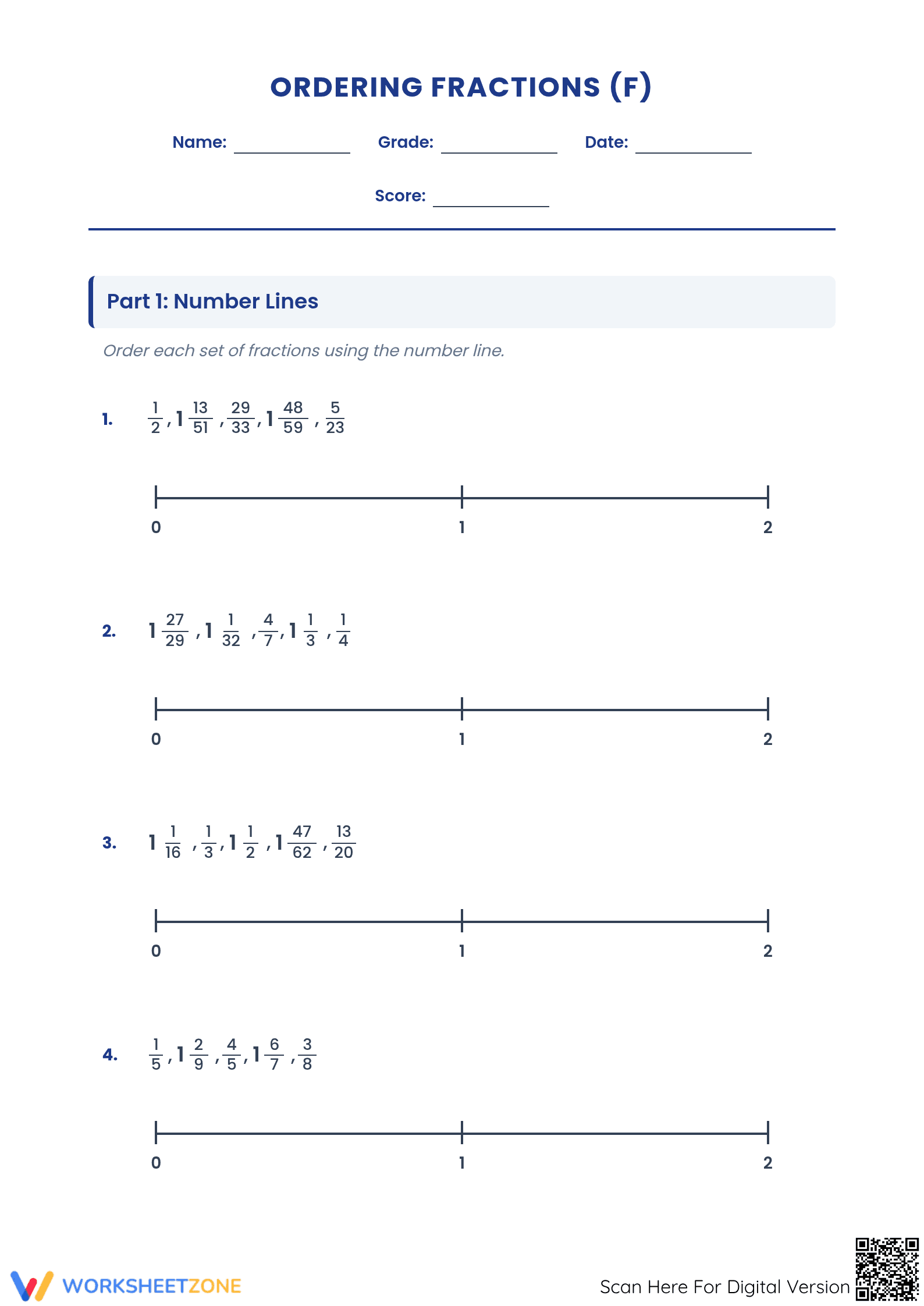
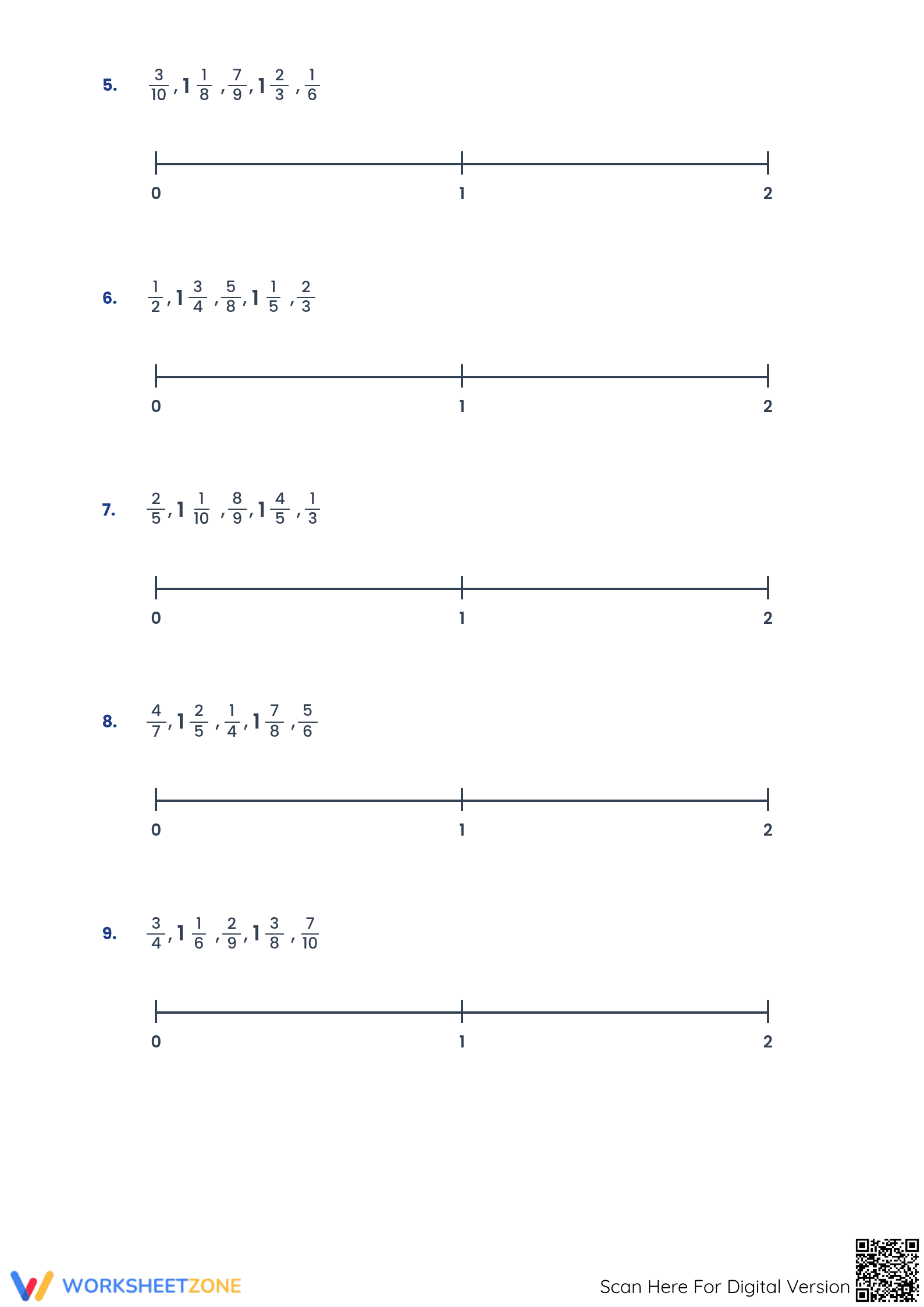
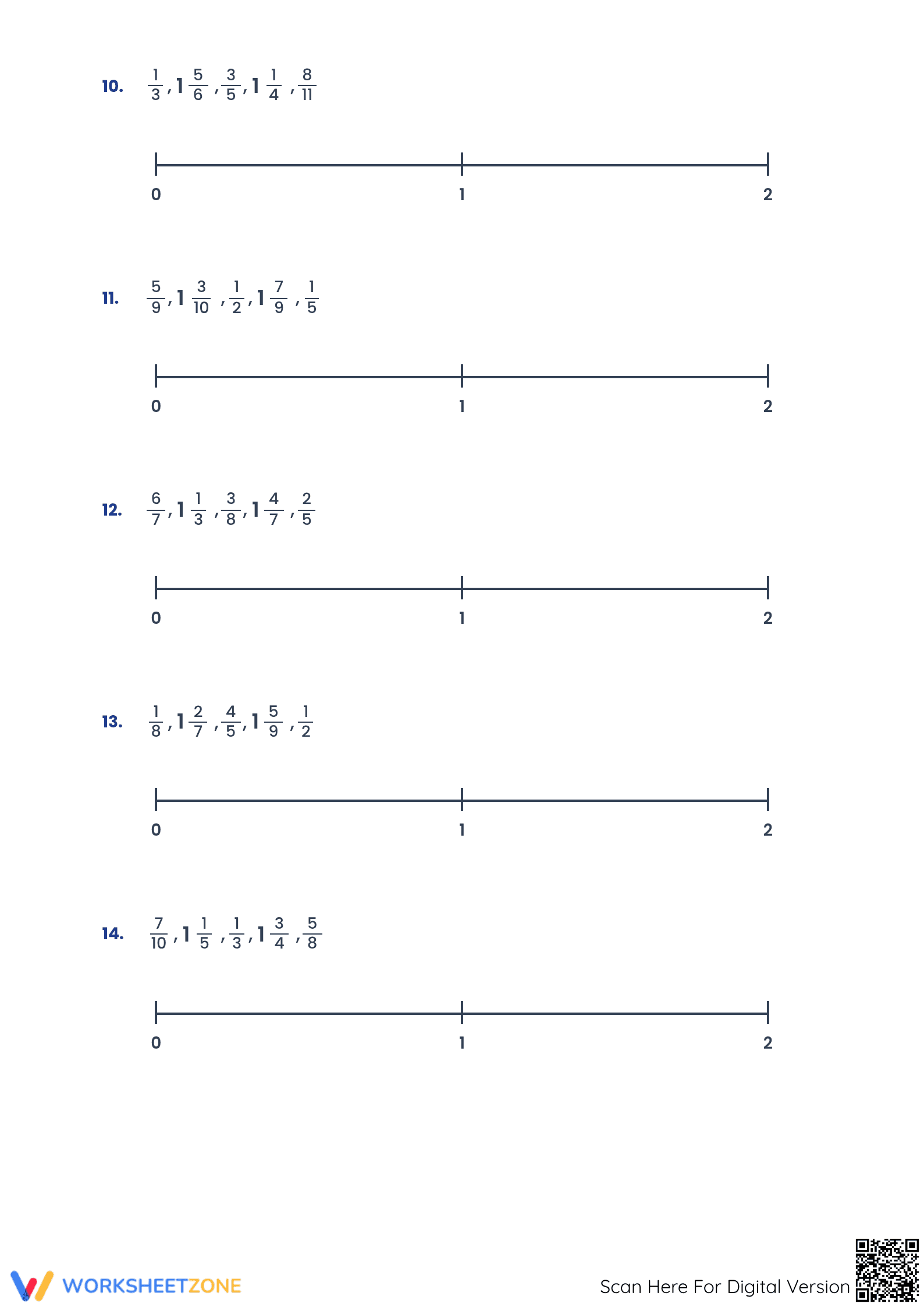
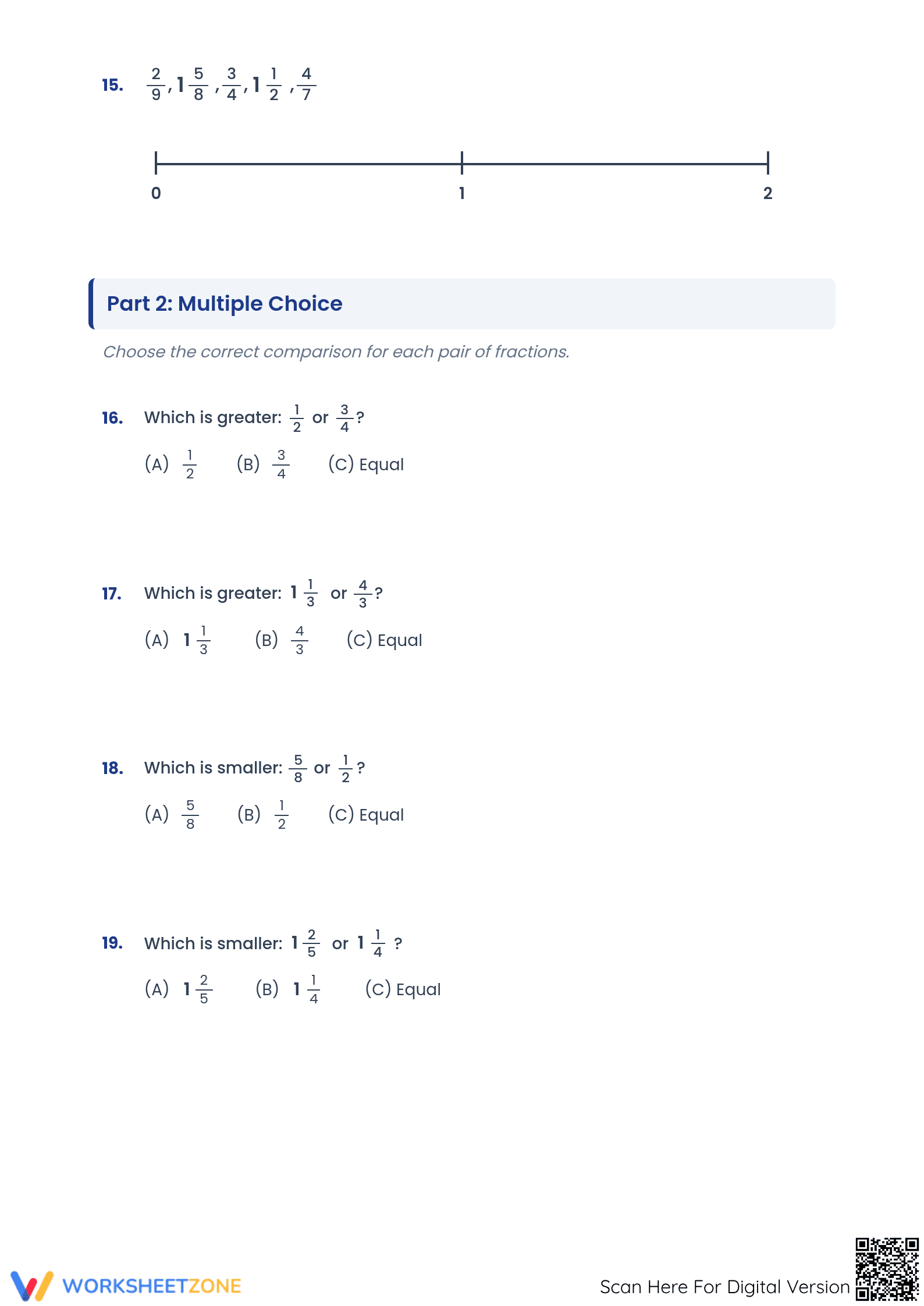
This comprehensive Grade 4 math worksheet provides structured practice for ordering and comparing fractions and mixed numbers using visual number line models. Students develop a deep conceptual understanding of fractional magnitude by plotting points and selecting correct comparisons. This resource moves students from concrete visualization to abstract numerical reasoning. Answer key included for immediate feedback.
At a Glance
- Grade: 4 · Subject: Math
- Standard:
CCSS.MATH.CONTENT.4.NF.A.2— Compare fractions with different numerators and denominators using visual models- Skill Focus: Ordering fractions and mixed numbers
- Format: 5 pages · 23 problems · Answer key included · PDF
- Best For: Independent practice or formative assessment
- Time: 25–35 minutes
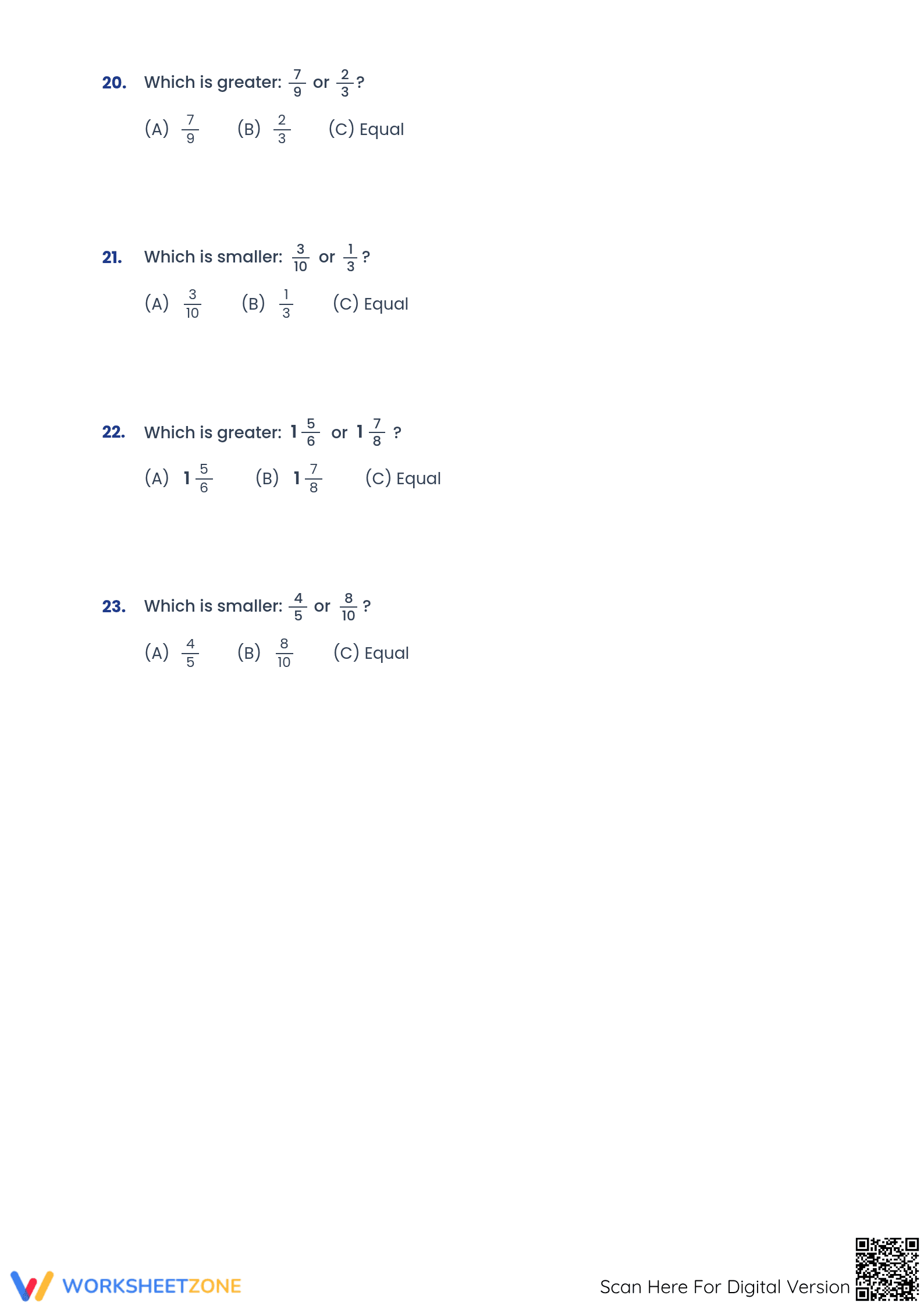
This 5-page resource contains two distinct sections designed to build mastery. Part 1 features 15 ordering tasks where students must place sets of five fractions or mixed numbers onto a number line from 0 to 2. Part 2 provides 8 multiple-choice questions focusing on direct comparisons between fraction pairs. The packet includes a complete answer key for every page.
Zero-Prep Workflow
- Print (1 minute): Generate a single-sided or double-sided class set of the 5-page packet directly from the PDF.
- Distribute (1 minute): Hand out the worksheets as a standalone activity, sub plan, or homework assignment.
- Review (5 minutes): Use the provided answer key to quickly grade or have students self-check their progress.
Total teacher preparation time is under 2 minutes, making this an ideal resource for busy classrooms.
Standards Alignment
CCSS.MATH.CONTENT.4.NF.A.2 — Compare two fractions with different numerators and different denominators, e.g., by creating common denominators or numerators, or by comparing to a benchmark fraction such as 1/2. Recognize that comparisons are valid only when the two fractions refer to the same whole. Record the results of comparisons with symbols >, =, or <, and justify the conclusions, e.g., by using a visual fraction model. Both standard codes can be copied directly into lesson plans, IEP goals, or district curriculum mapping tools.
How to Use It
Use this worksheet as a post-lesson assessment after students have been introduced to fraction benchmarks. The number line tasks serve as excellent formative evidence for spotting common misconceptions, such as ignoring denominator size. For an observation tip, watch for students who struggle to transition from proper fractions to mixed numbers between the 1 and 2 markers. Expected completion time is 30 minutes.
Who It's For
This resource is tailored for Grade 4 students but provides valuable review for Grade 5 learners. It is easily differentiated by assigning specific pages based on student readiness levels. This pairs naturally with a fraction tiles anchor chart or a direct instruction lesson on benchmark fractions like 1/2 and 1.
Fractions are often cited as one of the most challenging hurdles in elementary mathematics, requiring a shift from whole-number logic to relational thinking. According to a RAND AIRS 2024 analysis, the use of visual number lines is a critical scaffold that helps students bridge the gap between concrete manipulatives and abstract numerical operations. This worksheet aligns with CCSS.MATH.CONTENT.4.NF.A.2 by requiring students to order fractions and mixed numbers, a skill that serves as a prerequisite for fraction arithmetic. By visualizing the distance from zero, students develop a stronger sense of magnitude and benchmark values. Research indicates that frequent, low-stakes practice with number lines improves longitudinal retention of rational number concepts. This 23-task resource provides the necessary repetition to move students toward mastery, ensuring they can accurately compare values with varying denominators in a structured, standards-compliant format.


