


























Views
Downloads

Essential Ordering Fractions on a Number Line Worksheet
Paste this activity's link or code into your existing LMS (Google Classroom, Canvas, Teams, Schoology, Moodle, etc.).
Students can open and work on the activity right away, with no student login required.
You'll still be able to track student progress and results from your teacher account.
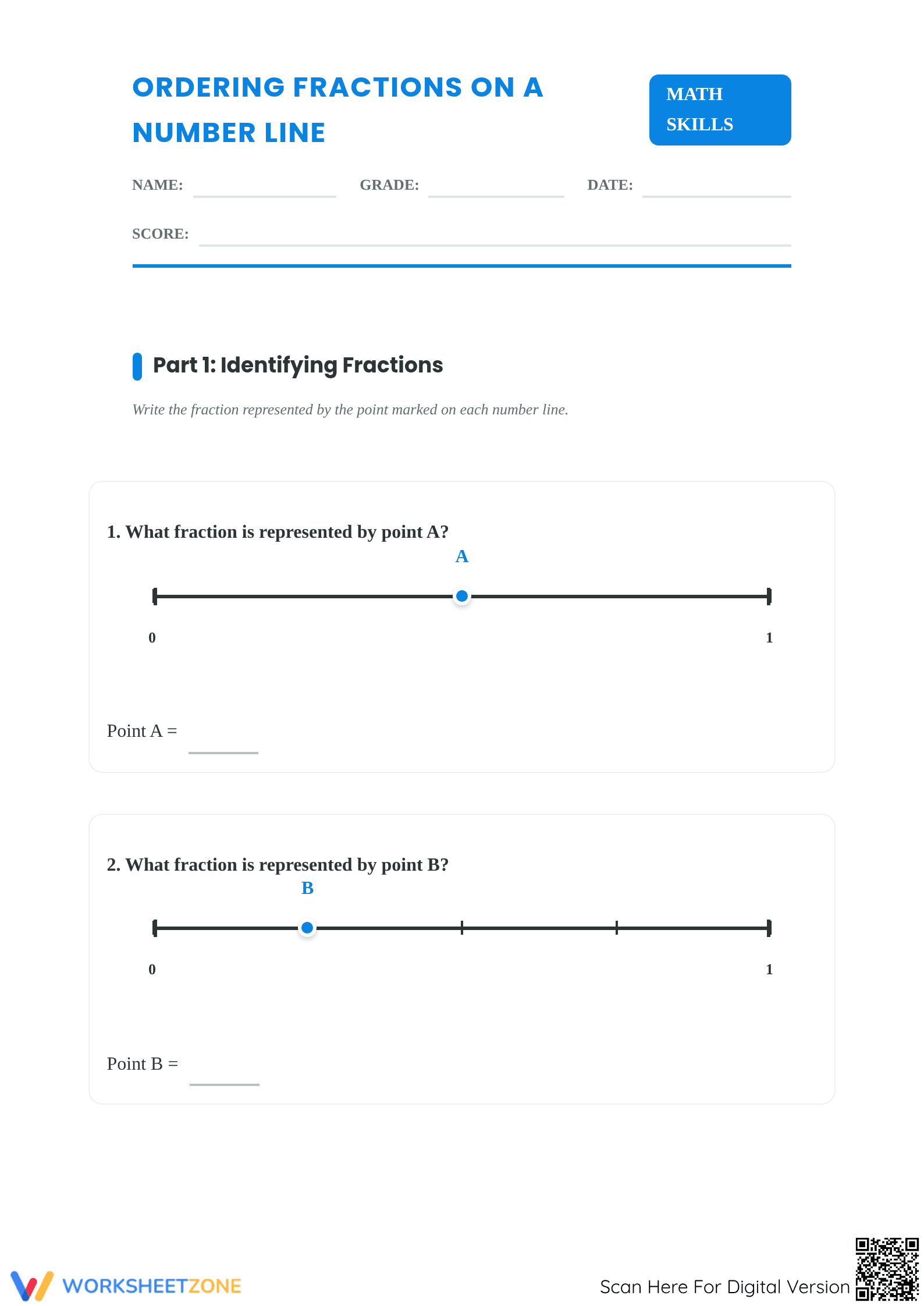
This comprehensive math worksheet focuses on ordering and representing fractions on a number line. By moving from identification to application, learners build a robust mental model. Students will master visualizing fractions as specific distances from zero, enhancing their conceptual understanding of magnitude and comparison.
At a Glance
- Grade: 3–10 · Subject: Math (Fractions)
- Standard:
CCSS.MATH.CONTENT.3.NF.A.2— Represent a fraction on a number line diagram as a specific distance from zero- Skill Focus: Ordering and placing fractions
- Format: 5 pages · 16 problems · Answer key included · PDF
- Best For: Independent practice or small group intervention
- Time: 25–40 minutes
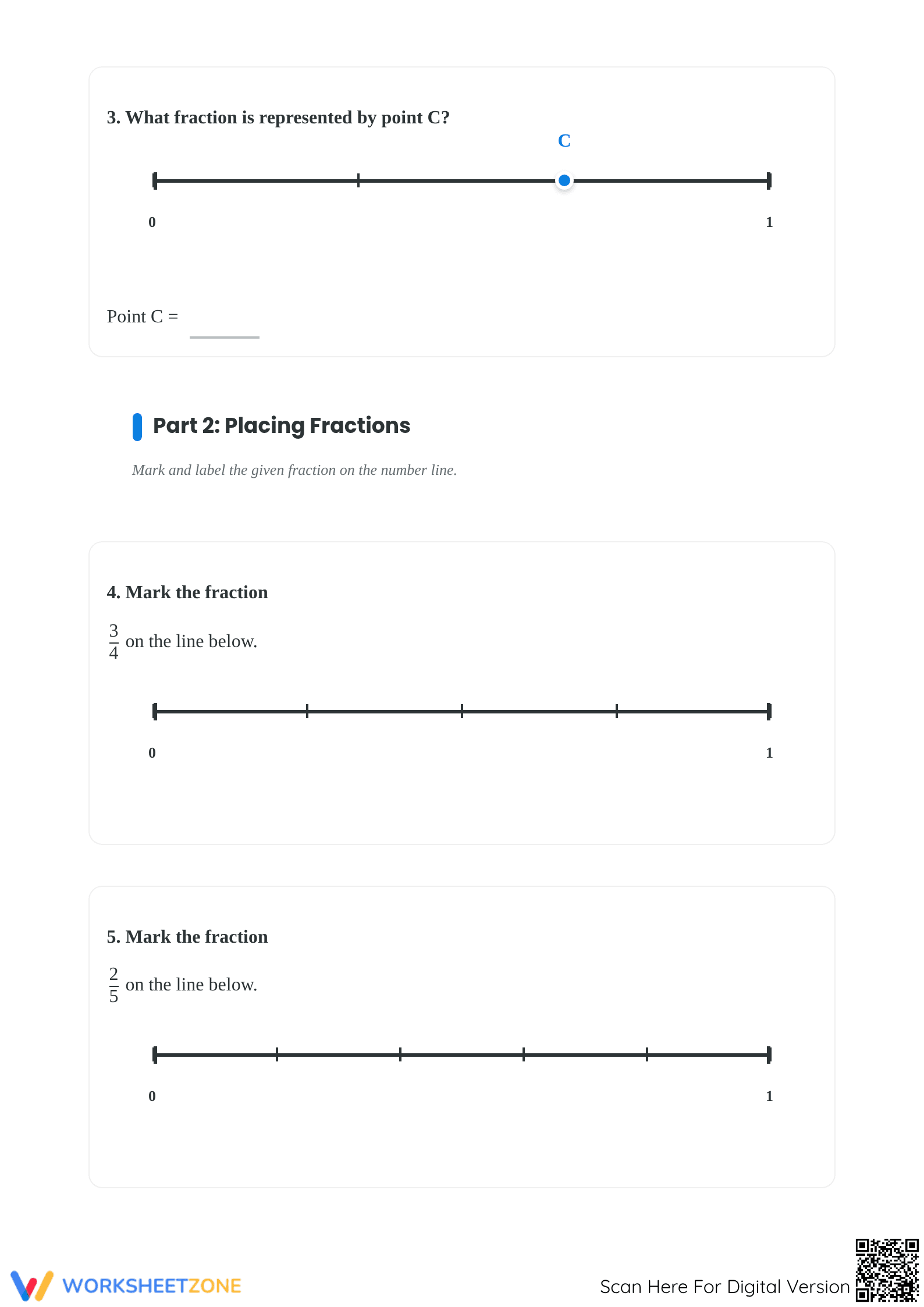
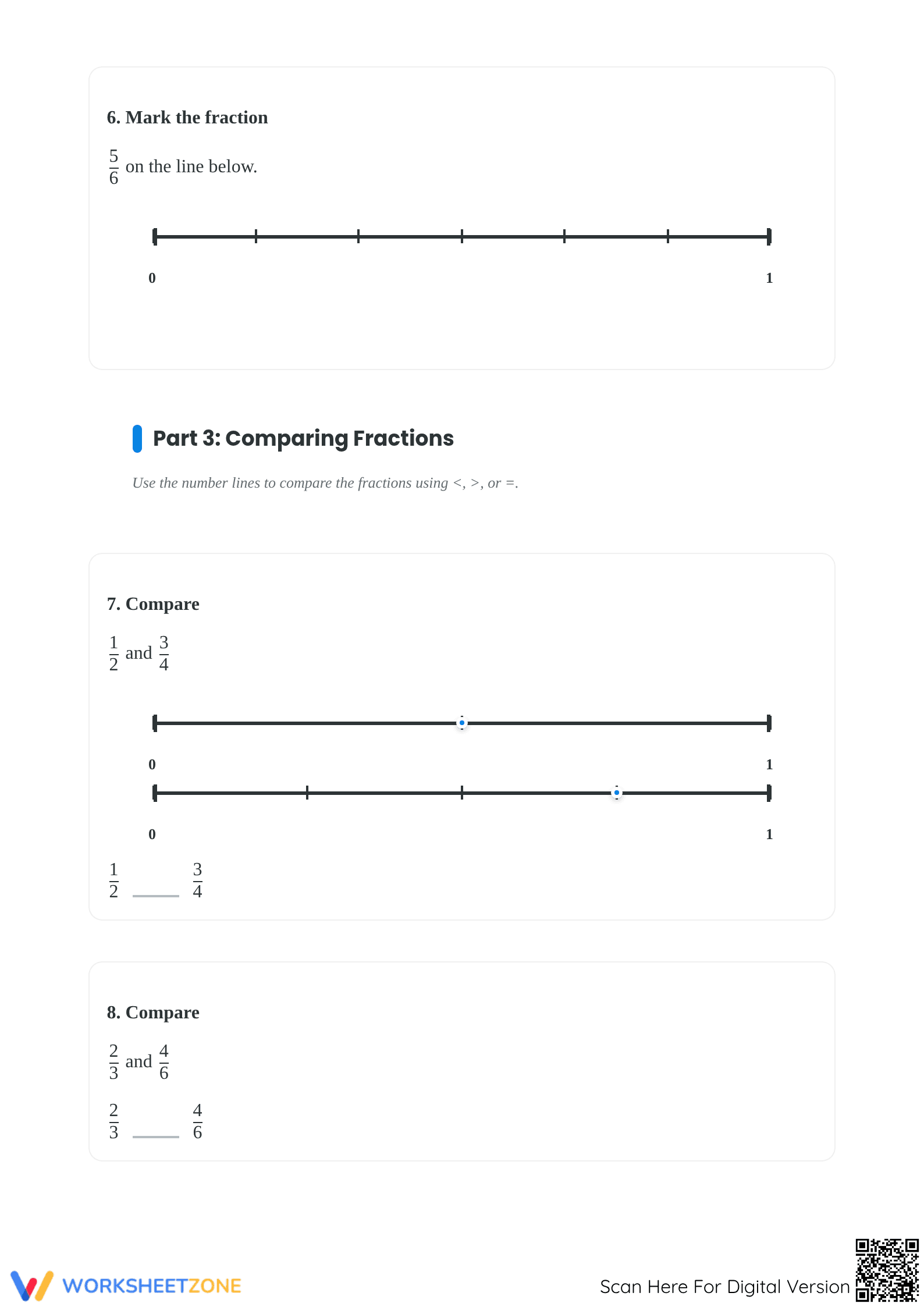
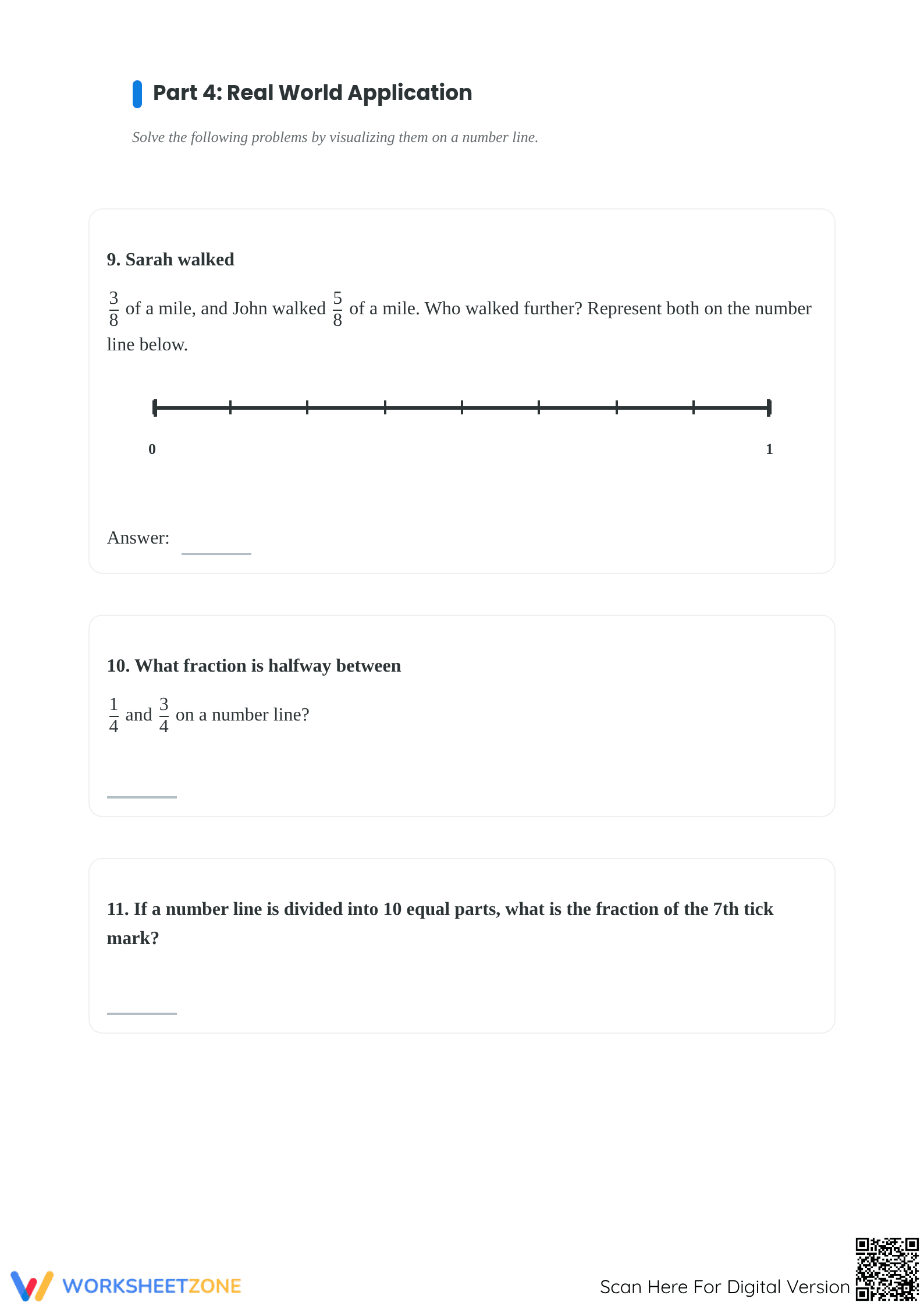
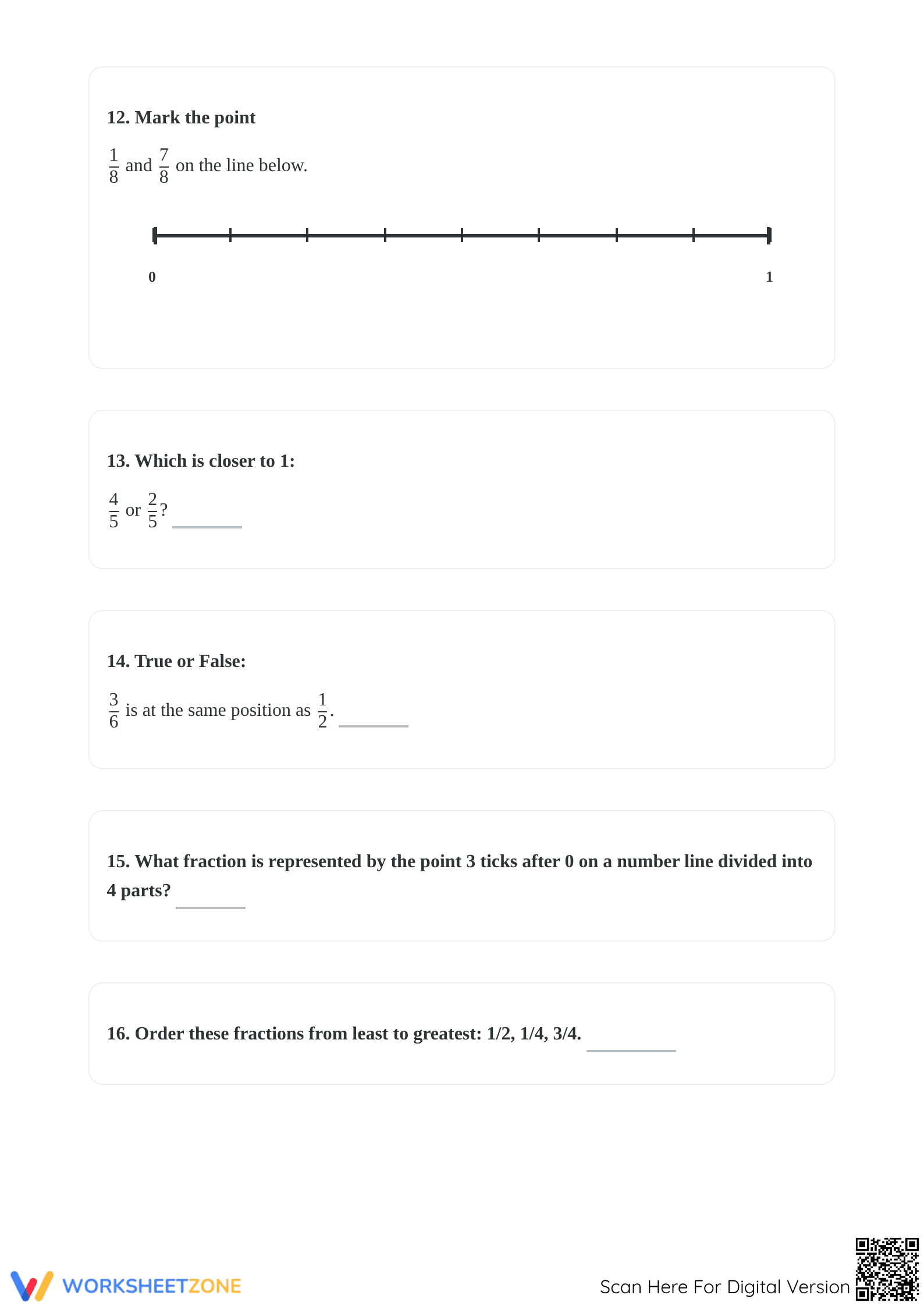
The resource contains five pages with 16 distinct problems. Tasks include identifying points on pre-marked lines, marking fractions like 3/4 and 2/5, and comparing values using inequality symbols. A final section provides word problems to ensure students apply these skills in context. A full answer key is provided for rapid grading and immediate classroom feedback.
The zero-prep workflow is efficient. 1. Print: Select all five pages for a full lesson (30 seconds). 2. Distribute: Hand out to students for independent work or centers (1 minute). 3. Review: Use the included answer key to check misconceptions in real-time or as a summative assessment check (2 minutes). The printable format ensures accessibility for all classroom environments.
This worksheet is strictly aligned to CCSS.MATH.CONTENT.3.NF.A.2, requiring students to understand fractions on a number line. It supports the sub-standard of representing fractions by partitioning the interval. The progression also touches upon CCSS.MATH.CONTENT.4.NF.A.2. Both codes can be copied directly into lesson plans, IEP goals, or curriculum mapping tools.
Use this worksheet during the direct instruction phase. Model how to count intervals between zero and one. Alternatively, use the real-world application section as a formative assessment exit ticket. Observe if students can correctly partition the number line for denominators like eight or ten to identify common errors in spatial reasoning during guided practice.
Ideal for 3rd and 4th-grade students beginning rational numbers, or older students needing remedial support. It serves as an excellent resource for Tier 2 intervention groups needing visual scaffolding. Pair this with physical fraction strips or an interactive whiteboard number line for a multi-sensory learning experience across multiple grade levels.
According to EdReports 2024, the use of visual models like number lines is critical for developing fractional fluency in the elementary years. This worksheet addresses CCSS.MATH.CONTENT.3.NF.A.2 by providing multiple opportunities for students to represent and order fractions as distances from zero. Research from Fisher & Frey (2014) emphasizes that gradual release models—moving from identification to application—significantly improve student retention of abstract mathematical concepts. By requiring students to not only mark points but also solve word problems, this resource bridges the gap between procedural skill and conceptual depth. The inclusion of denominators like 5, 6, and 8 challenges students to generalize their understanding beyond the standard halves and quarters. This rigorous approach ensures that students are prepared for more complex middle school rational number operations. Teachers can use the diverse task types to gather actionable data on student mastery of fractional equivalence and order.


