


























Views
Downloads
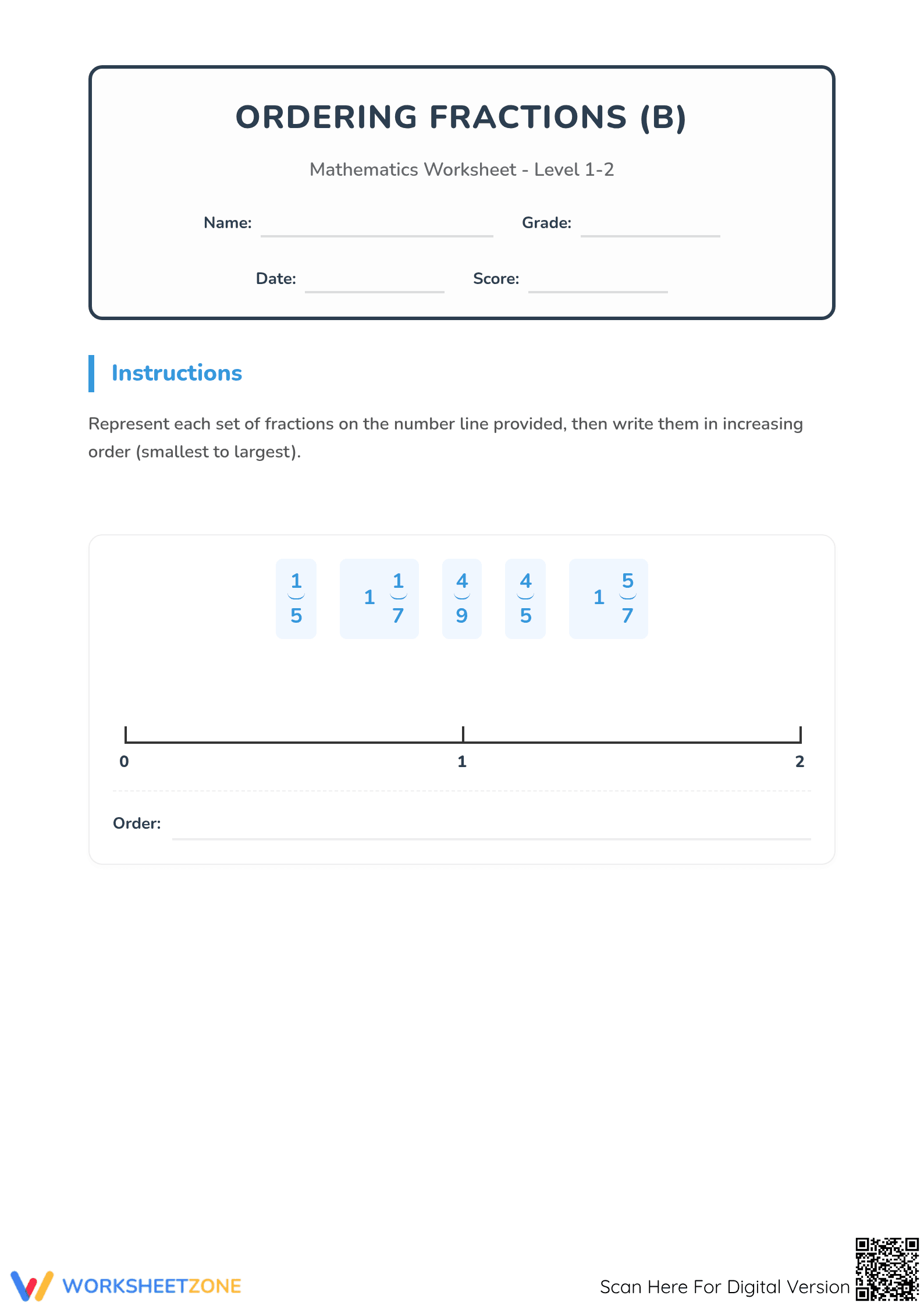

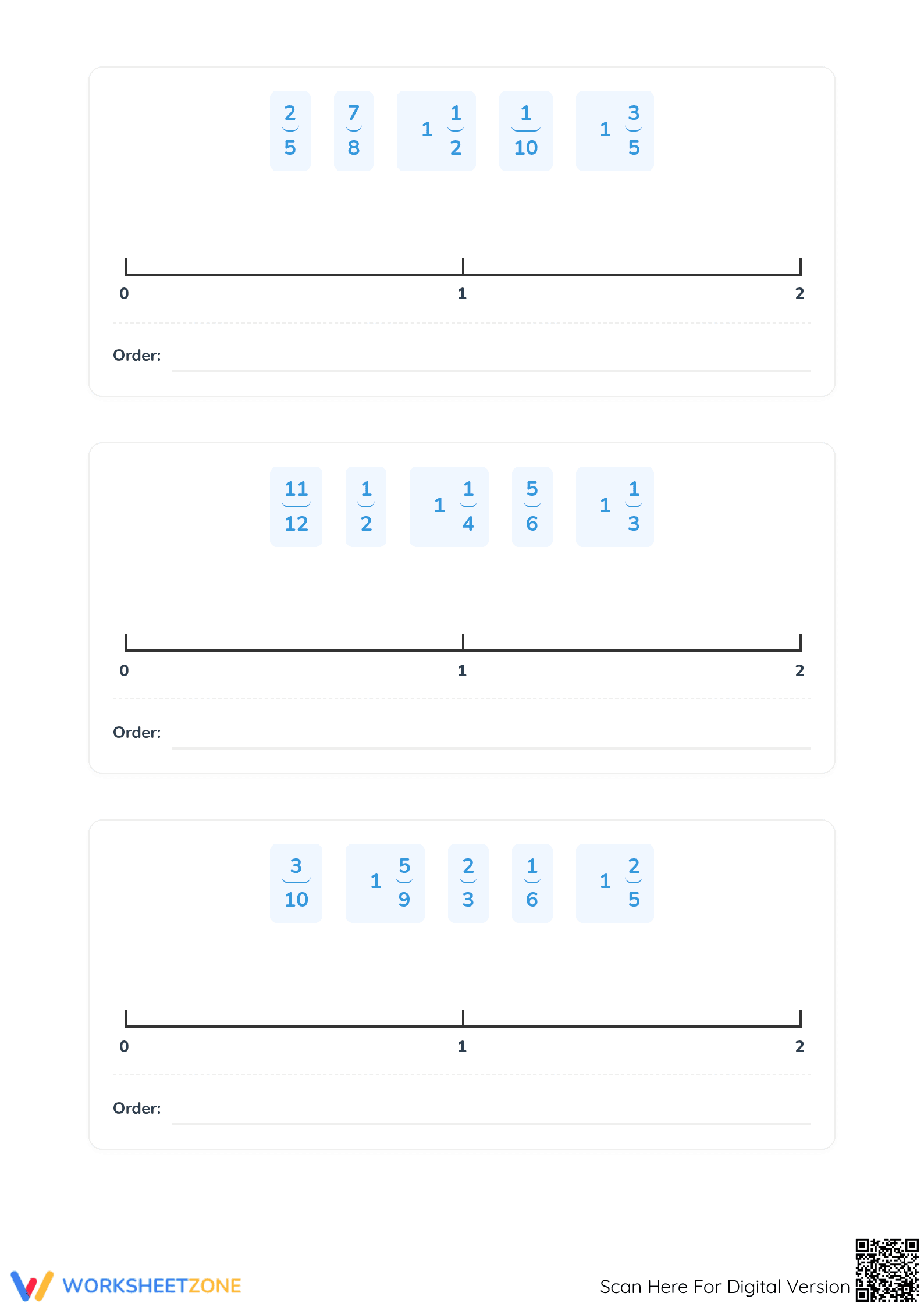

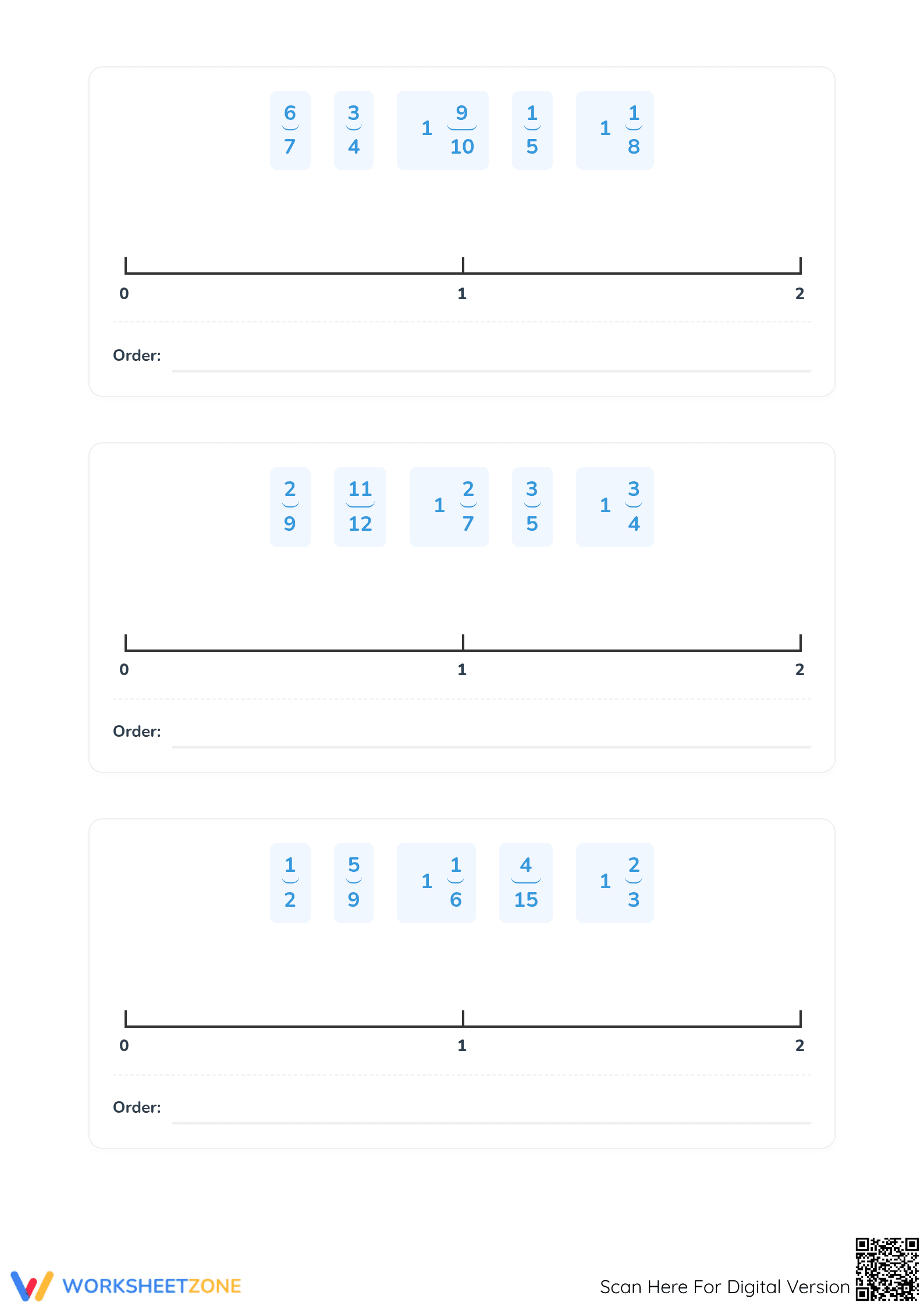

Printable Ordering Fractions on a Number Line Worksheet
Paste this activity's link or code into your existing LMS (Google Classroom, Canvas, Teams, Schoology, Moodle, etc.).
Students can open and work on the activity right away, with no student login required.
You'll still be able to track student progress and results from your teacher account.
Ordering fractions on a number line is a foundational skill that bridges the gap between abstract numbers and spatial reasoning. This comprehensive practice set empowers students to visualize fraction magnitude by placing proper and mixed numbers on a scale from zero to two. Learners develop a concrete understanding of fraction density and relative value while building the Essential foundations for proportional reasoning.
At a Glance
- Grade: 4–6 · Subject: Math
- Standard:
CCSS.4.NF.A.2— Compare fractions by reasoning about their size on a visual number line.- Skill Focus: Ordering proper and mixed fractions
- Format: 5 pages · 12 problems · Answer key included · PDF
- Best For: Fraction comparison and number line mastery
- Time: 25–40 minutes
What's Inside
This 5-page worksheet features 12 unique practice sets designed to build fractional fluency. Each set presents five distinct fractions including proper and mixed numbers with varying denominators. Students are provided with a 0-2 number line for each task, ensuring clear plotting and labeling. A complete answer key is included to facilitate easy grading and immediate feedback.
Zero-Prep Workflow
This resource is engineered for immediate classroom deployment with no setup required. Following these three steps ensures a smooth instructional flow:
- Print: Generate the 5-page packet or select specific pages based on your current lesson focus (under 1 minute).
- Distribute: Hand out the packets to students for independent work, math centers, or as a Reliable sub plan (under 1 minute).
- Review: Use the included answer key for rapid assessment or display it for student self-check (under 2 minutes).
Standards Alignment
This resource aligns with CCSS.MATH.CONTENT.4.NF.A.2, which requires students to compare fractions by creating common denominators or comparing to a benchmark. It also supports 3.NF.A.2 by reinforcing the concept of representing fractions on a number line diagram. Both standard codes can be copied directly into lesson plans, IEP goals, or district curriculum mapping tools.
How to Use It
Deploy this worksheet as a formative assessment after introducing benchmark fractions. Observe students as they plot values like 1/2 or 1 1/2; those struggling with these midpoints may need additional scaffolding. Alternatively, use specific pages as daily math warm-ups to ensure long-term retention of comparison strategies. Most students complete one page in approximately 8-10 minutes.
Who It's For
This packet is designed for Grade 4 and Grade 5 students mastering fraction comparison, as well as Grade 6 students requiring targeted remediation. The inclusion of mixed numbers makes it a natural pairing for units on converting improper fractions. It serves as an excellent companion resource to an anchor chart illustrating common benchmark fractions on a number line.
Research by Fisher & Frey (2014) highlights the importance of visual models in developing fractional number sense, particularly using number lines to transition toward proportional reasoning. This Grade 4-6 worksheet supports CCSS.4.NF.A.2 by providing 12 structured tasks where students evaluate the magnitude of diverse fractional forms. By requiring students to plot and then order fractions in increasing sequence, the resource reinforces the conceptual understanding that fractions are specific locations on a continuous scale rather than merely parts of a shape. This alignment with evidence-based instructional practices ensures that learners move beyond rote memorization toward a flexible, visual mastery of fractional relationships. The included answer key and multi-page format make this an Essential, printable tool for building the mathematical foundations necessary for middle school algebra. This resource provides the Proven practice needed to ensure students are Ready for more complex mathematical concepts in higher grades while remaining strictly Aligned to core state standards.


